TPO Roofing in Chico, CA
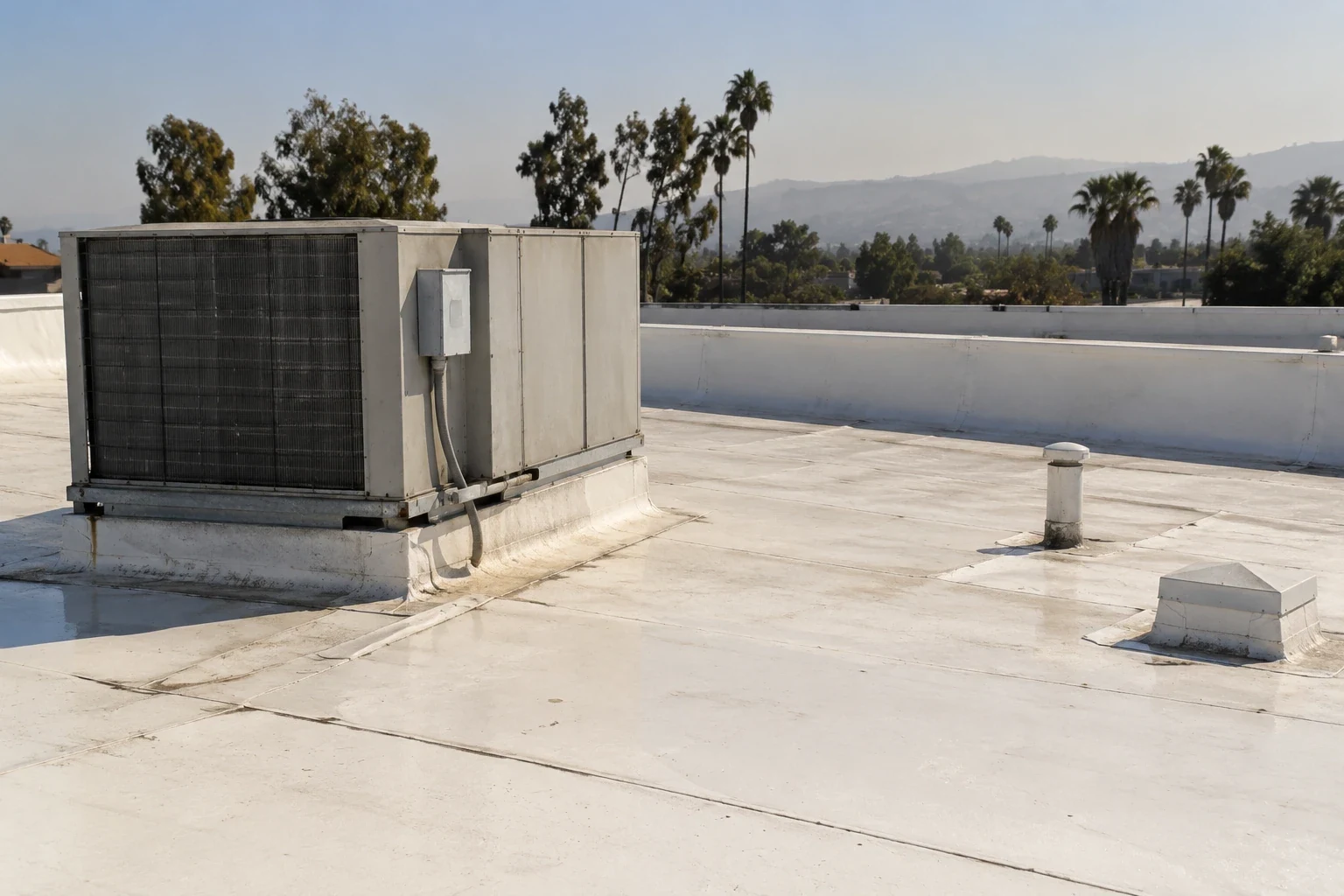
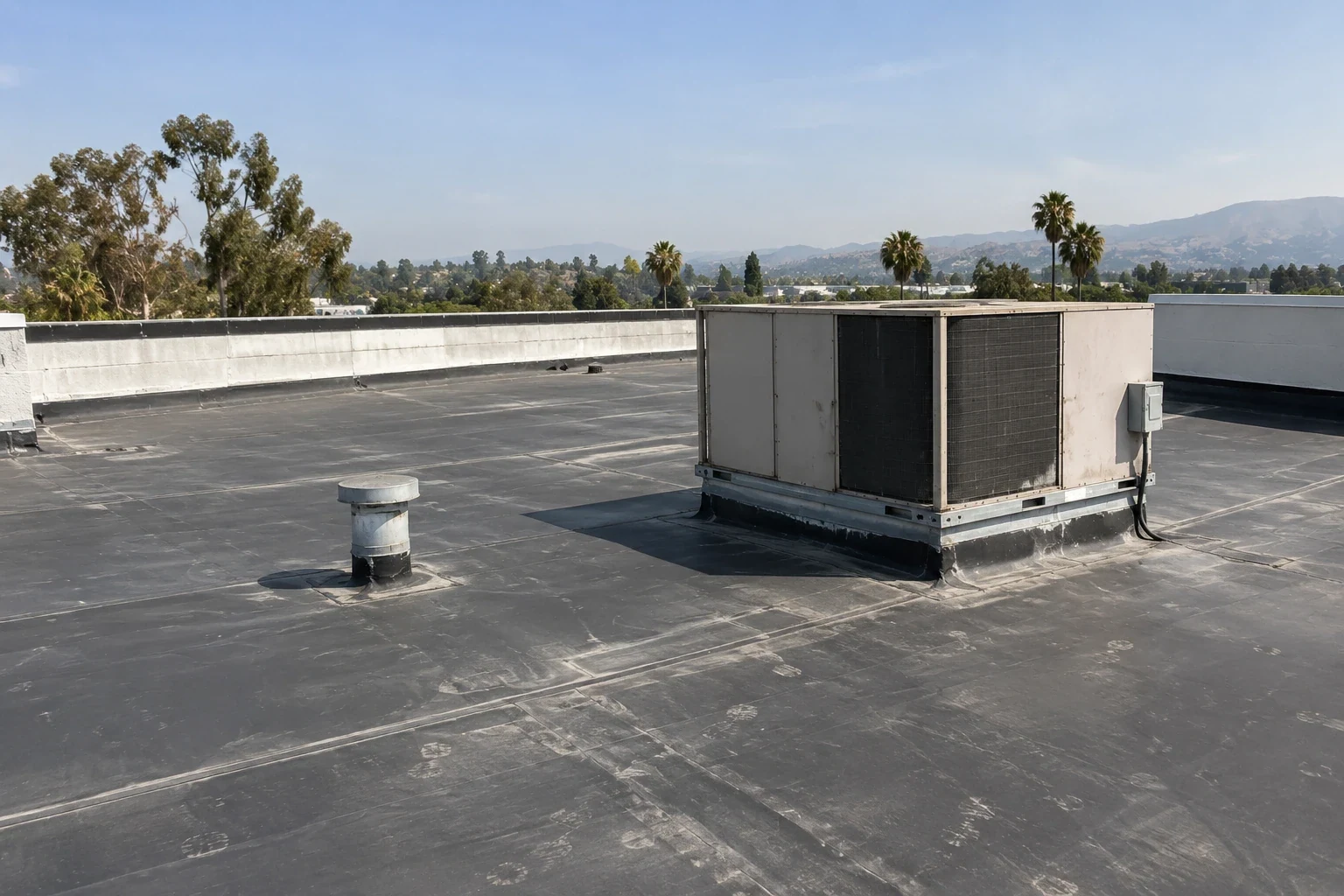
TPO works as a reinforced thermoplastic sheet, so the field seam and every edge detail have to be treated as part of one roof assembly. In Chico, hot summer exposure and a wetter winter season give an owner two different inspection questions: whether heat has stressed exposed surfaces and whether drains and transitions move rain away during the wet months. Chico’s hazard-plan annex labels the climate Mediterranean, with summer heat, cooler wet winters, and occasional tule fog. That seasonal backdrop does not prove distress on a particular building. We inspect the installed membrane, attachment, insulation, drainage, and repair history before deciding whether a local correction will hold or a larger section needs attention. A useful scope shows the observed condition and its boundary, not just the system name. For a nearby thermoplastic comparison, check whether the roof is actually a PVC membrane roof before choosing weld materials.
What the membrane assembly includes
A TPO roof commonly includes the membrane, cover board or substrate, insulation, vapor control where required, attachment, perimeter details, and penetrations. TPO sheets can be held by different attachment methods, and the edge or drain view alone may not show what lies beneath. We compare field clues with available roof records before describing the assembly. We check plans and accessible edges, then compare them with field conditions at drains, curbs, parapets, and roof-to-wall transitions. Chico's planned commercial areas range from Downtown mixed-use blocks to light-manufacturing districts, and the building use can affect access, equipment coordination, and interior protection. Those district descriptions do not establish an individual roof's materials. Our inspection records the assembly we can verify and labels any concealed layer that would require an approved test before the recommendation changes. An EPDM field has different seam chemistry, so review EPDM system options only when that is the confirmed assembly.
How seam quality is checked
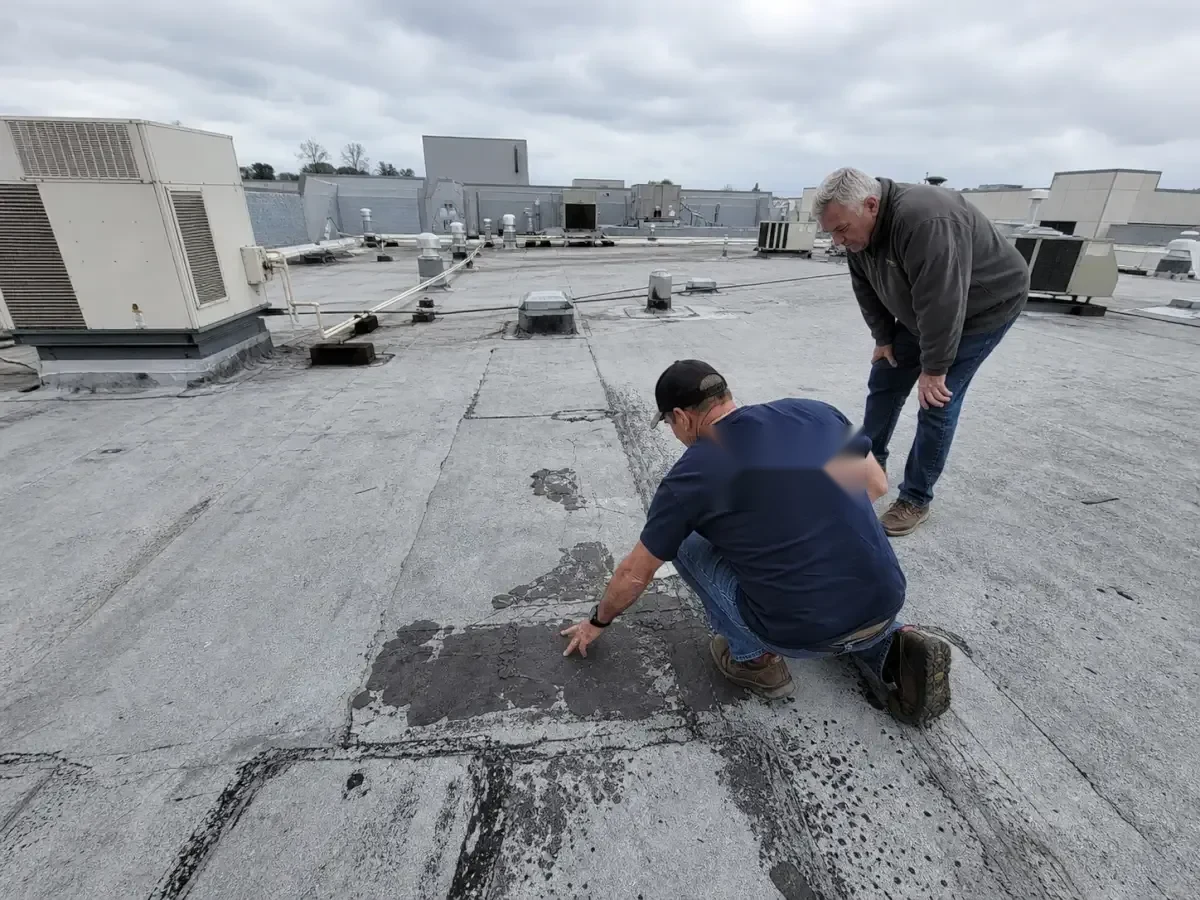
Thermoplastic seams are joined with heat, and a reliable repair depends on clean, compatible surfaces and controlled welding conditions. We examine seams where water could enter, including intersections at corners, patches, penetrations, and changes in plane. We use a probe only as one check on the weld. The surrounding membrane, insulation indicators, and water path must also be reviewed before setting the repair limit. Summer heat can make a roof surface uncomfortable and can affect when a crew can work safely; the open-roof window also needs to leave enough time to close and protect the section. At the North Valley Plaza and other regional retail areas, delivery windows and occupied entrances may shape that sequence. We confirm each site's operating rules rather than assume one schedule fits every commercial property. A survey through commercial roof inspection can connect visible seams to the roof plan and service history.
Where summer heat enters the decision
Drainage is part of the TPO system, not a separate maintenance item. We trace slope toward drains or scuppers, inspect bowls and strainers, and look for ponding, debris, or a transition that could slow runoff. A roof plan may show intended flow while later equipment or prior repair work has changed the actual path. Chico's precipitation normals place more rain in January and February than in midsummer, so the inspection record should distinguish an exposed wet-season issue from a dry-weather observation. It should also note which drains were reachable, whether water remained after a prior storm, and what the surrounding membrane showed. The owner can then decide whether the next action is cleaning, a localized flashing repair, or a broader drainage review before interior finishes are affected. If an open weld or flashing needs attention, define the limit through seam and flashing repair.
How winter water leaves the roof
At a curb, pipe, wall, or rooftop unit, the membrane must connect to metal and flashing without leaving a channel for water. We check termination height, corner patches, sealant condition, edge restraint, and whether another trade has altered the detail. A repair boundary should follow the sound membrane and stop at a detail that can be restored, rather than expand simply because a ceiling stain is large. Near Meyers Street and Hegan Lane, Chico planning documents identify industrial and business-park areas; at a property in that part of town, we still verify every support, flashing, and access route directly instead of drawing conclusions from the district map. We verify each curb and support in the field, photograph the condition, and identify any trade coordination needed before work begins. Keep the photo map and decision points with roof condition records for the next review.
Which details govern a repair
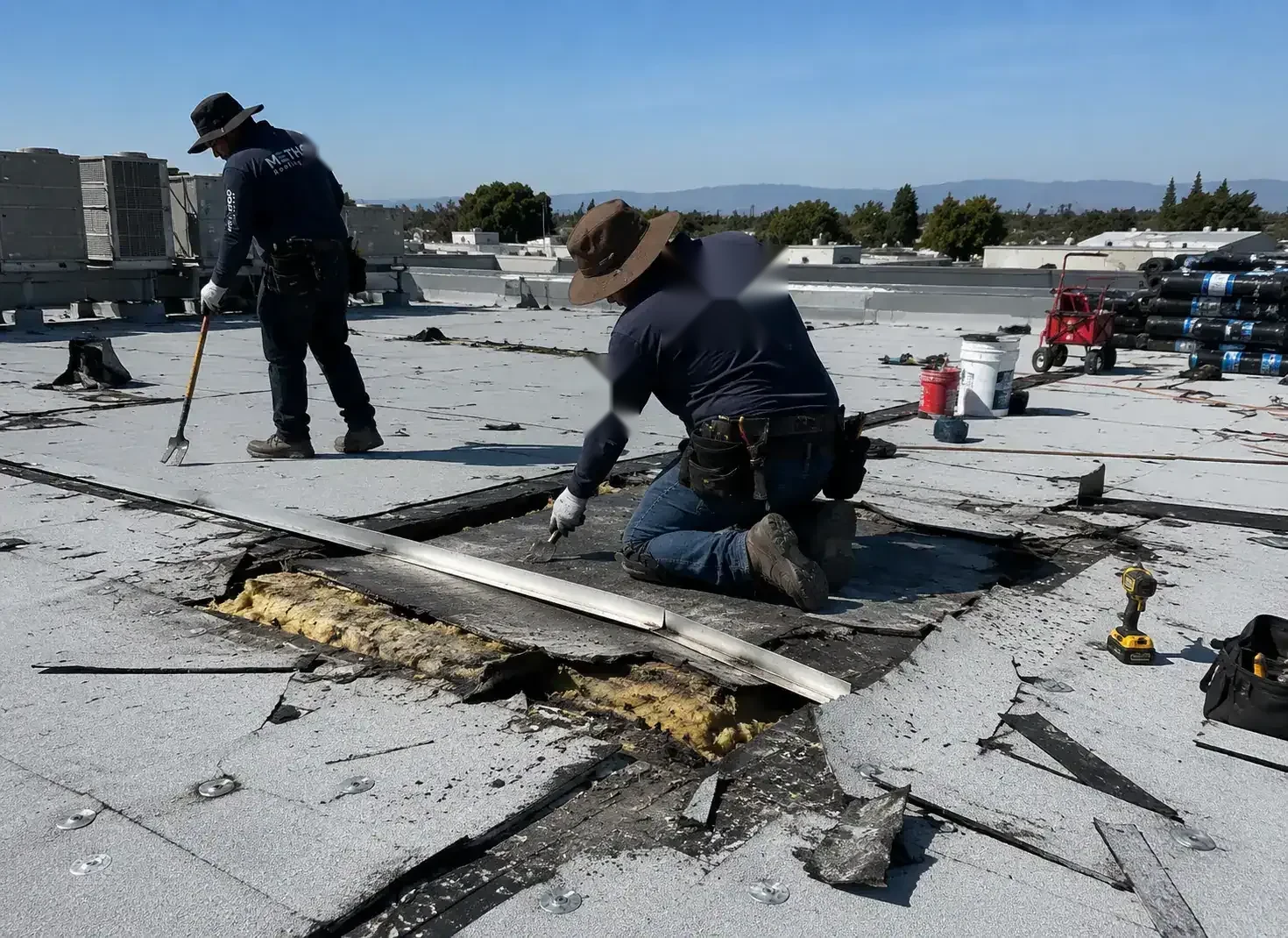
A TPO patch is a sensible option when the membrane remains weldable, the insulation is dry enough for the proposed detail, and water can be redirected through a defined repair area. Repeated seam separation, widespread wet insulation, brittle or contaminated surfaces, or drainage failures that extend across several zones may point toward recover or replacement planning. We compare the repair area with roof plans and prior service records, then explain what further testing could change the choice. For buildings near the South Park Avenue and Fair Street employment area, access or delivery timing may influence when a section can be opened, but neither geography nor building use determines roof condition. The proposal should identify the system, preparation, materials, tie-ins, temporary protection, and the hold point where the owner can review concealed conditions. A route through the Downtown Chico roof service area still needs access rules from the property contact.
When a patch is no longer enough
A useful service record ties the reported symptom to a roof zone, date, photo direction, and repair completed. We note whether the crew found an open weld, a drainage restriction, a damaged flashing detail, or a condition that still needs testing. The record also identifies any temporary protection and the point where the owner can review work before closure. Chico's climate normals give a seasonal frame for future visits, but the next inspection should be scheduled from the assembly history and current operating need. At a facility with several roof sections, retain a separate map and closeout for each phase so a later leak does not inherit assumptions from a different area. That makes repair-versus-renewal planning more precise and keeps maintenance decisions tied to evidence. Where water is trapped at an outlet, inspect drain and scupper work alongside the membrane.
Commercial Roofing Questions
How can we tell whether a TPO seam has opened?
We inspect the weld edge, intersections, patches, and nearby sheet for a consistent entry path. A probe finding is recorded with the roof zone, then compared with drainage and interior observations before we set a repair boundary.
Does Chico summer heat mean the membrane needs replacement?
No. NOAA normals describe regional exposure, not a roof diagnosis. We check the actual sheet, seams, attachment, insulation, and repair history, then recommend a patch, test, recover, or replacement only when those findings support it.
What should the TPO repair scope include?
The scope identifies membrane preparation, compatible patch material, seam welding, edge termination, nearby penetrations, and the area protected during work. If hidden moisture could change the repair, we specify the test and restoration before opening the assembly.
Can ponding water be solved with a new membrane?
A new sheet does not correct every drainage problem. We review slope, drains, scuppers, curbs, and previous alterations first, then identify whether cleaning, a tapered assembly, or another design decision is needed.
What information helps schedule an inspection?
Before the visit, share a roof sketch, the reported leak area, any past repairs, and the site’s check-in process. We will confirm a safe route with the property contact and list any area that needs a second visit.
Review the roof evidence
Share the building type, the current symptom, and any roof history you have. We can inspect the assembly, document a repair boundary, and explain timing considerations for the next step.