Commercial Roof Leak Repair in Chico, CA
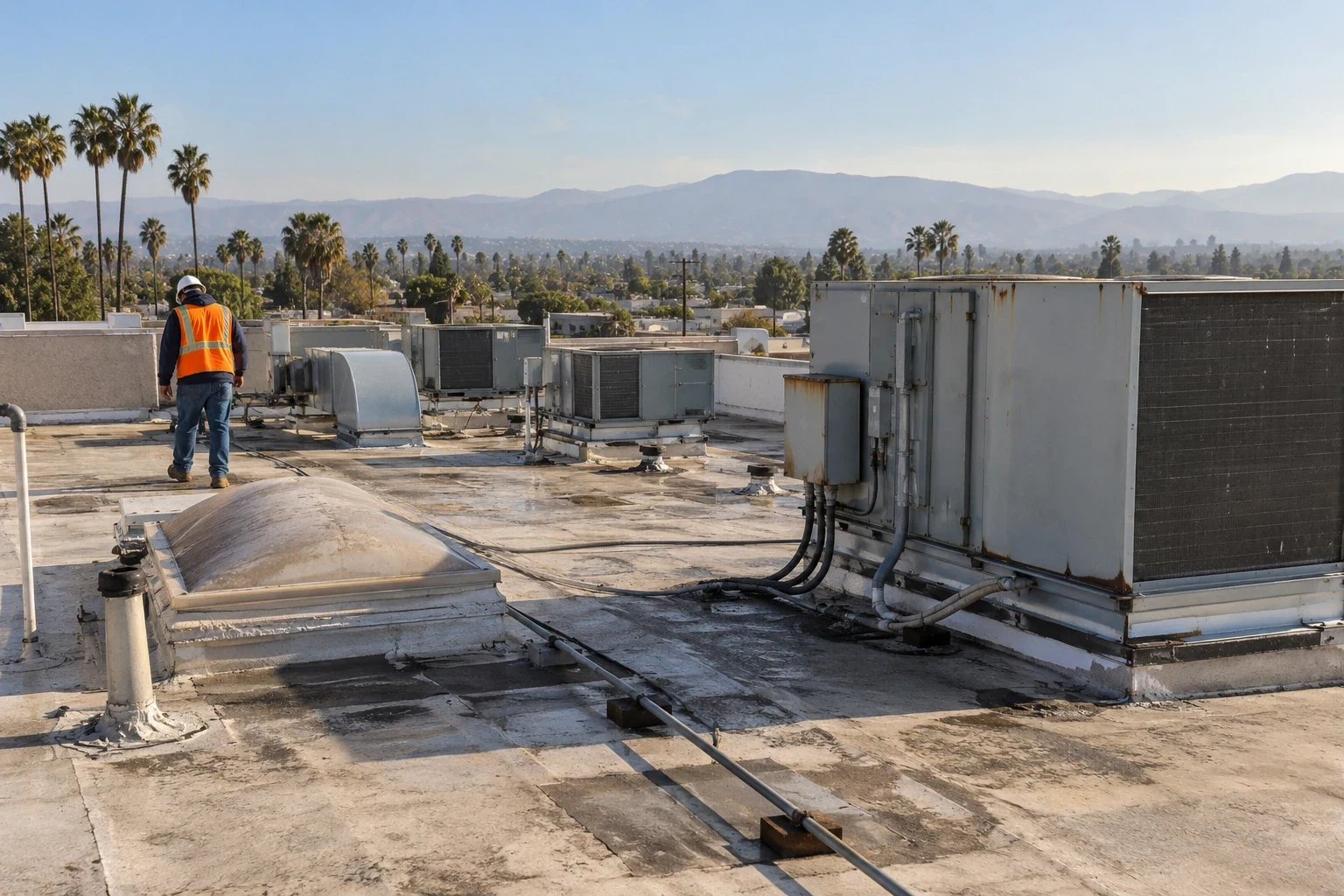
Water at a ceiling tile gives a location, not a diagnosis. We compare the indoor stain with the roof above it, then trace likely paths through seams, penetrations, curbs, drains, and wall transitions. The entry point may sit upslope or travel along a deck flute before it becomes visible inside. In Chico, a hot dry stretch can make a slow leak less obvious until winter rain returns. We photograph the symptom, inspect the surrounding assembly, and decide whether immediate protection is needed before we open or patch the roof.
Protect the space and trace the path
When water is active, the first goal is to protect people, equipment, inventory, and finishes below. We identify whether the source is roof runoff, plumbing, condensation, or another building system before committing to a roof repair. If roof entry is likely, we make a safe temporary measure where conditions allow, record the area, and set a permanent repair visit with the right material and access. The temporary action should control exposure without hiding the area that still needs diagnosis.
The owner can help by marking when the water appears, what operations run above the space, and any roof work completed recently. A roof inspection checks the likely water route and adjacent details, while a We record where the indoor symptom sits relative to roof features rather than assuming that the ceiling stain is directly below the opening.
Read more than one clue
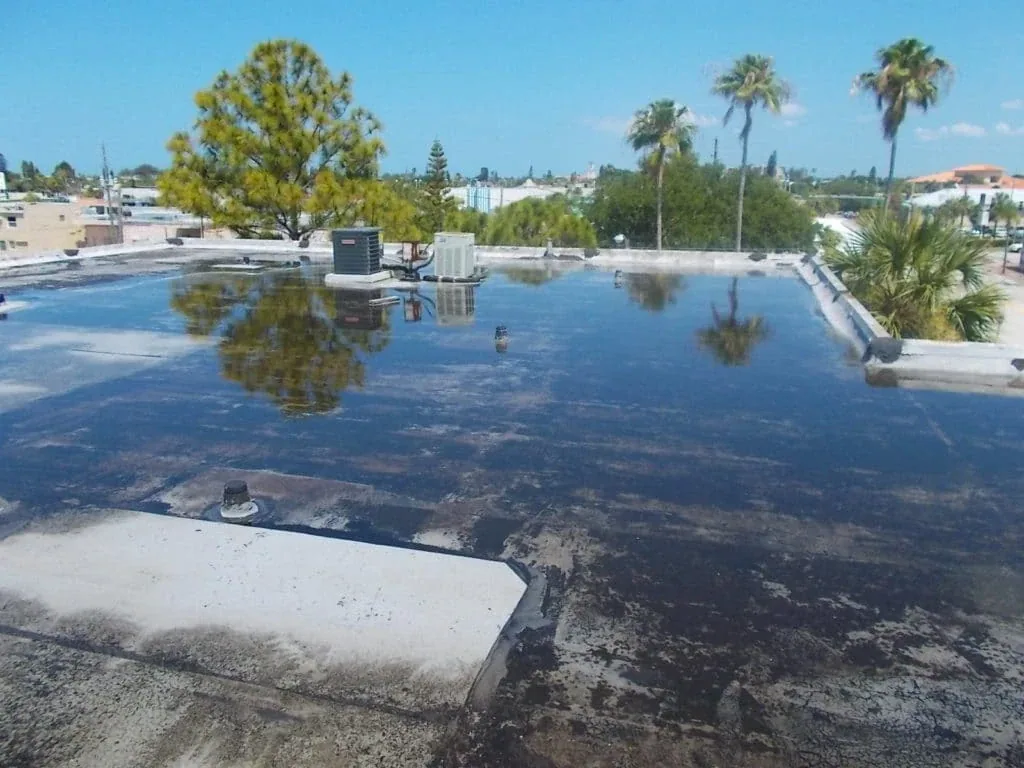
We inspect seams, fasteners, flashing, roof-to-wall transitions, and every penetration near the probable path. A drain can be clear at the surface while a low point remains blocked by an old patch or raised edge. A pipe boot can look intact while sealant has separated at its base. We compare changes in color, trapped debris, membrane movement, and prior repair edges. If the roof is insulated, a selective moisture check can help locate a concealed wet area that would affect the repair boundary.
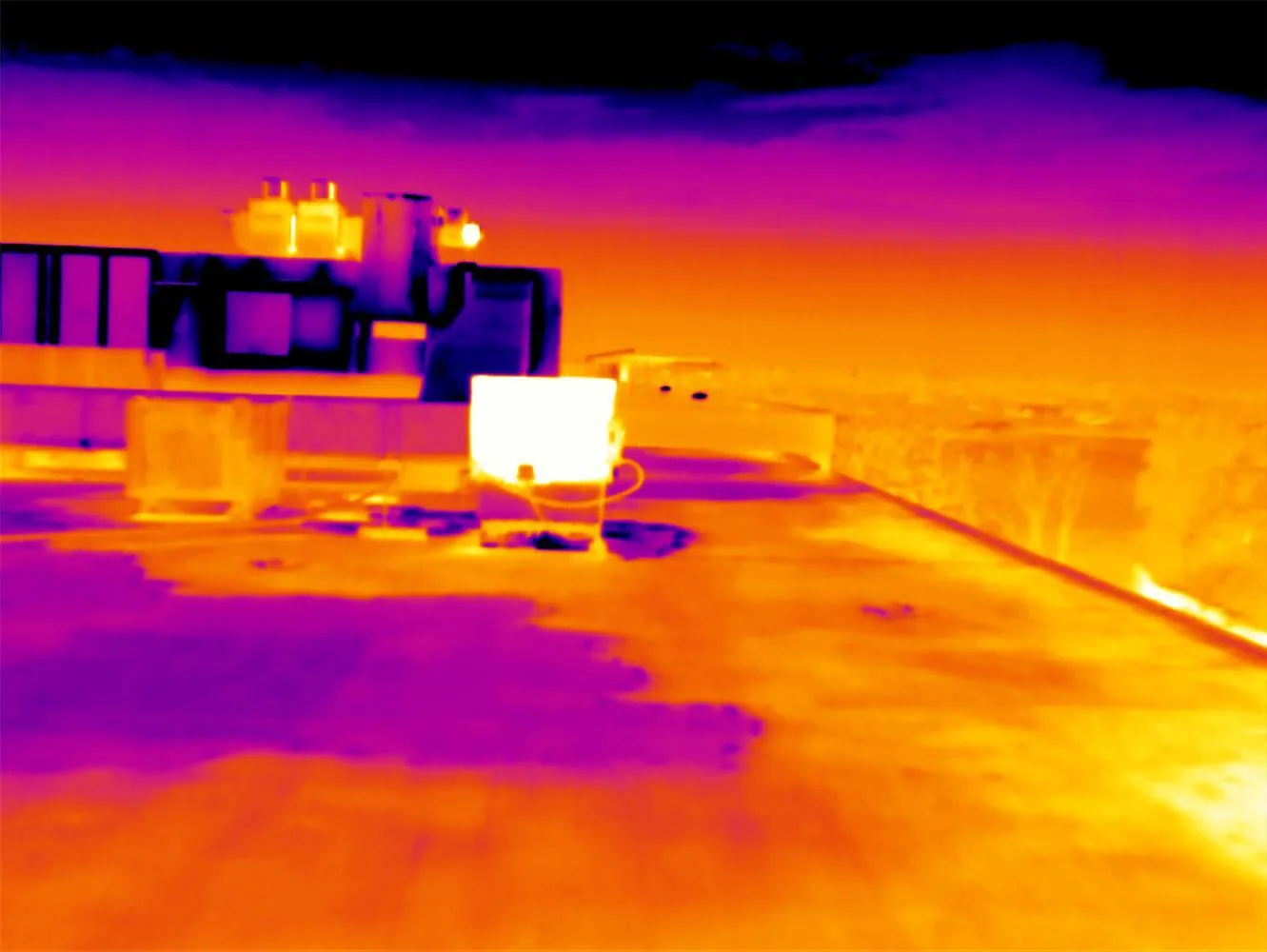
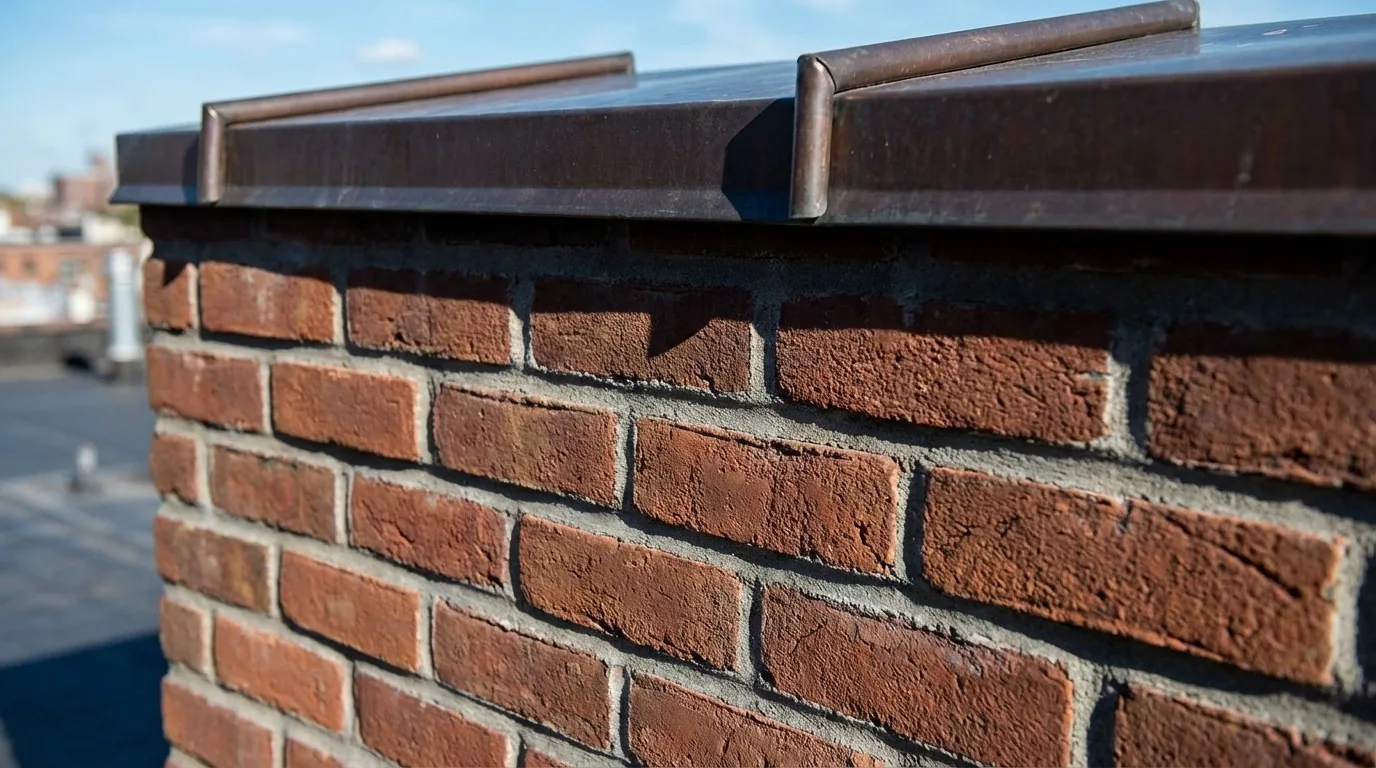
For a multi-level building, wind can push rain under a termination on a different elevation from the reported leak. We examine parapets and edge metal alongside the field, and note whether a plumbing line or equipment condensate could produce a similar pattern. An infrared moisture survey can identify temperature patterns worth testing, but the reading is not a substitute for confirming the assembly. We explain what is confirmed, what remains uncertain, and what opening would resolve it.
Interior protection continues until the repair is verified. We ask the building contact to keep the affected space accessible, move sensitive stock or electronics when practical, and note any ceiling system that could conceal water. The roof team does not cut a large opening just to follow a stain. We use the least disruptive check that can distinguish a wet insulation pocket from a route along deck or framing. If a test opening is needed, we agree on the location and patch it as part of the inspection sequence.
A leak visit also looks for clues left by earlier work. Different mastics, patched fasteners, or a raised repair edge can show where water has been managed before. We record those layers without assuming who installed them or why. A clear history helps the owner decide whether another localized repair is sensible or whether repeated openings warrant a broader condition review.
Match the repair to the roof
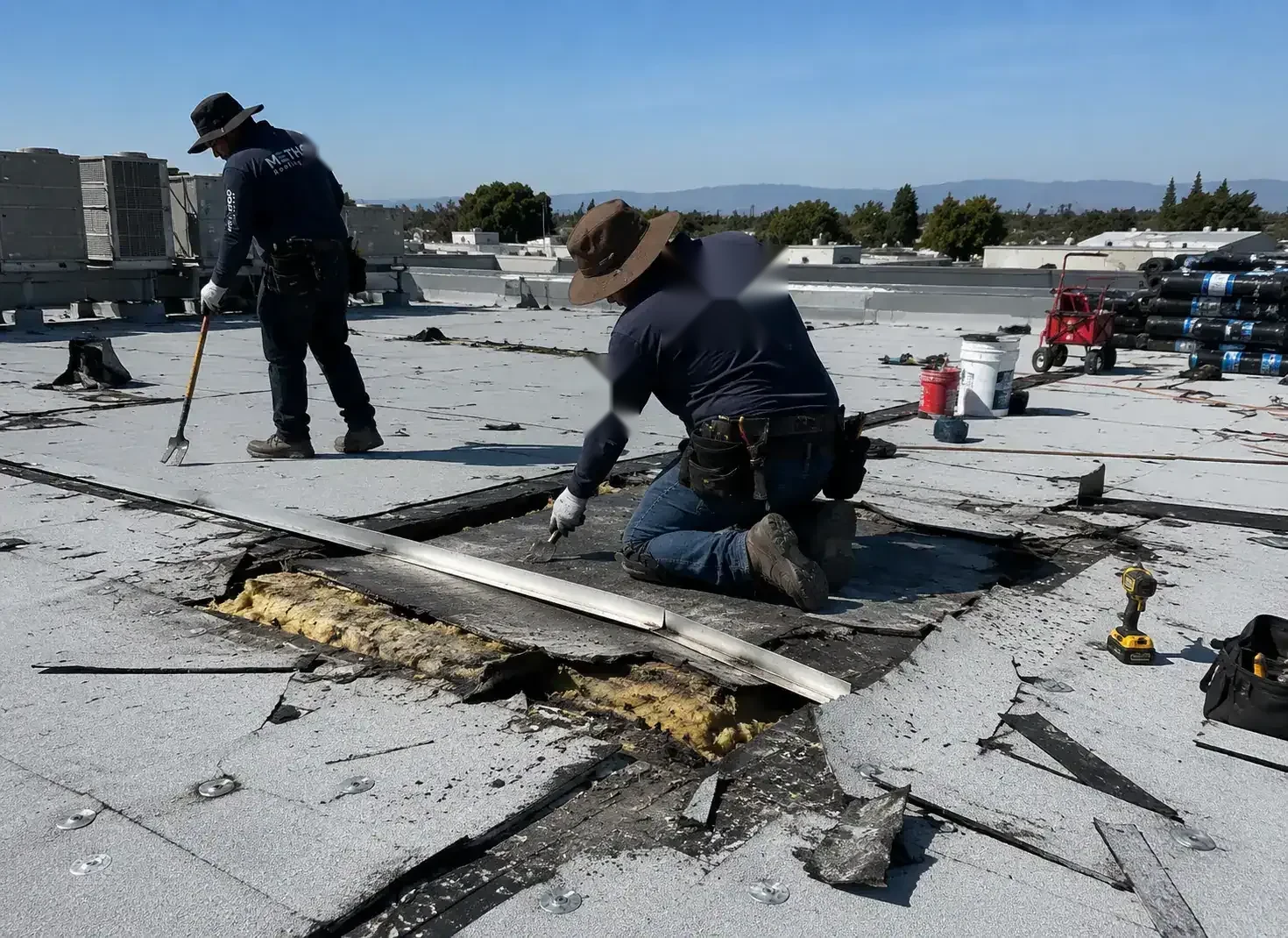
Once the source is located, repair begins with a clean, dry, sound surface. We remove failed sealant and loose material, prepare the surrounding membrane, and install a compatible patch or flashing detail. If the leak comes from a split seam, the repair must extend past the split to a reliable weld or bond. If the water path enters at a curb, rebuilding the flashing may be necessary even when the field membrane looks serviceable. We do not close the roof over softened insulation or an unstable deck without addressing that condition.
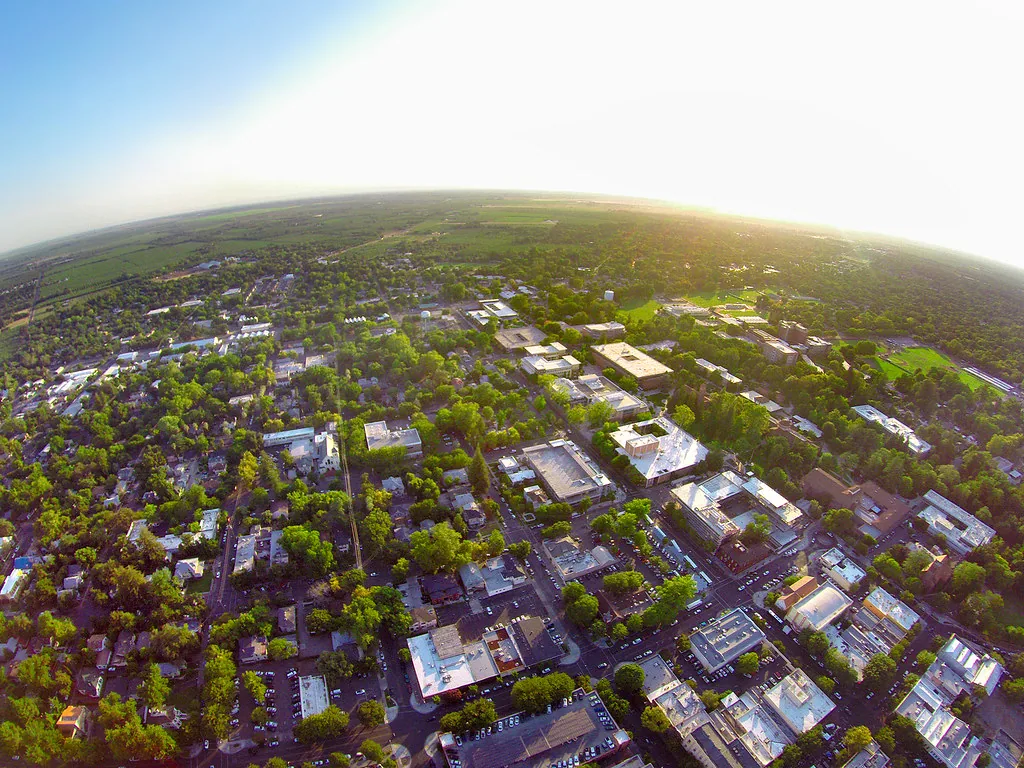
Chico’s wet season carries substantially more rain than midsummer, so we plan permanent work around a dry preparation window when possible. The drain and overflow check confirms where runoff should leave the roof. The edge and coping review examines transitions where water can bypass the membrane. In Downtown Chico's mixed-use area and the the North Valley Plaza District's regional retail setting, the building's hours and access determine how we isolate the work area.
Know when a leak is a larger roof issue
A single opening can be repaired without replacing a whole roof when adjacent surfaces and connections remain sound. Multiple leaks, widespread wet insulation, recurring seam failures, or repairs that cross several roof sections may signal a broader condition. We map each symptom and compare it against the rest of the assembly before recommending a larger correction. The owner receives the repair limit and a note of any separate condition that may need monitoring or a budget decision.
Where repeated leak calls cluster in one field, our condition report helps compare locations, dates, and prior repairs. A bounded repair scope may solve the immediate issue, while a can address broader failure. We also consider whether a suitable is worth testing, but only after moisture, attachment, and layer count are known.
We can also compare the repair with a system-level detail in the TPO assembly when that is the roof covering confirmed during inspection. A repair is not specified until the actual membrane and attachment are identified.
Verify the repaired area
After the repair, we photograph the finished detail and record how the new material ties into the roof. We note drains, seams, curbs, or edge conditions that were checked nearby, along with anything that could not be confirmed during the visit. If the owner sees water again, those records help us compare the new report with the original path and decide whether the same defect returned or another source is involved.
Share the leak location, a photo of the interior mark, the time water appeared, and any known rooftop work. We will inspect above the symptom and explain the evidence behind the repair. When the source is not on the roof, we will identify the competing cause we observed so the building team can direct the next check to the right system.
Commercial Roofing Questions
Why does the ceiling stain appear far from the roof opening?
Water can travel along insulation, deck flutes, framing, or a pipe before it drips. We compare the indoor location with roof slopes and transitions, then inspect likely entry details rather than patching directly above the stain.
Can you stop an active leak the same day?
We provide around-the-clock emergency response, including holidays. Safe access, weather, and the leak location determine what can be protected immediately and when a permanent repair can be prepared and installed.
What if the leak is caused by an HVAC line?
We check roof penetrations and equipment details while distinguishing roof entry from condensate or plumbing issues. If evidence points to another building system, we document that finding so the correct trade can inspect it.
Will infrared imaging find every leak?
No single scan establishes every source. Infrared patterns can help focus test cuts, but we confirm the assembly and moisture condition at selected locations before deciding what material must be removed.
How do I know whether the repair worked?
We photograph the finished tie-in and mark what was checked nearby. After rain or a controlled water test where suitable, the owner can compare the same interior area and report any new moisture for follow-up.
Find the roof entry before water travels farther
Tell us where the interior water appears, when it began, and what roof repairs are already known. We will trace the path, protect the affected space, and document a repair boundary.