Built-Up Roofing in Chico, CA
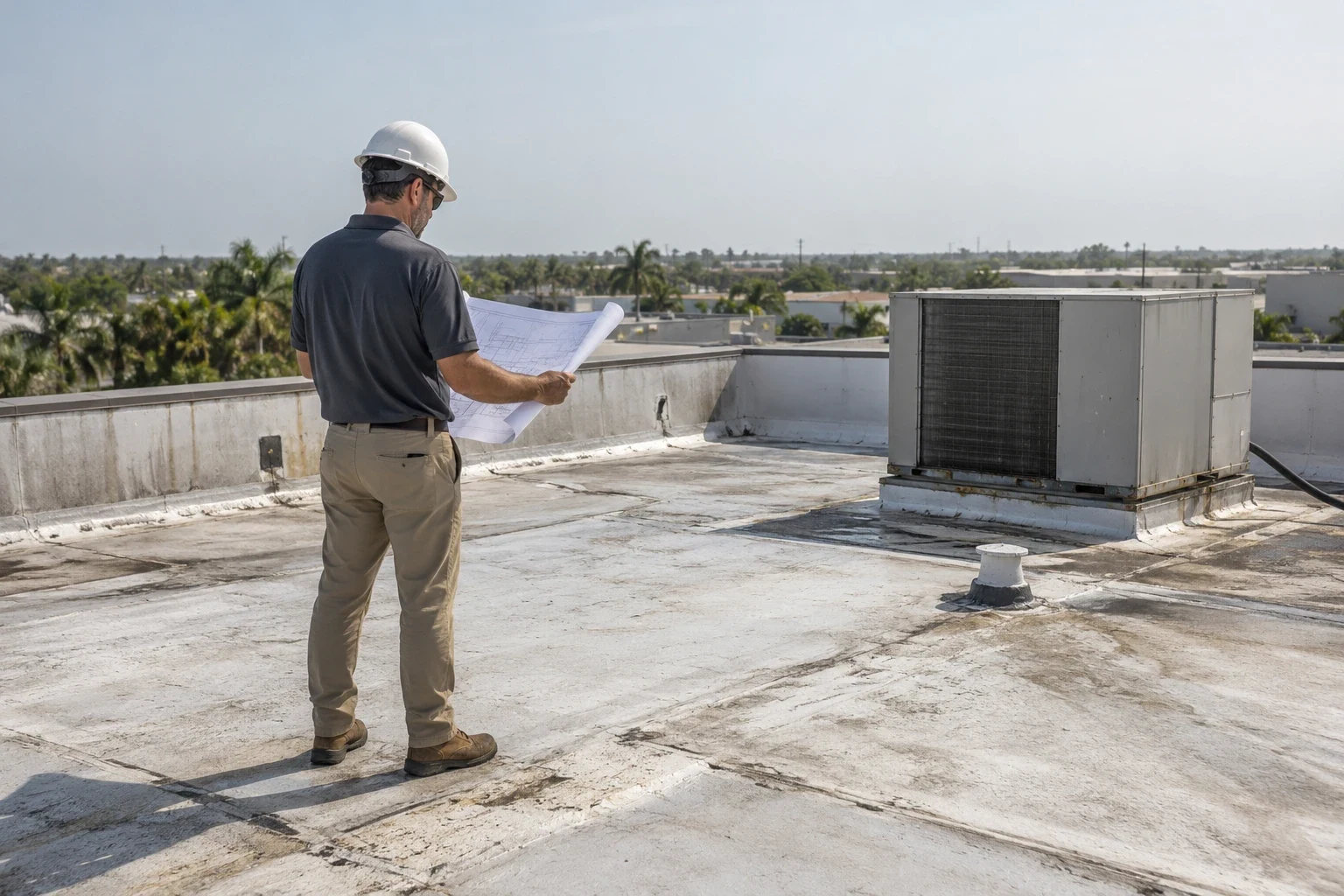
Built-up roofing, or BUR, uses alternating bitumen and reinforcing plies, often finished with gravel surfacing or a cap sheet. Its visible top layer can hide the seams and conditions beneath, so we start with drains, edges, penetrations, and any accessible roof cut or termination. Chico's hot dry summer and wet winter pattern makes it useful to compare surface exposure with water-management details at different points in the year. Weather context is not a diagnosis; the building's assembly and service history set the scope. We document where gravel has shifted, surfacing is thin, water collects, or a previous repair interrupts the roof field. The owner then has a defined choice between a local repair, a test opening, or a broader roof review. For another multi-ply assembly, compare the roof with modified bitumen assembly after verifying the existing layers.
How a BUR assembly is built
A BUR roof may have several reinforcing plies, asphalt or coal-tar materials, insulation, and a protective surface. The exact make-up must be confirmed from records or an approved field test because an existing roof can include additions and past repairs. We inspect accessible edges, wall flashings, drains, and penetrations, then check for blisters, splits, exposed bitumen, displaced gravel, or unusual soft spots. Chico's General Plan identifies mixed-use Downtown, regional retail centers, and light-manufacturing districts; those broad patterns help frame building-use questions, not the roof's composition. We ask the site contact how the roof has been serviced and whether equipment or additions were installed after the original work. That record can reveal where the assembly changed and where a repair may need a separate detail. If a separate area uses a membrane, TPO membrane roofing needs its own seam and attachment review.
What gravel or cap materials conceal
Gravel or a cap sheet protects the BUR surface, but it can make small defects harder to see. We look for displaced aggregate, concentrated erosion, exposed bitumen, surface cracking, and areas where water or debris stays. Moving gravel is done only when needed for an inspection and with a plan to restore the cover. If a defect is suspected beneath the surface, we mark a small test area for owner approval rather than infer the full extent from a single spot. Chico's precipitation normals place the bulk of annual rain in the cooler months, so timing a return survey after the surface dries can clarify what the first visit could not show. The note records both visible conditions and the limit created by covering materials. The roof plan may be checked through commercial roof inspection before a test opening is approved.
Where slope and outlets interact
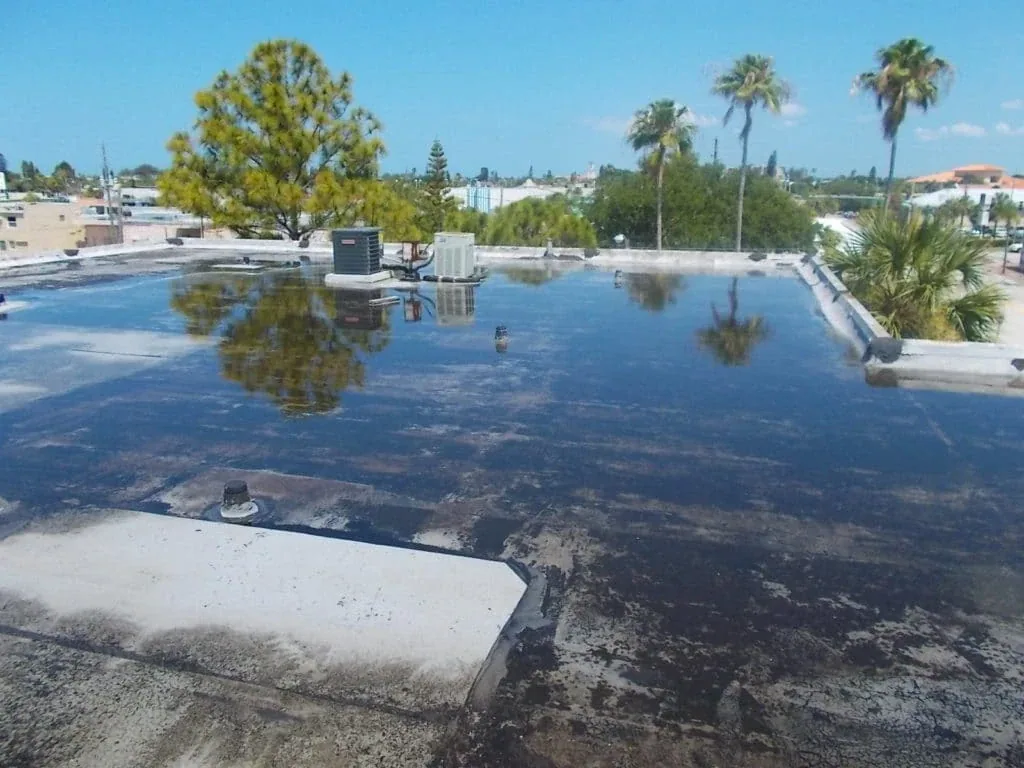
Drainage performance depends on the deck slope, drains, scuppers, crickets, and outlet height. A BUR field can hold water at a low point even when its surfacing looks continuous, and a blocked drain can make an otherwise sound area appear suspect. We map the flow path, inspect strainers and bowls, and compare standing-water evidence with roof drawings or elevations. Planning documents identify Chico commercial districts near North Valley Plaza, East 20th Street, and Skyway, with surface-parking and reuse patterns around them. Those plans are a city-scale context, not a statement about any particular building. The roof survey must establish actual slope and outlet condition. If drainage changes the recommendation, we identify whether the work is maintenance, a drain correction, or an assembly-level slope project. Drain bowls and outlets may need roof drain service alongside membrane work.
How the inspection verifies hidden layers
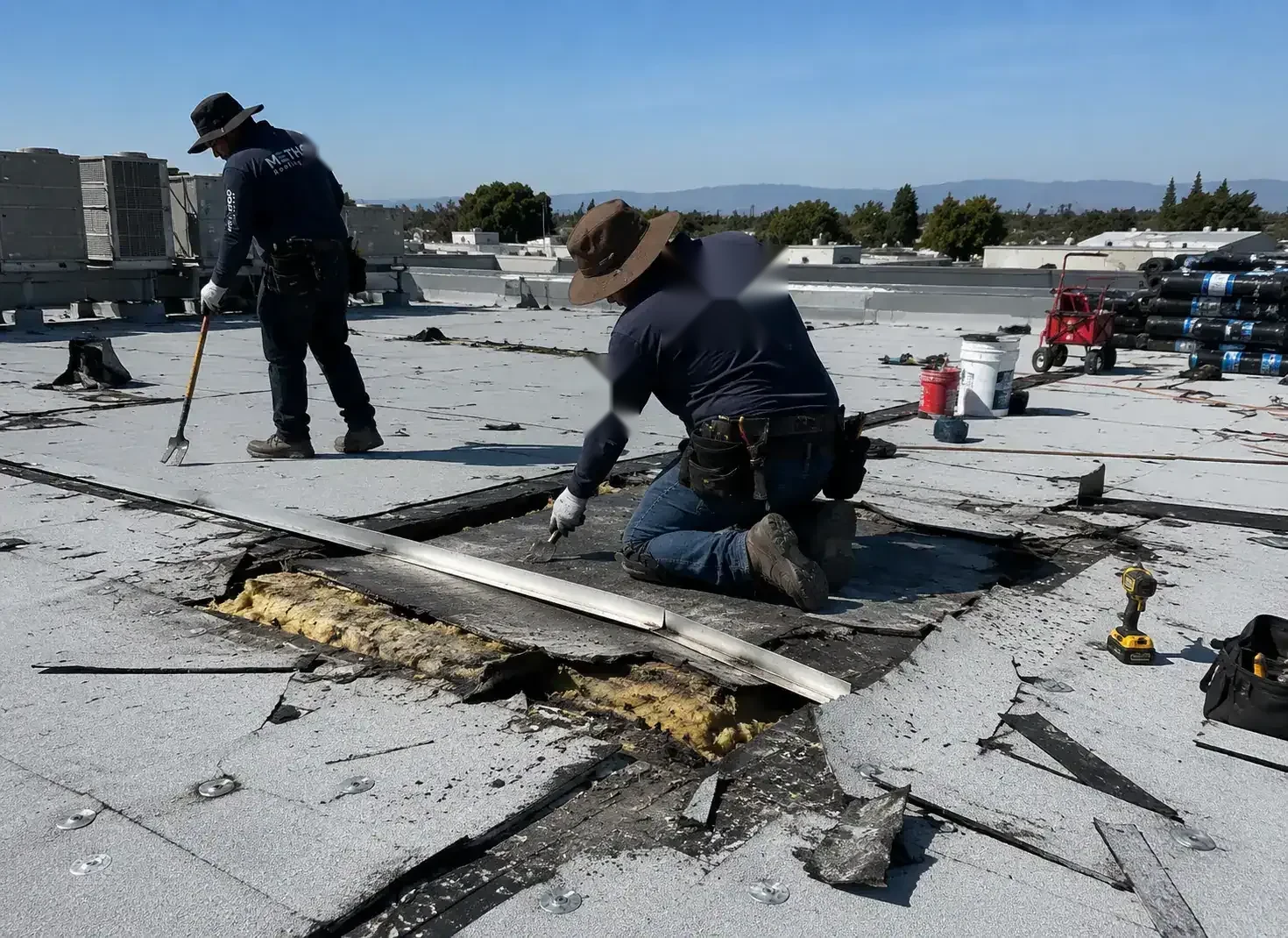
A BUR patch needs a firm perimeter where new layers can join the existing assembly. We check the exposed plies and nearby surfacing before selecting a compatible repair detail. We determine whether surface gravel must be moved, whether a cap layer can be bonded, and whether the substrate beneath is dry enough for the selected method. Heat application, adhesive, and cold-weather options each have restrictions, so the scope calls out the intended material and safe work window. Before planning access near Meyers Street or Hegan Lane, we ask the facility contact about roof equipment and delivery windows. District geography informs the trip plan, while the current site rules govern the work. The work plan also covers temporary dry-in, fire controls where relevant, inspection hold points, and restoration of the protective surface. Use roof capital planning when the owner compares localized repairs with phased renewal.
What a localized correction requires
Repeated wet areas, saturated insulation, many prior patches, or deteriorated plies can make individual repairs less useful. We compare the location of findings across roof zones and separate what is visible from what needs an approved test. A replacement plan should address tear-off limits, deck review, insulation, drainage, perimeter metal, penetrations, and disposal of existing material. A recover may be possible only if the substrate and assembly meet the project requirements. We explain the conditions that support each option so a property manager can plan the work by phase and preserve interior operations. Chico's wet-season rainfall also makes temporary protection and end-of-day closure part of the schedule, not a detail to leave until mobilization. A roof in the Skyway commercial district still needs a property-specific survey and access plan.
When the full assembly should be compared
The record for a BUR roof should include maps, photos of displaced surfacing, drain observations, exposed edge details, and the result of any test opening. We identify where aggregate or a cap sheet was restored and which adjacent zones still need a check. If the property adds rooftop equipment later, the new penetration and service route should be added to the roof plan. That helps future crews avoid a blind cut through several plies and gives the owner a usable maintenance history. A return visit can compare the same roof area after rain or after a repair has weathered. We keep the decision practical: what was repaired, what remains uncertain, and which next inspection would reduce that uncertainty. A roof with eligible substrate may warrant roof recover overlay review. A proposal should show the owner exactly where the inspection stops and where a test opening could begin. For each option, list the preparation, surfacing restoration, drain or flashing detail, and temporary protection. If the roof is part of a larger property program, keep the zone identifiers consistent across drawings, photos, and invoices. That small discipline makes a later review faster and avoids confusing a repaired section with an untouched area. It also gives the owner a useful basis for scheduling a second review after weather exposure, especially when the first visit took place before the seasonal rainfall period.
Commercial Roofing Questions
How do you inspect a gravel-surfaced BUR roof?
We check gravel coverage, exposed bitumen, drains, flashings, and repair history. If surfacing obscures a decision point, we describe a small approved test and how the opening will be restored.
Does standing water always mean the BUR has failed?
No. We map the actual low area, outlet condition, and membrane evidence. Cleaning or a drain correction may solve one issue, while a recurring slope problem needs a separate design review.
Can a BUR roof be repaired in one area?
A repair is most useful when adjacent plies are firm, drainage is understood, and the damage has a manageable edge. We map that zone and identify any test that could affect the material choice.
When do you recommend testing below the cap sheet?
A test is useful when the hidden layers could change repair versus renewal planning. We identify the location, approval point, temporary cover, and permanent restoration before opening the assembly.
How does winter rain affect the work plan?
Chico receives more normal precipitation during winter than midsummer. We use that seasonality to plan access and dry-in, then confirm the actual forecast and roof condition for the job.
Review the roof evidence
Share the building type, the current symptom, and any roof history you have. We can inspect the assembly, document a repair boundary, and explain timing considerations for the next step.