Commercial Roof Drain and Scupper Service in Chico, CA
A roof drain is only one point in a larger water path. We inspect the inlet, strainer, bowl, nearby membrane, overflow route, and the slope that carries runoff toward the outlet. NOAA normals assign more than five inches of precipitation to each of Chico's first two months, while midsummer is notably dry. That seasonal contrast makes drainage checks useful before wetter weather, but it does not show whether an individual roof is working. We document actual debris, slow flow, standing water, open seams, or damaged flashing, then separate cleaning from repair. A commercial roof inspection can map the affected low points before a correction is priced.

Check the inlet, bowl, and connection
At each drain, we look for an obstructed strainer, loose clamping ring, damaged bowl, or membrane pulled away from the opening. We note whether the drain accepts water and whether the connection remains secure. A clear strainer does not prove that a concealed leader is clear, so we distinguish roof observations from plumbing tests that may require another trade. Photos show the bowl and the membrane transition in the same sequence, making it easier to find the location later. We also check whether fasteners, sealant, or a prior patch interfere with the outlet. The work order should specify whether the crew is removing debris, repairing the drain flashing, or coordinating a test downstream. We check the surface around each inlet for loose aggregate, cracked coating, a lifted seam, or deterioration where water concentrates. If cleaning exposes a defect, the crew records it before deciding whether it falls within the authorized scope. A strainer should sit securely and remain serviceable after the work; a patch that traps debris or blocks removal creates a maintenance problem. The closeout notes whether the condition was corrected or only observed, and whether an owner should schedule a plumbing check below the roof.
Follow the primary and overflow routes
A scupper can discharge through a wall or edge, but its opening and surrounding flashing still need a complete inspection. We look for debris, damaged metal, failed laps, and a discharge path that could direct water toward a lower roof or wall. Where an overflow is present, we record its height relative to the primary outlet and check that no coating, patch, or stored material narrows the opening. This is an observation, not a code certification. Chico's City planning documents identify commercial activity near North Valley Plaza and along the East 20th Street District; those settings may shape access and tenant coordination, but they do not establish how a particular building drains. We verify each roof's actual outlet layout before recommending work.
Map low areas instead of guessing at slope
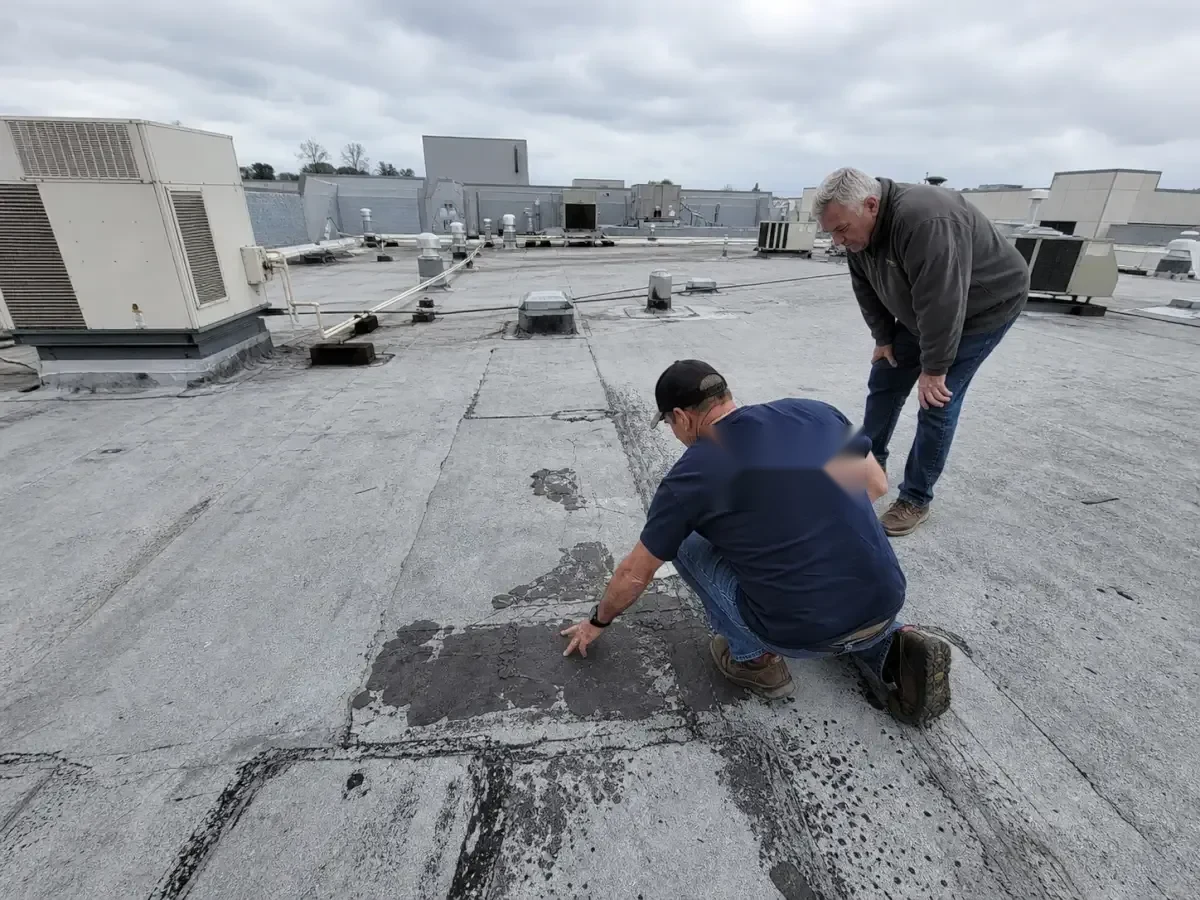
Water remaining after a storm can indicate debris, a blocked outlet, a settled area, or a drainage design that does not move runoff as intended. We photograph the boundary, note when the observation was made, and compare it with nearby drains and roof transitions. A single visit may not show how long the water remained, so the record should state that limitation. If the low area appears near a curb or structural bay, we mark the reference points for a follow-up measurement. Broad ponding may require additional review rather than a local drain repair. For a persistent roof symptom, a ponding-water assessment can separate surface observations from an underlying slope or assembly question.
Protect the membrane around the drain
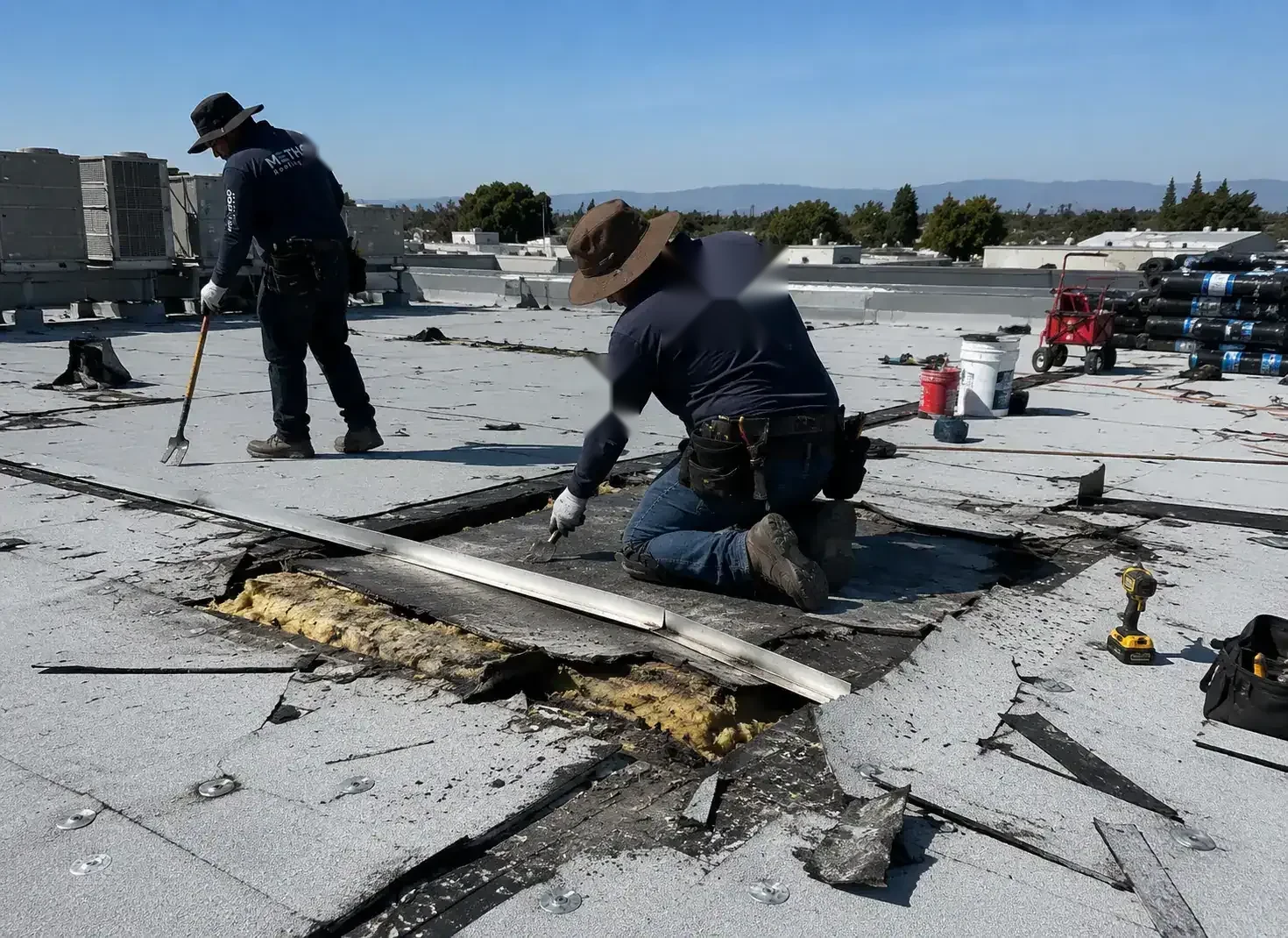
Drain work often depends on the material surrounding the bowl. We check for cracks, open laps, loose reinforcement, corrosion, and patches that bridge the outlet. The repair boundary includes enough sound receiving surface to form a compatible tie-in, but it should not extend blindly across areas that were not inspected. On an older assembly, we may need to identify the membrane before selecting a patch material. A localized roof repair can address a confirmed opening, while a coating restoration review is a separate decision that requires a suitable receiving surface and clear outlets. We do not use coating to cover a blocked drain or to conceal a loose connection. The estimate names the drain count or marked locations, the preparation around each bowl, and how the membrane tie-in will be checked. If an opening is too corroded or the membrane cannot be joined to a stable surface, that condition is documented for a broader correction. Any overflow outlet receives the same attention so the primary correction does not leave a secondary path restricted. Where wet insulation may extend beyond the visible drain detail, the report identifies a test area rather than promising that a surface repair resolves the larger assembly.
Plan cleaning and correction around roof use
Before work, we confirm access, fall protection, safe routes, equipment clearances, and whether the roof has restricted zones. A cleaning visit may be short, while a flashing correction can need material preparation and a controlled close-in window. Chico's Park Avenue and Mangrove Avenue corridors carry commercial uses identified in City planning documents; site traffic and business hours may affect arrival, yet roof access rules remain property-specific. We coordinate any interior protection if debris or water could reach occupied space. The sequence states which drains will be serviced, where removed material goes, and whether a return test is included. If new damage appears after cleaning, the owner receives photographs and a separate scope request rather than an unapproved expansion of the work. We also identify drains that are blocked by rooftop equipment, stored material, or a restricted walkway, then confirm how the facility wants that access controlled. Crew members should leave the route clear and report any condition they could not safely reach. That note keeps a scheduled cleaning from being mistaken for a complete inspection of every low point.
Verify the outlet and leave a service record
After the correction, we photograph the repaired connection and surrounding membrane, remove loose job debris, and confirm that the outlet is not obstructed by the completed work. Any downstream test is described separately from the roof-side visual check. The closeout notes which locations were serviced, what materials were used, and whether monitoring remains appropriate. A condition report can carry that map into the next visit, and a maintenance review can set a repeatable check based on the roof's actual drainage behavior. If a drain issue overlaps with a commercial property in the East 20th Street District, the area name can orient the record, while the roof diagram identifies the precise building and outlet.
Commercial Roofing Questions
Does clearing a drain always stop ponding?
No. Debris may be only one cause. We also inspect the nearby slope, outlet connection, overflow route, and membrane before saying what correction is supported.
Can a roof inspection confirm that the drain leader is clear?
A roof-side inspection can document the inlet and visible connection. A concealed or downstream leader may require a separate test, which we identify rather than assuming from the roof surface.
Should an overflow opening be coated during restoration?
The opening must remain clear and its flashing must be treated according to the selected system. We verify dimensions and details in the field instead of letting a coating or patch reduce the water route.
How do you document standing water?
We record its location, approximate boundary, nearby outlet, and timing of the observation. One visit may not establish how long water remains, so that limitation belongs in the report.
What should a drain repair closeout show?
The record should identify the outlet, repair boundary, materials, photographs, debris removal, and any downstream test or follow-up that remains open.
Trace the roof's full drainage path
Tell us where water remains, which outlets are involved, and whether there are interior reports. We will map the roof-side condition, identify any test beyond visual inspection, and document the repair boundary.