Commercial Roofing for Manufacturers in Chico, CA
A drip above a production bay can affect material, equipment, or a shift that cannot simply pause. For a Chico manufacturer, we identify the area below the report, inspect the roof section, and connect the symptom to seams, curbs, drains, or transitions. The visit records what is confirmed and what needs an opening before a permanent scope is priced. A roof map lets operations plan around the repair instead of closing unrelated areas on the strength of one ceiling mark.
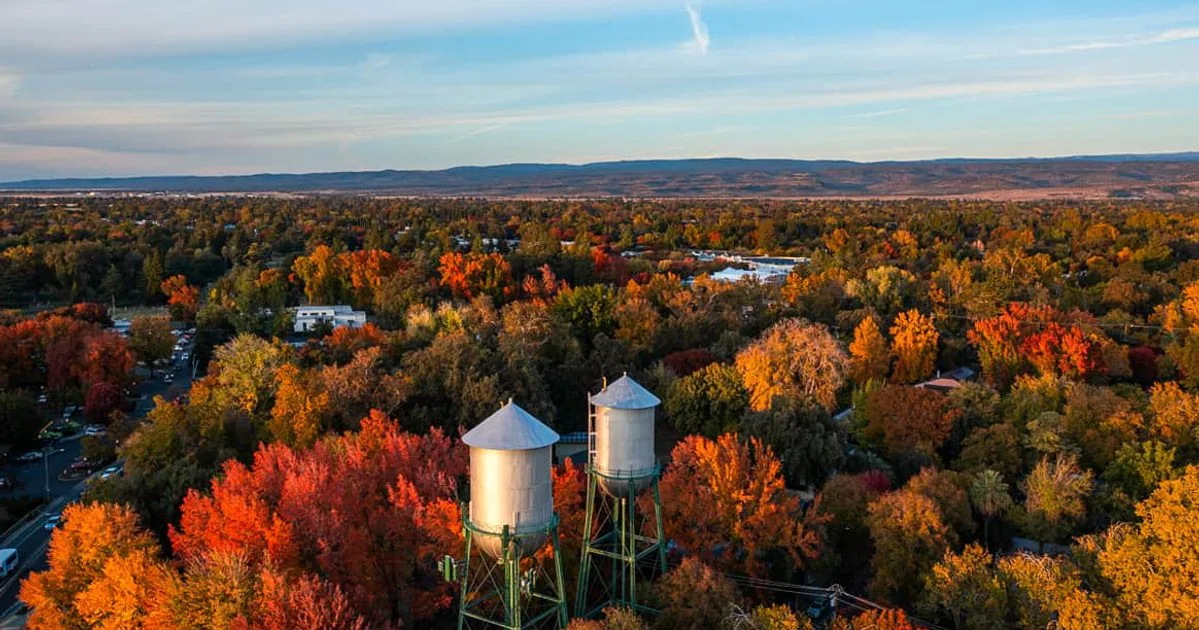
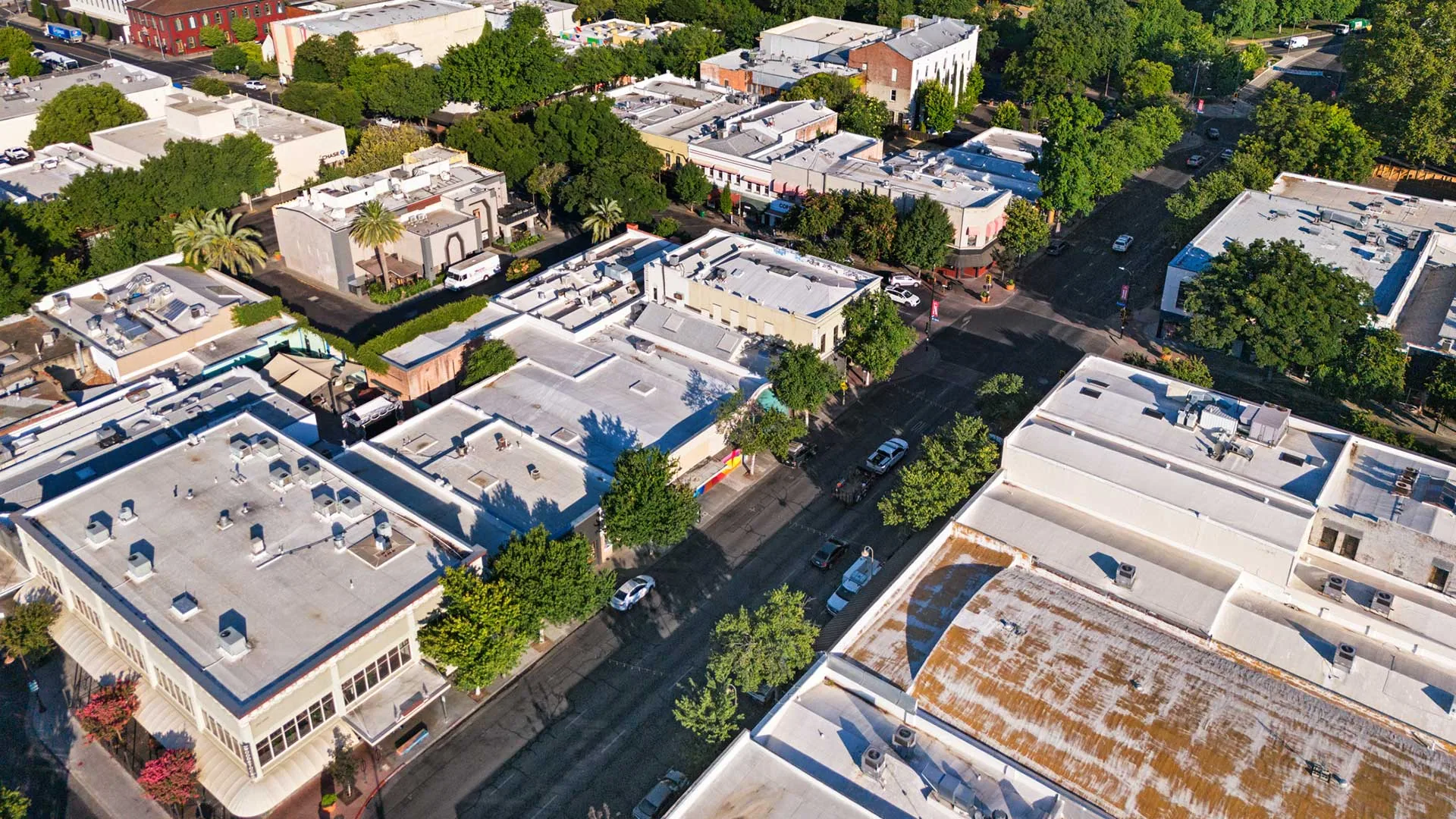
City planning documents place industrial employment areas around Meyers Street and Hegan Lane, with additional planning context at South Park Avenue/Fair Street and the airport-side area. They describe broad industrial settings, not the roof system or process at an individual plant. We verify the actual assembly, delivery routes, and access permissions. For example, a Meyers Street area visit still depends on the property contact's roof access and production schedule.
Keep the Line and Roof Scope Distinct
The production manager knows which rooms, conveyors, controls, or stored materials cannot be exposed. The roof inspection identifies the zone above them and notes whether an interior barrier, temporary cover, or limited room closure is needed. We do not assume every industrial operation runs the same shift or that a leak report is above the nearest equipment. The plan ties the roof opening, drop zone, and access route to the facility's approved operating limits.
If the line stays active, we coordinate noisy cutting, lift movement, debris handling, and work over sensitive machinery with the site lead. A roof area that cannot be opened and closed within one approved shift may need a different method or a later window. An occupied-building work sequence can show the boundary and daily dry-in point. For a facility with a separate electrical or mechanical crew, the roofing scope identifies which trade handles each curb or support before membrane restoration. Some plants have equipment that cannot be shut down on a roofing schedule. The site contact identifies the mechanical lead and the control room that approves any interruption. We mark that dependency beside the relevant curb or penetration, then state which roof work can proceed before the equipment returns.
Identify the Materials Before Selecting a Repair
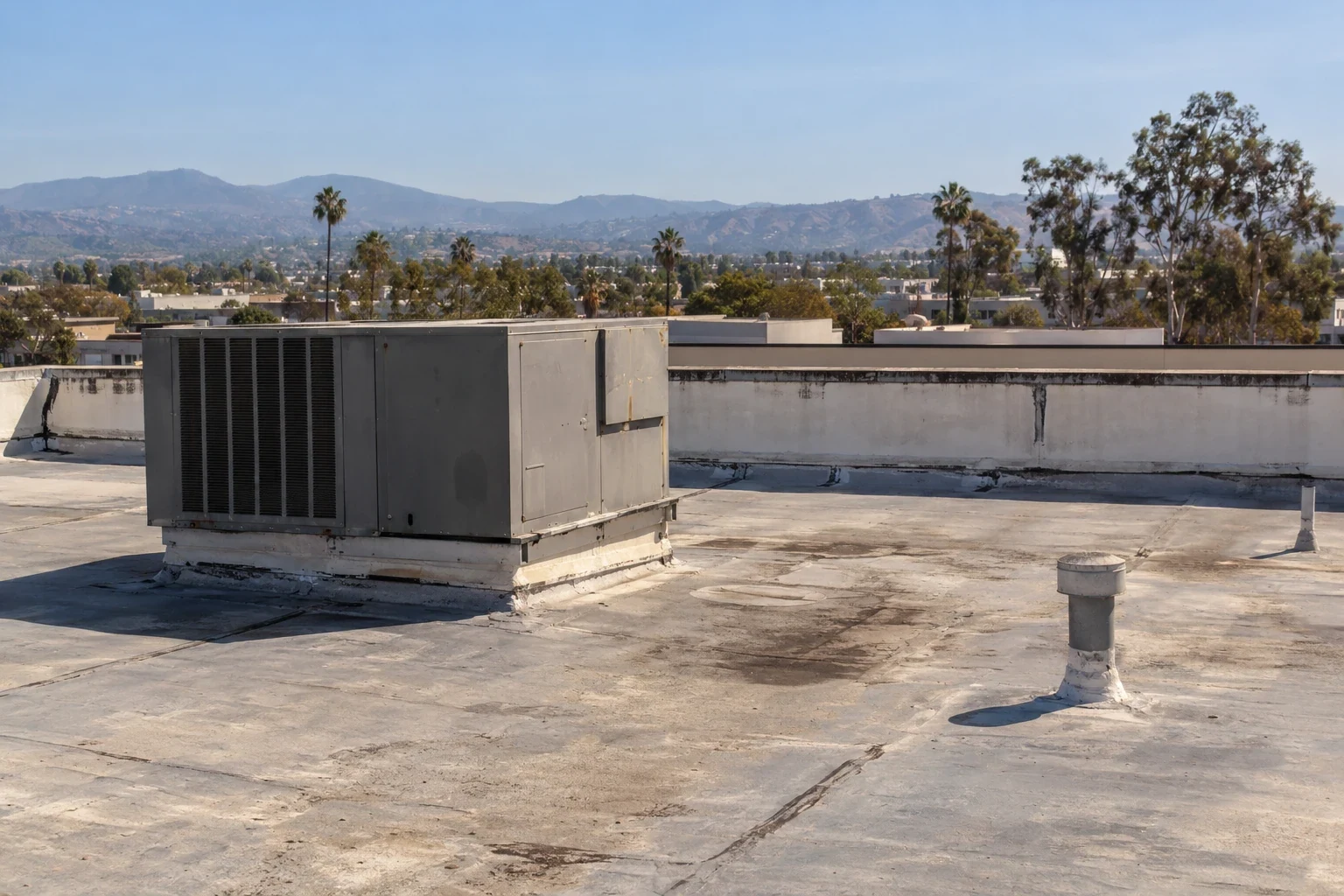
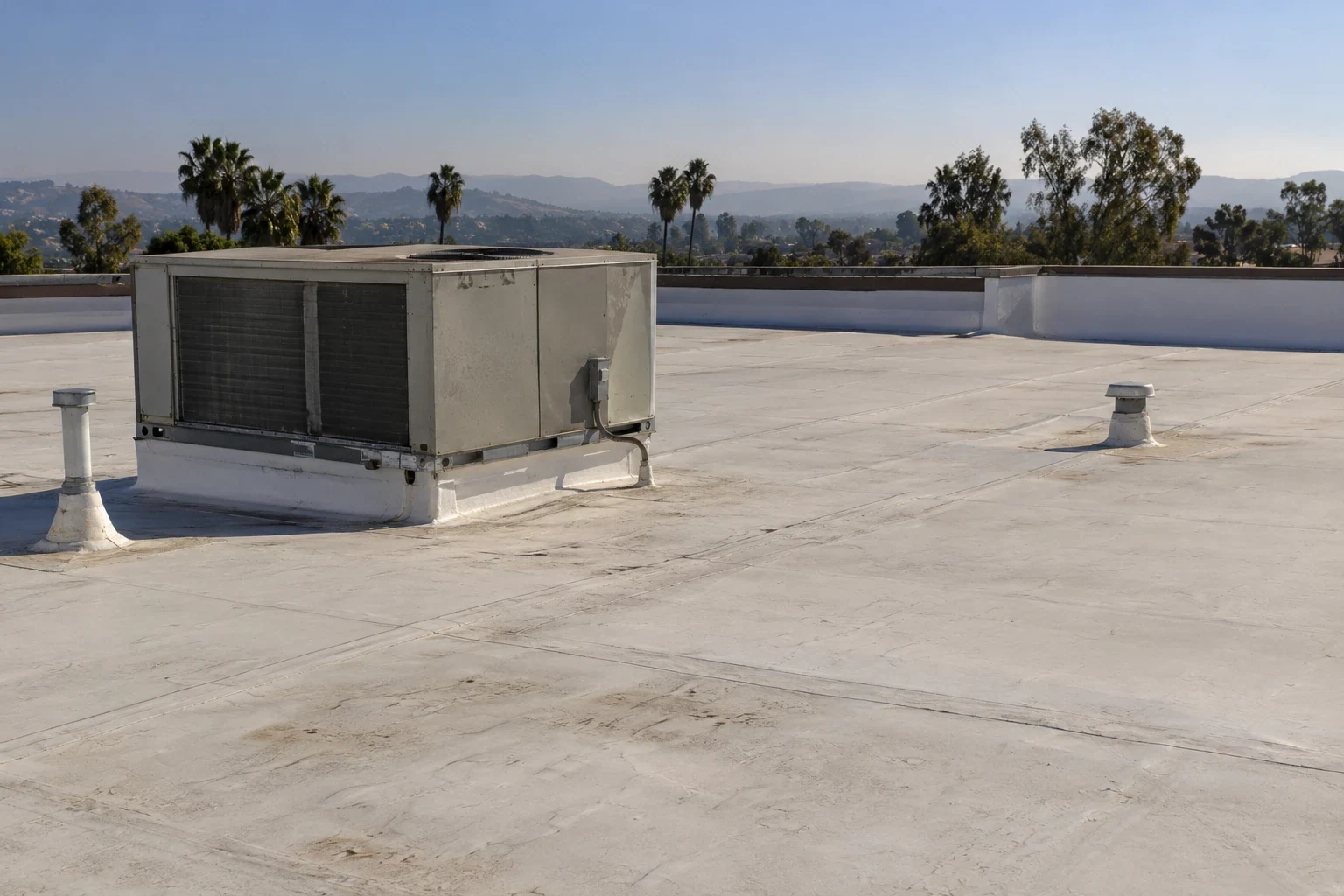
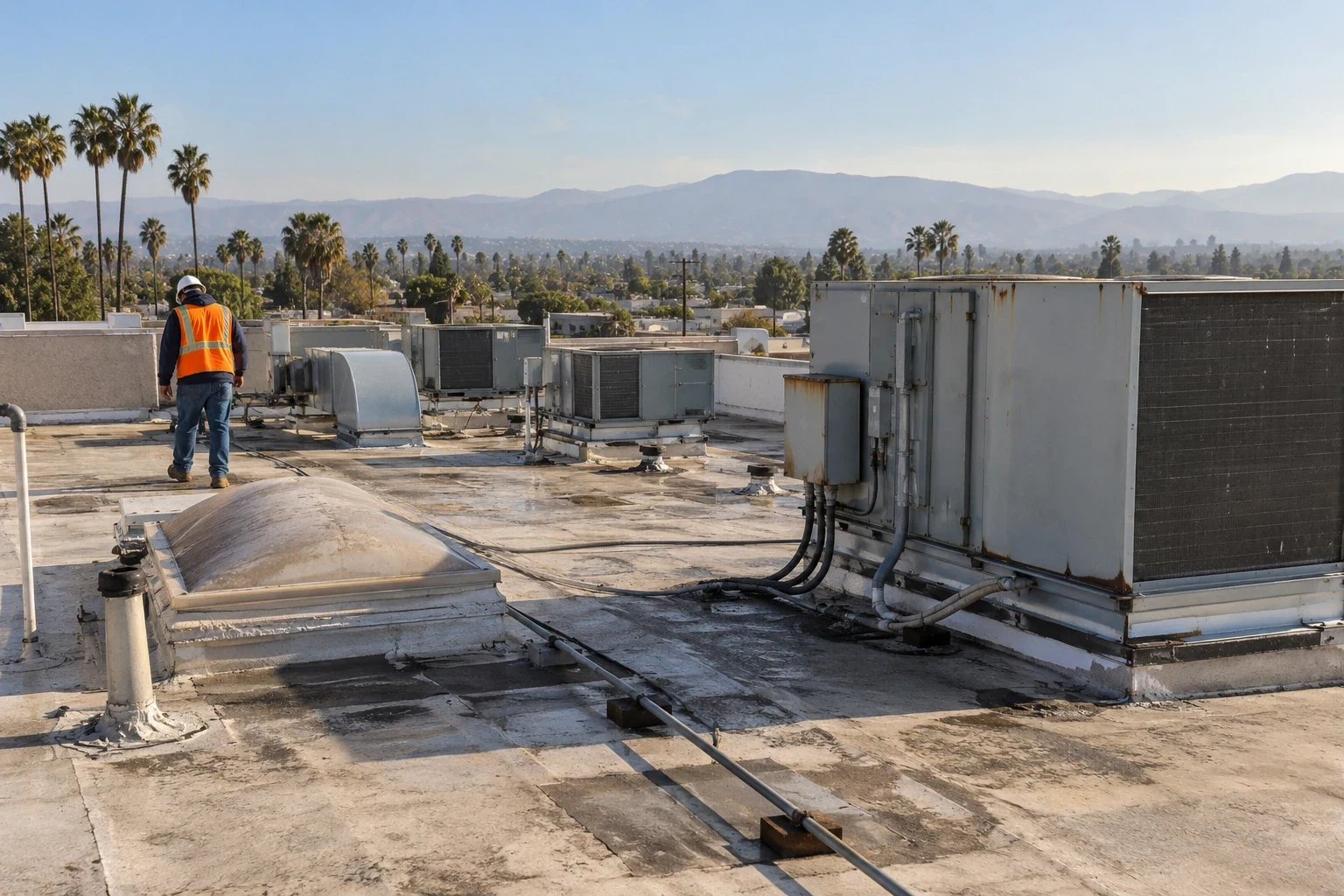
Industrial roofs can include single-ply membranes, modified bitumen, built-up roofing, metal, or coating systems, sometimes with later additions. We inspect seams, fasteners, penetrations, edge metal, and the areas around rooftop equipment. A surface color or a line item in an old bid does not establish the layers below. If records conflict with field conditions, we mark the discrepancy and identify whether an approved opening is needed before choosing materials.
Chico's long hot season can increase movement at seams, sealants, and metal edges. That exposure is a reason to look closely, not evidence that a detail has failed. For a confirmed TPO assembly, TPO seam repair uses a compatible preparation and weld; metal panel movement needs a different detail. A commercial roof inspection can label the system and the repair boundary before the plant compares patching with a larger correction.
Map Runoff Away From Work Areas
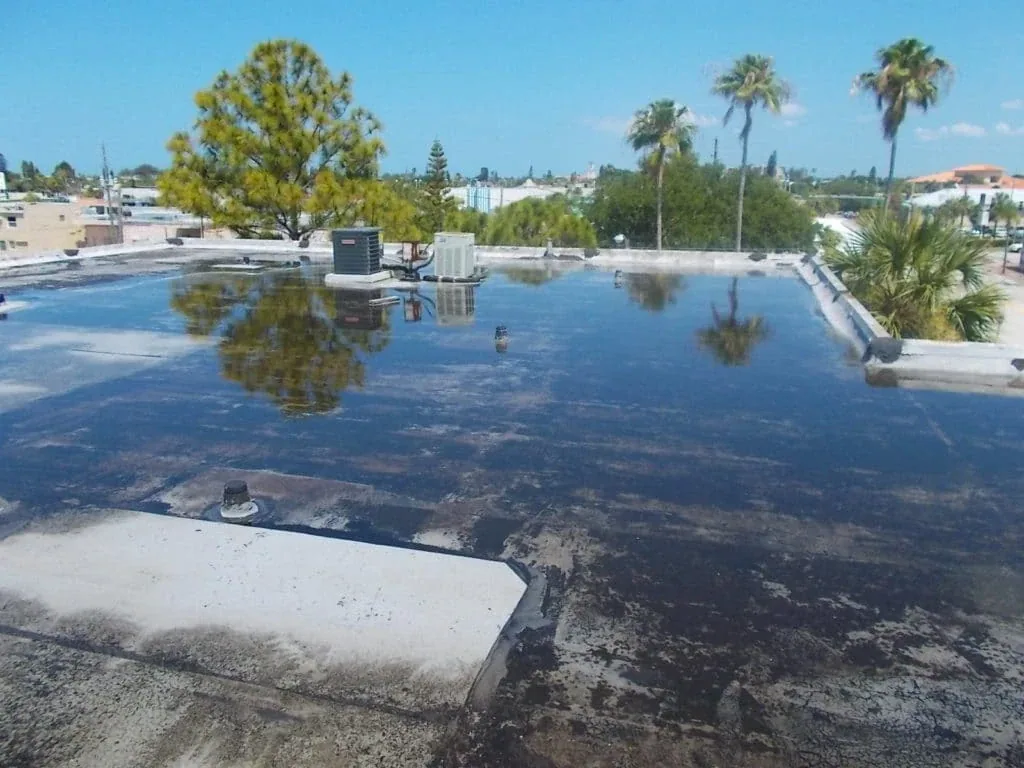
Chico's rain is concentrated in the cool season, so outlets deserve attention before repeated winter storms. We inspect primary drains, overflows, scuppers, gutters, and slope changes, then trace where discharge leaves the building. At a manufacturing site, the route may cross a loading apron, material staging area, or staff entrance. We identify that path on the roof plan and note an outlet that could need cleaning, repair, or follow-up testing.
Planning descriptions distinguish the Meyers Street business-park setting from industrial activity along South Park Avenue and Fair Street. Those district facts do not show how a particular plant drains. We check the actual roof and identify whether a curb, parapet, or prior equipment change has redirected water. A drain and scupper review helps separate maintenance from a membrane issue. When surface readings or a thermal image suggest retained moisture, we mark the affected grid and compare it with drainage, recent weather, and the known roof assembly. An approved opening or another suitable verification method is needed before the estimate treats concealed insulation as wet.
Set the Daily Stop Point
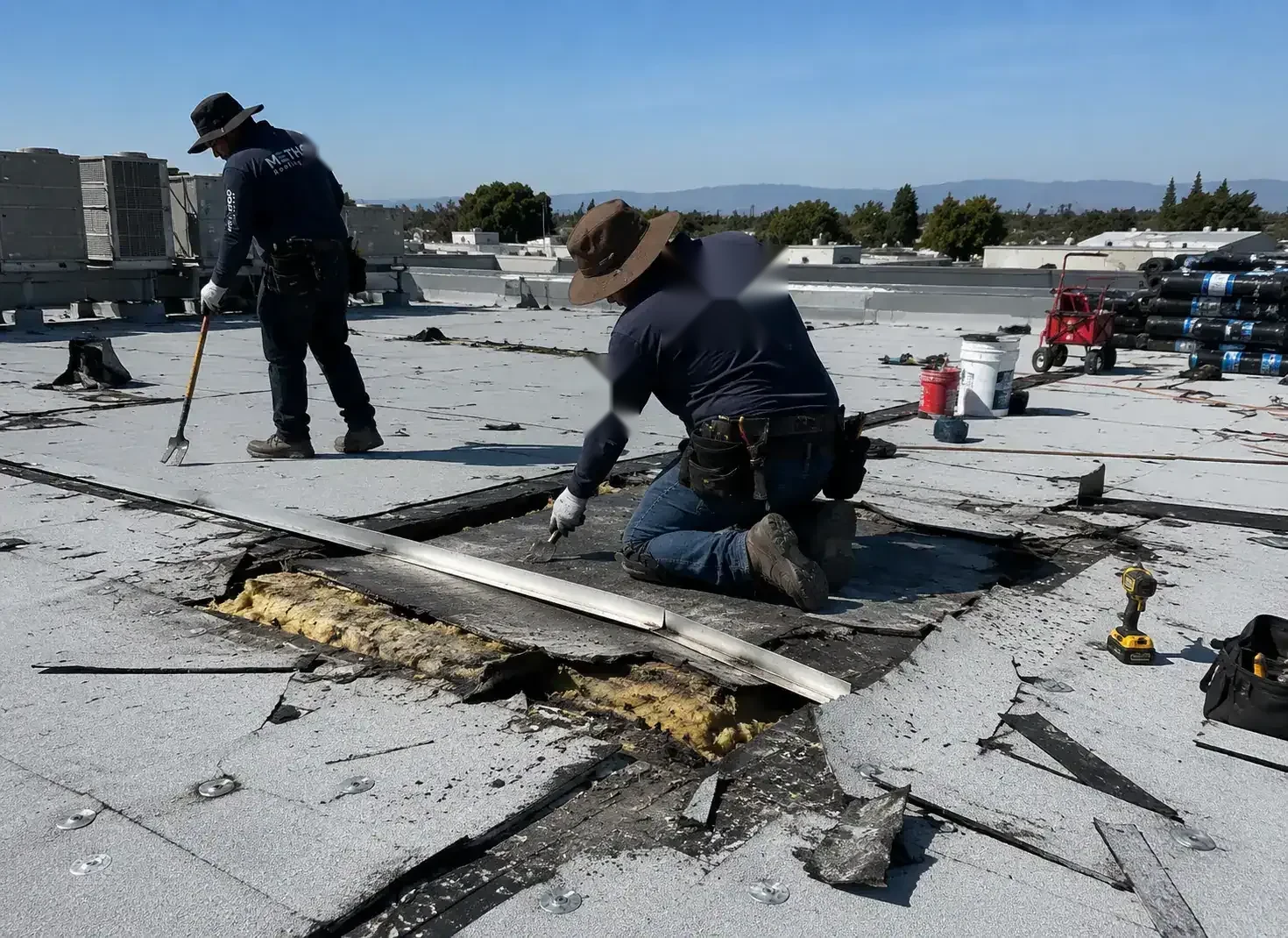
Before the roof is opened, the facilities lead identifies access, escorts, loading periods, fire lanes, and any equipment shutdown that requires approval. We agree on the area that can be protected at the end of each shift. If removal exposes wet insulation or a weak deck, the crew needs a hold point where the owner can review photographs and authorize the next boundary. That decision is easier when the estimate already states how concealed conditions will be handled.
Summer heat can change material handling and the time available for surface preparation. We check current conditions and installation instructions before starting. If rain interrupts the plan, the report identifies what is closed, what remains protected, and when the next inspection is needed. A photo-backed condition report can preserve those work limits. In Chico's industrial areas, service planning may involve a delivery route from State Route 99, but each facility's truck access and staging rules determine where material is placed.
Compare Repair With a Production-Safe Renewal
A localized patch can fit when the defect is bounded and nearby material remains attached and dry. Partial replacement deserves review when water or attachment problems cross several bays. Full renewal enters the comparison when the assembly shows widespread deterioration or repeated repairs no longer correct the path. We show where each option starts and ends, what has been verified, and which test could change the scope.
Cost and schedule depend on roof height, equipment, line access, removal, insulation, edge details, drains, disposal, and how much can be closed at the end of a shift. A recover may reduce tear-off only when the retained assembly is suitable and dry and the permit path accepts it. A recover evaluation and a replacement scope should use the same mapped boundary, equipment coordination, and production window. That lets the plant compare operating impact with the roofing work instead of treating downtime as an afterthought.
Leave Operations a Useful Roof Record
The closeout identifies inspected roof zones, completed details, temporary protection, and locations not reached. We label photographs so the facilities team can connect an interior report with a seam, drain, curb, or edge. If the roof is part of a larger industrial portfolio, the report still identifies this building's assembly and history separately. A future capital review should not inherit another plant's repair assumptions.
Share the production schedule, affected area, roof plan, material records, and the person authorized to approve an opening. We will trace the water path, identify work that can happen within the approved window, and list the next inspection point. An industrial logistics roof plan may involve a different loading pattern, while a general-contractor coordination scope may divide trade responsibilities. The findings at this plant set the repair boundary.
Commercial Roofing Questions
Can production keep running during roof repair?
Often, but the facility must identify sensitive areas, shift limits, equipment, and routes. We state which roof zone is open and how it will be dried in before the work window ends.
What should we do if a leak reaches material or machinery?
Protect the affected area under facility procedures and report its location and timing. We inspect the roof path, document any temporary measure, and separate mitigation from permanent repair.
How do you determine the roof system on an older plant?
We compare records with accessible edges, seams, fasteners, penetrations, and field conditions. If layers remain concealed, we identify an approved opening that could confirm them.
Can a roof recover avoid disrupting a production line?
It may limit removal, but only a dry, stable assembly that qualifies under the permit can support another layer. Access, attachment, and concealed conditions still need review.
What belongs in the closeout for plant maintenance?
Keep the roof-zone map, dated photographs, materials corrected, areas not reached, temporary measures, and follow-up tests together with the work order.
Plan a Chico Manufacturing Roof Review
Send the roof plan, production window, reported condition, and any material or repair records. We will identify the inspection route, work boundary, and approval points.