Cold Storage Facility Roofing in Chico, CA
Cold storage changes the cost of a roof leak because moisture above a controlled space can affect insulation, vapor control, and stored product. For a Chico, CA facility, we first identify the roof assembly, the room below the reported area, and the way temperature and humidity are managed. The scope separates an urgent protection measure from the investigation needed to set a durable repair boundary.
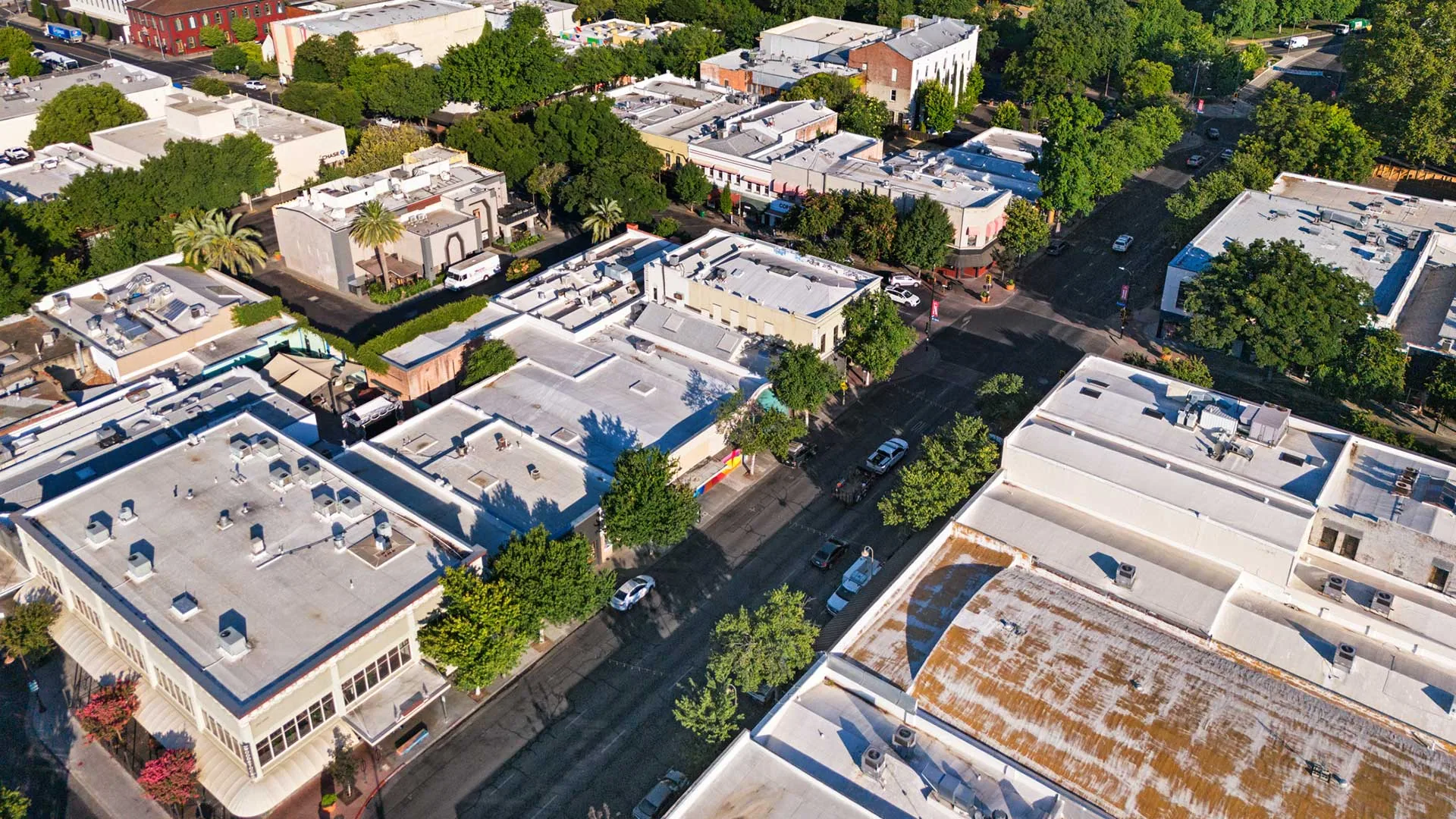
Butte County planning recognizes agriculture across the county, while Chico maps employment areas near Hegan Lane and the South Park/Fair Street area. For a cold-storage roof, those places orient service planning; room conditions and assembly evidence still determine the scope. These facts provide broad market context, not proof of a cold-storage building or roof in any named area. We confirm the facility’s actual operation and access restrictions before work is planned.
Protect the Controlled Space
The property contact should identify room setpoints, door cycles, defrost schedules, air movement, and any area where temporary exposure is unacceptable. We do not infer the cause from a ceiling stain or surface temperature alone. A roof leak, condensation, and a damaged vapor-control transition can present similar interior symptoms. We compare timing, weather, equipment status, and roof conditions before choosing a test. The report states what evidence supports each conclusion.
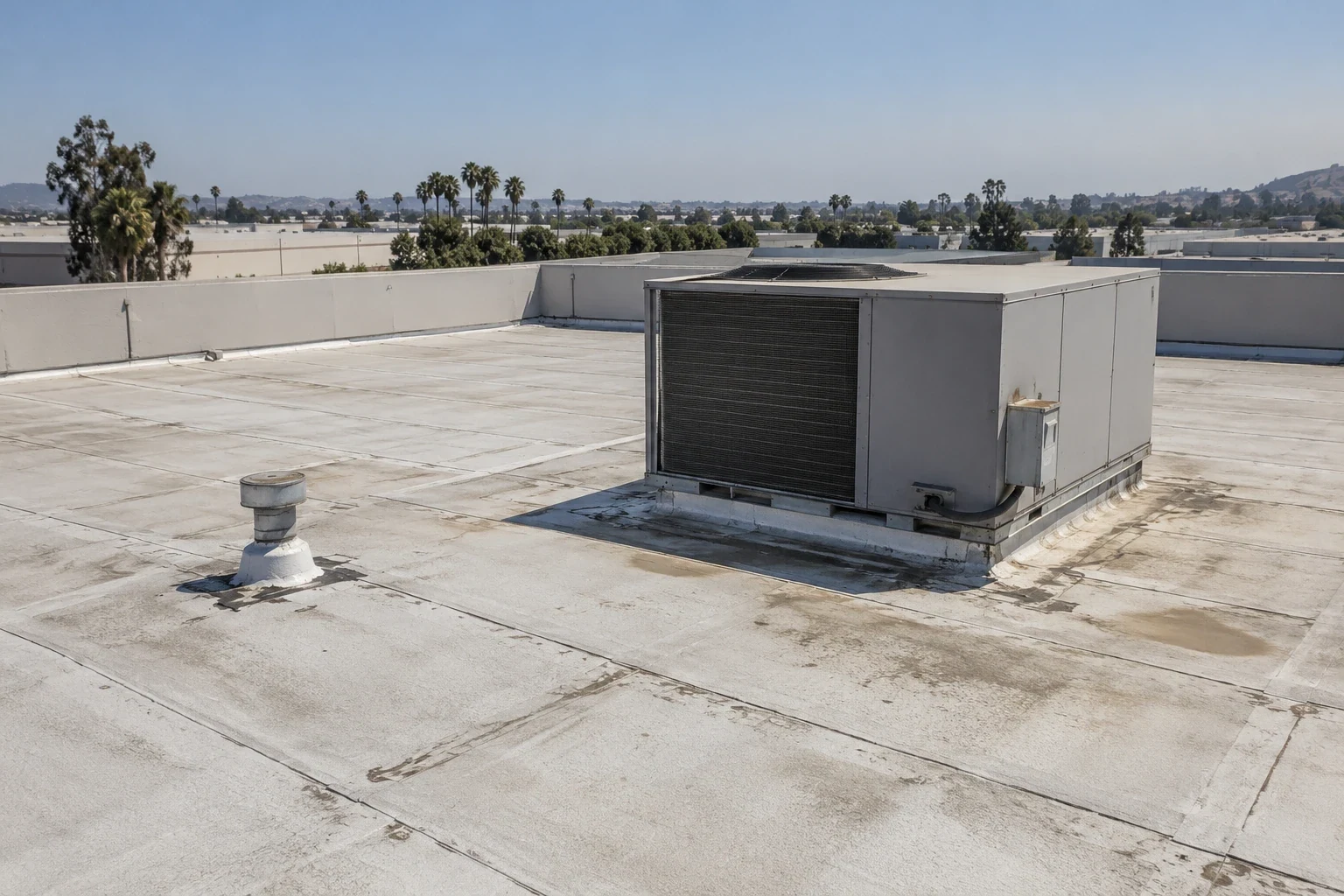
Roof access also needs care around refrigeration equipment, piping, and service routes. We confirm escorts, lift zones, and areas where debris cannot fall. If a membrane opening is needed, the maximum work area and dry-in method should be agreed before the shift begins. A facility manager can coordinate any room protection with operations and tell us who can authorize a change if concealed wet insulation extends beyond the initial boundary. For controlled rooms, the commercial roof leak repair review should identify temperature-sensitive zones and the maximum exposure the operator will accept.
Separate Roof Leaks From Process Moisture
Moisture can move through an assembly and appear far from the roof entry. We map the affected room to roof sections, then inspect seams, penetrations, curbs, edges, drains, and prior repairs. Temperature differences may inform a survey, but they do not independently identify a leak path. If testing is recommended, the report explains its purpose and limitations.
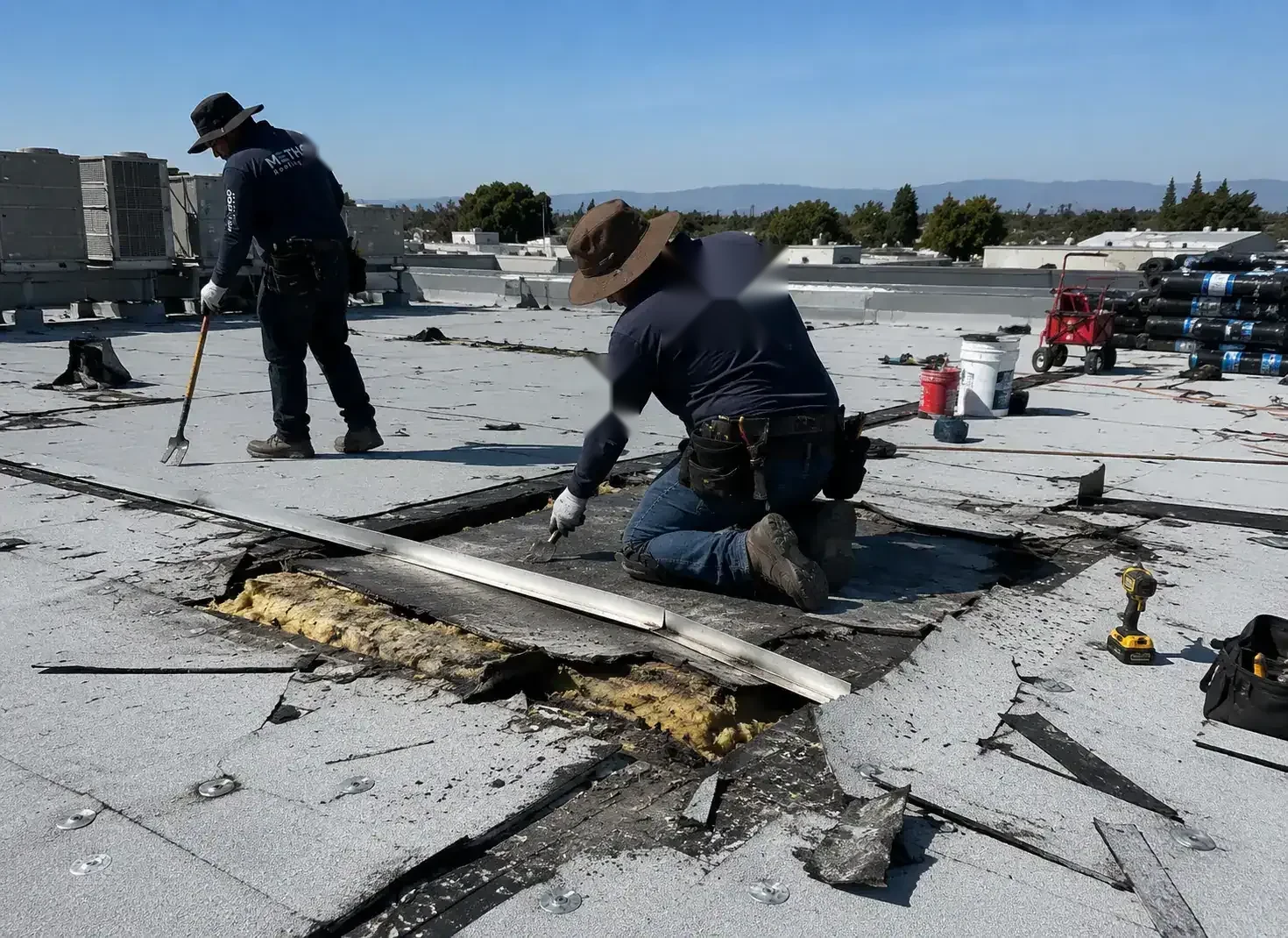
The repair boundary should include damaged membrane, compatible flashing, and the insulation or cover board shown to be affected. If test openings find more wet material, the estimate needs an approval step before removal expands. We close each test cut in the specified assembly and photograph the result. That record protects the cold-space operating plan and gives the maintenance team a baseline for later observation. A commercial roof inspection can record the layer conditions, insulation findings, and vapor-control details that affect a cold-room renewal decision.
Record What the Test Shows
A cold-storage roof may have a membrane above insulation and a vapor retarder, but the layers must be confirmed rather than assumed. We inspect seams, attachment, penetrations, perimeter transitions, and evidence of prior repairs. A coating or recover cannot correct wet insulation or a discontinuous vapor detail. If replacement is needed, the design should coordinate the roof layers with the interior environment and applicable code requirements. Our scope identifies where the roof meets walls, refrigeration penetrations, and equipment curbs.
Agriculture remains part of the wider Butte County economy, while Chico’s industrial areas give a separate urban context for facilities. Neither fact establishes what is stored at a particular building. The owner’s inventory, temperature range, and process information determine the protection plan. A cold-storage roof inspection can distinguish an exterior roof condition from questions that require refrigeration or building-envelope specialists. Cold rooms need a different protection boundary from dry storage because the temperature and moisture controls below the roof remain active during the work.
Review Each Layer Before Recovery
Winter precipitation is substantially greater than midsummer rainfall in Chico; we use that seasonal contrast to prioritize outlet readiness before the wetter period.
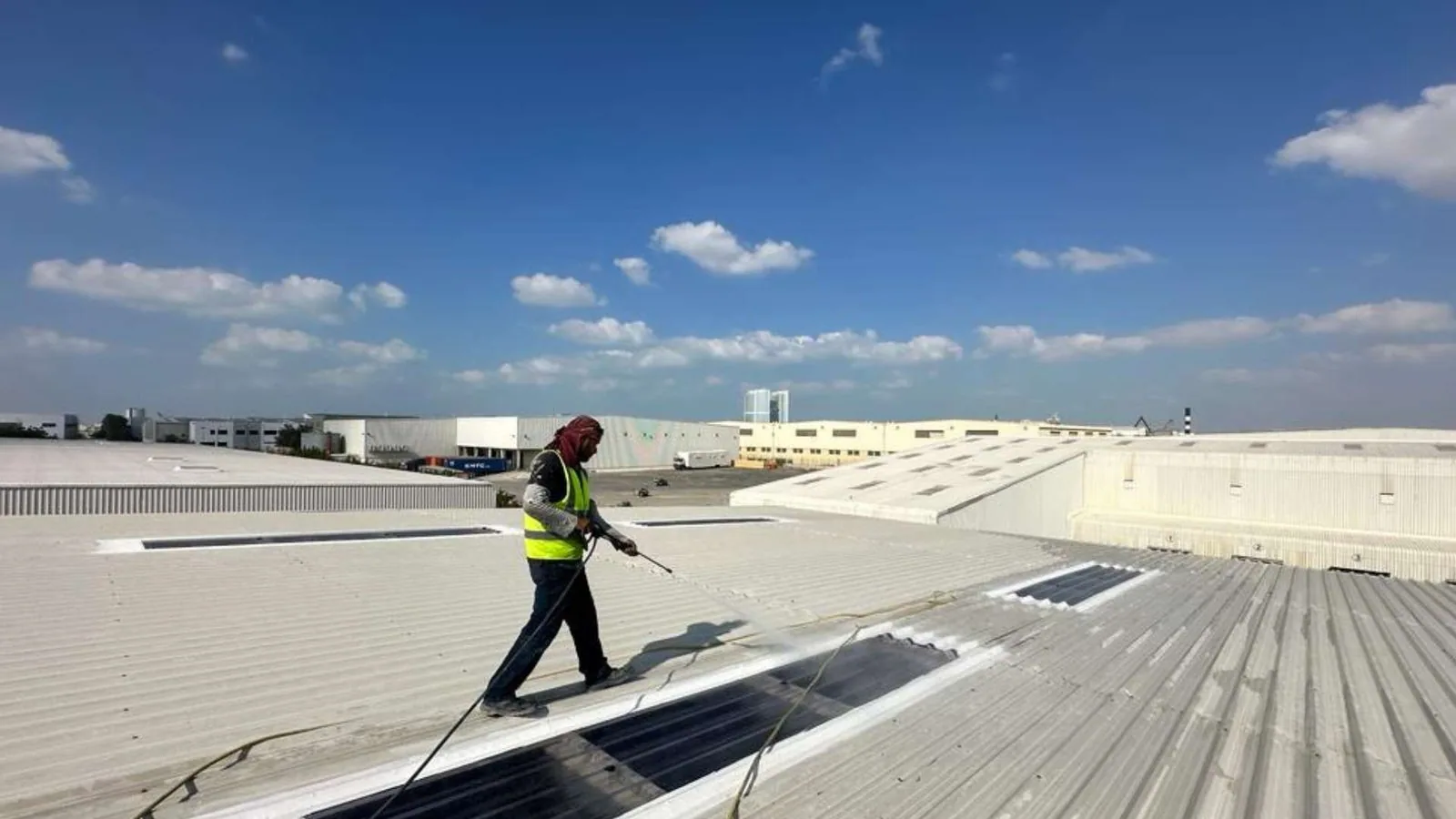
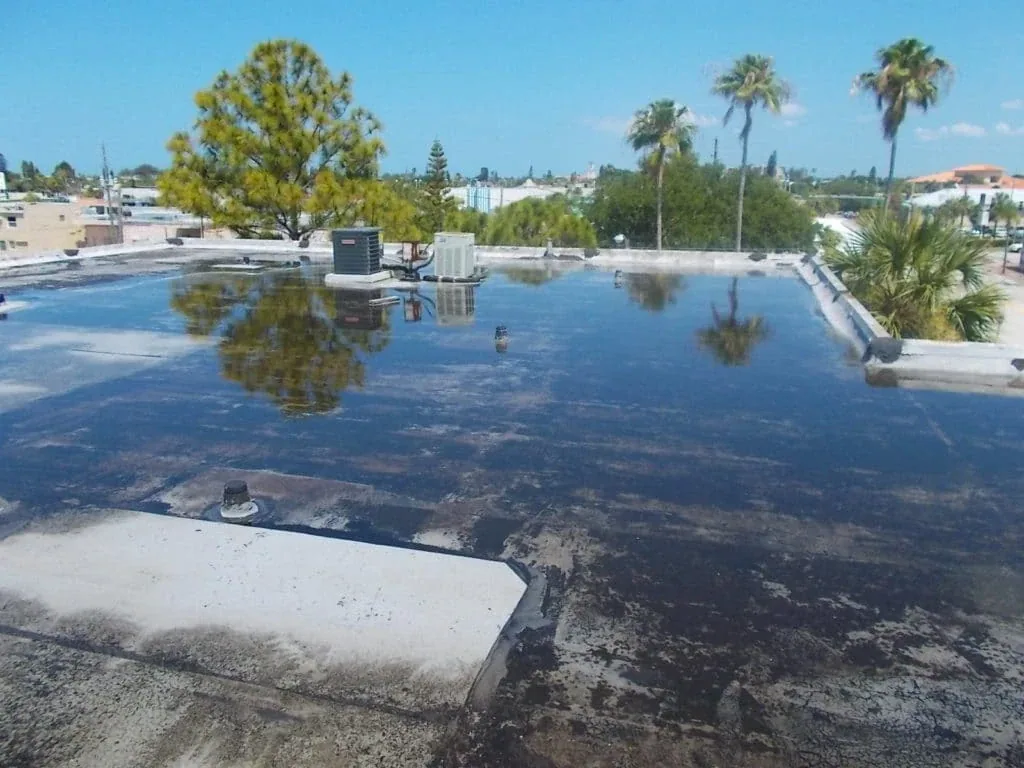
At a cold-storage roof, blocked drainage can keep water at a seam or perimeter where temperature changes and movement complicate repair. We check drains and scuppers alongside membrane terminations and flashing. If a low area persists after cleaning, a measured correction may be needed. During work, drains remain clear and temporary covers are secured so runoff does not move toward loading doors or occupied access. Cold-room access may have a tighter exposure limit than ordinary storage; the distribution-center roof plan offers a useful comparison for staging multiple zones. A roof drain and scupper inspection can record outlet condition before seasonal rain while keeping runoff away from loading doors and controlled-space entries.
Prepare Outlets Before Wet Season
A repair fits when the failure is localized and the adjacent roof layers remain suitable. If moisture is found in several areas or vapor details are discontinuous, compare removal and replacement with a carefully evaluated recover. Coating has a narrower use case where substrate and bond support it. We mark each option with the same roof sections and state how concealed conditions change cost. The estimate should identify insulation grade and thickness only where verified, plus any owner design criteria that remain outstanding.
Removal depth, cold-room protection, equipment scheduling, access, and temporary exposure all affect the work plan. For bulk storage, compare the warehouse roof plan with controlled-space limits; a recover overlay can be considered after testing. If the assembly has broad moisture, a replacement scope may be more transparent than repeated patching. We document that choice without promising an outcome beyond the inspected area. A commercial roof replacement scope should state how insulation removal, vapor details, and room-protection limits will be handled.
Compare Options With the Same Boundary
Before mobilization, the facility and roofing contacts confirm material routes, loading windows, escort requirements, and the person who can approve temporary protection. The sequence sets the open-roof area, dry-in point, and stop condition for weather. We coordinate noisy work and debris removal with occupied spaces, and keep refrigeration technicians informed where penetrations or equipment curbs are involved. Any system-side isolation or start-up remains with the qualified equipment contractor.
At closeout, the owner receives photos by section, notes on test cuts and insulation replacement, repaired transitions, and areas not accessed. The record should identify open questions rather than silently extend a conclusion to the whole roof. A roof maintenance entry can include outlet cleaning and planned follow-up observation. That keeps the building team from treating a local repair as proof that every layer or perimeter detail was evaluated.
Coordinate Access and Exposure
Chico planning identifies Hegan Lane as an industrial district. For a cold-storage roof request in that area, operating limits, roof sections, and moisture findings still set the job scope.
A Hegan Lane industrial-area roof visit is oriented by the broader district, while the building’s access rules and temperature-sensitive areas set the work plan. For drainage review, include a roof drain and scupper inspection; for replacement, provide insulation records, test results, and approval authority. The next decision should identify a repair boundary and the evidence still needed before capital approval. The roof recover overlay option should wait until testing shows the insulation and vapor-control layers are suitable for another assembly. A Hegan Lane industrial-area visit uses a recognized Chico district to orient dispatch; cold-room setpoints and roof evidence determine the protection plan.
Commercial Roofing Questions
Can a roof leak be confused with condensation in cold storage?
Yes. We compare the timing, room conditions, equipment operation, and roof-side evidence before assigning a cause or repair boundary.
What should be protected before opening a cold-storage roof?
The owner identifies sensitive rooms, stored product, access limits, and the maximum exposure window so temporary dry-in can be planned.
Does thermal imaging prove insulation is wet?
No. It can guide investigation, but representative openings or other suitable testing may be needed to confirm material condition.
What changes the cost of a cold-storage reroof?
Insulation layers, vapor details, penetrations, equipment coordination, staging, and the duration of temporary protection can change scope and sequence.
Do Chico-area agriculture facts prove local cold-storage demand?
They describe the wider county economy, not a specific facility. Each property and its roof are confirmed with the owner before planning.
Review a Cold Storage Roofing Scope
Tell us which rooms require controlled conditions, when defrost or door cycles occur, and what roof sections show symptoms. We will document the moisture boundary and keep the proposed work within approved exposure limits.