EPDM Roofing in Chico, CA
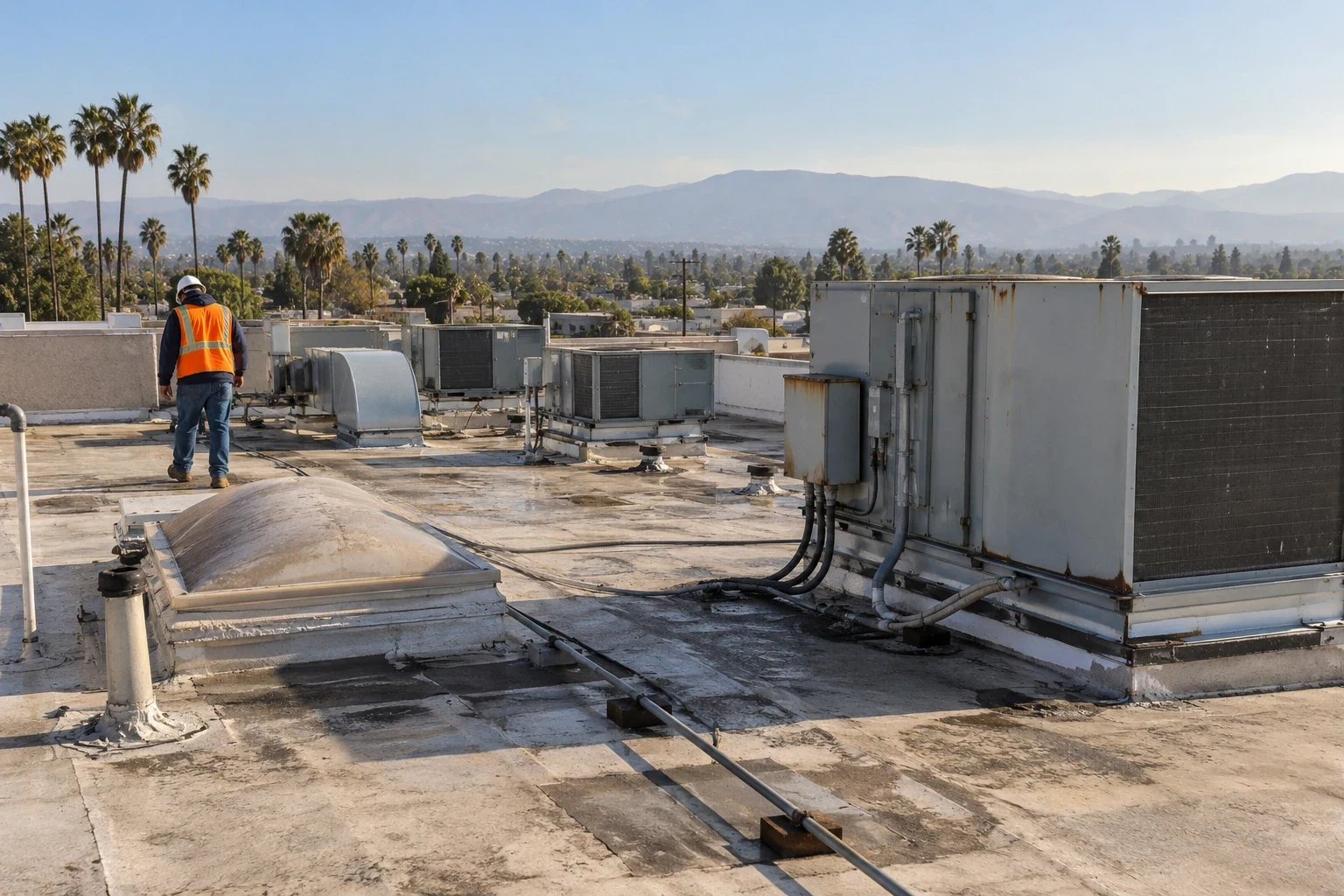
Ethylene propylene diene monomer (EPDM) is a synthetic rubber sheet used on low-slope roofs. We start the survey at its attachment and perimeter details, then identify the installed assembly before discussing a repair. In Chico, a hot dry summer and wetter winter season make it helpful to look at the roof in context: heat exposure at open seams, then drainage and flashing before winter rain. In its 2024 hazard annex, Butte County describes Chico as Mediterranean, with dry summer weather, winter rain, and possible tule fog. Use that pattern to plan visits, not to diagnose a roof. We inspect the actual sheet, seams, terminations, penetrations, insulation clues, and repair history. The report identifies what can be patched, what needs testing, and where a broader renewal scope may be justified. The owner receives a repair boundary connected to visible evidence. Compare the field only with a verified TPO membrane inspection when records identify that material elsewhere on the roof.
What the existing sheet shows
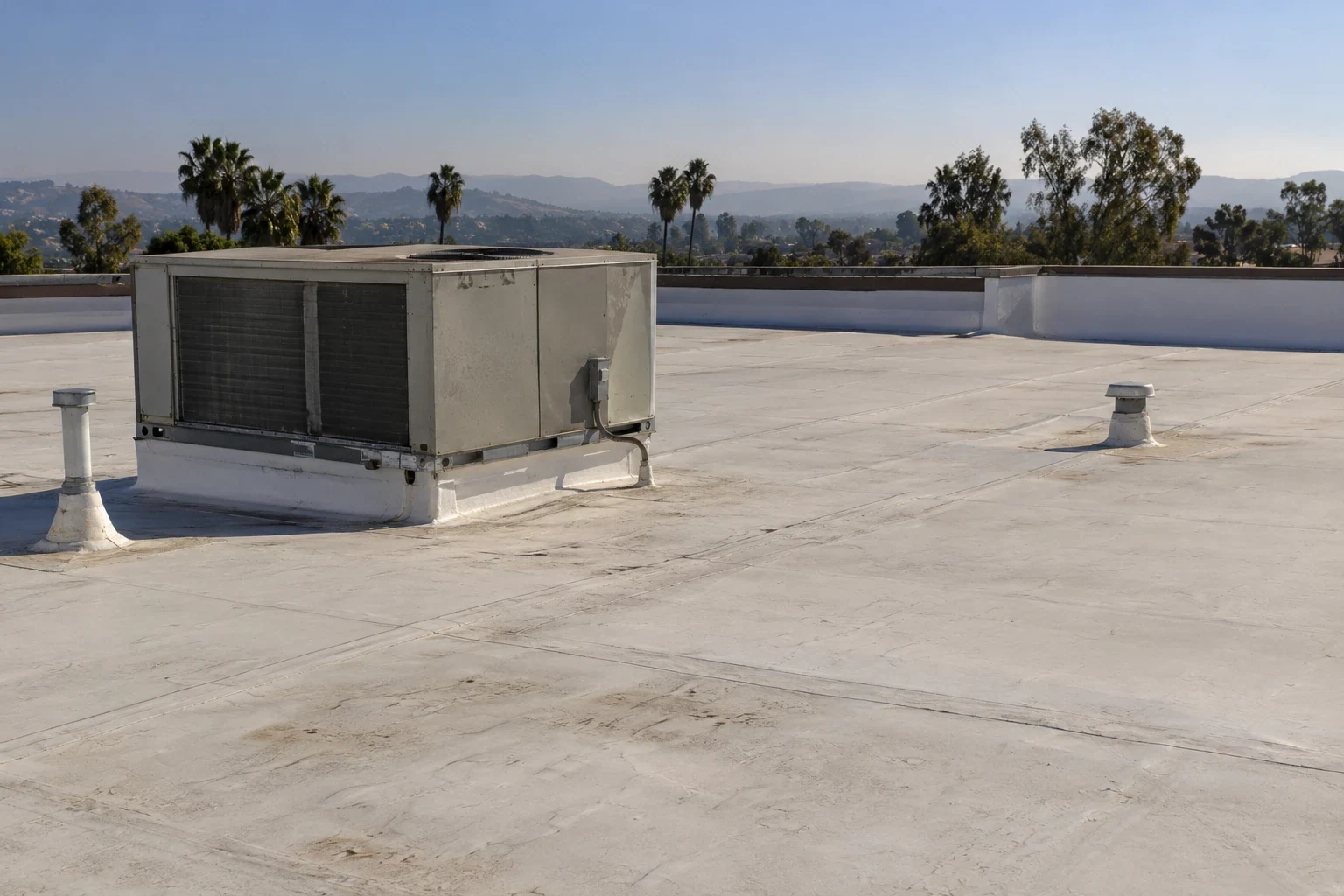
EPDM assemblies can be fully adhered, mechanically attached, or ballasted, and each configuration places different demands on perimeter restraint and transitions. We review available roof drawings, edge metal, ballast where present, and accessible attachment evidence before proposing work. The rubber sheet may be black or light-colored depending on the assembly, so color does not establish age or condition. Chico's regional planning materials distinguish Downtown mixed-use blocks from business and light-manufacturing areas around Meyers Street and Hegan Lane. Those areas help frame access and the kinds of operations a site contact may describe, but they do not identify the roof on any individual building. We match the survey to the real deck, slope, drainage, and interior use, then document any concealed assembly layer that still requires owner-approved verification. A bituminous assembly responds differently, so review modified bitumen options only for a confirmed section.
How the membrane is held in place
Temperature changes can move a flexible sheet and load its seams, flashing, and attachment points. We check where the membrane crosses a parapet, expansion joint, drain bowl, curb, or change in deck plane, looking for pullback, fishmouths, wrinkles, or stress around patches. Those observations are recorded as conditions, not treated as proof of failure without a water path or other evidence. Chico's climate has most of its normal precipitation in winter, while summer is especially dry; the season can affect both visibility and the work window. We ask when the symptom appeared and whether the roof had recently been serviced. The sequence helps separate a localized opening from a broader issue at an edge or transition that would make a simple surface patch short-lived. When moisture is reported below a seam, use commercial leak investigation to trace the entry route.
Where expansion and contraction matter
EPDM seams may be bonded with adhesive or joined by manufacturer-approved seam tape, and repairs require compatibility with the existing material. We check lap direction, seam edges, prior patches, surface contamination, and any area where adhesive or tape has lost contact. A patch needs adequate overlap on sound material and a termination detail that sheds water; adding a coating or sealant across an unknown surface can hide the problem without restoring the assembly. Near the Skyway and East 20th Street commercial districts, building access may involve broad parking areas and active storefronts, but the inspection plan still comes from each property's roof map. We mark the seam or penetration, photograph it, and state whether the next step is a direct repair or a limited test to learn what lies below. If a surface treatment is being considered, roof coating restoration starts with substrate and compatibility checks.
How water leaves the assembly
Water management on an EPDM roof depends on slope, drains, scuppers, and the way the sheet is turned into each outlet. We check strainers, drain bowls, overflow points, and the membrane-to-metal connection, then compare standing-water patterns with the roof plan. A blocked outlet can leave water near a seam that was otherwise sound, while a low point may result from deck movement or an earlier addition. The City identifies commercial centers near North Valley Plaza and Skyway; large parking and infill patterns there make roof drainage one of several building details to evaluate, not a local condition claim. Because Chico’s rainy period is concentrated in winter, we log drain access and post-storm water evidence. The record can separate an outlet cleaning item from a slope or flashing question. Carry the marked map into roof condition documentation so future findings can be compared.
What the roof edge must protect
Perimeter flashing, pipe boots, curbs, and wall transitions need to stay compatible with the EPDM sheet. We inspect termination bars, counterflashing, sealant joints, corner patches, and the route water could take behind a wall or below an equipment curb. When another trade adds conduit or replaces a unit, its support should not puncture the membrane without a coordinated detail. The inspection notes the trade interface and the authorized contact for any equipment movement. We can perform around-the-clock emergency response when active water threatens an occupied building, then return for a permanent repair once the surface and assembly are verified. A temporary cover is recorded separately from the final EPDM detail. That distinction gives facility staff an accurate service record and a clear next inspection item. The Meyers Street industrial area is a broad local district, while site access remains property-specific. A scheduled roof maintenance plan can revisit drains and transitions before the wet season.
Choosing a repair boundary
A follow-up is most useful when it returns to the same marked zones and checks whether the repaired seam, edge, or drain remains stable. We list the date, roof surface condition, recent interior report, and any area that was blocked during the first survey. If a winter visit found snow or unsafe access, the record can identify the exact detail to examine after exposure improves. Chico's industrial employment areas and retail corridors include different roof access constraints, so the next route should follow the facility's access plan rather than reuse an assumption from another property. Keep photographs oriented to a fixed roof feature and retain them with the assembly notes. A future decision about repair or recover can then compare the same conditions instead of starting with a blank description. For a return visit, compare photos from the same roof zone and note whether the seam, flashing, or ponding condition changed. A consistent record makes maintenance useful without treating an earlier observation as proof of a current leak.
Commercial Roofing Questions
How do you know if an EPDM seam needs repair?
We inspect the bond or tape edge, related flashing, surface condition, and drainage route. The recommendation follows the observed opening and adjacent sound material, with concealed layers called out for a test only when they could change scope.
Can an EPDM roof be recoated instead of repaired?
A coating is not a substitute for fixing a failed seam, wet insulation, or loose edge. We first identify the assembly and surface compatibility, then decide whether restoration belongs in the work plan.
What does ballast change during an inspection?
Ballast can limit direct access to the membrane and affect how repairs are staged. We identify the roof configuration, safe handling plan, drainage path, and restoration detail before moving material.
Does summer heat prove that an EPDM sheet is brittle?
No. Regional temperature normals describe exposure, not the condition of a particular roof. We examine flexibility, seam contact, flashing, and prior repairs at the building before recommending action.
Can a leak be repaired before winter rain?
A defined seam or penetration repair can often be scheduled before the wet season when access and weather allow. We confirm the material, dry-in time, and work area needed to close the roof safely.
Review the roof evidence
Share the building type, the current symptom, and any roof history you have. We can inspect the assembly, document a repair boundary, and explain timing considerations for the next step.