Modified Bitumen Roofing in Chico, CA
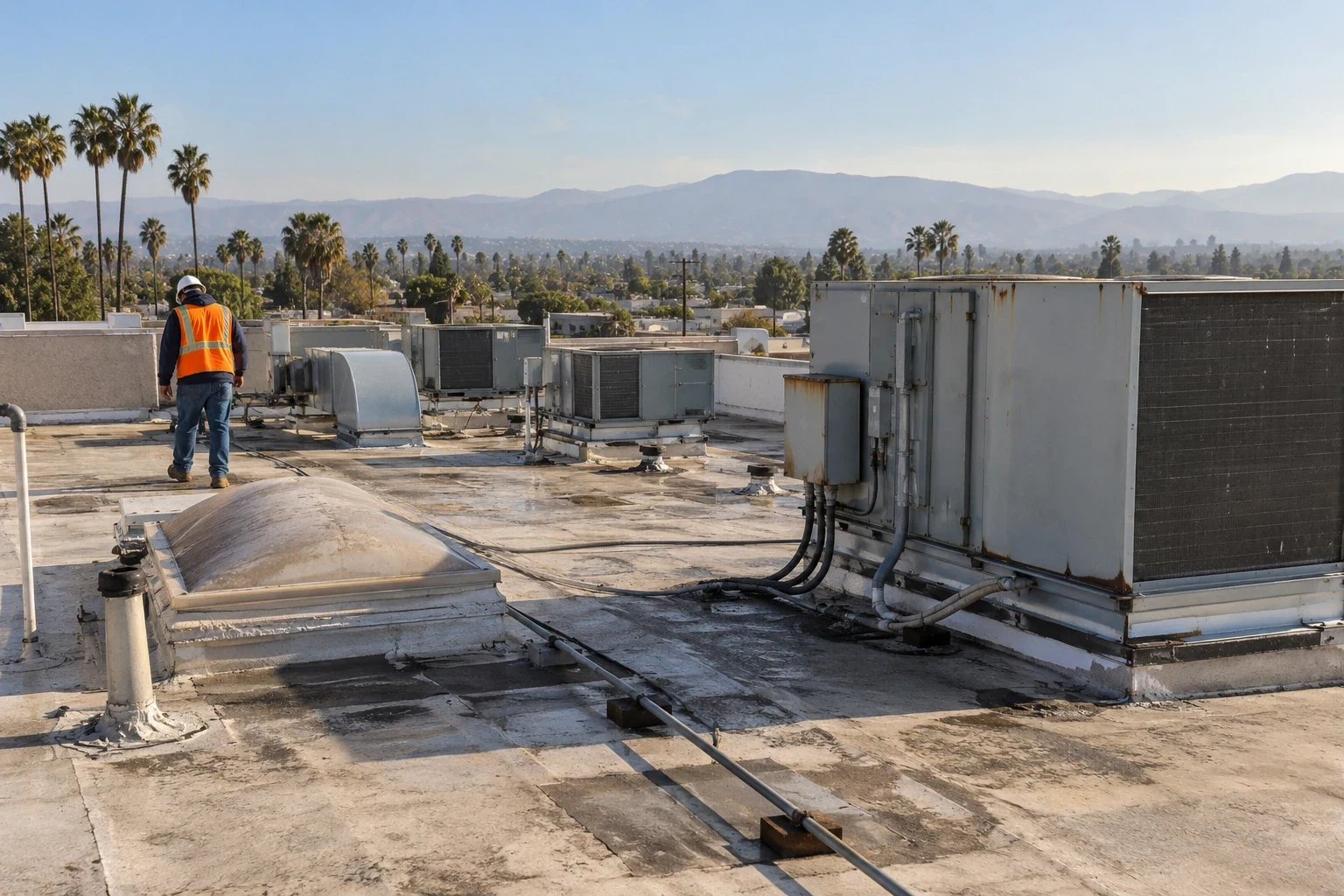
Modified bitumen is a multi-ply low-slope roof system that combines bitumen and reinforcing layers, often with a surfaced cap sheet. An inspection should identify the actual plies, surfacing, attachment, and edge details before anyone recommends a patch or overlay. In Chico, hot dry summers and concentrated winter rainfall make the cap surface and drainage useful seasonal checks, yet weather patterns cannot show whether a given membrane has failed. We map the roof zones, compare visible conditions with prior repairs, and trace the likely water path. If a local split or flashing opening sits over sound material, a defined repair may be appropriate. If moisture or deterioration extends beneath several layers, the scope should explain what test would change the recommendation. A layered bituminous assembly can be compared with built-up roofing layers when field evidence confirms that system.

How the plies work together
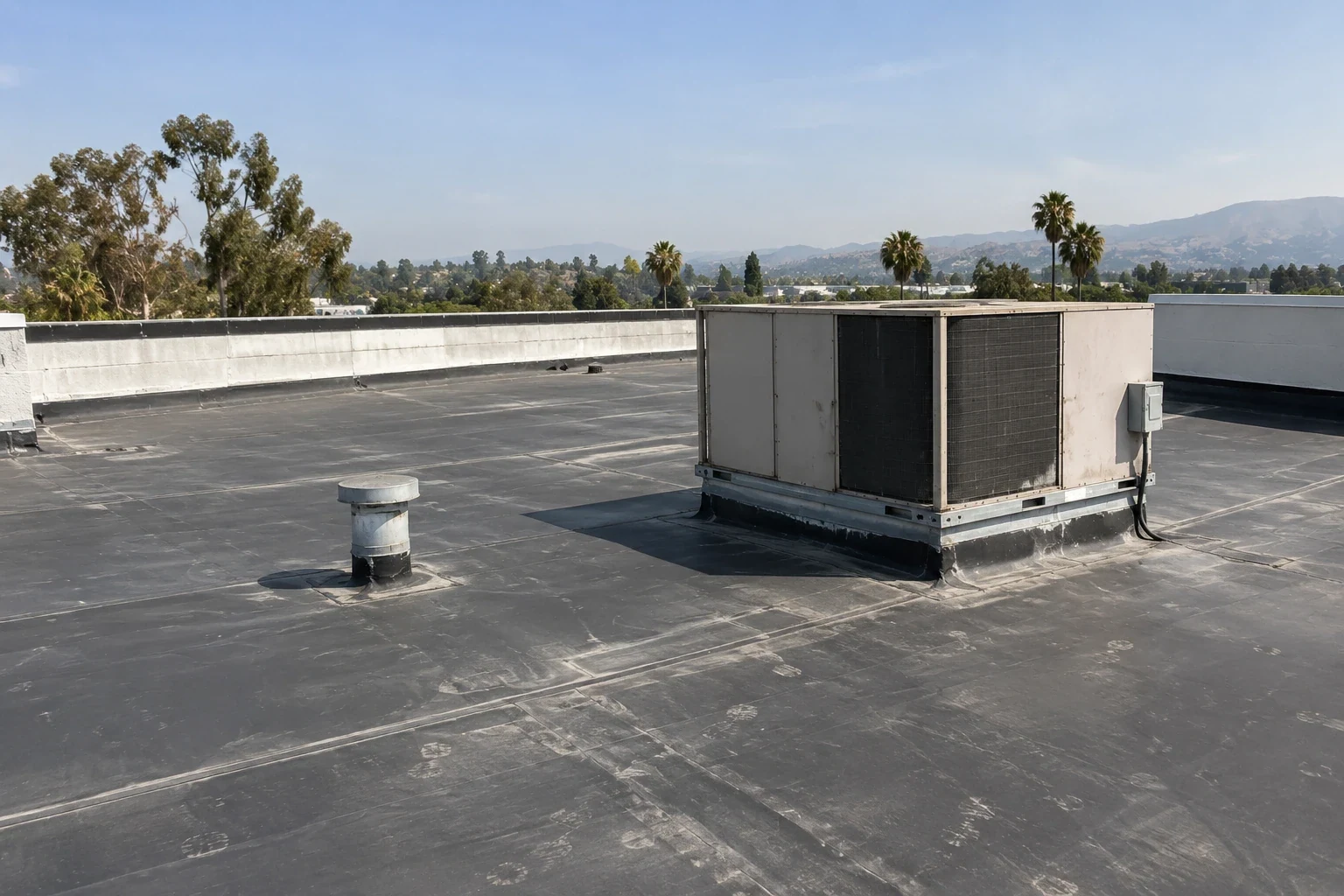
A modified bitumen assembly can include a base sheet, one or more reinforcing plies, a cap sheet, insulation, cover board, and vapor-control components. Installation may use heat, cold adhesive, self-adhered products, or other manufacturer-approved methods; the existing roof must be identified rather than assumed. We look at seams, laps, granule loss, blisters, wrinkles, patches, and transitions from one roof phase to another. Chico's General Plan identifies downtown mixed-use areas and light-manufacturing districts, so a facility's occupancy and equipment may affect how we access and phase a repair. Those planning areas do not tell us what layers are present. We record the visible construction, request available drawings, and separate confirmed layers from anything hidden under the cap sheet. An unrelated sheet roof should be reviewed as EPDM membrane systems only after its material is identified.
What the cap sheet can show
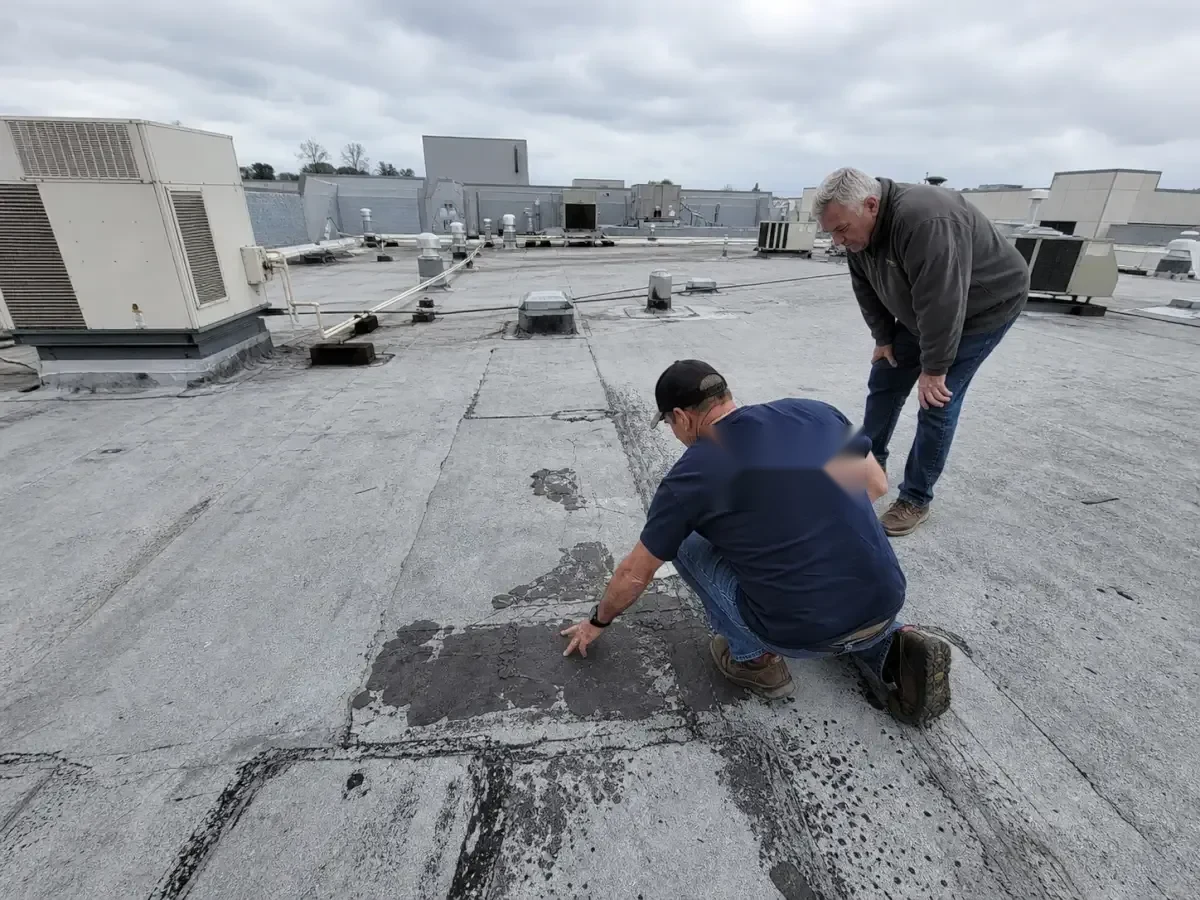
A cap sheet's surface can show wear, displaced surfacing, open laps, cracking, blisters, or prior repairs that need a closer look. We check whether a defect is isolated or continues across seams and at wall flashings, equipment curbs, drain rings, or perimeter metal. A soft or wet area may point to a concealed layer, but it needs a defined verification step before the affected area is expanded. Chico's climate normals show a much drier July and August than January and February; this seasonal contrast can inform a return visit when a roof was dry during the first survey. The record should state when it was inspected and what could be confirmed at that time. That helps an owner distinguish a surface repair from a deeper assembly question. A bounded defect may call for commercial roof repair once surrounding plies are verified.
Where wet-season water collects
A patch must bond to a prepared, stable surface and tie into the existing plies with a detail that sheds water. We inspect lap direction, cap sheet condition, prior mastic, and whether the repair would trap moisture or create a raised edge that interrupts drainage. A torch detail needs a clear work zone and fire safeguards. Adhesive and self-adhered materials each have their own substrate and temperature limits. The chosen method follows product instructions and actual conditions, not a universal rule. Near Meyers Street or Hegan Lane, commercial and light-industrial activity may influence deliveries and roof access, but each building contact sets the route. We identify the temporary dry-in, the area to be opened, the restoration material, and the hold point for review before the repair is closed. Where existing layers can remain, evaluate roof recover planning after the substrate review.
How a repair meets the existing roof
Rain control begins at slope, drains, scuppers, parapets, and the point where a cap sheet terminates against metal or a wall. We look for debris, an undersized or obstructed outlet, a low area, and evidence that water moves beneath a lap. The City describes retail districts near North Valley Plaza and East 20th Street; commercial sites there can have broad parking and phased infill, but no district fact predicts a specific roof's drainage. We follow the roof plan and field slope instead. If water remains after a storm, the scope should identify whether cleaning, drain repair, or a slope correction is needed. A surfacing patch alone will not correct a flow problem that extends beyond the repaired seam. Carry the findings into roof condition reports so repairs can be compared by zone.
Planning safe installation
Some modified bitumen roofs remain suitable for selective repairs, while others have repeated failures, wet insulation, or multiple layers that complicate a recover. We compare the number and location of repair areas, drainage performance, substrate condition, perimeter details, and any planned equipment work. When hidden layers need verification, the scope marks the proposed test point and its planned reinstatement detail. A replacement scope should identify demolition limits, insulation, cover board, cap sheet, edge metal, drains, and occupied-building protections. From that record, the owner can weigh a contained repair against staged renewal using the confirmed conditions in each zone. For Chico's winter weather, schedule protection and the daily closeout of exposed areas matter as much as the selected surface material. The Meyers Street industrial area is a broad employment district, not a substitute for site access instructions.
When renewal deserves review
A follow-up record should show the roof zone, date, surface condition, repair material, and any area left for a later check. We pair photos with the roof map and note whether a prior patch remains stable or whether water has moved to a nearby transition. That history can help the owner plan maintenance before the next wet season and avoid reopening a section without context. A repaired cap sheet may need a later visual review after weather exposure, while a concealed condition could require a separate approved test. We identify those actions clearly and do not treat a temporary dry-in as a permanent repair. The service record closes with the decision made, the limits of the work, and the next inspection item. A seasonal preventive roof maintenance visit can review drains and cap-sheet edges. A clear comparison table can separate the owner’s choices: repair the confirmed defect, authorize a limited test opening, or price renewal with defined demolition limits. Each option should name its assumptions, the conditions that would change the scope, and how the exposed roof will be protected if the work pauses. This helps a facility manager compare near-term restoration with a planned capital project without treating one visible blister as a verdict on every roof zone. We also retain the date, roof map, photos, and material identification with the closeout so a later inspector can see what was known and what remained concealed.
Commercial Roofing Questions
How do you identify the layers in an older modified bitumen roof?
We review available drawings, exposed edges, drain details, and prior repair records. If the cap sheet hides a layer that could change the scope, we identify an approved test opening and its restoration method.
When is a localized cap-sheet repair useful?
A repair can be considered when the defect is isolated, adjacent plies remain stable, and water can be redirected through the corrected detail. We document the repair zone and any concealed condition that could change its extent.
Does torch-applied work fit every modified bitumen repair?
No. Torch work requires compatible layers, a suitable substrate, fire protection, and an approved method. We also check whether an adhesive or self-adhered detail better fits the confirmed assembly and current conditions.
How does a recover compare with removing the existing assembly?
A recover retains approved existing layers under new work. A replacement removes material to the limits in the scope. We compare those paths only after reviewing substrate, moisture evidence, drainage, and permit conditions.
Which Chico conditions affect timing?
Hot dry summers and a wetter winter season affect access, protection, and installation windows. We check current site conditions and forecast details before opening a roof area.
Review the roof evidence
Share the building type, the current symptom, and any roof history you have. We can inspect the assembly, document a repair boundary, and explain timing considerations for the next step.