PVC Roofing in Chico, CA
A PVC membrane can be a useful low-slope option where the roof needs a heat-welded surface and the building has equipment or service uses that require careful detailing. In Chico, summer heat and winter rainfall create a seasonal inspection cycle, but neither climate nor a property category tells us the membrane's condition. We verify the existing sheet, seam type, attachment, insulation, drainage, and prior repairs before selecting a repair method. The decision often turns on whether a sound area can be isolated around the defect or whether the same weakness continues across seams and transitions. Our Diligence Notes identify the exact roof zone and the next check, giving the owner a defined choice instead of a system label without a plan. A confirmed TPO assembly should be reviewed as TPO roof assemblies, with its own repair instructions.
Where PVC fits the roof plan
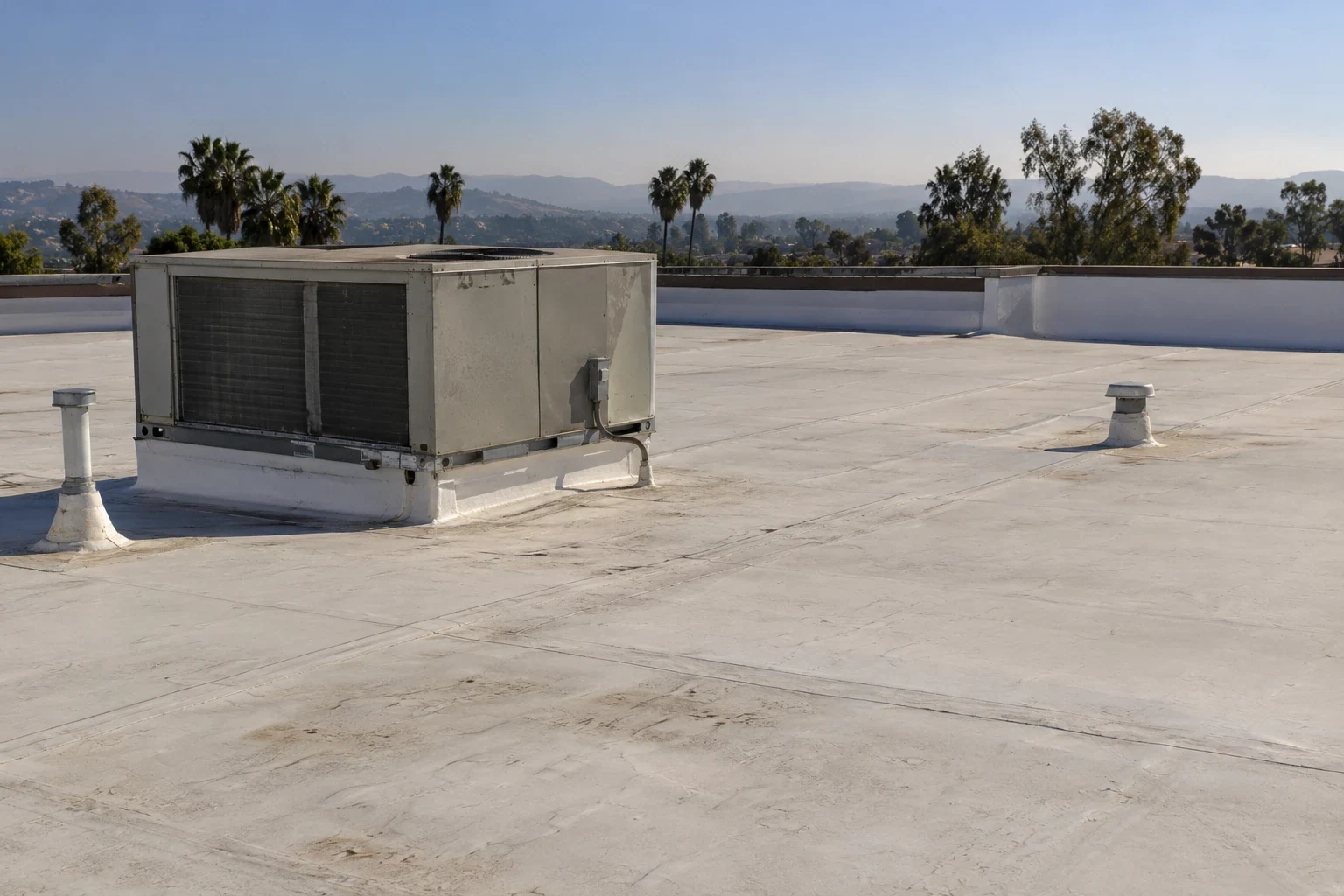
PVC is a thermoplastic sheet whose seams are heat welded, with reinforcing and formulation details that vary by product. The installed assembly may be attached through the deck, adhered, or configured with ballast, and edge conditions can differ from one roof section to another. We review accessible records and then inspect laps, corners, perimeter metal, drains, and penetrations. Chico's General Plan identifies downtown mixed-use districts alongside light-manufacturing and office areas, so a roof may serve very different interior operations from one block to another. That local planning context helps frame access and coordination questions; it does not tell us which roof assembly any property has. Before pricing, we record confirmed materials and note when a test opening would be needed to identify a concealed layer. For a related flexible thermoplastic, compare the installed formulation with KEE membrane systems.
What exposure the surface faces
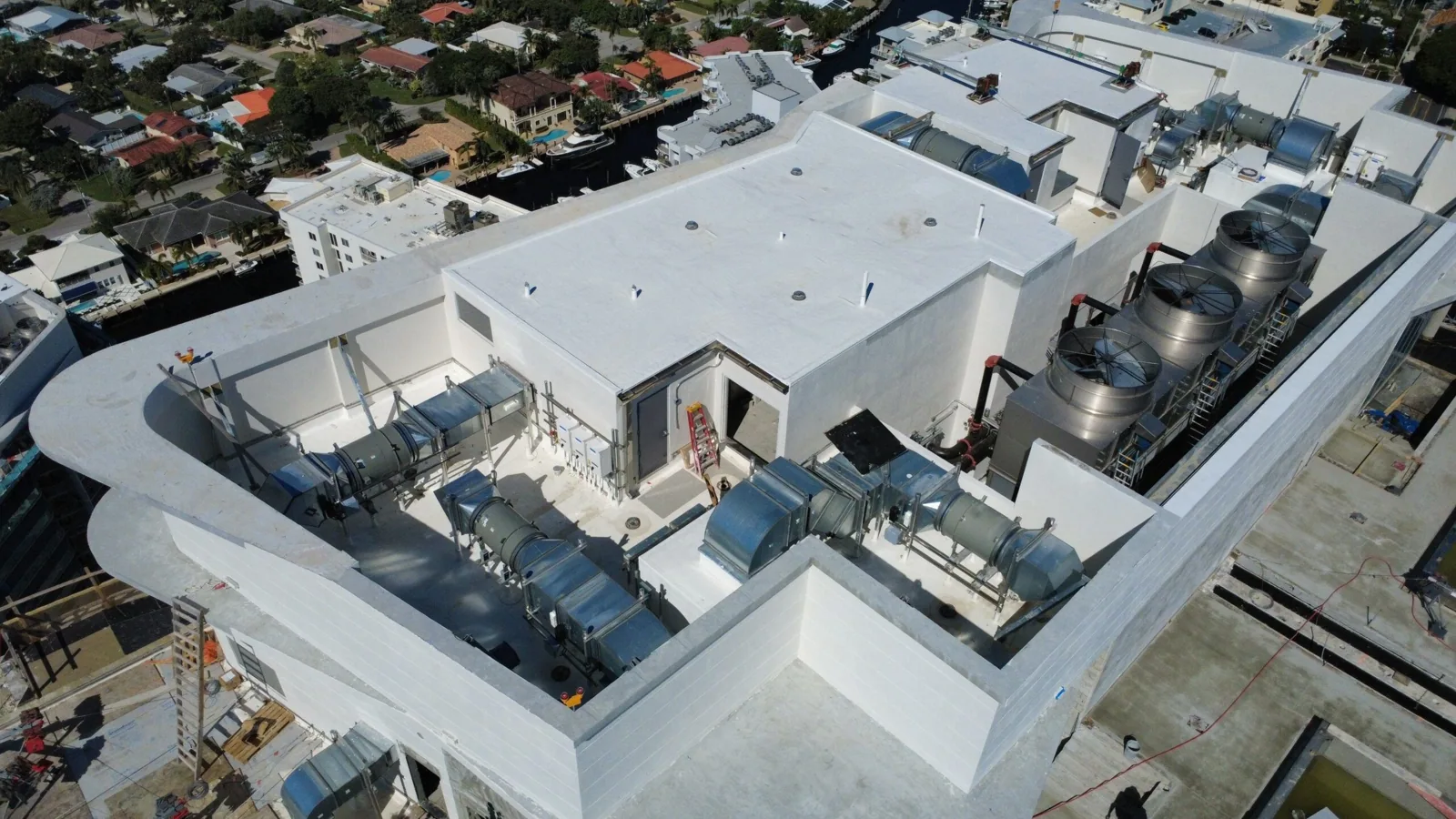
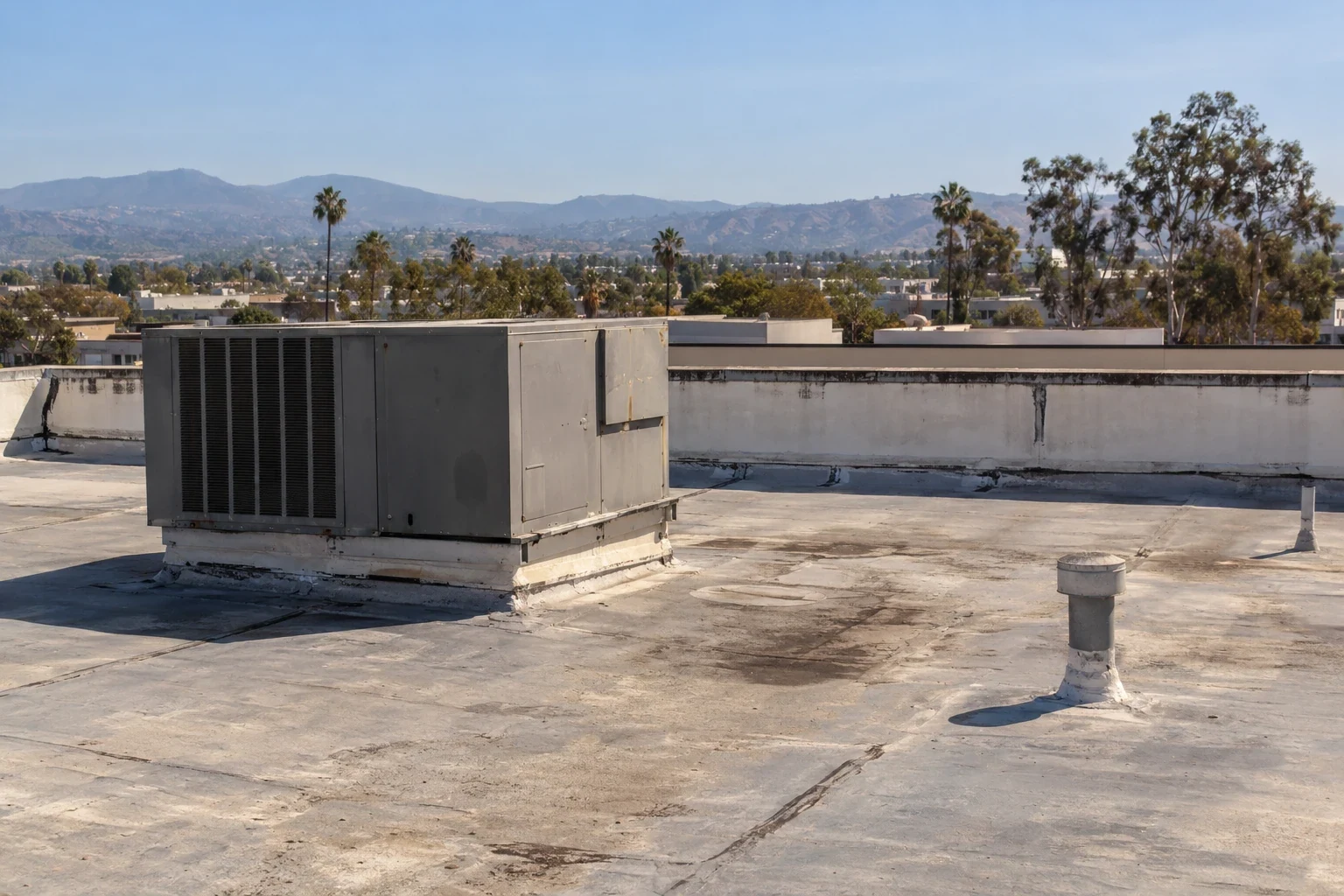
PVC can be selected for certain grease-exposed roofs; exhaust discharge and service equipment still need a separate condition review. We check visible contamination, membrane condition, welds, and flashing near kitchen exhaust, mechanical units, and drains, then discuss cleaning or material compatibility before work. The roof should be treated as a complete assembly: a membrane repair cannot correct saturated insulation or a failed deck. North Valley Plaza and Skyway are among Chico's mapped retail districts, which illustrates why delivery and operating windows can differ among commercial sites. The actual contact provides each property's schedule, loading route, and interior restrictions. We plan those details before material staging so the repaired section can be closed and protected within the available work period. On an active property, roof replacement planning should include delivery, dry-in, and interior protection.
How the seam is restored
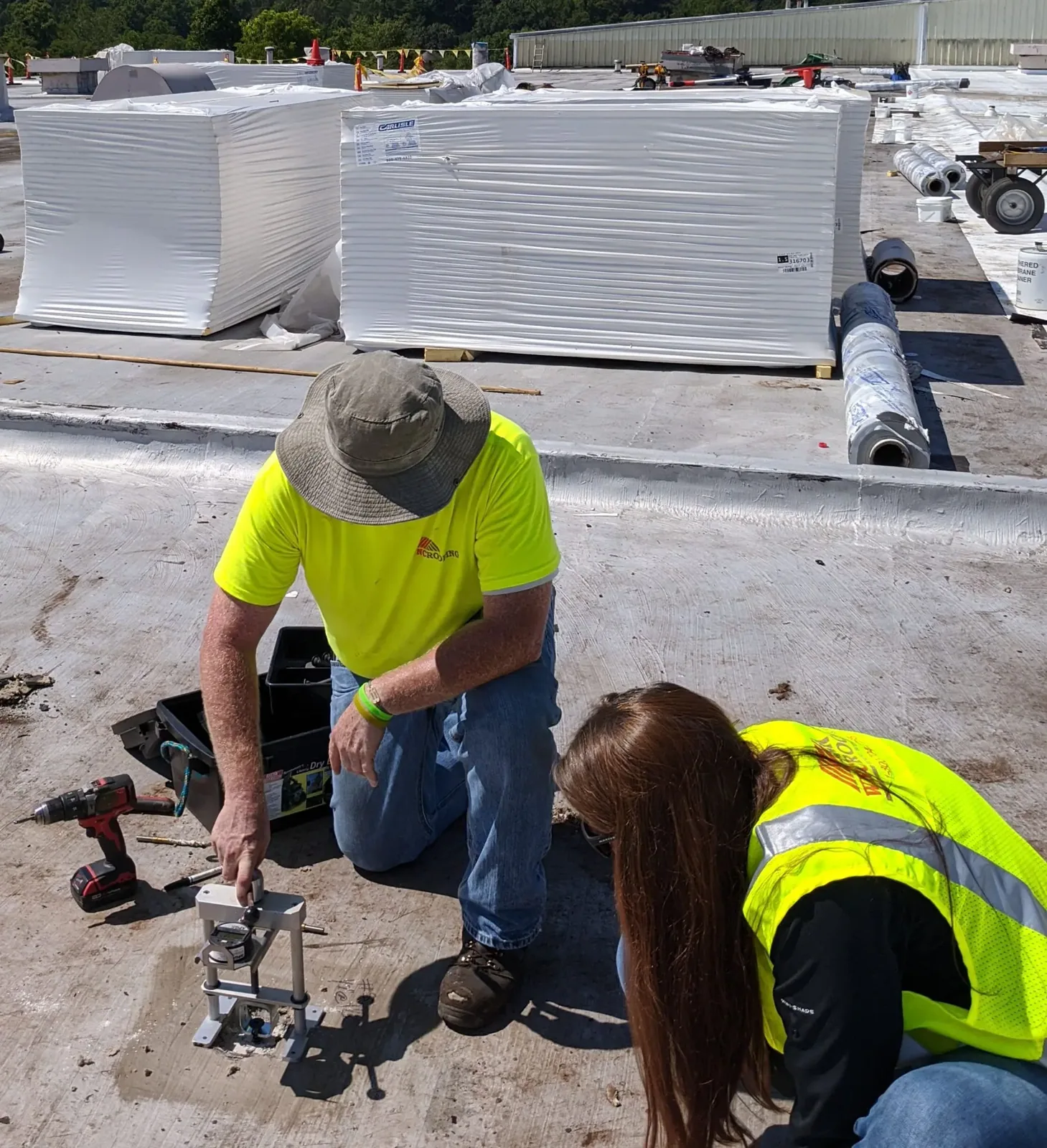
A PVC weld needs clean surfaces and controlled heat to fuse the new material to the existing sheet. We first check whether the old membrane can accept a weld, whether the repair area is dry, and whether seams meet at corners or around rooftop equipment. The detail should follow the product's repair instructions rather than rely on generic sealant across a thermoplastic lap. A field test can confirm that a surface is weldable, while a cut test may be appropriate only with approval and a clear restoration method. We document both the confirmed result and any area that remains unknown. A strong work scope also notes perimeter tie-ins, edge metal, parapet conditions, and what the owner will inspect before the crew closes the repair area. An outlet defect may require roof drain and scupper repair rather than another sheet patch.
Which wet-season details matter
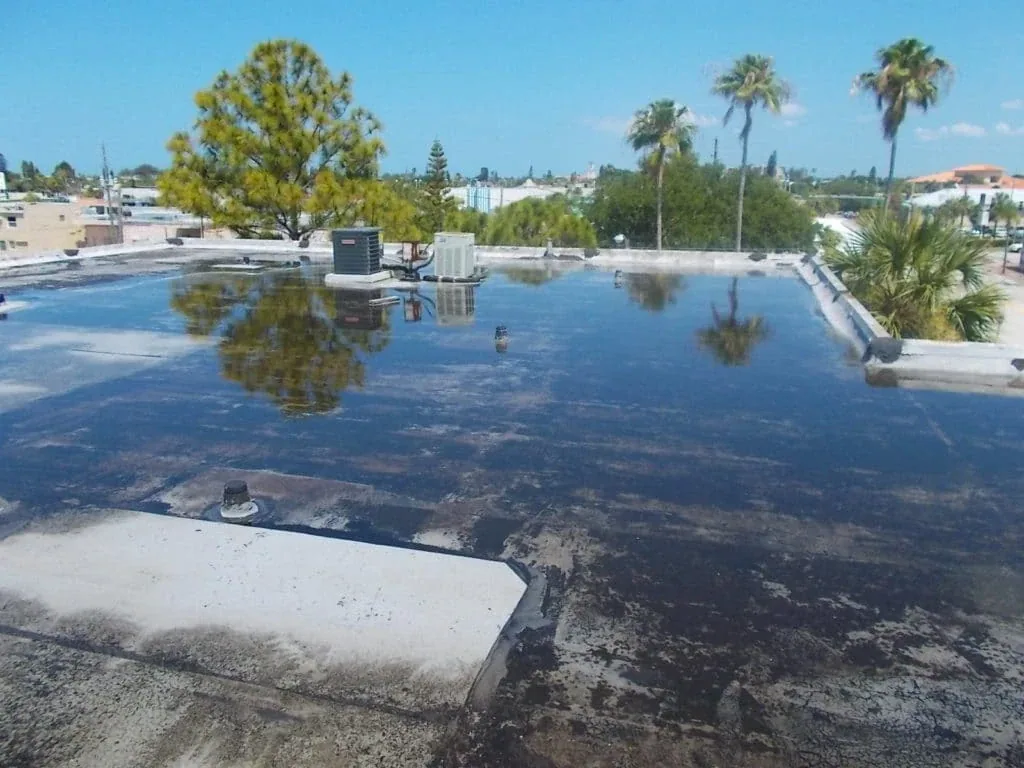
Wet-season drainage deserves attention before rain returns. We trace the path from high points to drains or scuppers, look for debris and displaced strainers, and compare standing-water evidence with roof slope. NOAA normals for Chico record substantially more precipitation in January and February than in July and August; this helps with seasonal planning but does not establish a leak on a particular building. We note when the inspection occurred, which outlets were accessible, and whether the surface was dry or recently wet. In food-service or industrial spaces, an interior leak may appear below a curb or transition far from the entry point. The report ties the interior observation to the nearest roof geometry and defines a targeted check rather than treating the full membrane as suspect. Where business operations stay active, occupied building reroofing can be phased by approved roof zone.
How rooftop equipment changes scope
At each penetration, we look at the curb, boot, welded flashing, and nearby field seam as one detail. Exhaust or HVAC equipment may have been replaced since the original roof, and an added support can change the flashing boundary or restrict drainage. We coordinate shutdowns or access with the facility contact when the work could affect operations, and identify any other trade whose equipment or conduit must be moved. Chico's planned employment areas include Meyers Street and Hegan Lane; those broader industrial contexts can involve equipment-intensive buildings, but they are not evidence of a specific tenant or roof. We use the actual drawings and site walk to locate each penetration, check the welds, and state what repair can be completed without disturbing a sound surrounding assembly. The broader route through the Skyway commercial area should be set from each site's loading and access rules. Kitchen exhaust details may also require a review of restaurant roof planning.
How repair and replacement compare
A complete closeout identifies the product that was confirmed, the portion of seam or flashing repaired, and the preparation used before welding. We add dated photos, roof-zone references, any wet-season drainage observation, and the next inspection item. If another trade has equipment near the repair, the record notes the coordination boundary and who approved access. Chico's commercial areas have different operating hours and delivery patterns, so a future crew should not have to infer the safe route from a generic work note. For a multi-section property, retain the roof plan and repair record together; compare recurring conditions only after confirming that the other section has the same assembly. That gives the owner a reliable basis to budget a further test, a targeted repair, or a phased project. A Diligence Notes should keep the membrane name separate from the repair diagnosis. Record the seam direction, attachment that could be confirmed, drain and curb locations, and any surface condition that limited inspection. If a later test changes the understanding of the assembly, document the new evidence and update the repair boundary before work proceeds. This preserves a clear handoff between the inspection, owner decision, and crew closeout.
Commercial Roofing Questions
What happens after a PVC seam test?
A successful trial establishes workable preparation and heat parameters for compatible sheet. We complete the seam detail, photograph the finished edge, and add the repair location to the owner’s roof record.
Where should we check when an interior stain does not line up with the roof symptom?
An interior stain is a clue to map, not proof of where water entered. We review the building section against roof slope, outlet positions, and nearby transitions, then list the confirmation step that could narrow the source.
Can kitchen grease damage a PVC roof?
PVC formulations can suit some grease-exposed roofs, but exhaust discharge and flashing still need inspection. We check the actual membrane, equipment curb, runoff path, and manufacturer repair method before recommending work.
How do you trace a suspected PVC roof leak?
Trace from the reported room to nearby drains, welds, and curb details. Photos and a short test list show which roof zone the inspection can confirm and which path remains hidden.
What should be ready before a roof survey?
Provide roof drawings, known leak dates, access rules, and a site contact. The inspection can then focus on visible welds, equipment details, drainage, and any test that could affect the repair choice.
Review the roof evidence
Share the building type, the current symptom, and any roof history you have. We can inspect the assembly, document a repair boundary, and explain timing considerations for the next step.