Restaurant Roofing in Chico, CA
Restaurant roofs sit above kitchens, dining rooms, storage, and equipment that may operate on different schedules. In Chico, CA, we begin with the reported interior condition, roof-zone location, equipment history, and the hours when inspection or repair can occur. A ceiling stain near a kitchen does not prove the roof entry; water can move along a deck or follow a curb, seam, or wall transition before becoming visible. The inspection should distinguish confirmed roof damage from a reported symptom and identify what access was not available. Chico has commercial activity along corridors including the Mangrove Avenue Corridor and Skyway Commercial District. Those city contexts do not establish an individual restaurant’s roof assembly or condition.

Map equipment and dining areas
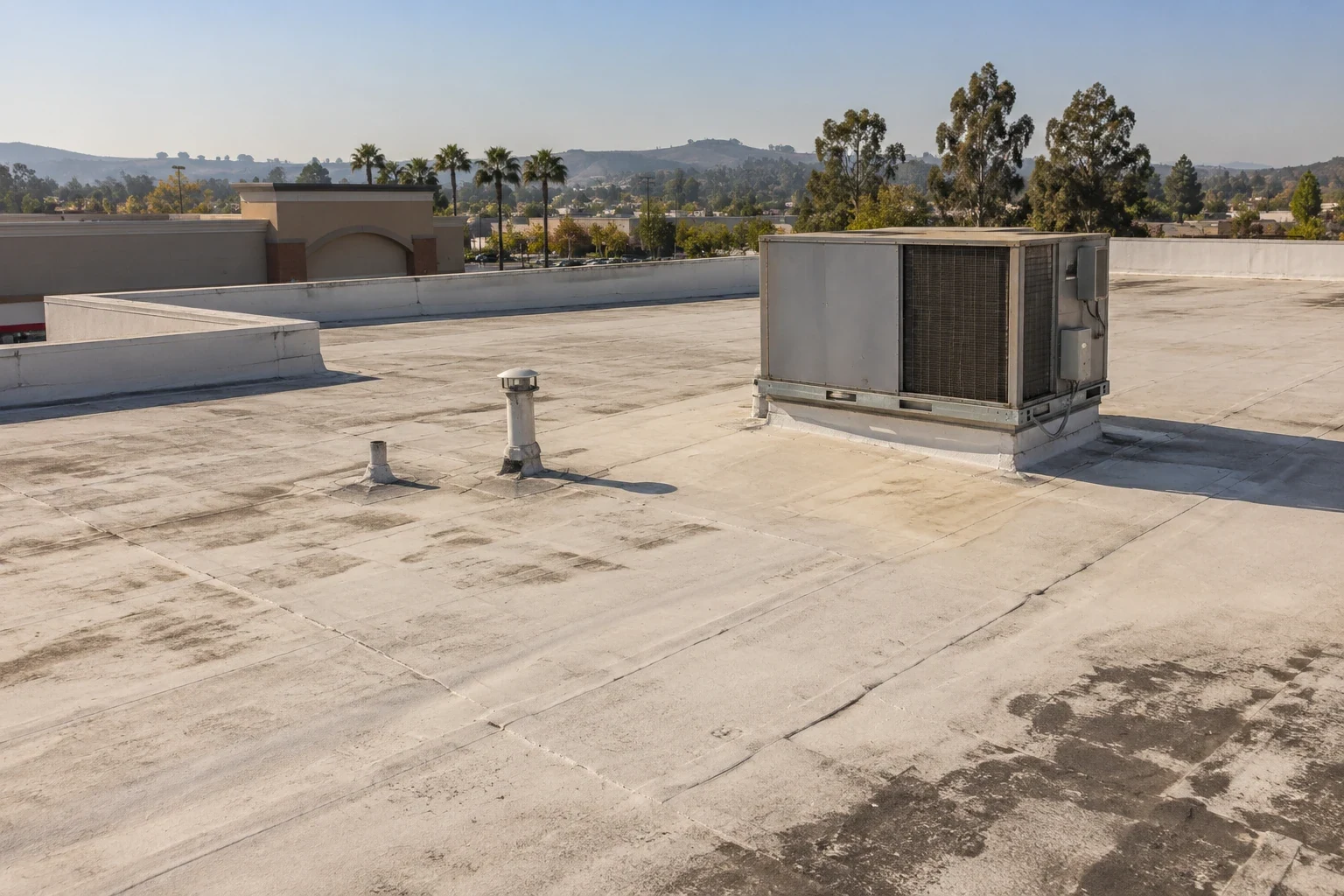
We record the roof area, membrane where known, drains, curbs, exhaust penetrations, skylights, edge details, and prior patches. A restaurant contact can note which rooms sit below a suspect area, when water appeared, and whether a recent hood or HVAC service occurred. Marked photos make it easier to compare findings during a later visit. If grease exhaust or another system limits access, the report should identify the limitation rather than treating the surrounding roof as fully inspected.
The maintenance record should keep roofing work distinct from kitchen-exhaust cleaning and mechanical service. Those trades may interact at curbs or supports, but each scope needs a clear handoff. A grocery roof plan may also coordinate food-area protection, while hotel roof work adds guest-space scheduling. For a restaurant, the owner should identify who can approve equipment shutdown, access over food-preparation areas, and the time when a repaired room may reopen.
Inspect exhaust curbs and flashing
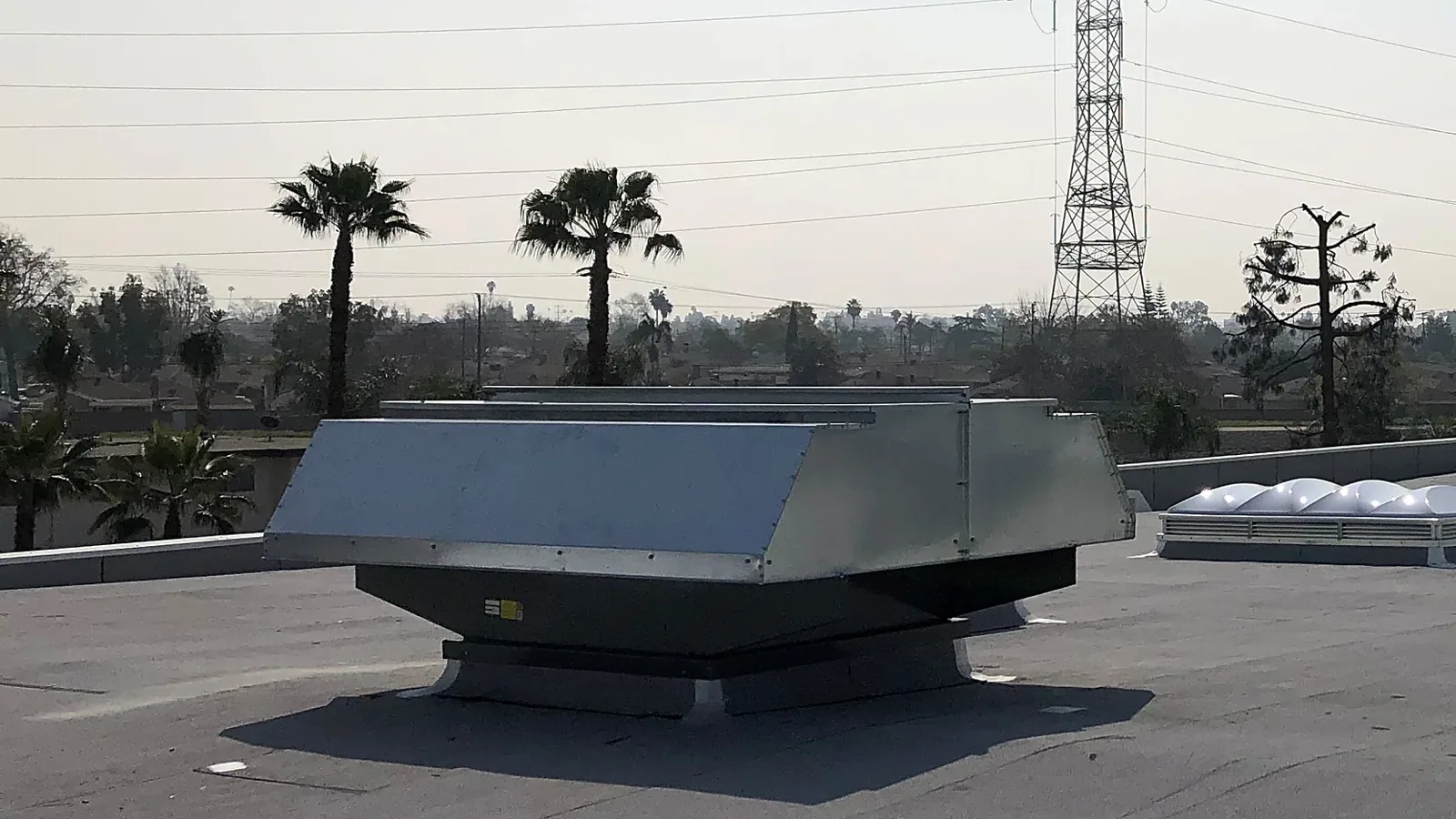
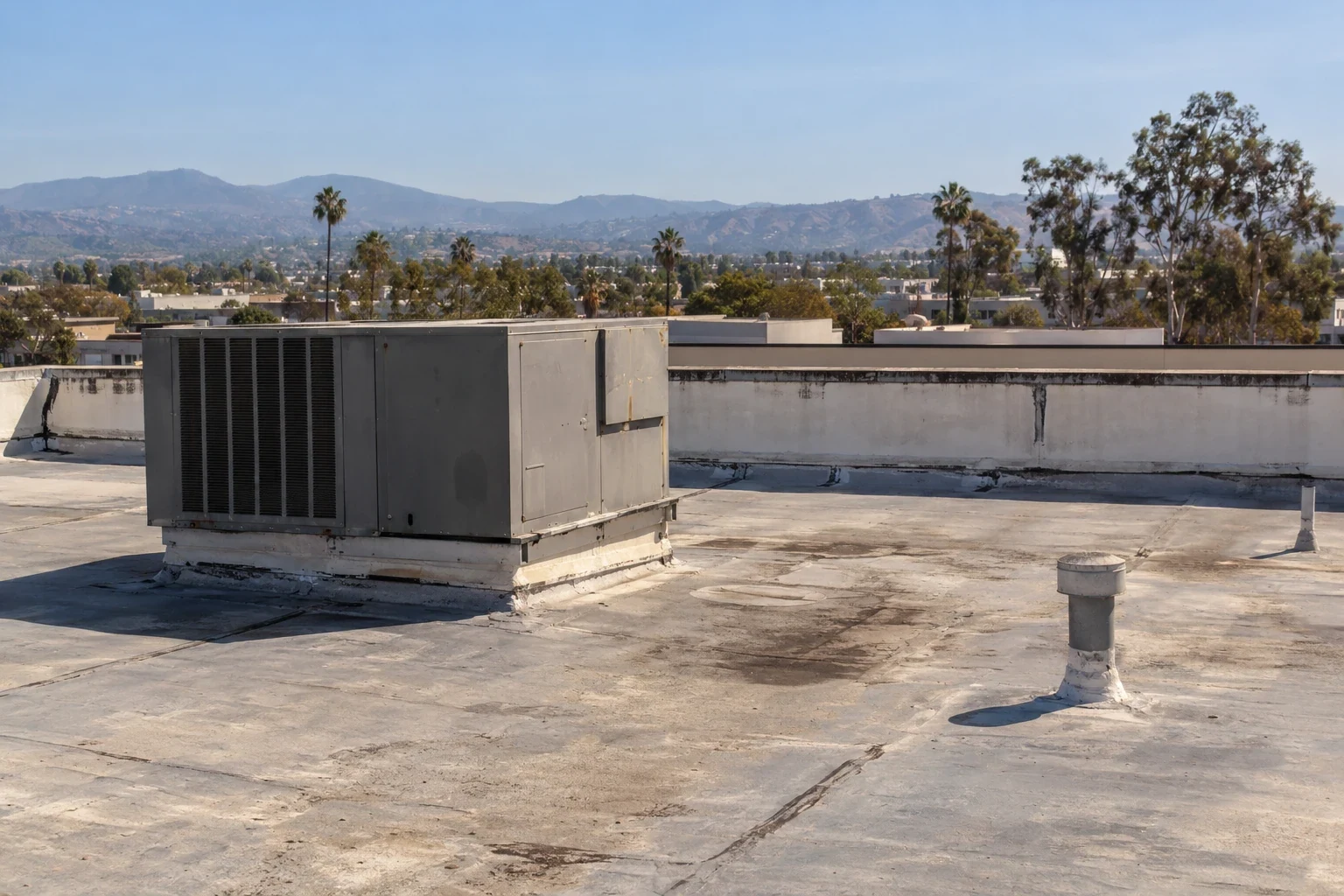
Kitchen exhaust, makeup-air units, and rooftop fans create transitions through the roof. We look for loose metal, separated flashing, open seams, failed sealant, and movement around curbs. Grease or service residue can make a detail harder to inspect, so the scope may require coordination with the exhaust contractor before repair. If a fan or hood system is removed, the plan should state who protects the opening and who finishes the membrane tie-in when equipment returns.
We avoid assuming a roofing crew should disconnect a kitchen system or clean an exhaust duct. The facility owner assigns those tasks to the qualified trade and sets the operating window. A defined curb and support detail can show where roofing work begins and ends. The closeout record should include the completed flashing and any adjacent area that could not be inspected until the system was back in service.
Trace leaks and drainage paths
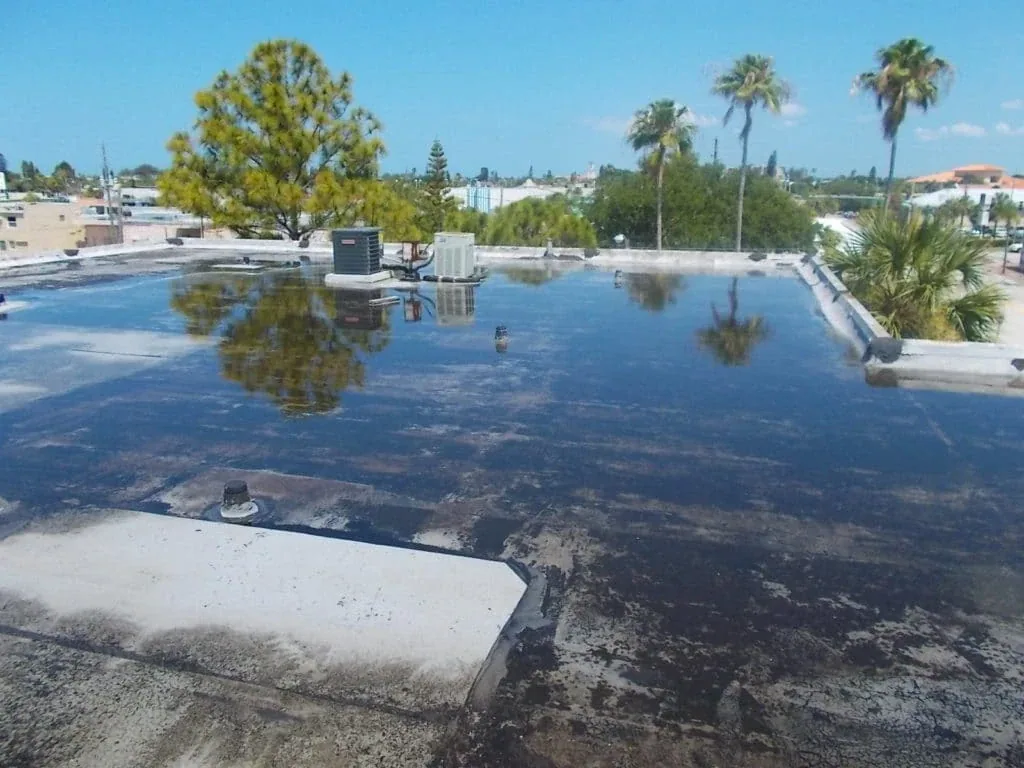
Water appearing above a dining room may originate at a drain, curb, seam, or perimeter detail some distance away. We compare the report’s time and location with roof slopes, drains, wall transitions, and past repair areas. Photos should show the complete detail and surrounding membrane, not only a small patch. A roof plan can also note low areas and overflow paths, then help the owner distinguish debris removal from repairs to a drainage design or failed connection.
Chico averages 27.39 inches of annual precipitation, with greater monthly totals in January and February than in summer. Those averages do not explain a specific leak, but date and storm context help investigation. If water is active, immediate protection and permanent repair remain separate decisions. A leak repair assessment can follow the inspected path, while drain and scupper work can address an identified outlet condition.
Protect service and customer access
Restaurant work often needs to fit around receiving, food preparation, dining, and closing or opening routines. The owner can identify when deliveries arrive, which doors stay clear, and whether noise or odors affect customer or staff areas. We confirm staging, ladder access, debris routes, and the person who can authorize a temporary equipment shutdown. For roof work above food handling, the restaurant’s own sanitation and closure procedures govern protection below the work zone.
A phased sequence should show the area opened, temporary protection, and the inspection before the crew leaves. A repair may sometimes fit into a lower-traffic window, but forecast, materials, access, and the scope decide whether that is workable. An occupied-building sequence can define daily boundaries and communication. The operator retains responsibility for customer notices, kitchen procedures, and decisions about pausing service.
Use seasonal conditions to set limits
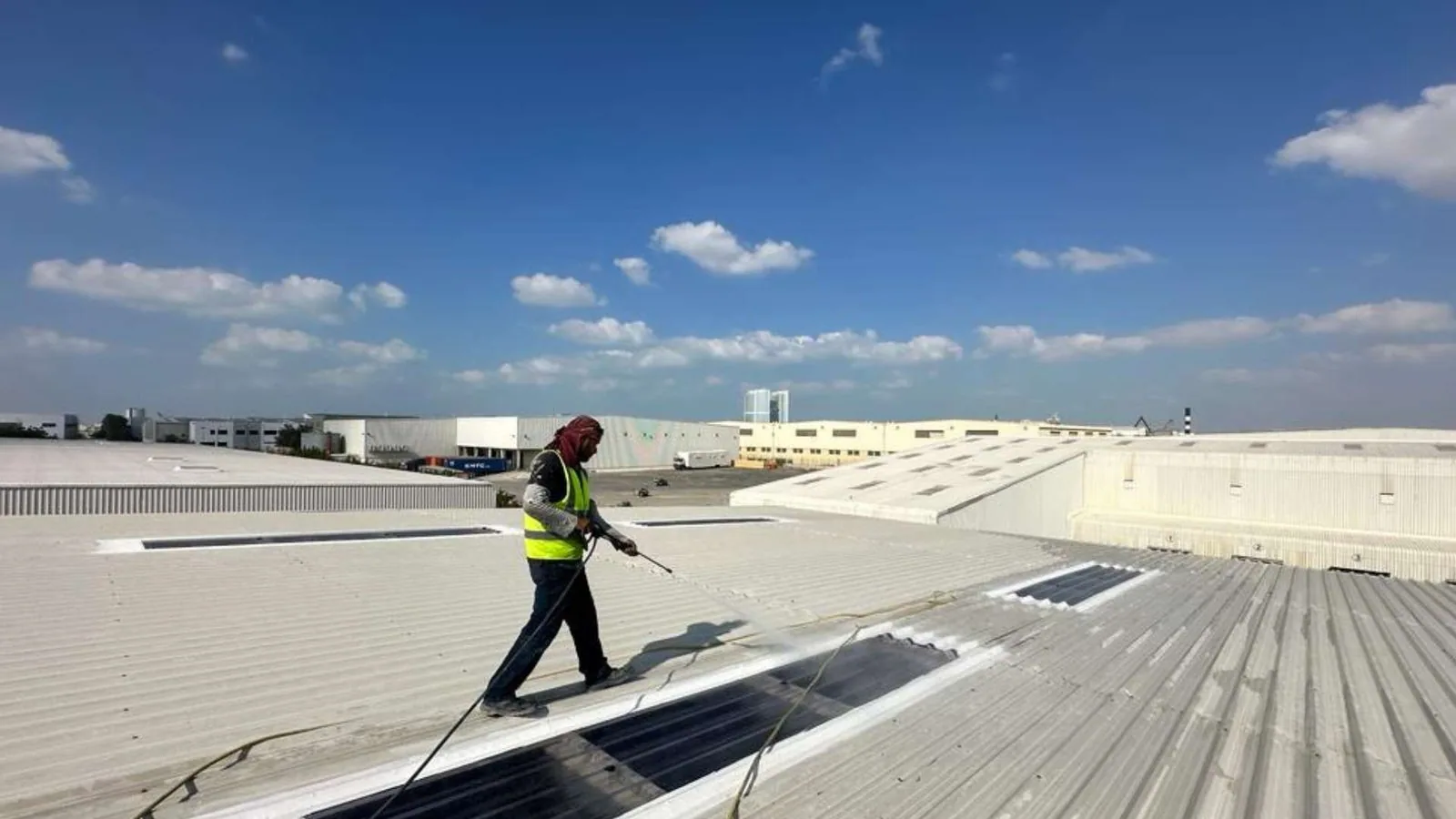
At Chico University Farm, normal rainfall is nearly absent in midsummer: 0.03 inches for July and 0.10 for August. The January and February averages rise to 5.12 and 5.14 inches; the yearly figure is 27.39. Butte County classifies Chico as Mediterranean. These facts can inform seasonal scheduling, but a daily forecast and actual roof condition set the work limit. We establish how much material can be removed safely, what temporary tie-in is available, and how a section will be closed before crews leave. Kitchen systems may need a defined operating plan before work begins.
Summer heat can affect crew timing on an exposed roof. Winter rain increases the importance of a complete closure boundary and clear drains. The owner should know who receives an urgent water report and how the roofing contact can reach the site. An emergency roof response can provide immediate protection when available, followed by inspection and a documented permanent-scope decision.
Compare the repair boundary
A local opening at a curb or seam may support repair if adjacent membrane and substrate remain stable. Repeated failures or confirmed moisture across multiple areas can require a broader plan. A recover is appropriate only if existing layers, wet materials, attachment, drainage, structure, and perimeter conditions support another assembly. If those conditions are uncertain, testing can prevent an incomplete repair or unsupported replacement recommendation. The report should describe both the evidence and the limit of what was inspected.
Owners can compare repair, recover, and replacement by considering leak recurrence, service interruption, remaining system condition, and cost of separate mobilizations. A TPO assembly may fit a project when its substrate and detail design are compatible; it is not a default for every restaurant. Chico planning identifies commercial areas near Skyway and Mangrove Avenue. Those district references help locate the market, while drawings and field observations guide the scope.
Define trade boundaries and closeout
A proposal should list measured roof zones, preparation, materials, drains, flashing, curb work, access, disposal, protection, and schedule. It should state whether equipment removal, exhaust cleaning, electrical disconnection, and interior protection belong to another trade. For concealed conditions, the owner needs a review and approval process before added scope proceeds. Clear boundaries help the operator plan service hours and compare proposals that may otherwise place different responsibilities in the base price.
Timing depends on roof dimensions, deck condition, material availability, equipment coordination, operating window, and weather. A closeout record should identify the completed area, materials, photos, and remaining observations. The City identifies the Mangrove Avenue Corridor and Skyway Commercial District as local retail and service areas, but these public planning facts do not describe a particular restaurant building. Share the roof history, exhaust schedule, and access limits to plan an inspection that fits the operation.
Commercial Roofing Questions
Can a restaurant stay open during roof repairs?
The owner and contractor can evaluate phasing, food-area protection, noise, access, and weather. The operator decides whether service can continue in affected rooms.
Who handles a roof curb when kitchen equipment is replaced?
The project should identify the mechanical or exhaust contractor and roofing contact, protect the opening, and assign the final flashing tie-in before equipment work starts.
Does a ceiling stain locate the roof leak?
Not by itself. Water can travel along the deck or framing, so the reported room and time are compared with roof details along a plausible path.
Can grease exhaust be included in roofing work?
The scopes should distinguish exhaust cleaning and equipment service from membrane flashing. The owner coordinates the appropriate trade for each interface.
What information helps schedule restaurant roofing?
Share opening and closing hours, delivery windows, sensitive rooms, equipment access, roof records, prior leaks, and the person authorized to coordinate work.
Plan a Chico restaurant roof review
Share the property use, reported symptom, roof records, access limits, and operating calendar. We will confirm the inspection boundary and document findings for the area reviewed.