Rooftop Equipment Curbs and Supports in Chico, CA
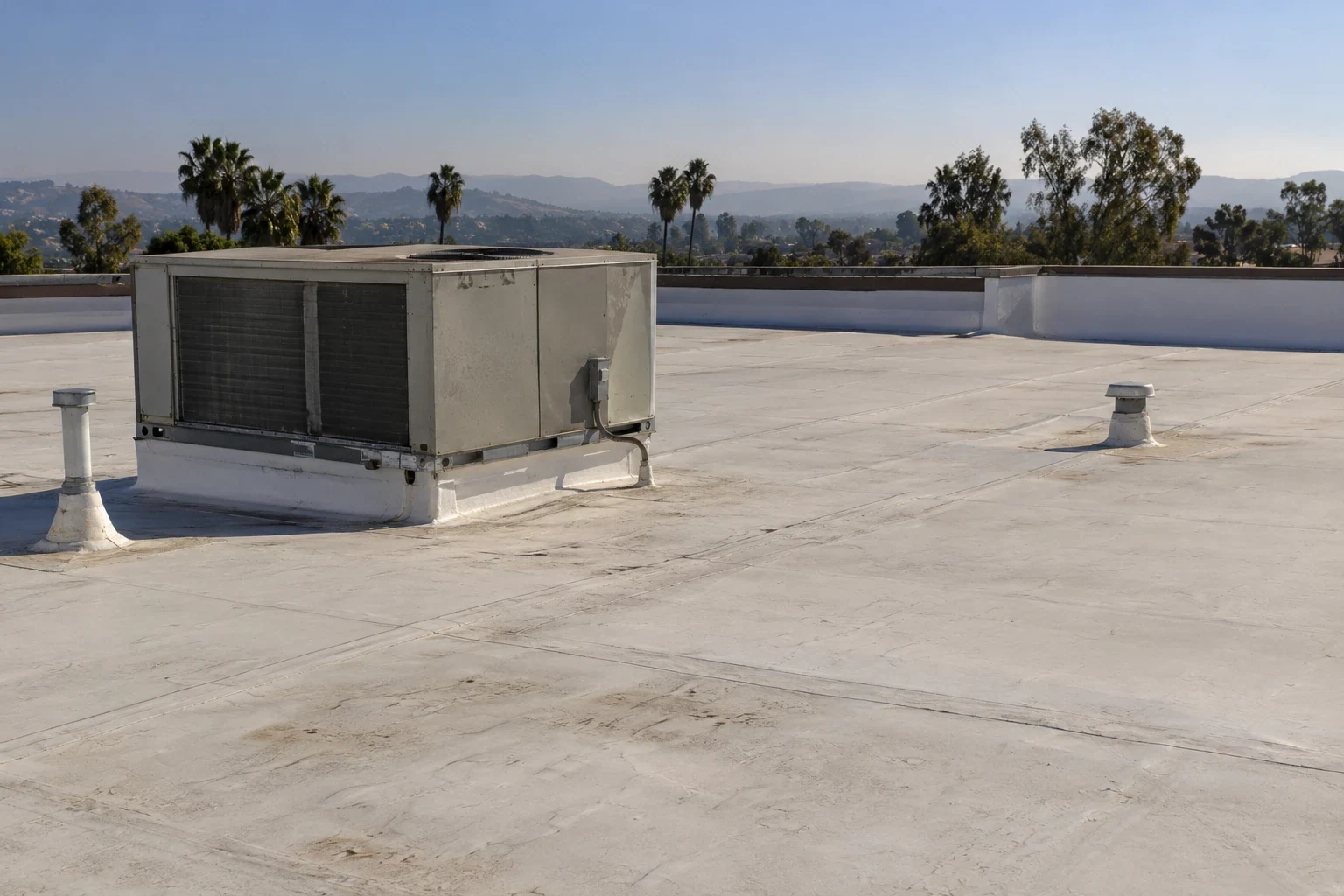
A rooftop unit can be sound while the curb beneath it leaks. The roof connection still has to manage movement, runoff, and the loads that reach the deck. In Chico, CA, hot, dry summers put exposed flashing and attachment on the inspection list, though the season does not diagnose a curb. We inspect the membrane, metal, seal, fasteners, and surrounding insulation, then trace water toward the nearest drain or scupper. The report separates an isolated detail repair from work that would require lifting equipment or opening a wider roof section. For a full condition map, start with a commercial roof inspection that records the curb and its neighboring details.
Read the curb as part of the roof
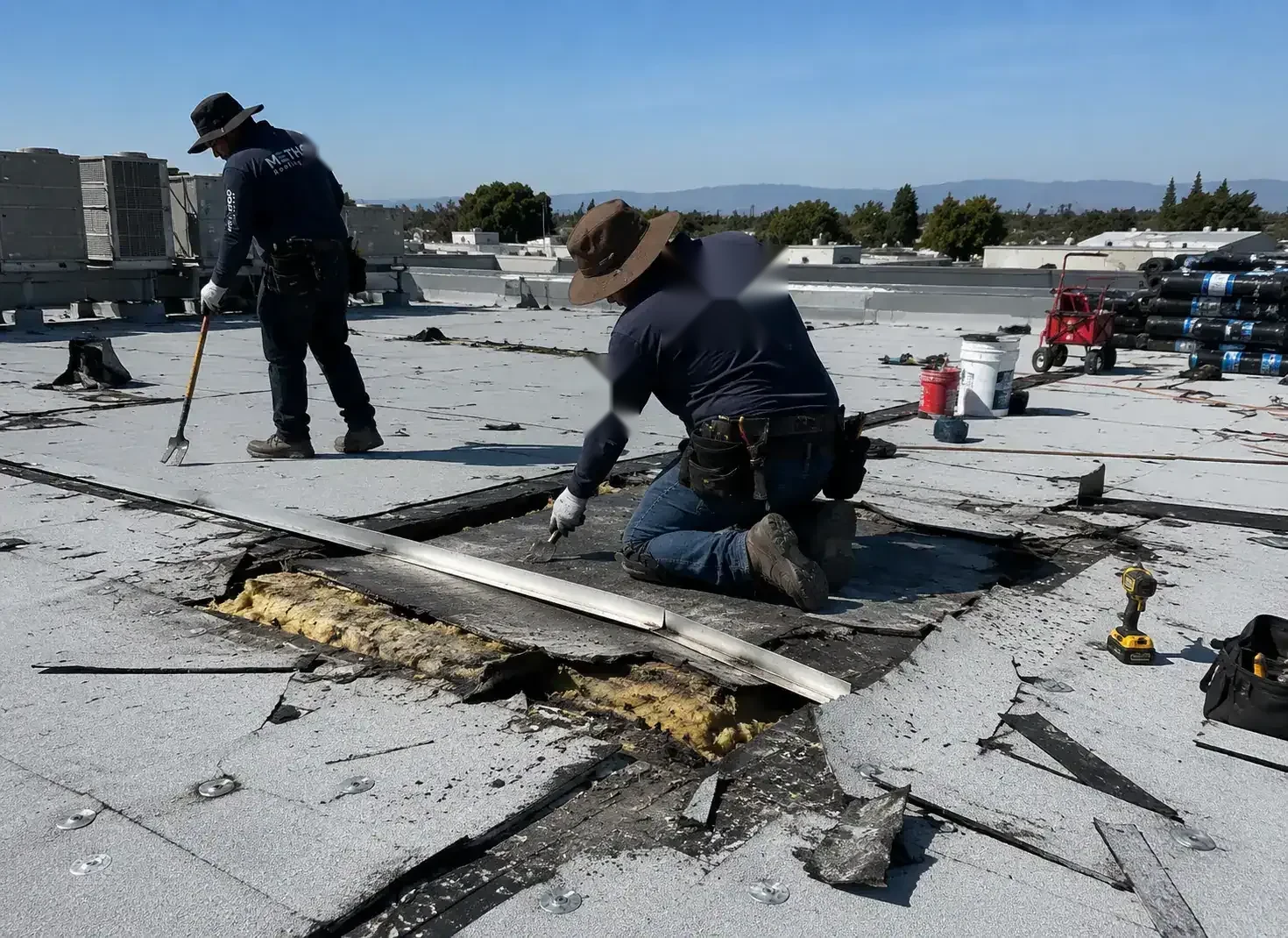
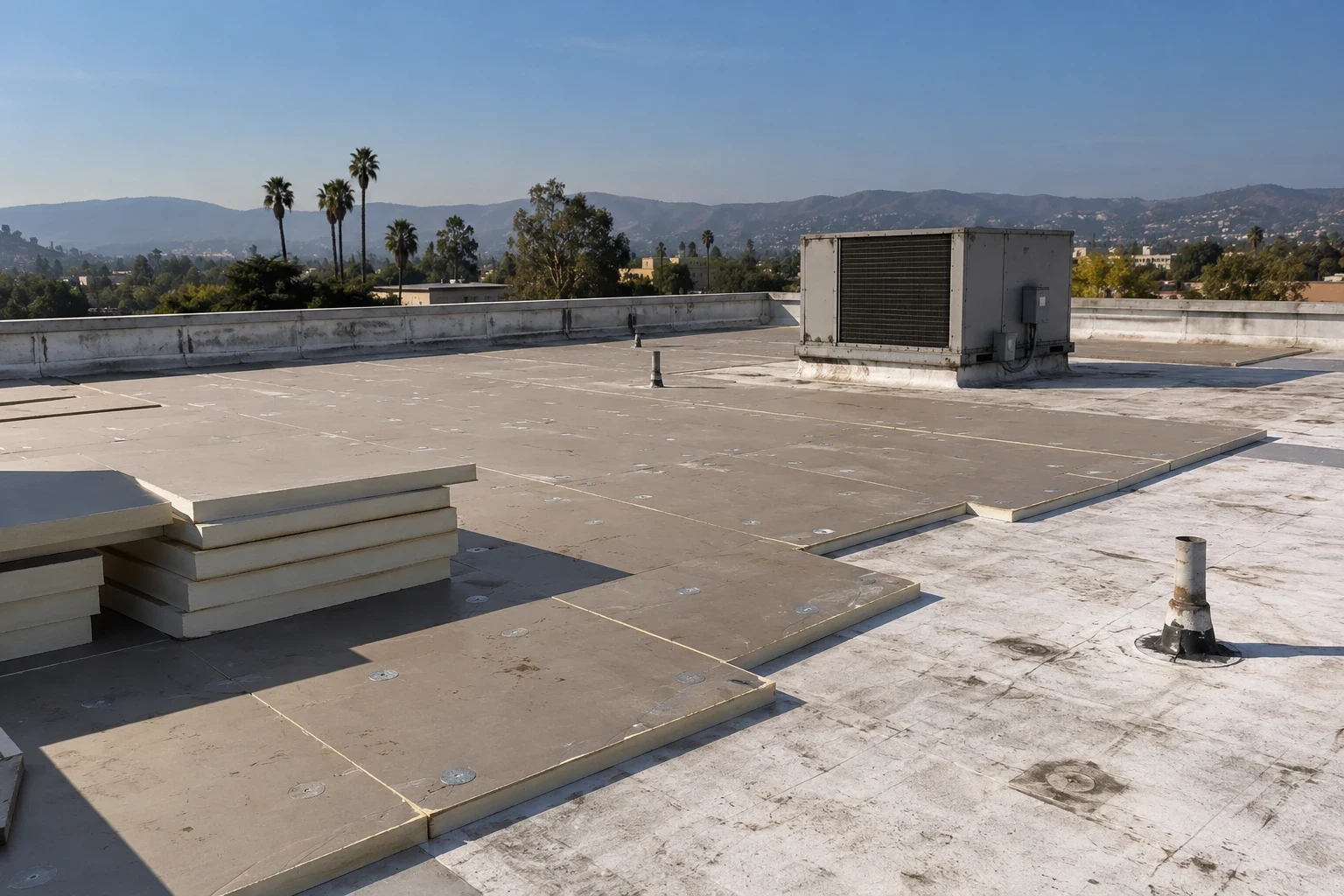
A curb raises equipment above the roof surface and gives the membrane or flashing a stable transition at the unit. We check its height, corners, metal condition, and connection to the surrounding assembly. A curb that rocks, has separated seams, or carries patched flashing may be moving against the membrane. We also look for corrosion, crushed insulation, loose termination bars, and sealant that has pulled away from a surface it could not hold. A bead of caulk can hide a gap without reconnecting the layers below it. The repair scope should identify which material is removed, what surface will receive the new flashing, and where the restored detail will terminate.
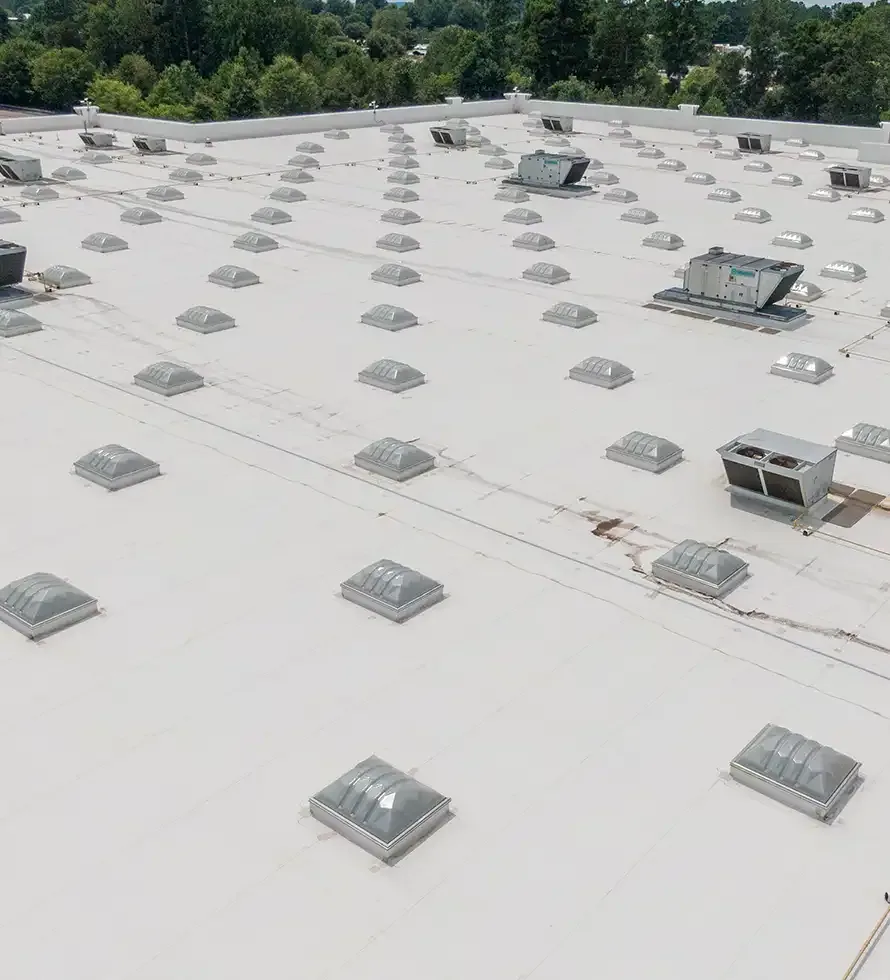
Industrial and business-park areas near Meyers Street and Hegan Lane give Chico roof work distinct delivery and access settings. They frame delivery access; unit dimensions and clearances come from the building itself. We photograph each curb side and mark the roof zone so the owner can compare the condition with equipment records. If the unit remains, the scope names the membrane tie-in instead of leaving it to a later trade. Review penetration flashing work when nearby openings share a similar transition.
Check the supports under pipes and lines
Pipe stands, conduit blocks, and service platforms can concentrate weight on a small part of a membrane. A support may abrade the surface as it shifts, pinch a walkway, or hold debris where water should move. We inspect its base and contact points, then note whether the membrane is cut, worn, compressed, or covered by an incompatible patch. The roof report also distinguishes the roofer's work from mechanical work: a trade partner may need to disconnect or temporarily move a line before the roof detail can be restored. That sequence is planned before materials are removed, with the owner confirming shutdown or access limits.
State Route 99 links Chico commercial areas from north to south, but it does not show where equipment lines cross a roof. We map each support and note whether the base needs a compatible pad, flashing repair, or trade-coordinated move. Soft insulation or water held at a stand may justify a targeted check before resetting it. cover board and insulation review helps define what lies below a damaged base.
Keep runoff moving around the unit
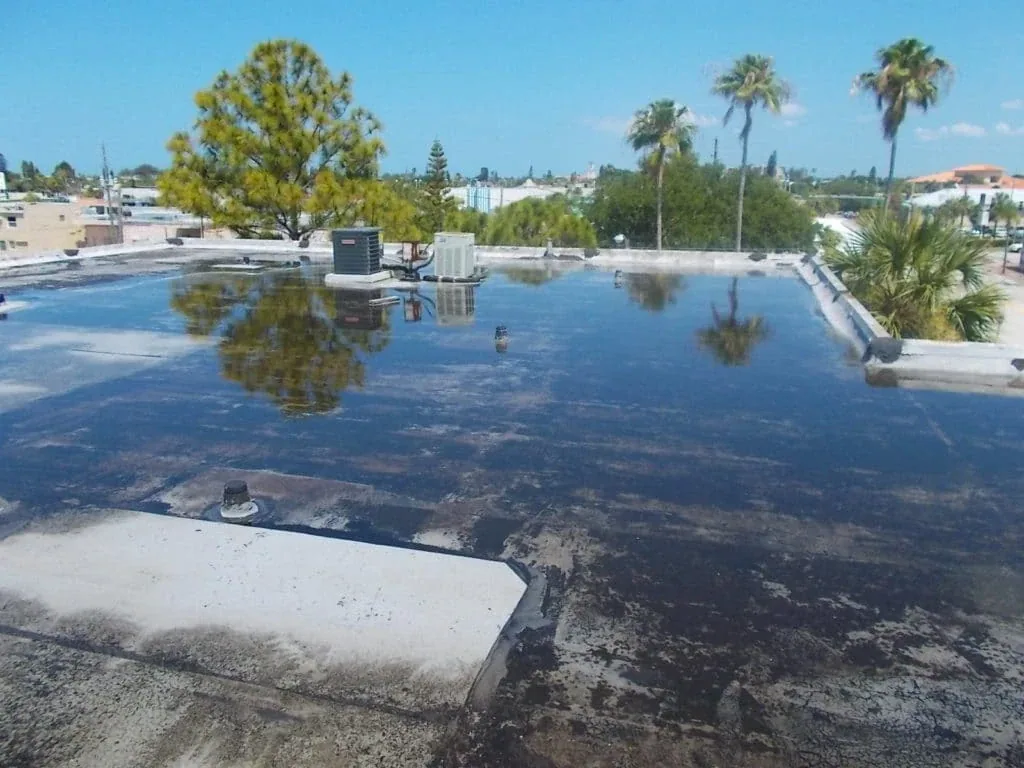
Curbs interrupt the roof surface, so runoff may collect at an uphill corner or pass through a narrow channel beside the equipment. We compare the water path with drains, scuppers, overflow points, and any tapered insulation visible at the surface. A unit that sits in a low area may need a drainage correction as well as flashing repair. A membrane patch will not change deck slope, and a new curb does not automatically resolve standing water. Our notes identify the observed low point and whether a roof plan or measured elevation would change the proposed fix. A drain or scupper inspection can be included when the outlet affects the equipment area.
Little midsummer rain contrasts with much wetter winter months, so dry-season observations may miss a seasonal drainage problem. We record what the roof shows on the visit date, whether drains were accessible, and any known history of retained water. Openings near an outlet need room for cleaning and future checks. If supports block that route, the scope preserves a clear water path rather than coating over the obstruction.
Coordinate roof and mechanical work
When a rooftop unit reaches the end of its service life, replacement can change its curb, height, connections, or service clearance. California's 2025 Energy Code became effective January 1, 2026, and applicable commercial alterations include provisions that affect end-of-life rooftop HVAC equipment and building-envelope efficiency. The permit and project team determine which requirements apply to a specific job. We coordinate the roof tie-in with the equipment schedule, curb dimensions, and any required shutdown rather than installing flashing before the final assembly is known. If the new unit or curb alters roof height, we check whether wall flashing and access clearances still work.
Downtown Chico includes commercial and office mixed-use areas, while Meyers Street and Hegan Lane serve industrial and business-park uses; neither setting tells us what equipment sits on an individual roof. We list the roofer’s work, mechanical trade scope, final curb dimensions, and the owner’s review point after opening. When the roof is confirmed as TPO system details, the tie-in follows that assembly. A Hegan Lane service area still receives a building-specific survey.
Set a repair boundary before work starts
A localized curb repair is reasonable when the surrounding membrane remains compatible, the base is stable, and moisture has not spread beyond a defined area. Repeated movement, wet insulation, a deteriorated deck, or several failed penetrations may call for a broader roof plan. We show the boundary on the roof sketch and identify any concealed condition that would change the recommendation. If opening the area reveals damage, the crew photographs it and pauses at the agreed review point before covering the surface. The owner can then compare a detail repair with selective replacement or a larger project using the same evidence.
Equipment shutdowns, deliveries, and roof access affect timing when a building stays open. We divide work into sections that can be prepared, restored, and protected within an approved window. For several curbs, the closeout lists locations, materials, adjacent supports, and items reserved for another trade. A phased occupied-building sequence can help when interior access cannot pause. The record gives the next technician a repair history instead of a vague note that a curb was sealed.
Leave a record that supports the next visit
After the repair, we provide roof-zone photos and note the curb or support, the membrane transition, and any limitation in access. The record identifies what was removed, what was installed, and whether the equipment remained in place. It also flags a drain, pipe stand, or adjacent flashing that needs attention at the next maintenance visit. This is useful when one property has several units or when different trades have worked on the roof over time. A complete condition report keeps those observations with the roof history.
For the visit, share the equipment location, current symptom, replacement plans, and site check-in process. We can inspect the curb and water path, confirm trade coordination, and document a repair boundary with timing considerations. The recommendation follows the assembly and field conditions, not a citywide assumption about roof construction.
Commercial Roofing Questions
Can a curb be reflashed without lifting the unit?
Sometimes. We check the curb height, existing flashing, membrane condition, and room to complete a watertight tie-in. If the detail cannot be restored in place, the scope identifies the mechanical coordination needed before work begins.
What makes a pipe support a roof concern?
A base can abrade the membrane, compress insulation, or obstruct runoff. We inspect the contact area and water path, then state whether a repair pad, flashing detail, or trade-coordinated move is needed.
Does the new HVAC curb have to match the old one?
The equipment dimensions and project requirements set that decision. We confirm the final curb height and footprint before completing the roof tie-in so the flashing is built to the assembly that will remain.
Can a leaking curb damage insulation below it?
Water can enter at a failed transition and travel into adjacent layers. We inspect visible edges and use targeted confirmation when concealed moisture would change the repair boundary or replacement decision.
What should the proposal show for equipment work?
It should identify the roof materials, curb and support locations, mechanical scope, access or shutdown needs, flashing tie-ins, and the review point for concealed conditions. We keep those responsibilities visible before mobilization.
Map the equipment interface
Tell us the building type, the equipment location, any active symptom, and what roof history is available. We will inspect the curb, supports, and water path, then document a repair boundary and coordination plan.