Commercial Roofing in Hegan Lane Industrial Area, Chico, CA
Industrial roof work starts with the route from the entry to the active work zone, then the assembly and condition found above it. Hegan Lane lies just south of Southwest Chico and shares the city's southern employment geography with Midway and the Chico-Oroville Road corridor. For an existing roof, we confirm which building and access point are authorized. For an existing roof, we confirm which building and access point are authorized. For a new project, we work from the roof plan and sequence instead of assuming that a district map identifies completed roof area.
Verify how a crew reaches the roof
Industrial properties may have loading, vehicle, or production paths that cannot be blocked during a roofing shift. We ask the site contact to identify the approved entry, delivery windows, lift location, material staging, and areas that need to remain open. The roof plan records access controls, fall protection, and the daily dry-in boundary. Hegan Lane’s broader employment setting does not tell us whether a particular building has a ladder, hatch, gate, or safe staging surface, so those details are confirmed before the crew arrives.
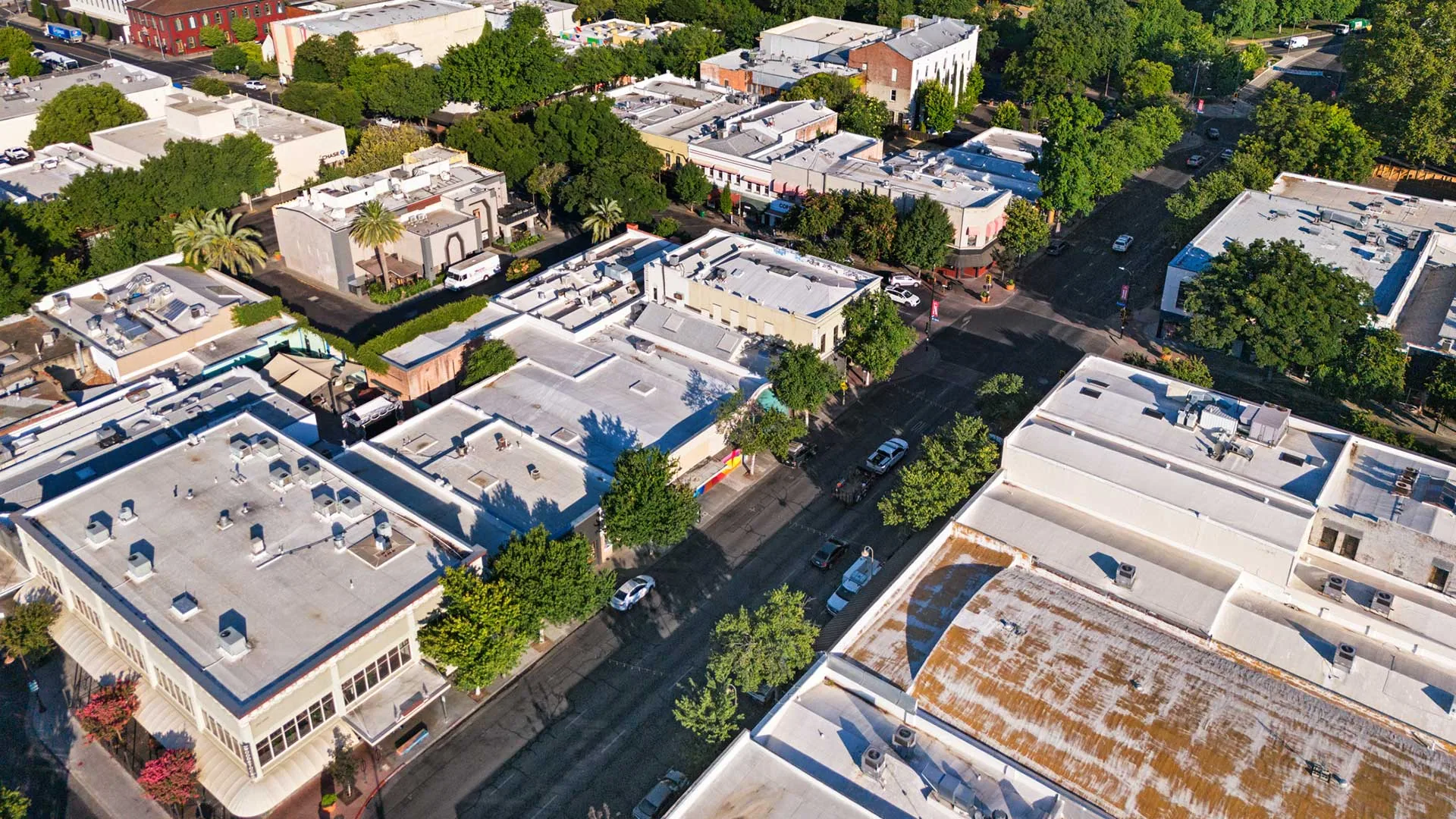
Midway and the Chico-Oroville Road corridor are separate orientation points within the southern employment geography. A Southwest Chico property may have different entry and work-hour constraints from a building near Hegan Lane. A Meyers Street industrial property has its own access route and roof boundary. Our roof inspection records the actual roof details and access limits so a later repair crew can use the same information without treating nearby sites as interchangeable.
Map the assembly before opening it
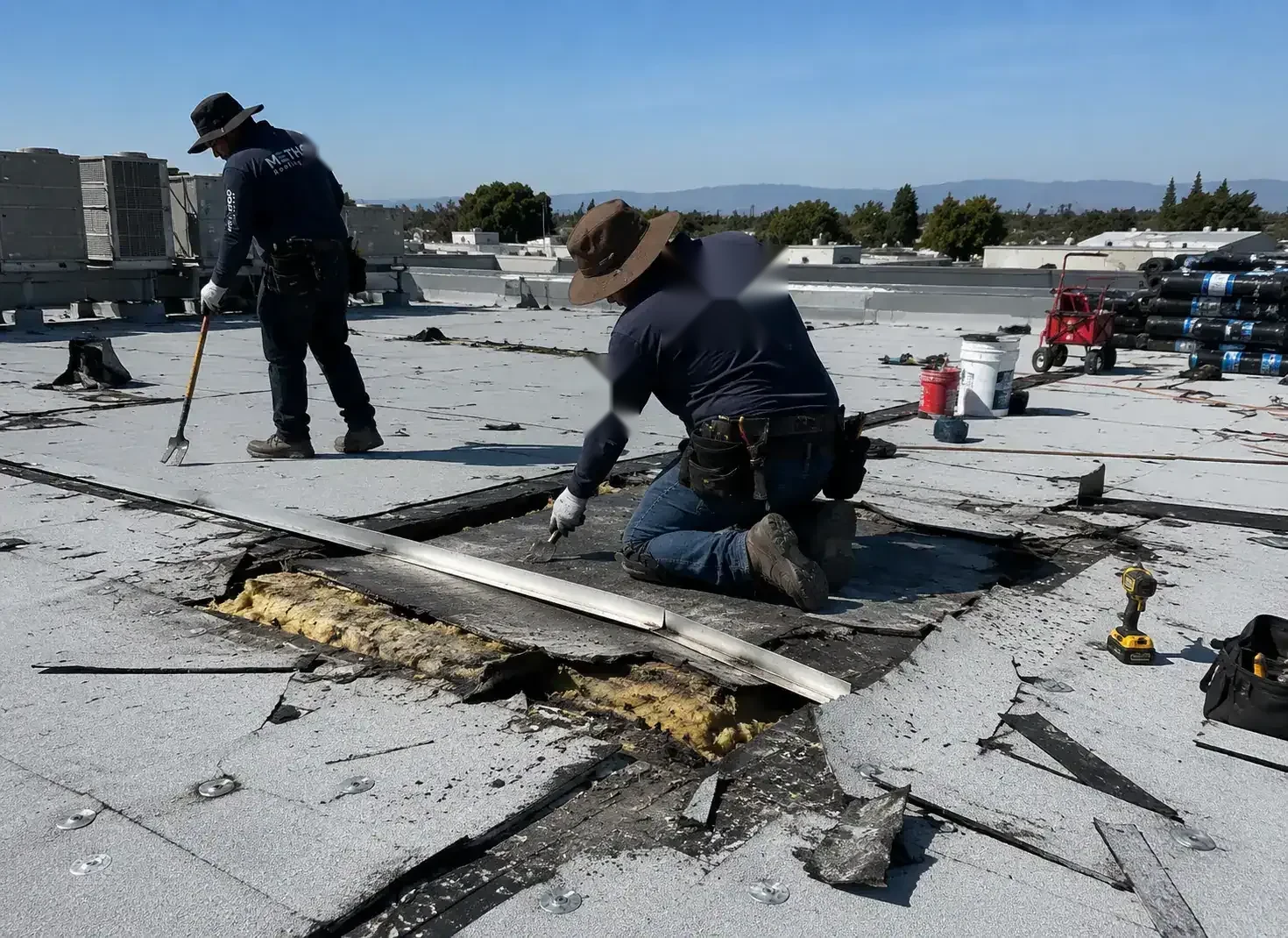
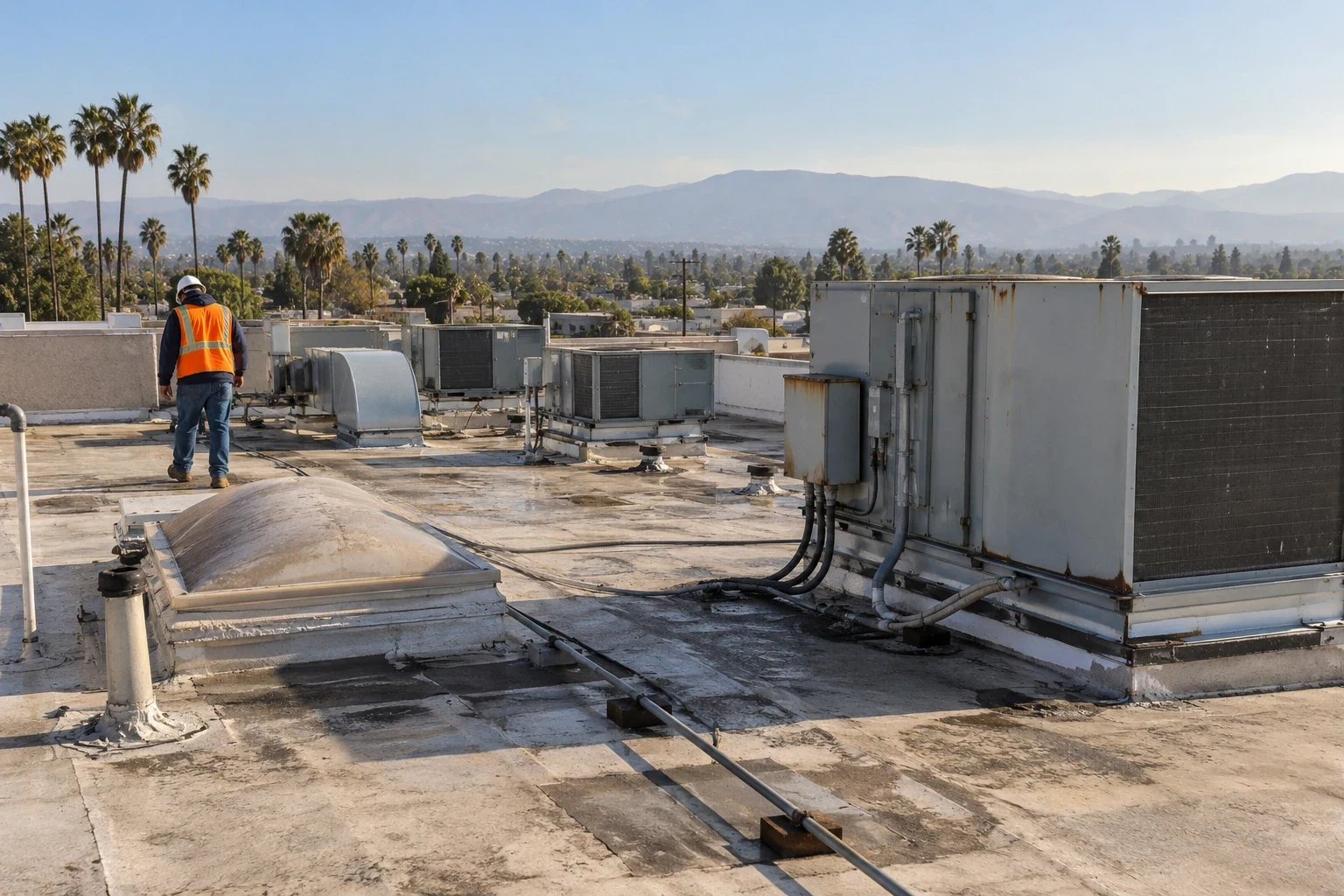
We identify the roof surface, seams, laps, penetrations, curbs, drains, and perimeter transitions before recommending a repair. If a leak has been reported, we compare its interior location with roof slope and water paths that could carry moisture away from the entry point. Earlier patches and recent equipment work are noted because they may affect what should be tested. When concealed insulation or deck condition could change the scope, the owner sees the reason for a test opening before removal begins.
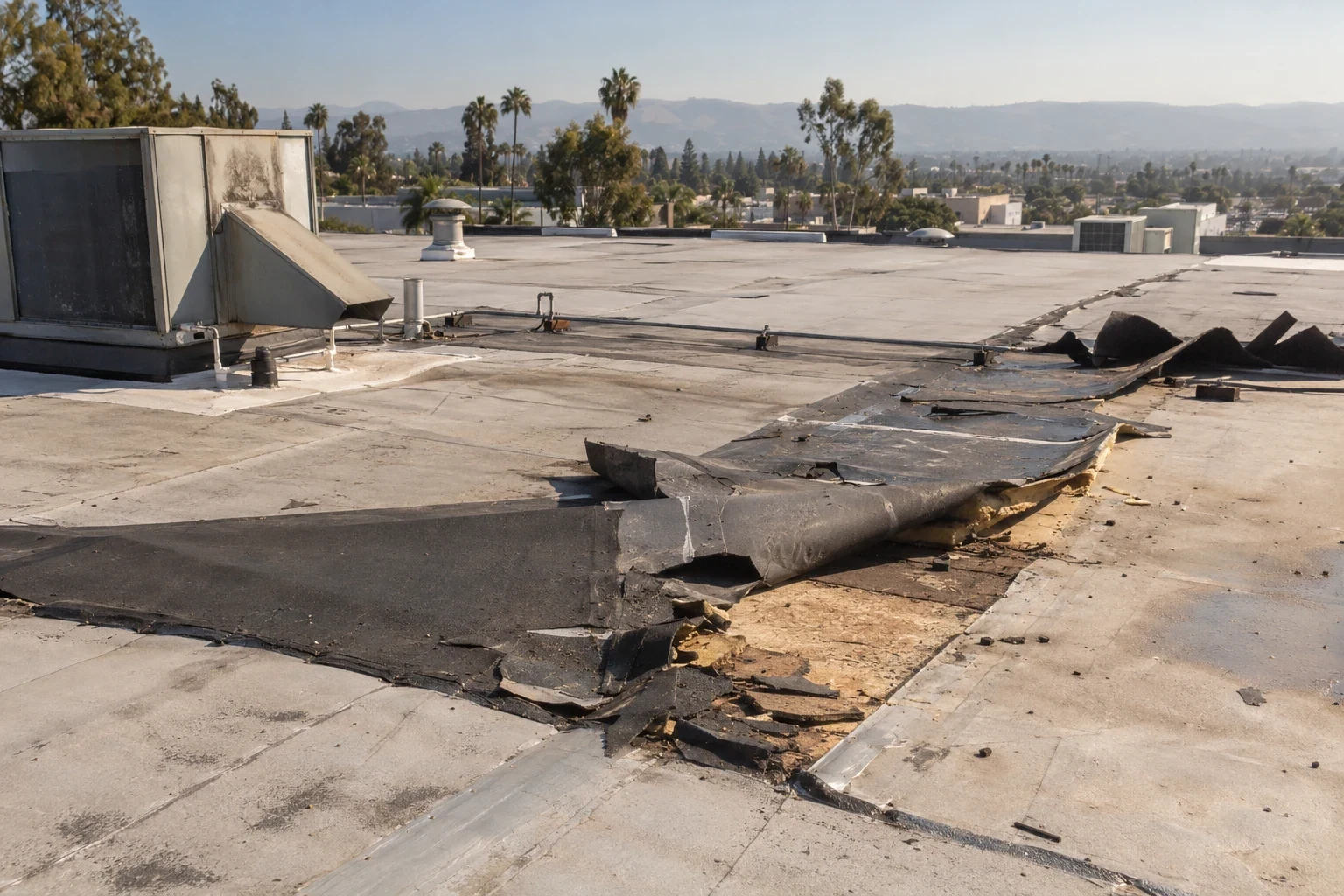
An industrial roof can have several work zones and multiple roof elevations, but the property facts do not tell us which conditions exist at a specific building. We record each roof section separately and distinguish visible surface wear from moisture evidence below the membrane. A photo report gives a facilities manager a repair boundary and a record of open questions. If wind has displaced edge metal, a wind-damage review documents what moved and whether adjacent seams need examination.
Keep drains clear of the repair path
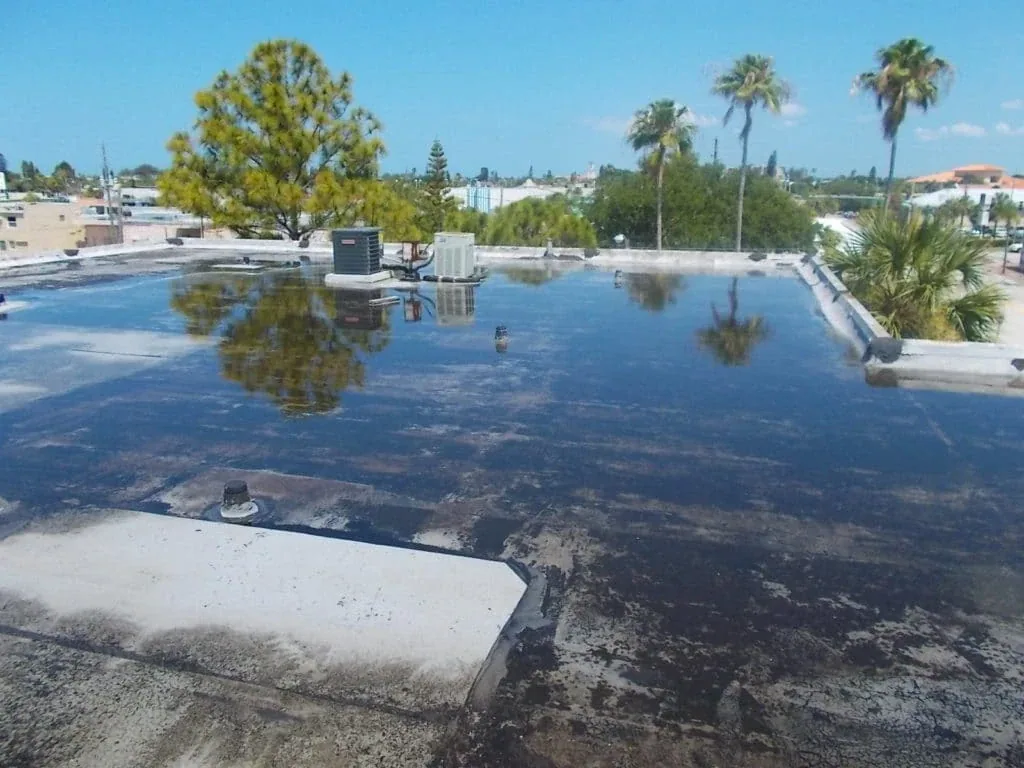
Water should reach a primary outlet without crossing a failed seam or collecting around a penetration. We inspect drain bowls, strainers, scuppers, overflow openings, flashing, and nearby membrane, then note what cleaning can correct. If retained water persists after an outlet is clear, we map the area and check for slope or insulation concerns. The owner can then decide whether the work is maintenance, a bounded patch, or a wider assembly issue rather than treating all ponding as one repair type.
Winter carries most of Chico’s normal rainfall, while midsummer is much drier. A pre-season drain visit can document obstructions before wet weather, but the seasonal pattern cannot determine an individual roof’s performance. Our drain and scupper service checks primary and overflow routes. If ponding marks extend beyond one outlet, a water-retention assessment records the affected boundary and nearby seams.
Choose work from the evidence
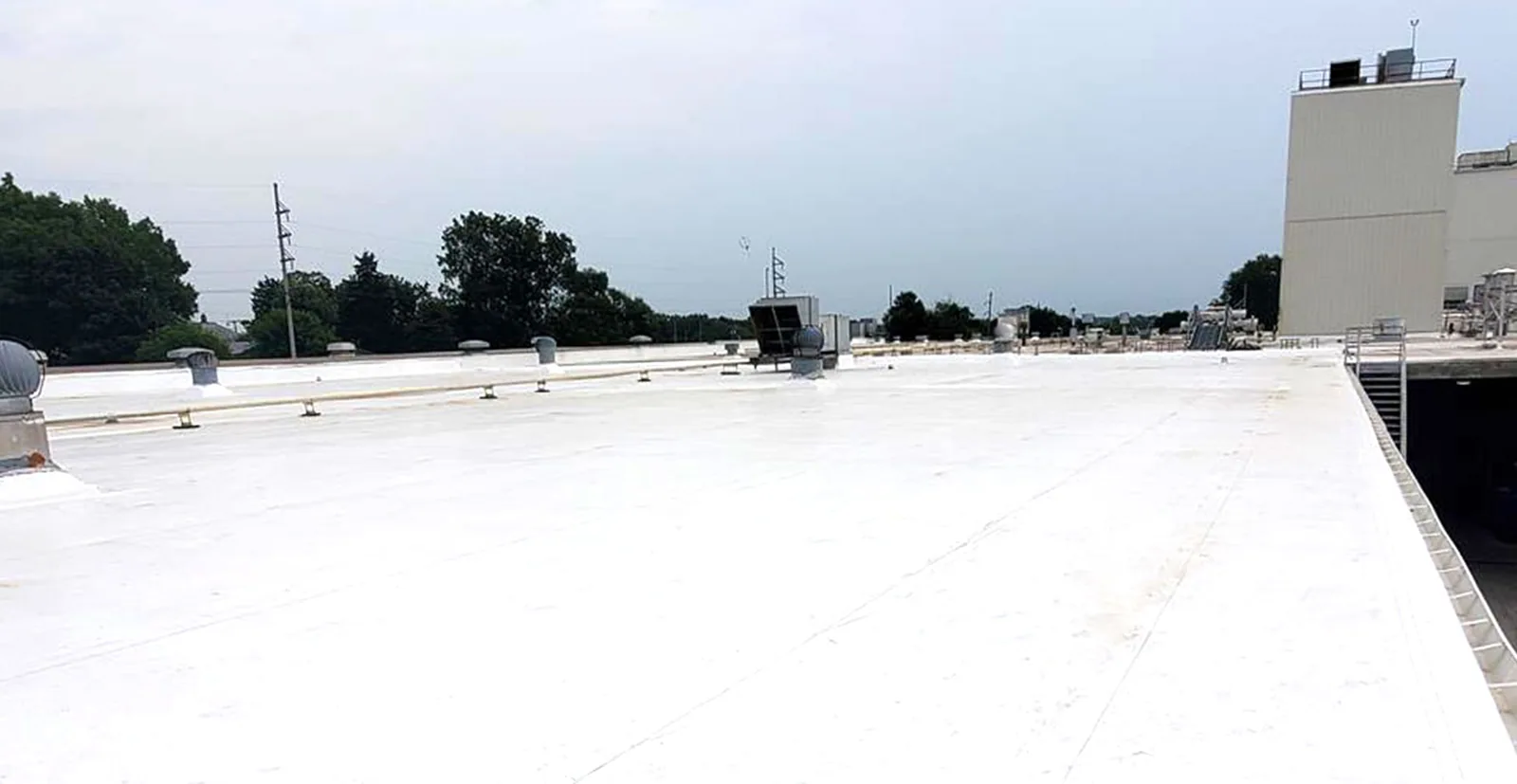
A localized repair fits when the failed seam, puncture, or flashing can tie into stable, compatible material. Replacement may be worth comparing when moisture or repeated failures cover multiple areas or the edge details no longer provide a sound connection. A recover is considered only after checking existing layers, attachment, dryness, drainage height, and compatibility. The proposal explains which observations support the recommendation and what remains uncertain before quantities are fixed.
For industrial use, temporary protection and roof access may matter as much as the membrane repair itself. We keep the work boundary visible, protect any open area before a shift ends, and document the material and preparation used. If the assembly is specified for replacement, a membrane system review compares the design and attachment details with the actual deck. Coating restoration is considered only when the substrate and existing system can accept it; a coating does not correct wet insulation or unstable flashing.
Set handoffs around the production schedule
Before work begins, the owner and superintendent agree on roof access, equipment shutdowns, protected interior areas, and who can approve a field change. If production or loading continues below the work, the daily plan names the zone that will be opened and the point where it must be dry-in complete. Materials are staged so they do not block a required route. When removal reveals a damaged deck or a different roof layer, we secure the opening and request direction before extending the work boundary.
A mechanical or electrical trade may need to cross a finished roof after installation. We define the sequence for curbs, supports, and final flashing so a late penetration does not leave the roofer guessing about responsibility. A curb and support review identifies the roofing tie-in, while the other trade handles its own equipment and code requirements. That handoff helps the owner track which transitions are complete before the next crew is scheduled.
Use the season without relying on it
Chico’s hot, dry summers and cool, wetter winters affect the timing of roof work. Surface temperature and substrate moisture still decide whether a product can be installed on a given day. In summer, crews check material limits and safe access before applying a repair. Ahead of winter rain, the owner may prioritize open seams and blocked drains. Those are planning cues, not proof that a roof has failed or assurance that weather will remain within the work window.
The schedule identifies the open-roof limit, temporary cover, and next inspection point for the shift. If conditions change, the team secures the exposed section and records what remains. For an active leak after hours or during a holiday, a temporary measure can protect the building before a permanent repair is scoped. The service record distinguishes that first response from completed restoration and gives the property contact a clear follow-up task.
Define cost drivers before mobilization
A measured scope lists preparation, repair or replacement limits, materials, flashing, edge metal, drain work, access, disposal, and temporary protection. Where quantities may change after removal, the owner sees the approval process and any unit basis in advance. Cost and duration depend on the area, assembly, deck condition, access, material lead time, weather, and operating constraints. A district name or a land-use plan does not establish the quantity or condition of a commercial roof.
California’s 2025 Title 24 standards took effect January 1, 2026. The applicable code edition, local amendments, and permit requirements depend on the project. We coordinate roof and insulation details with the design team and identify mechanical or electrical interfaces for the responsible professional. The final proposal shows included work separately from unresolved conditions, so the property manager can approve a defined scope rather than a broad allowance.
Commercial Roofing Questions
Can you inspect every building in the Hegan Lane area from one visit?
No. A roof inspection is specific to the authorized property and roof sections visited. Each building needs its own access and condition record.
What should an industrial manager confirm before a roof crew arrives?
Identify the approved entrance, delivery path, staging area, active work hours, roof access, and any interior zones that need protection.
How do you handle moisture found during removal?
We document the exposed condition, protect the opening, and ask the owner to approve any added work before the repair boundary expands.
Can a drain cleaning resolve ponding?
It can clear a restricted outlet. If water remains after cleaning, we record the area and check whether slope, insulation, or membrane conditions need separate attention.
Does the nearby employment geography determine the roof system?
No. Material choice follows the existing assembly or approved project design, plus deck, slope, drainage, and compatibility requirements.
Set a roof inspection around site operations
Share the building use, symptom, access rules, and work window. We will confirm the information needed to define a property-specific roof review.