Emergency Commercial Roof Repair in Chico, CA
An active leak reaching equipment, stored goods, or an occupied room calls for a controlled first step that limits interior exposure without creating a roof hazard. Our 24-hour commercial response, including weekends and holidays, starts with safe access and a check of the active water path. A temporary measure may be possible, but surface condition and weather can limit how it is installed; the first visit records that boundary instead of treating mitigation as a permanent repair. We document affected areas and arrange a durable scope when the roof can be prepared correctly.

Reduce interior exposure
Tell us where water is appearing, whether it is actively flowing, what equipment sits below, and whether anyone can safely provide roof access. Inside, move portable items away from the wet area when possible and keep people clear of ceiling materials that may be saturated. Do not step onto a wet roof or disturb electrical equipment. We coordinate the immediate roof response with the person who can authorize access and protect the affected space.
At the roof, we trace a likely path and assess whether a temporary patch, tarp, or other dry-in measure can be secured safely. The action must not create a trip hazard, obstruct a drain, or trap water against a wall. A leak-tracing visit can then establish the entry point, while an inspection documents adjacent details. If the roof is too wet or conditions make permanent work unsafe, we explain the limitation and set the next safe work window.
Once water is controlled, preserve the original ceiling mark and note whether it grows or changes after the temporary measure. That observation can help us compare conditions on the return visit.
Separate urgent work from permanent repair
Temporary protection and permanent repair solve different problems. The first limits exposure now; the second needs a sound, dry surface and a compatible tie-in. We record the temporary material, the area it covers, and any nearby condition that remains exposed. Then we determine whether the final scope is a seam weld, flashing rebuild, drain correction, puncture repair, or removal of wet material. A photo and short description of each finding make that decision easier for the owner and building team.
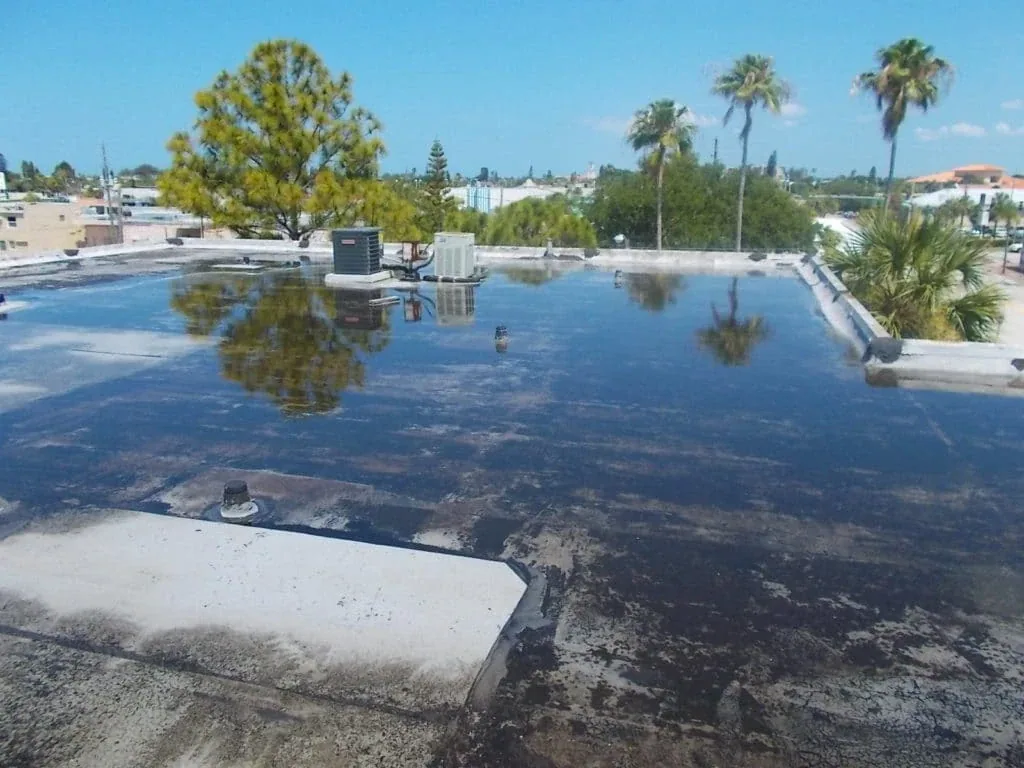
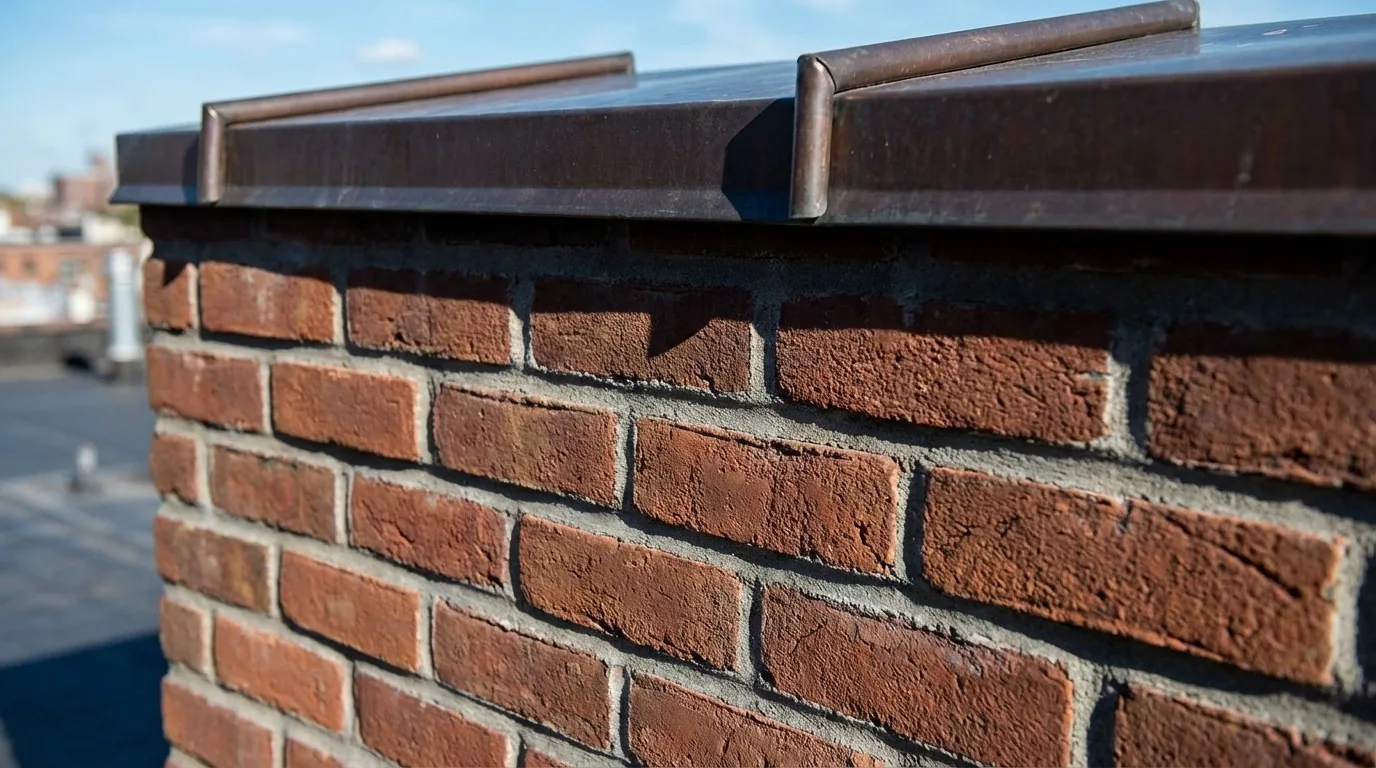
Chico's climate has hot dry summers and cool wet winters, with winter precipitation far greater than midsummer averages. When a storm arrives, repeated water can reveal a weak termination or a blocked outlet that stayed unnoticed during dry months. The owner may need a drain and overflow check in addition to the immediate opening. We also examine coping and gutters, since runoff can travel behind an edge even when the field membrane appears intact.
We also check whether water has traveled into insulation or reached an interior partition. A surface dry-in can limit new entry while the owner arranges a ceiling or equipment inspection below, but it cannot establish the full extent of concealed moisture. We mark the protected zone and return for any agreed test opening once access is safe. If the roof has several layers or the deck feels unstable, the permanent scope may require a different sequence than a simple membrane patch. That distinction is explained before we move from temporary stabilization to lasting work.
Make the response safe to execute
Emergency work still depends on safe roof access and a coordinated entry plan. We need to know the ladder or hatch location, rooftop unit restrictions, tenant hours, loading activity, and any area that cannot be shut down. If interior protection is required, we confirm who will move equipment or place coverings and which rooms remain occupied. Where water is near electrical systems or ceiling materials, the building contact should involve the appropriate facility staff before the crew begins.
If operations continue during the work, a phased roof plan can isolate work zones and keep the dry-in boundary clear. We confirm the actual property conditions rather than assuming that a district's typical use applies to the building.
Prepare the lasting repair
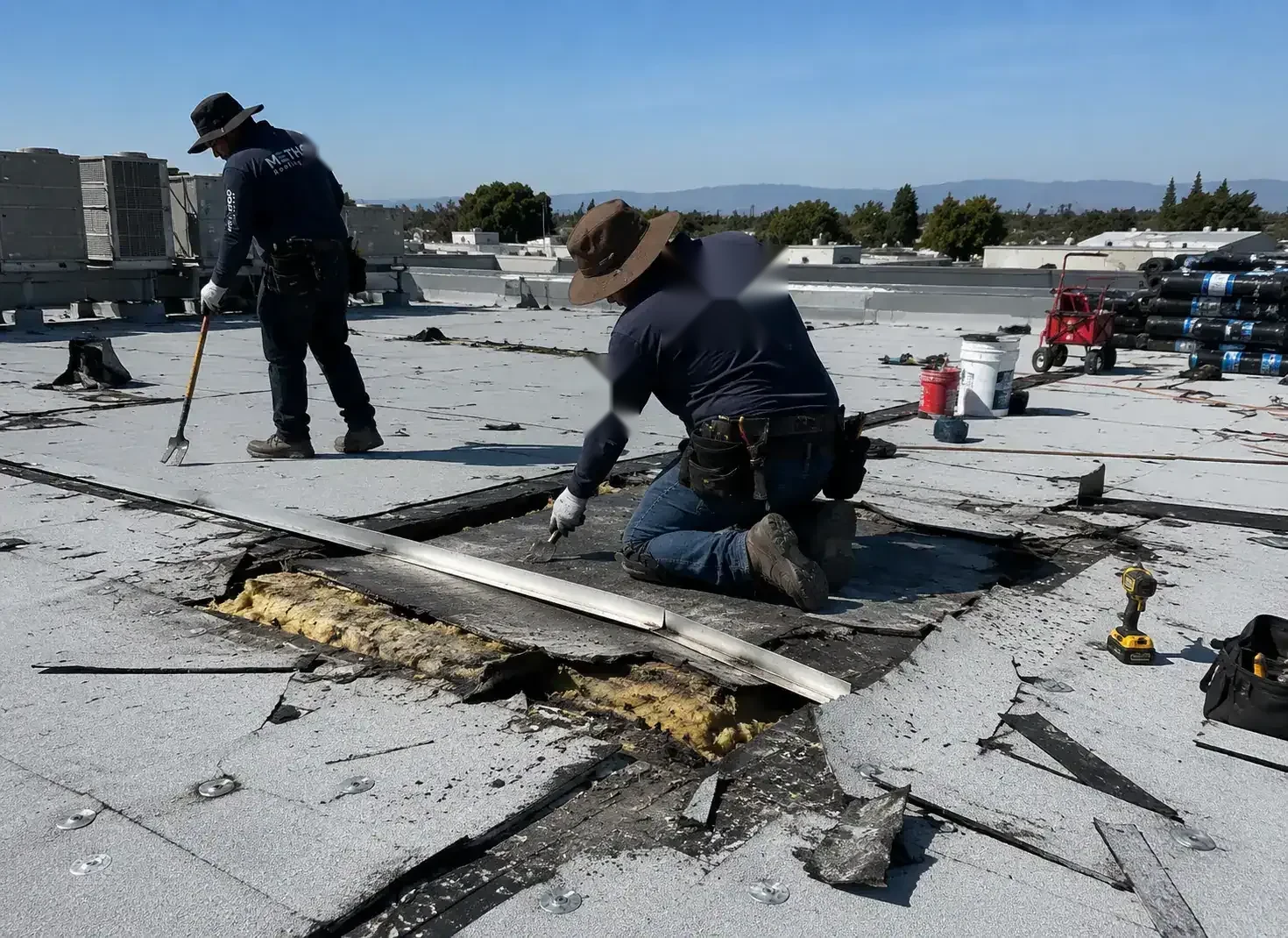
Before a permanent repair, we remove failed material and prepare the area so the new patch bonds or welds to sound surfaces. A membrane opening may require a larger patch than its visible tear, and a curb leak can need rebuilt flashing rather than a bead of sealant. If the insulation below is wet, we mark the boundary and explain whether a test opening or localized replacement is required. Where the deck or attachment appears compromised, we pause for the necessary assessment instead of concealing the condition.
Once the roof material is confirmed, we choose a compatible repair method. A TPO roof needs a prepared weldable surface; a metal panel requires attention to fasteners, laps, and movement. If repeat calls point to a larger failure, an overall repair assessment can define the boundary. We keep urgent stabilization separate from the owner's longer-term capital decision.
Plan around the property
The Downtown Chico district includes civic, cultural, office, residential, and commercial mixed-use designations; the Chico Airpark Employment Area sits within a different employment geography. Those facts help frame likely operating concerns, but the actual roof determines the response. A downtown property may need a narrow material route and careful coordination with adjacent activity. An airpark-side building may have security or equipment access conditions. We confirm these details with the site contact before dispatch and document any restriction that changes the repair sequence.
After the temporary action, we give the owner a clear record of the observed damage, protected area, and remaining exposure. When a permanent scope is ready, it names the repair material, tie-in boundary, access requirement, and any separate trade coordination. A condition report can preserve those findings for insurance, maintenance, or later budgeting without turning the emergency visit into an unsupported conclusion about the rest of the roof.
Downtown Chico's mixed-use blocks can bring multiple occupants and shared entrances into the access plan. We identify who can authorize roof entry, where temporary barriers can be staged, and whether a business must remain open beneath the repair area. A separate building contact may need notice before a short shutdown or interior protection step. The plan records those practical limits beside the roof work, so dispatch does not create an avoidable interruption while the crew is addressing water entry.
Commercial Roofing Questions
Do you answer commercial roof emergencies overnight?
Yes. Emergency response is available around the clock, including holidays. Safe access and weather determine whether we can make a permanent repair immediately or first install temporary protection and return for prepared work.
What should staff do before the roofer arrives?
Keep people away from wet ceilings and roof access points, protect movable items if safe, and report active electrical or equipment concerns to facility staff. Share the leak location and the best route for the crew to enter.
Will a tarp solve the leak permanently?
A tarp or temporary patch is a short-term control when it can be secured safely. We document its limits and schedule a permanent repair that prepares the roof surface and restores the required flashing or membrane tie-in.
Can you repair a roof during rain?
Some emergency stabilization may be possible, but permanent work usually needs conditions that allow safe access and proper bonding or welding. We assess the surface and explain what can be done during the response and what must wait.
Can I use the emergency report for an insurance claim?
We can document observed roof conditions, photos, and the work performed. The report records the scope we can verify; coverage decisions remain with the policy and claim reviewers.
Get a safe response to active roof water
Call with the building location, affected room or equipment, leak activity, and access instructions. We will coordinate protection, inspect the likely roof path, and define permanent repair follow-up.