Commercial Roof Edge Metal, Coping, and Gutter Service in Chico, CA
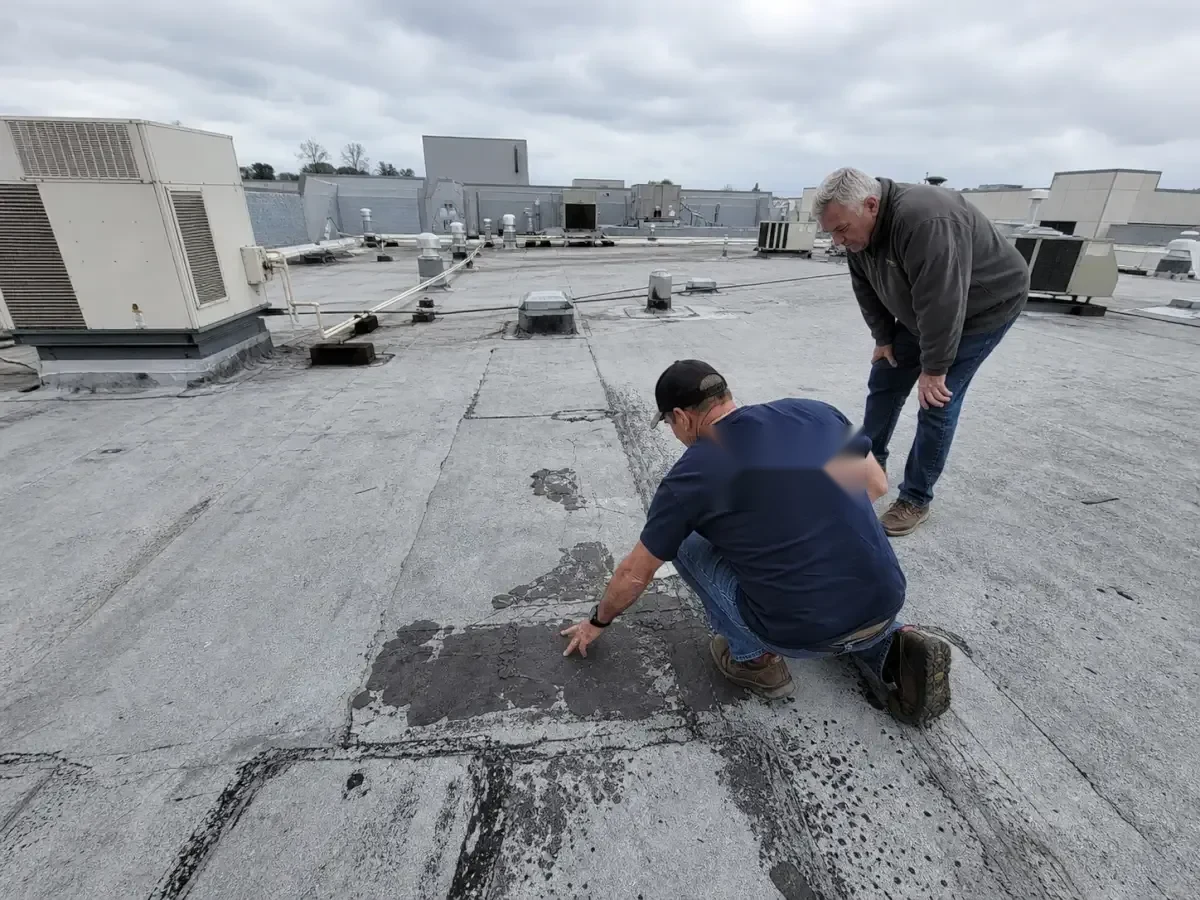
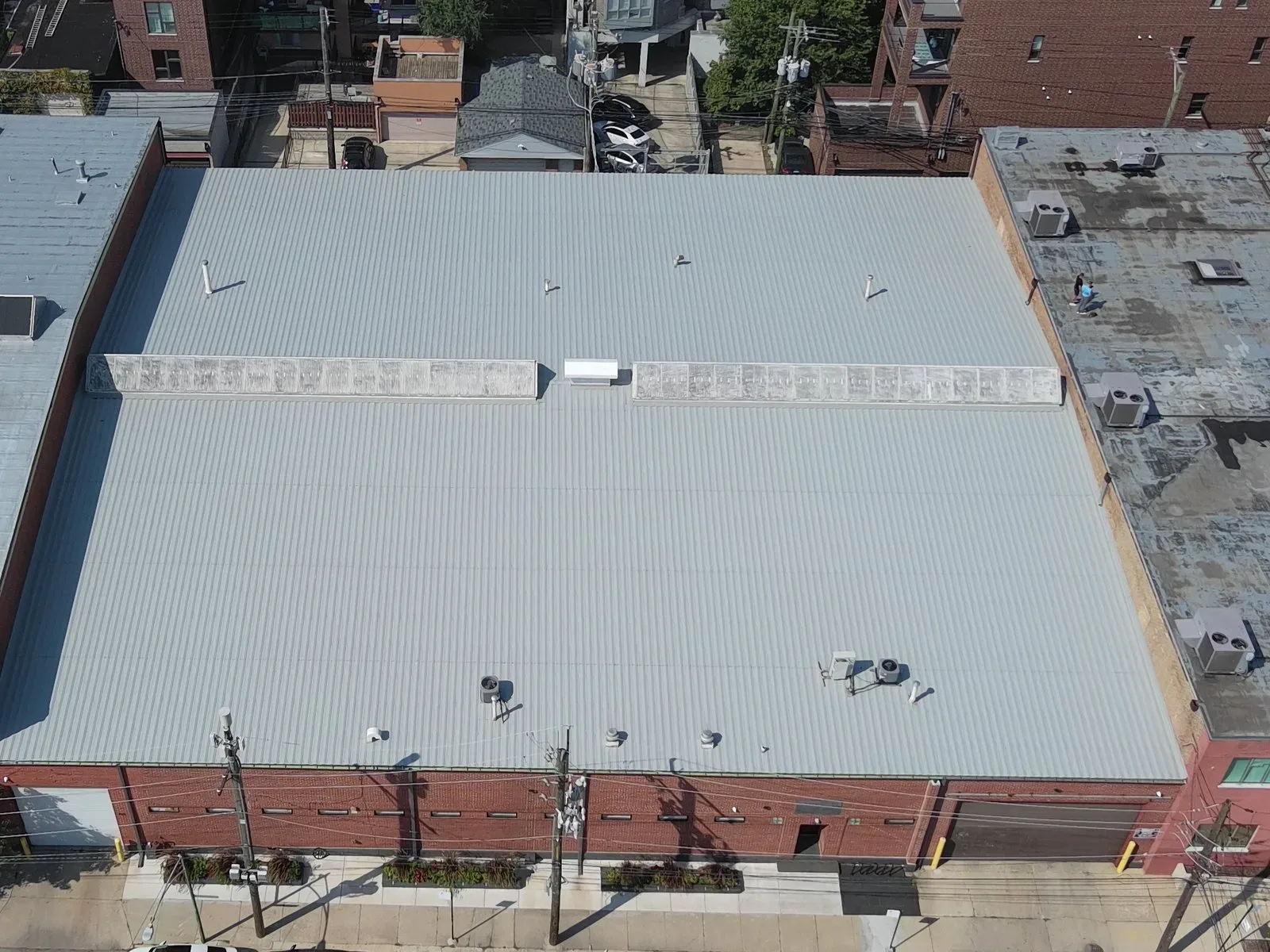
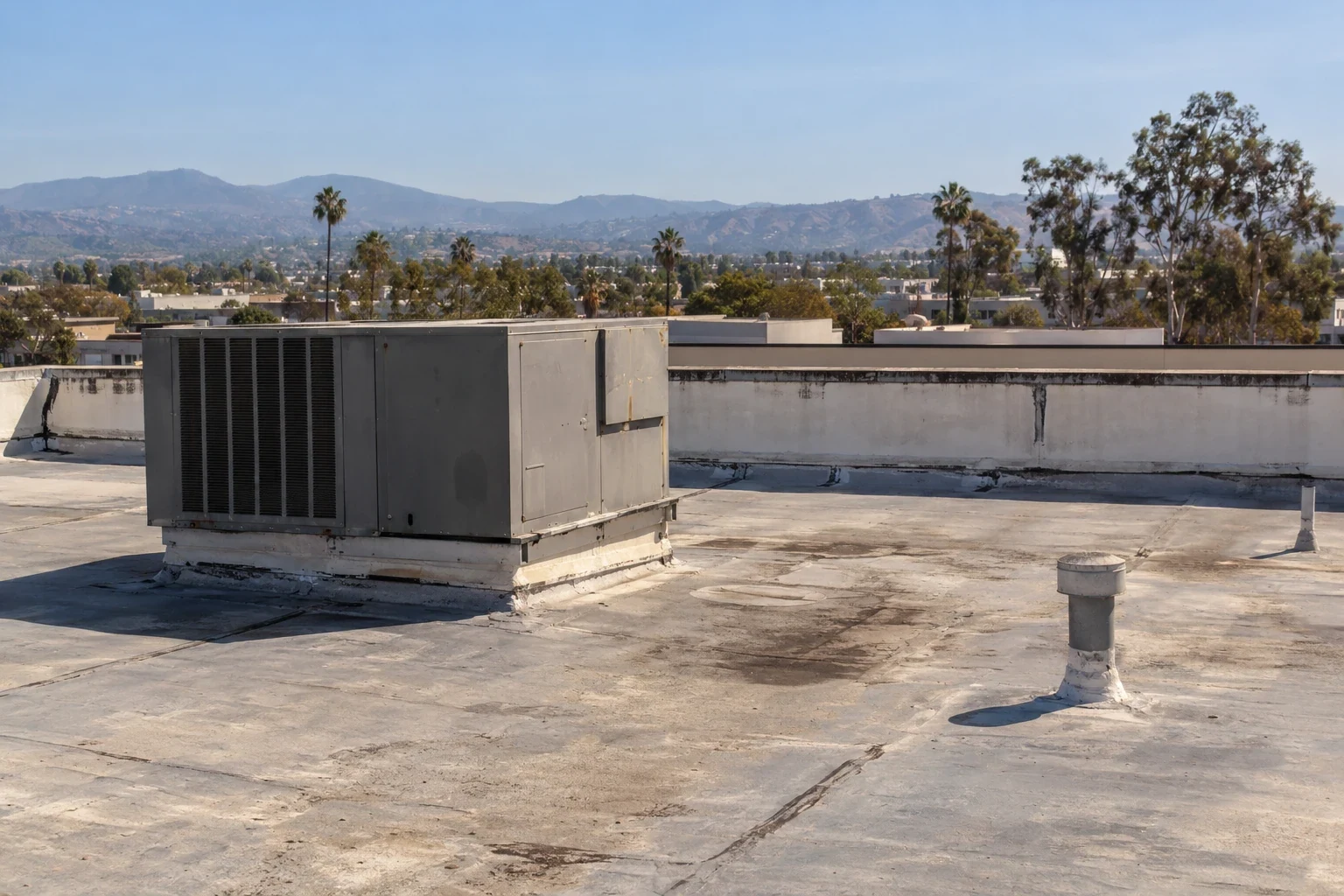
Chico's hot summer conditions and wetter winter months can expose roof edges to different cycles of thermal movement and drainage. During an inspection, we check coping joints, cleats, fasteners, metal laps, gutter hangers, downspouts, and the membrane transition, then record any actual separation, corrosion, failed seal, or blocked outlet. Weather provides context, not a diagnosis; the repair boundary comes from the observed detail and the route water can follow across the assembly. A commercial roof inspection can document which perimeter components need correction and which remain serviceable.

Follow coping joints around the roof line
Coping sits at a transition between the roof and a parapet, so we check the cap, joints, cleats, fasteners, corners, and terminations together. A loose splice or open end can admit water behind the metal even when the roof field appears intact. We photograph the full run and then each specific joint, noting whether metal has shifted or a sealant bead has separated. The repair plan identifies the substrate and attachment condition where visible; if the assembly hides a connection, we state that a limited opening may be needed. The City identifies commercial areas such as Downtown Chico and the East 20th Street District, where access and tenant coordination can differ. Those settings do not establish the edge construction at a building, so the field observation controls the scope.
Trace the membrane beneath the termination
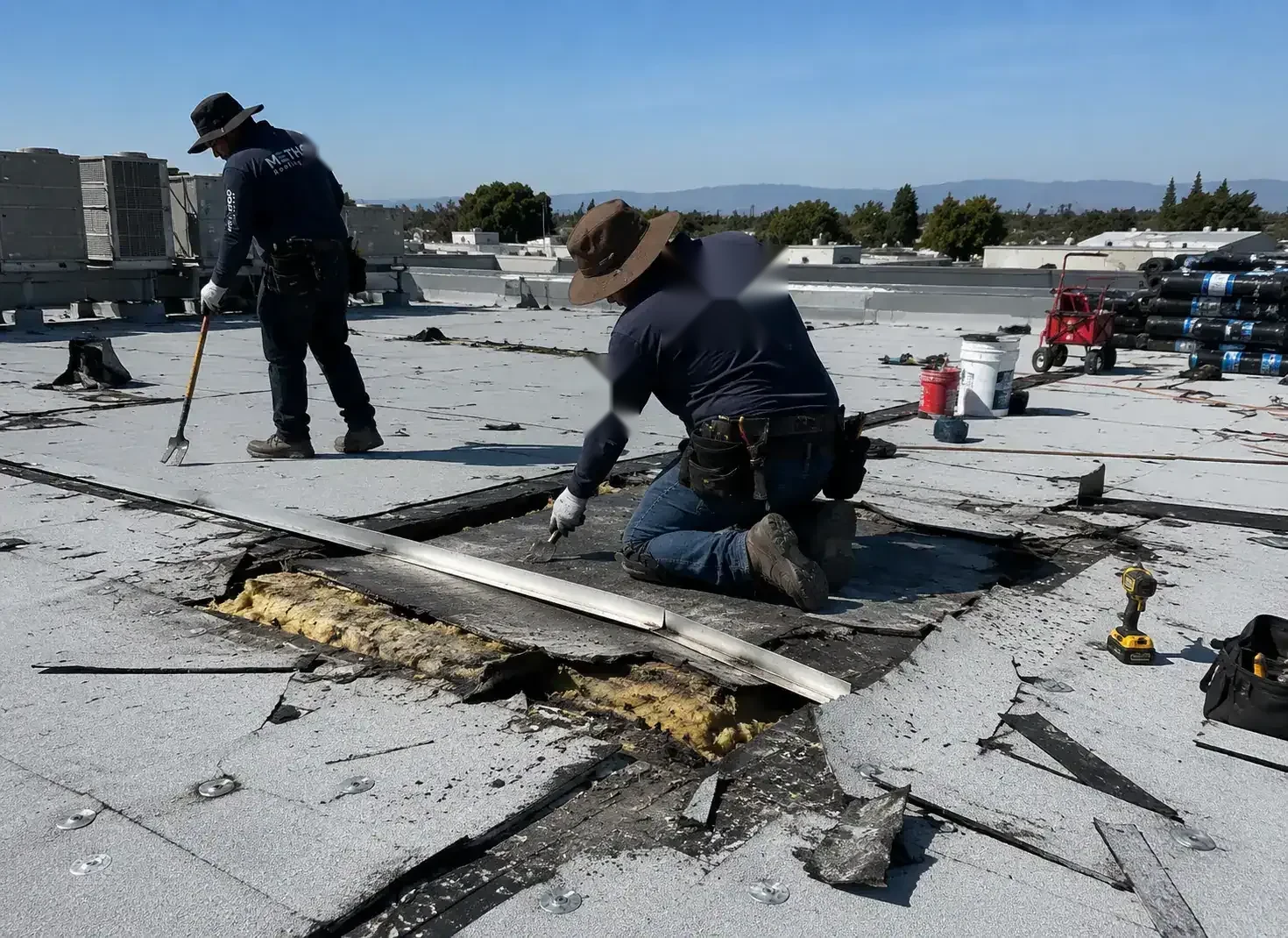
Metal cannot be assessed separately from the membrane or flashing that meets it. We inspect the termination bar or cleat, exposed fasteners, sealant, and adjacent roof surface for a gap, pullback, or previous patch. Where the edge is lifted, we check how far the condition continues and whether water has affected the substrate. A bounded roof repair may correct a localized opening, but a longer loose run needs a scope that addresses attachment and the receiving surface. If the building has a coating, we verify how the edge was treated and whether a new material can tie into it. A coating restoration assessment remains separate from the metal correction and cannot secure a failing cleat.
Check gutter pitch, hangers, and discharge
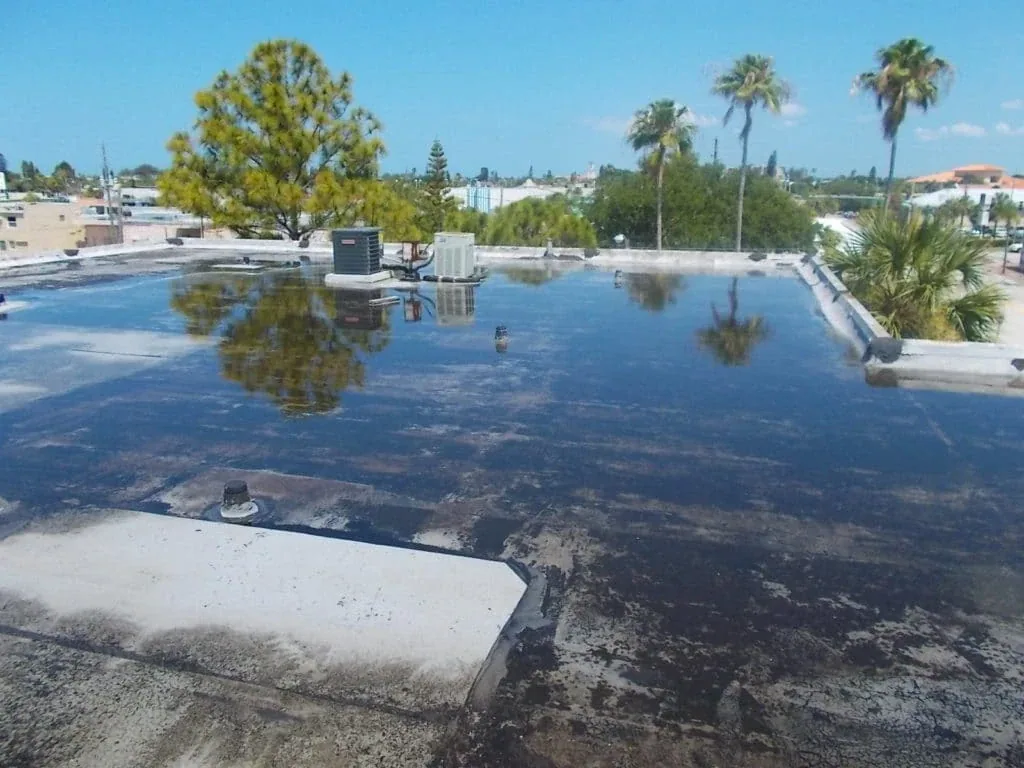
A gutter needs a supported route to its outlet. We look for loose hangers, separated joints, debris, low sections, corrosion, and signs that runoff overflows the edge. At the downspout, we note the connection and whether discharge can reach the intended ground drainage without wetting a wall or walkway. A roof-side review does not prove that a buried storm line is clear, so that question is assigned to a separate test when needed. City planning documents identify retail and service activity along Mangrove Avenue and a regional retail area near North Valley Plaza. Staging or tenant hours may affect access around those corridors, but they do not change the building's gutter geometry. A drain and scupper review may be useful where roof outlets feed the same perimeter system.
Match the repair to the metal and roof assembly
Edge work must account for metal thickness, condition, attachment, and compatibility with adjacent roofing materials. We record rust or deformation, check for sharp edges that could damage the membrane, and identify prior sealants that may not accept a new product. Chico planning documents show commercial uses along East 20th Street and employment areas around Meyers Street and Hegan Lane, but roofs in those settings can use different assemblies and cannot be grouped by neighborhood. We verify the installed materials before selecting fasteners, sealant, or flashing. If a metal panel roof is involved, a standing-seam system review can put the edge detail in assembly context. If the gutter requires replacement, its dimensions and support points should be measured rather than inferred from a photograph.
Stage the repair without blocking operations
Replacing coping or a gutter can affect sidewalks, loading routes, roof access, and the work happening inside the building. We agree on staging, protection below the edge, lift or ladder access, and any area that must stay clear for deliveries or emergency egress. The crew identifies what can be repaired from the roof and what needs exterior access, then sequences the work so open joints are not left exposed at the end of a shift. For an occupied facility, we coordinate noisy work and debris handling with the site contact. If the schedule changes because of conditions at the edge or weather, the owner receives the revised close-in plan. A phased work plan can coordinate edge corrections with a larger reroof when both scopes affect the same perimeter. Before mobilization we confirm whether a lift can fit the designated area, if traffic control is needed, and how removed metal will be lowered without crossing an active path. The site contact can then notify occupants about a defined work zone and expected access limits. This preparation also makes it easier to close the roof at each shift boundary and leave the next crew a safe, clear starting point.
Document the complete edge and water path
Closeout photos should show the repaired run, its joints, the connection to the roof membrane, and the outlet below. We list the fasteners or metal sections changed, note any adjacent area left for monitoring, and state whether a downstream drainage test remains open. The owner receives a roof plan or marked elevation with locations, so maintenance staff can compare the next inspection against the same points. A condition record is useful when future work will be phased or when water entry appears in a different season. If the inspection found interior impact, a leak investigation can trace that report separately from the exterior correction. The job is complete when the agreed edge details are secured and the drainage route is documented, not simply when new metal is installed.
For a long roof line, we identify the start and stop points of each section and note whether the work joins existing metal or a different roofing assembly. That makes it possible to compare an estimate with completed footage and see exactly where a return visit is still needed. We also mark any downspout that discharges close to an entry, walkway, or wall so the property contact can decide whether a ground-level correction belongs in another trade's scope. These details keep the edge repair connected to the full water path rather than treating the cap as an isolated strip of metal. The report includes any location that remained inaccessible so the omission is clear to the next reviewer.
Commercial Roofing Questions
Can a loose coping cap cause a roof leak?
A gap at a joint, corner, or termination can admit water behind the metal. We inspect the coping and the membrane transition together to establish the actual repair boundary.
Does gutter cleaning correct overflow?
Cleaning may remove debris, but overflow can also relate to pitch, support, outlet condition, or discharge. We record which part of the water path was checked and what needs a separate test.
Can sealant alone secure loose edge metal?
Sealant does not replace a failed cleat or attachment. We inspect the connection and identify whether fastening, metal replacement, flashing repair, or a compatible seal is needed.
Will a roof inspection include the downspout below the roof?
We document the visible roof-side connection and discharge path. A buried or concealed storm line may require a separate plumbing or drainage test.
What should edge repair closeout include?
The record should show the repaired run, joints, membrane transition, outlet, materials, and any area left to monitor, with locations tied to a roof plan or marked elevation.
Trace the edge from coping to discharge
Share the location of a loose cap, overflow, or leak and any prior repair record. We will inspect the roof transition, perimeter metal, and water route, then document the correction and access plan.