Commercial Roof Coating Restoration in Chico, CA
A coating restoration is useful only when the existing roof can serve as a stable base. We inspect the membrane or metal, check seams and transitions, trace drainage, and test the proposed preparation in a representative area. In Chico, July normals show an average daily maximum of 95.2°F, while January and February average more than five inches of precipitation each. That contrast is a reason to document surface condition and water paths at the right stage of work; it does not establish that a particular roof is coat-ready. A commercial roof inspection sets out what is visible, where testing may be warranted, and which defects need correction before pricing a coating.
Identify what the coating will receive
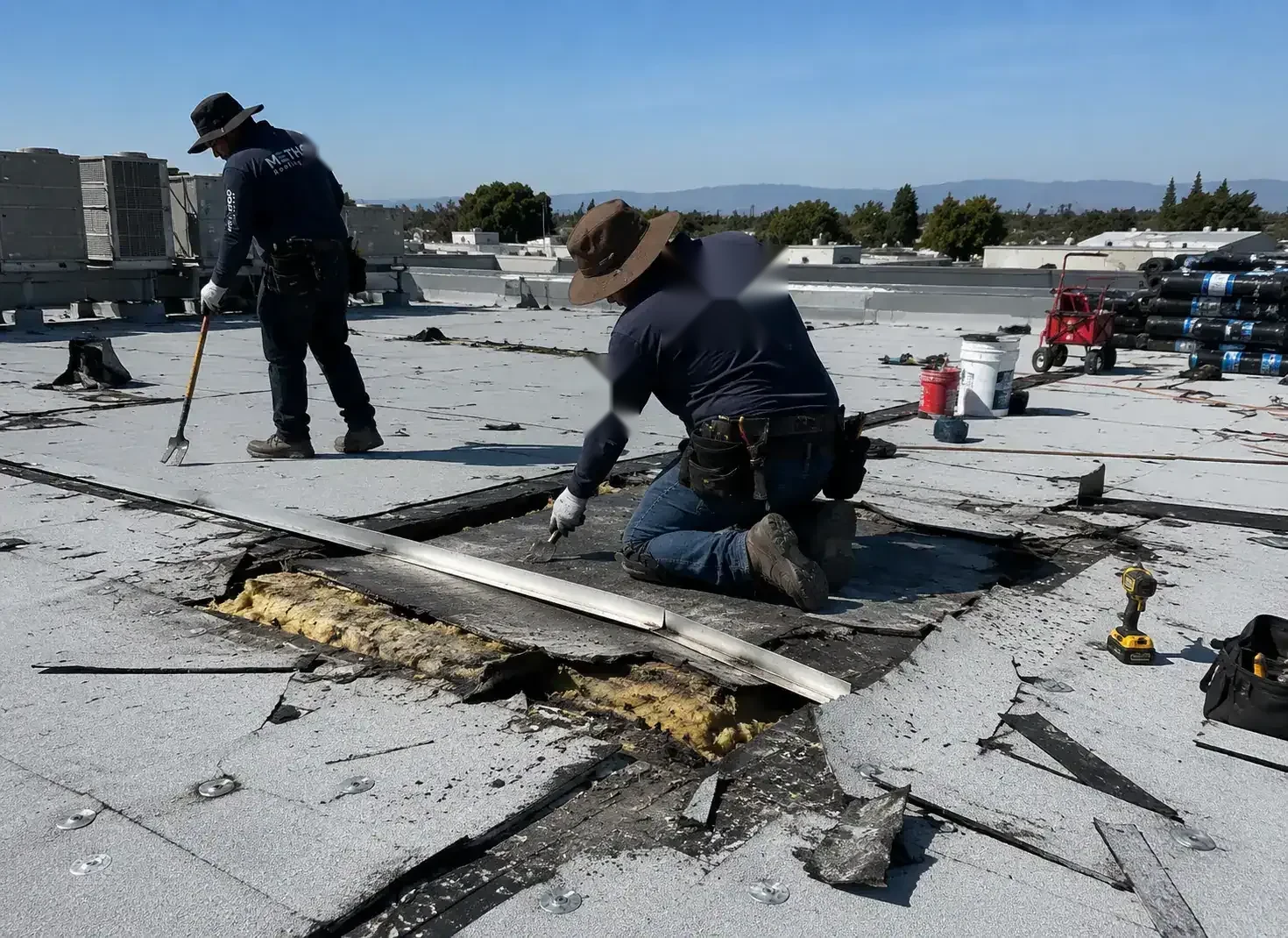
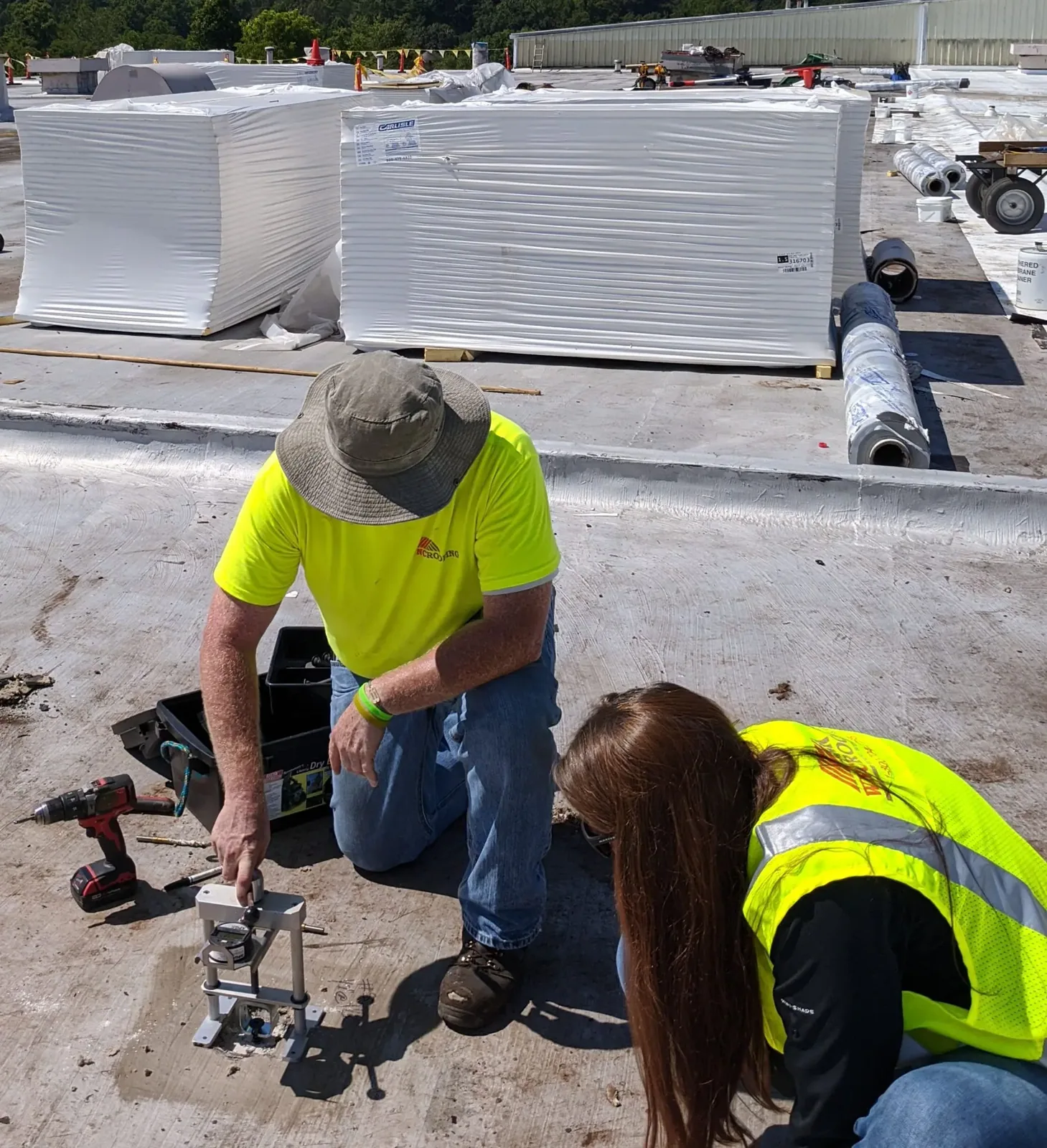
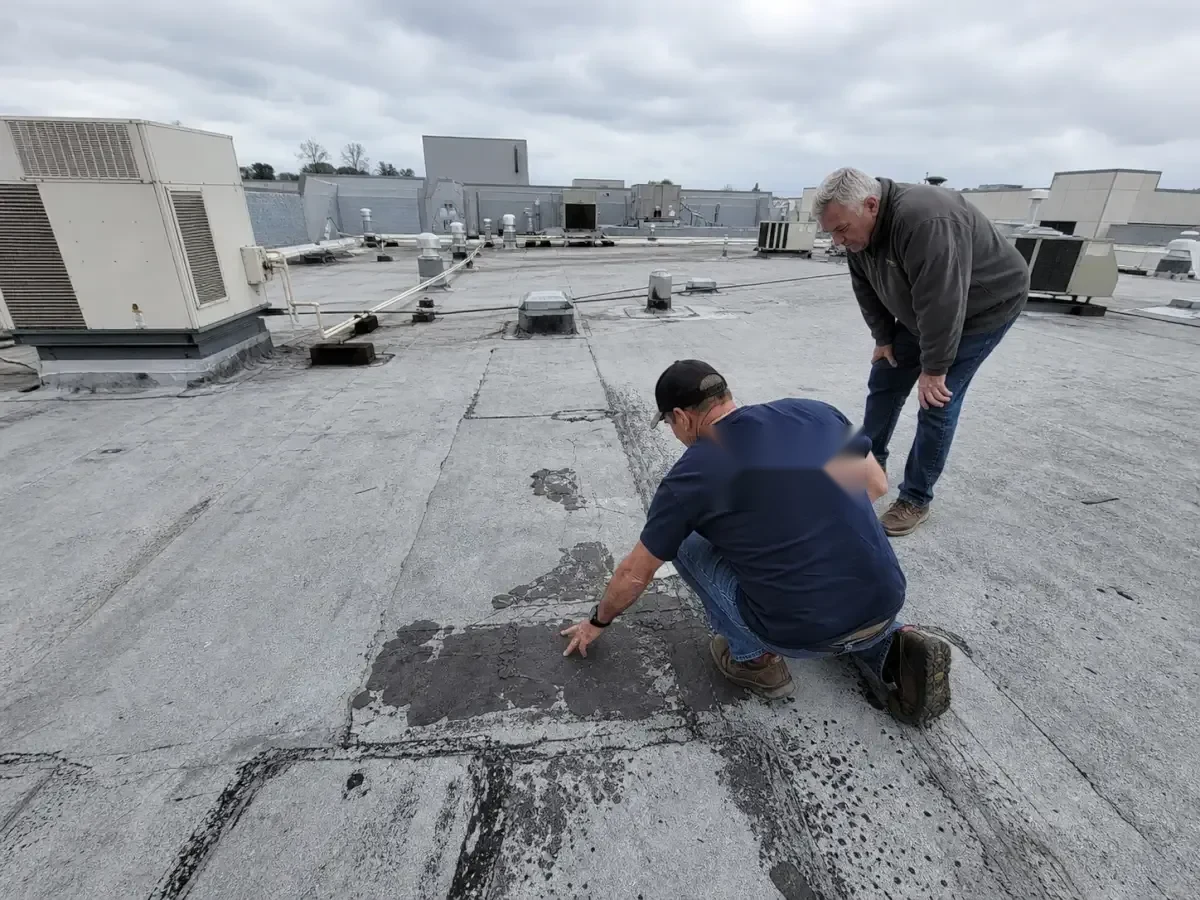
Before discussing product, we identify the existing assembly and its repair history. A metal roof brings panel joints and fasteners; a single-ply surface brings welded or adhered seams; an older coating may have more than one layer with uncertain adhesion. We note chalking, exposed reinforcement, loose material, corrosion, ponding evidence, and prior patch edges. A small adhesion test can reveal whether the proposed primer and coating bond to the prepared surface. If the test area releases or the base is unstable, the answer is not to add another layer over the same condition. We record the test method and result so the owner can compare a restoration scope with a replacement option using the same roof map.
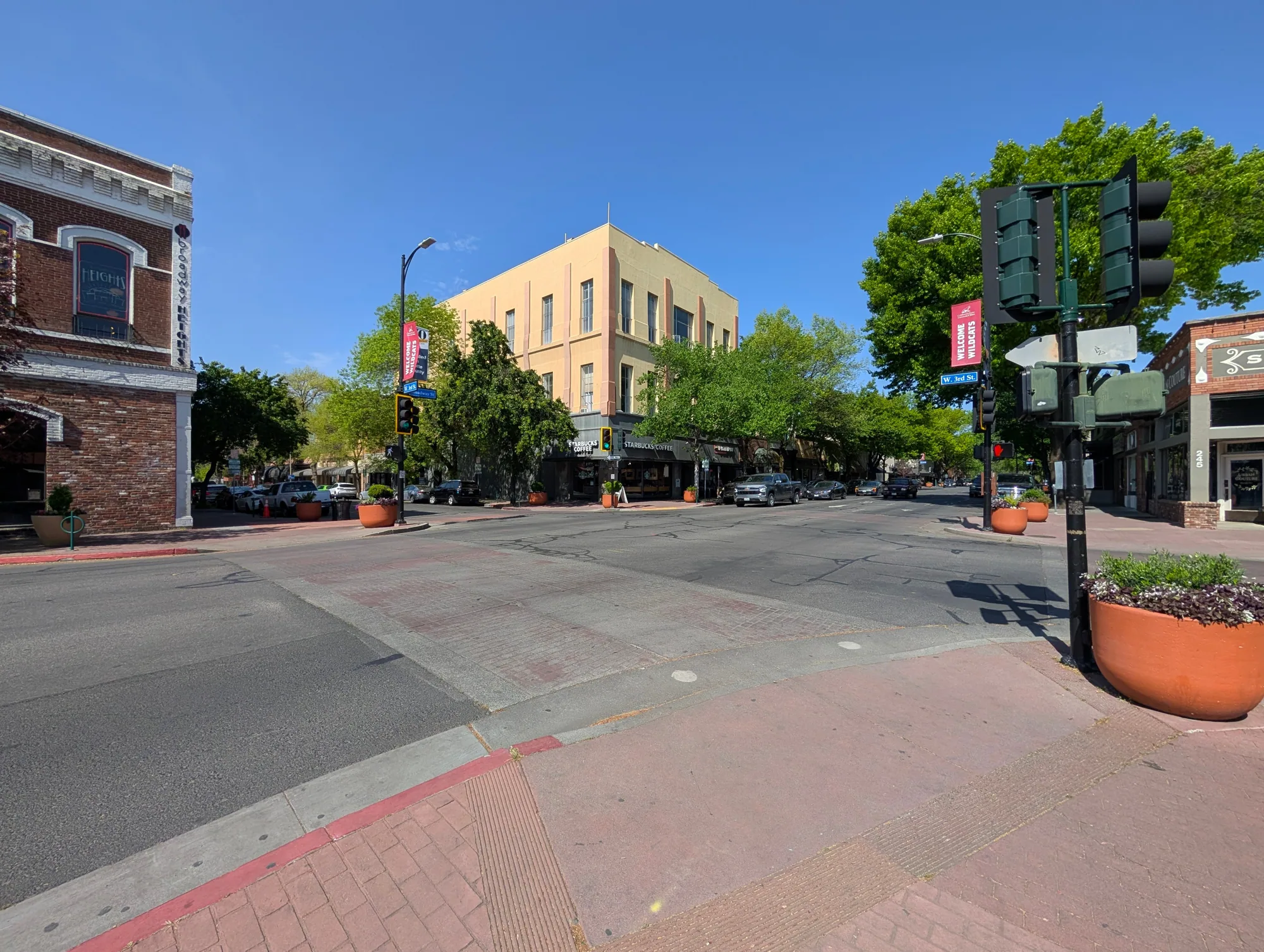
Chico planning documents describe varied commercial settings, including the North Valley Plaza regional retail area and the East 20th Street District. Those designations help explain why access, occupied hours, and staging differ between projects, but they do not tell us a building's roof type or condition. We verify the assembly at the property and keep the local planning context separate from the roof findings. That distinction prevents an area description from becoming an unsupported construction claim. A survey should also state which roof areas could not be safely reached, which layers were identified from the available records, and what a test confirmed versus what remains unknown. If the prior work history is incomplete, we label that gap instead of treating a surface appearance as proof of system compatibility.
Resolve drainage and suspected moisture first
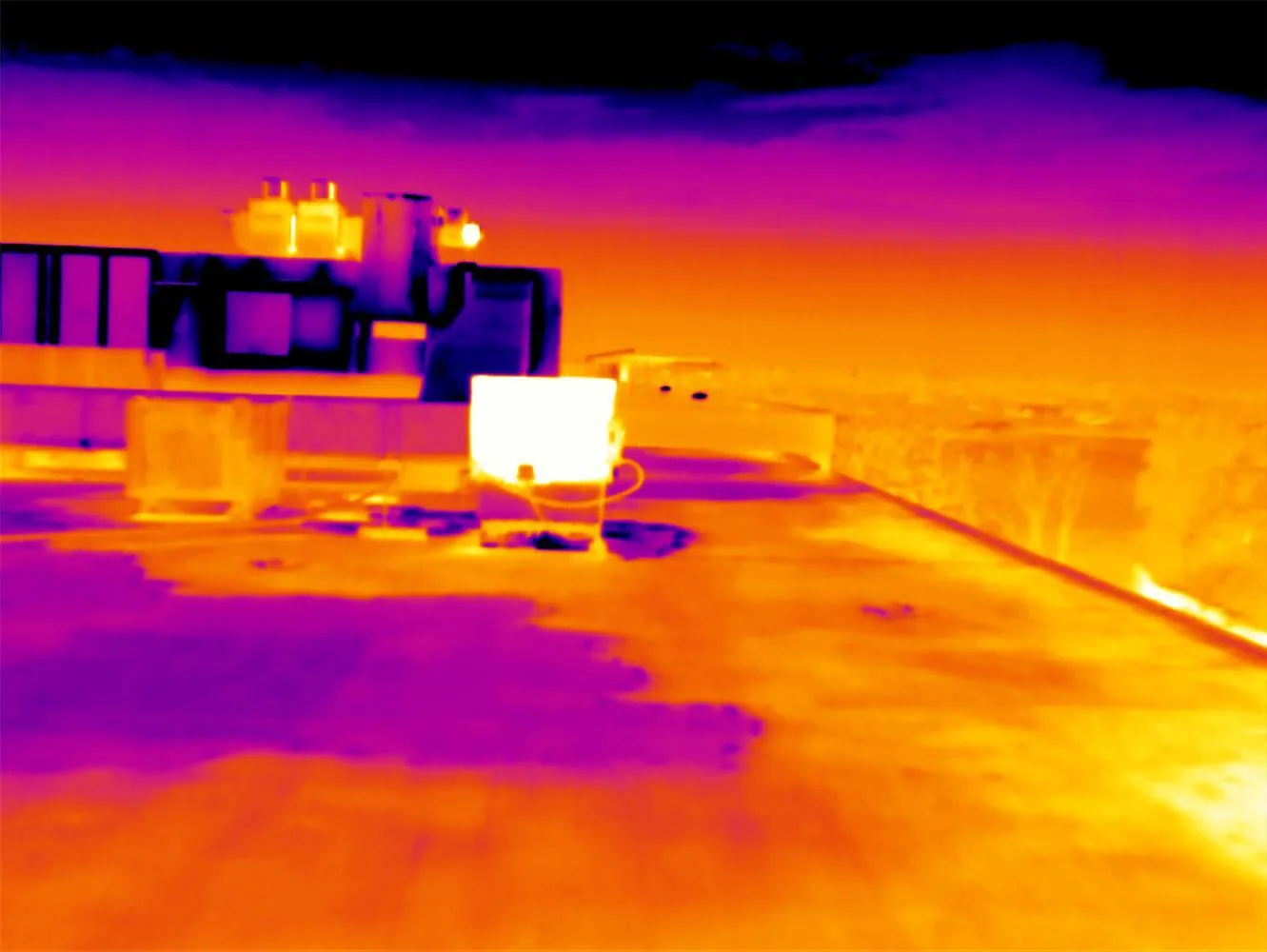
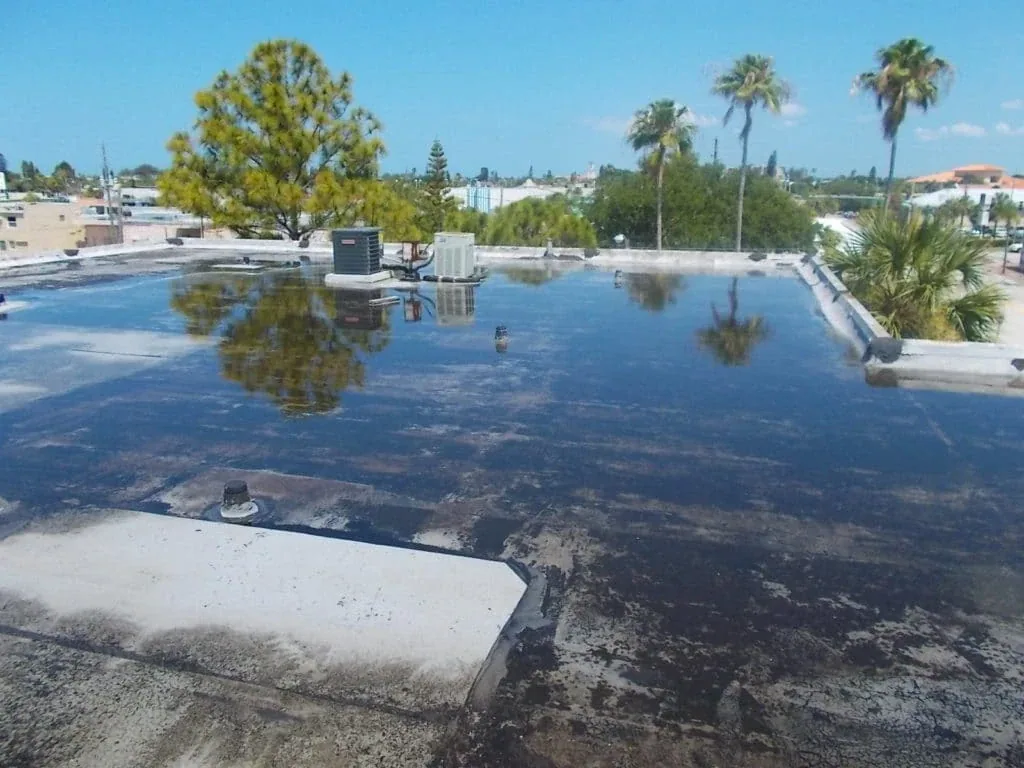
A coating changes the surface but does not remove water already held in insulation or repair a low area that sends runoff the wrong way. We inspect drain bowls, strainers, scuppers, overflow routes, and the surrounding membrane, then compare those points with interior reports. Chico's NOAA normals place most precipitation in the cooler months and show very little in July and August. We use that pattern to plan an appropriate inspection window, not to diagnose a leak from the season. When moisture below the surface could change the scope, we identify the locations that merit targeted confirmation. A moisture survey may help narrow that investigation, while a drain or scupper correction should preserve the full water path before coating work begins.
Repair edges and penetrations before field work
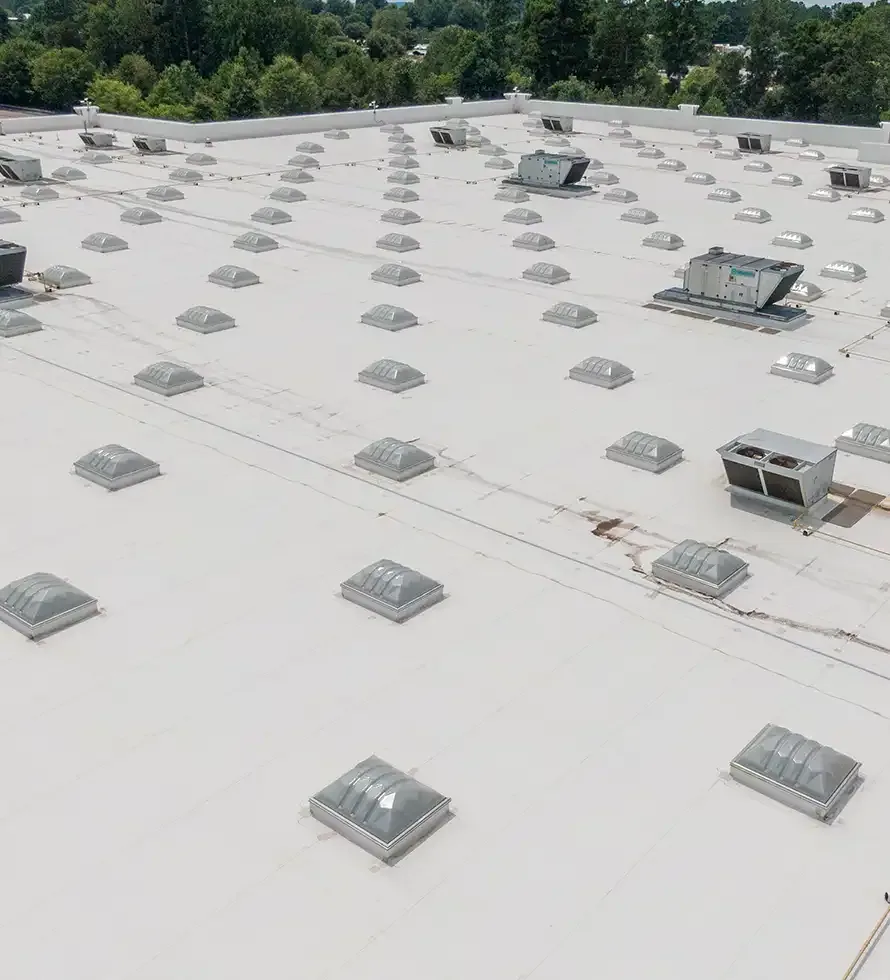
Most restoration scopes include detail work that is distinct from coating the open field. We inspect wall flashings, curbs, pipe boots, skylight perimeters, metal joints, and terminations for movement or failed sealant. Loose material must be removed, and the repair needs to be compatible with both the roof below and the coating above it. We mark each repair boundary on the roof plan so the closeout can show where preparation changed the surface. A localized roof repair may be appropriate for an isolated opening, while a penetration detail repair can address a curb or pipe before the field coating. These decisions follow what the inspection finds, not the assumption that a coating can bridge every transition.
Sequence cleaning, test areas, and application
Preparation is a defined part of the scope: remove loose material, clean the receiving surface, complete detail repairs, verify dry conditions where required, and apply primer or reinforcement specified for the selected system. We identify the sequence and the areas that must remain open for inspection before they are covered. Hot exposed surfaces can affect crew timing and material handling, so we check conditions on the roof and follow the product's application requirements. A forecast is only one input; surface temperature, substrate condition, and cure requirements still matter. For an occupied building, the route also accounts for service access and equipment that cannot be blocked. The final work plan names the test areas, preparation steps, transitions, and close-in checks rather than relying on a single application date. We also set a hold point after preparation, before coating starts. The field lead can confirm the agreed surface is clean, repairs are complete, and test results remain acceptable. If a new condition appears under debris or at an edge, the team photographs it and requests direction before covering it. That pause preserves a visible decision trail and reduces the chance that an unpriced defect disappears beneath the finish. Product instructions control cure and coverage; a property schedule cannot override them.
Coordinate work around active buildings
Roof work can affect deliveries, tenant access, rooftop equipment, and the timing of inspections below. The City identifies the Mangrove Avenue corridor as a retail and service area and the Meyers Street and Hegan Lane areas as industrial or business-park settings. Each roof still has its own operating constraints. We confirm access points, staging limits, fall-protection requirements, and any equipment shutdown before mobilization. Where a site needs a phased sequence, the work plan shows which section will be prepared and closed each day, how open areas will be protected, and who can authorize a change if weather shifts. The owner receives notice of any work that must be coordinated separately, such as a phased occupied-building scope or temporary protection over an exposed area.
Set a repair boundary the owner can verify
A sound receiving surface, confirmed adhesion, workable drainage, and correctable details support a coating discussion. Broad moisture, unstable layers, compromised metal, repeated failures, or incompatible materials can point toward selective removal or replacement instead. We separate confirmed conditions from questions that need a test, state which repairs are included, and list the limits of the proposed system. The closeout records preparation, repaired transitions, and areas left for monitoring. A condition report can carry those findings into future planning, while a coating-system comparison should account for the actual substrate and exposure. The City describes the East 20th Street District as commercial and the North Valley Plaza area as regional retail; that context may inform access planning, but the building-specific roof map controls the recommendation.
Commercial Roofing Questions
Can a coating restore every aging commercial roof?
No. The existing assembly must be stable, reasonably dry, and compatible with the proposed system. We inspect and test the receiving surface before deciding whether coating is appropriate.
Does a coating fix ponding water?
A coating does not create slope or clear a blocked outlet. We check the drain and overflow route, document areas that hold water, and price drainage corrections separately when needed.
Why test adhesion before pricing the full roof?
The test shows whether preparation and primer can produce a reliable bond on the existing surface. If the receiving layer releases, a larger coating scope would not solve that condition.
What preparation should appear in the scope?
The scope should identify cleaning, removal of loose material, seam and detail repairs, test areas, primer or reinforcement where required, and the sequence for inspecting each transition before close-in.
When should replacement be compared with coating?
Broad moisture, unstable layers, repeated detail failure, or a surface that cannot accept the proposed system may make removal or replacement more suitable. The decision follows documented roof conditions.
Test the roof before selecting a restoration scope
Share the roof history, active leak locations, access limits, and any prior coating records. We will map the receiving surface, check drainage and transitions, and document whether coating, repair, or replacement fits the observed condition.