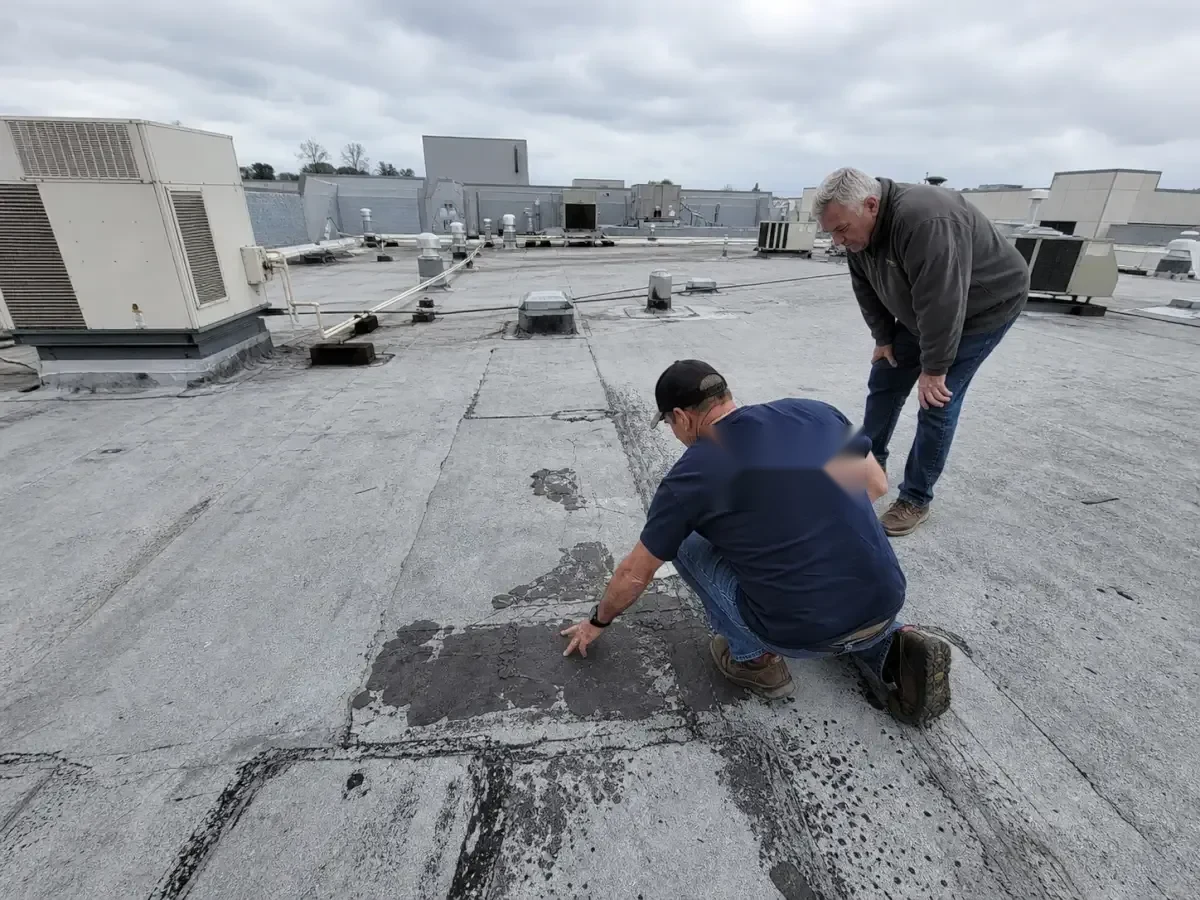
Commercial Skylight and Penetration Flashing in Chico, CA
A roof opening needs a continuous connection between its curb or pipe and the surrounding assembly. We inspect skylight frames, curb corners, pipe boots, counterflashing, sealant, and nearby seams, then trace any interior report to the roof location. Chico's July average daily maximum is 95.2°F in NOAA normals, while winter months carry most local precipitation. Those patterns make movement and seasonal water entry useful inspection context, not proof of a particular flashing failure. We document the actual material, gap, or movement before selecting a correction. A commercial roof inspection establishes the assembly and the limits of accessible observation.

Inventory each curb, pipe, and frame
We mark every opening in the affected roof zone and distinguish a skylight curb from a pipe, conduit, equipment support, or wall penetration. For each one, the record notes the base condition, flashing material, height where visible, fasteners, sealant, and nearby membrane. A group of penetrations can share the same roof area but still have different installation histories. We photograph each detail from a wide view and close enough to identify its corners and tie-in. If the owner has a roof plan or equipment schedule, we compare it with field conditions and list any mismatch. The map then gives a crew a reliable return point rather than relying on an approximate description such as “near the units.”
Check curb corners and frame movement
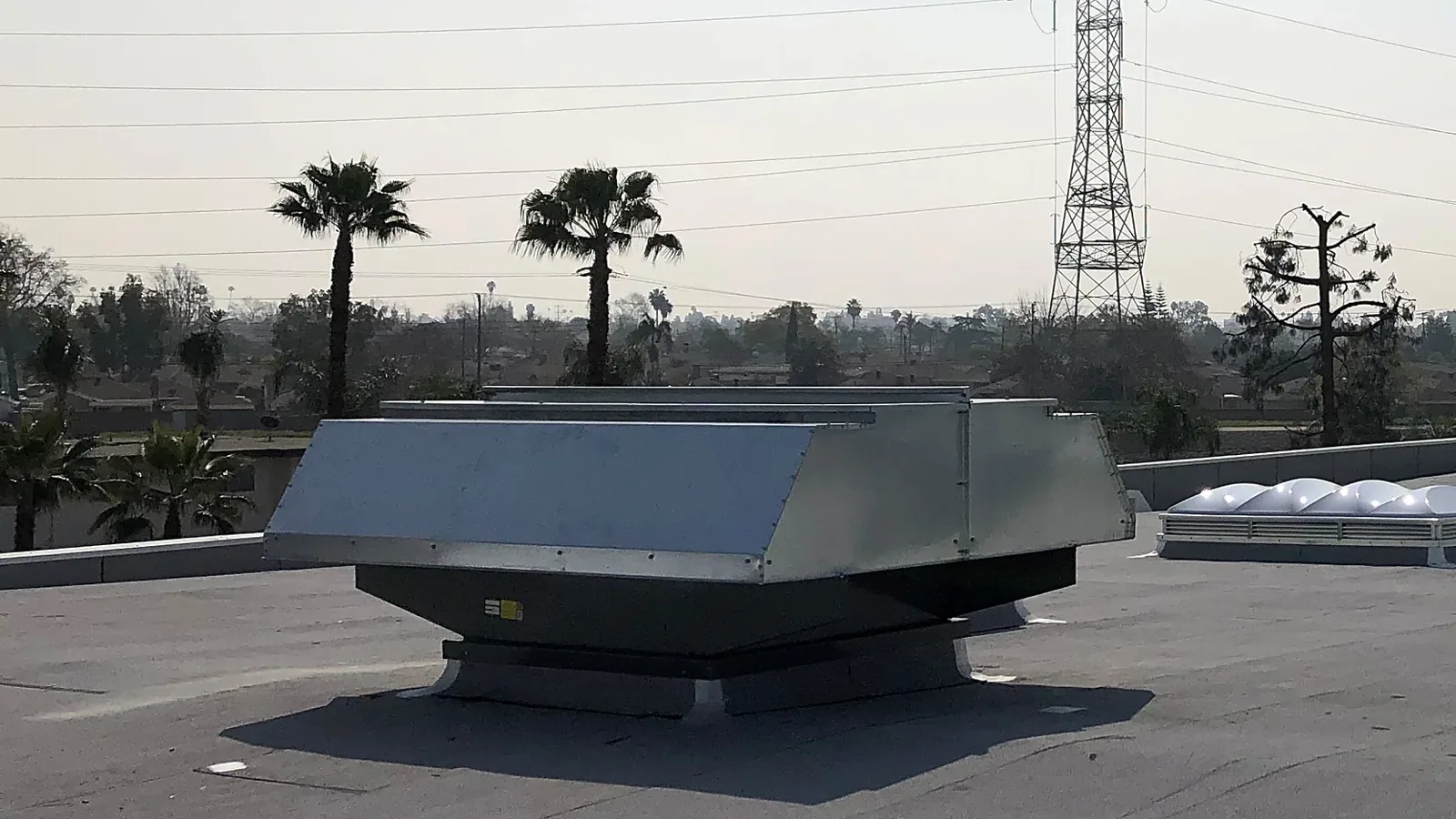
At a skylight, water can enter at the frame, curb, flashing, or adjacent field, so we examine each transition separately. We look for an open corner, lifted membrane, loose termination, cracked sealant, and signs that the curb or frame has moved. A cloudy lens or condensation may involve the skylight assembly, while a ceiling stain may have traveled from another roof location; we record these as separate observations. The Downtown Chico opportunity area includes mixed-use designations, and the East 20th Street District is identified for commercial activity. Those areas illustrate varied access and occupancy conditions but do not tell us the condition of a specific skylight. A North Valley Plaza roof would still need the same building-specific inspection. If the glazing is opaque or damaged, the roof crew reports the visible frame condition and coordinates the next step with the owner rather than treating glass replacement as membrane work.
Treat pipes and supports as distinct details
A pipe boot, conduit sleeve, equipment curb, and structural support each meet the roof differently. We check whether the flashing fits the penetration, whether a collar or clamp remains secure, and whether nearby movement has opened a seam. Sealant is not a substitute for a compatible boot or secure attachment. Where a support blocks the membrane view, we record the limitation and identify whether safe access or a temporary equipment move is needed. If the opening is part of a larger equipment curb, a curb and support review may be needed alongside flashing repair. We confirm who can authorize an equipment shutdown before scheduling work, and do not assume that an operating unit can be moved or isolated.
Follow the leak path beyond the frame
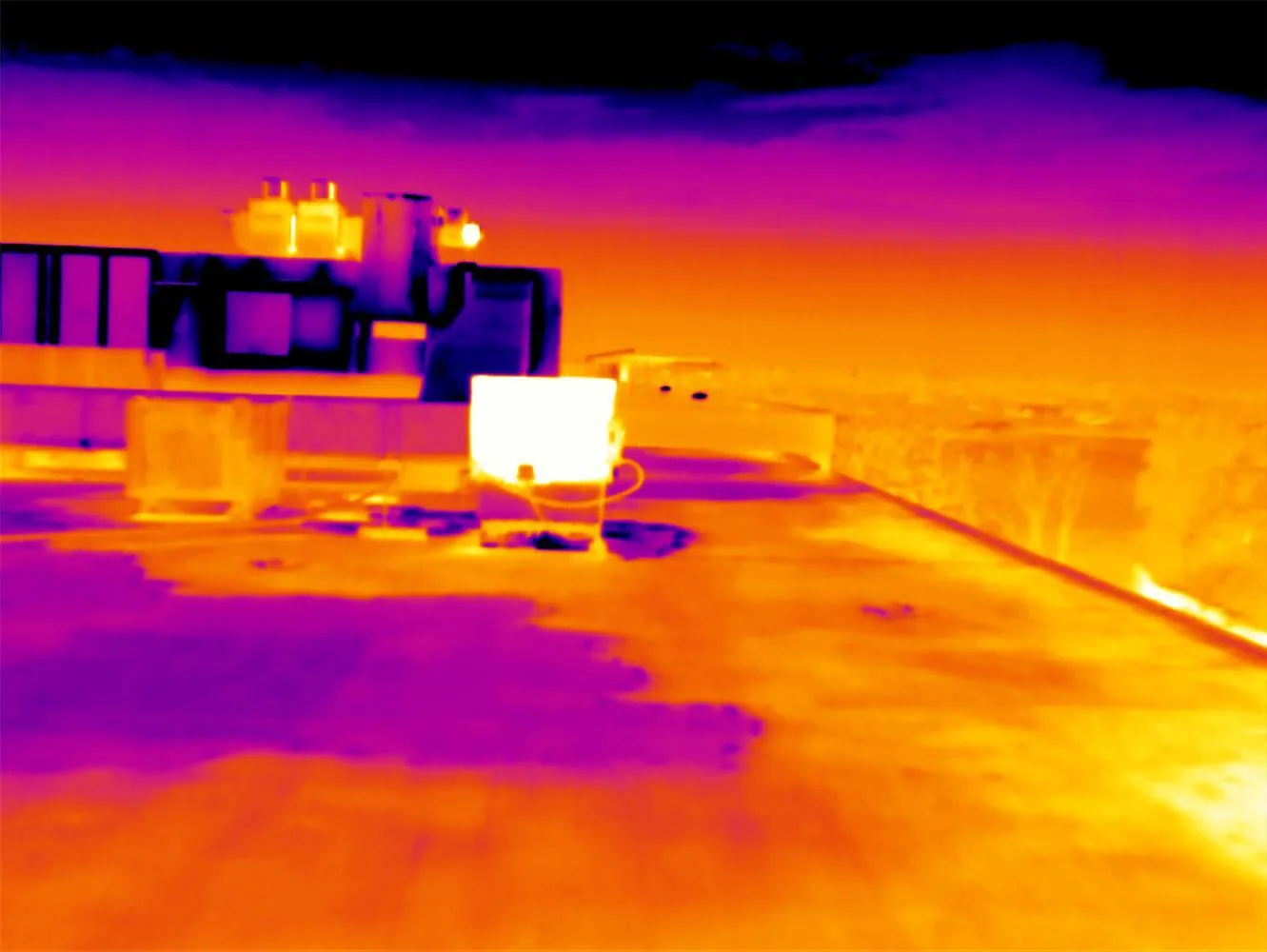
Interior water may enter above the reported ceiling point and move along framing or roof layers. We compare the room location with the opening, nearby seams, wall transitions, and drainage low points. A hose test is used only when the assembly and site conditions make it appropriate, and the test area and result are recorded. If moisture beneath the membrane could change the scope, we identify a targeted verification area instead of assuming the visible curb explains the full report. The leak investigation may include a wider water-path map, while a moisture survey can help prioritize confirmation where concealed wet material is suspected. We separate each finding from the conclusion that still needs evidence.
Prepare compatible transitions before close-in
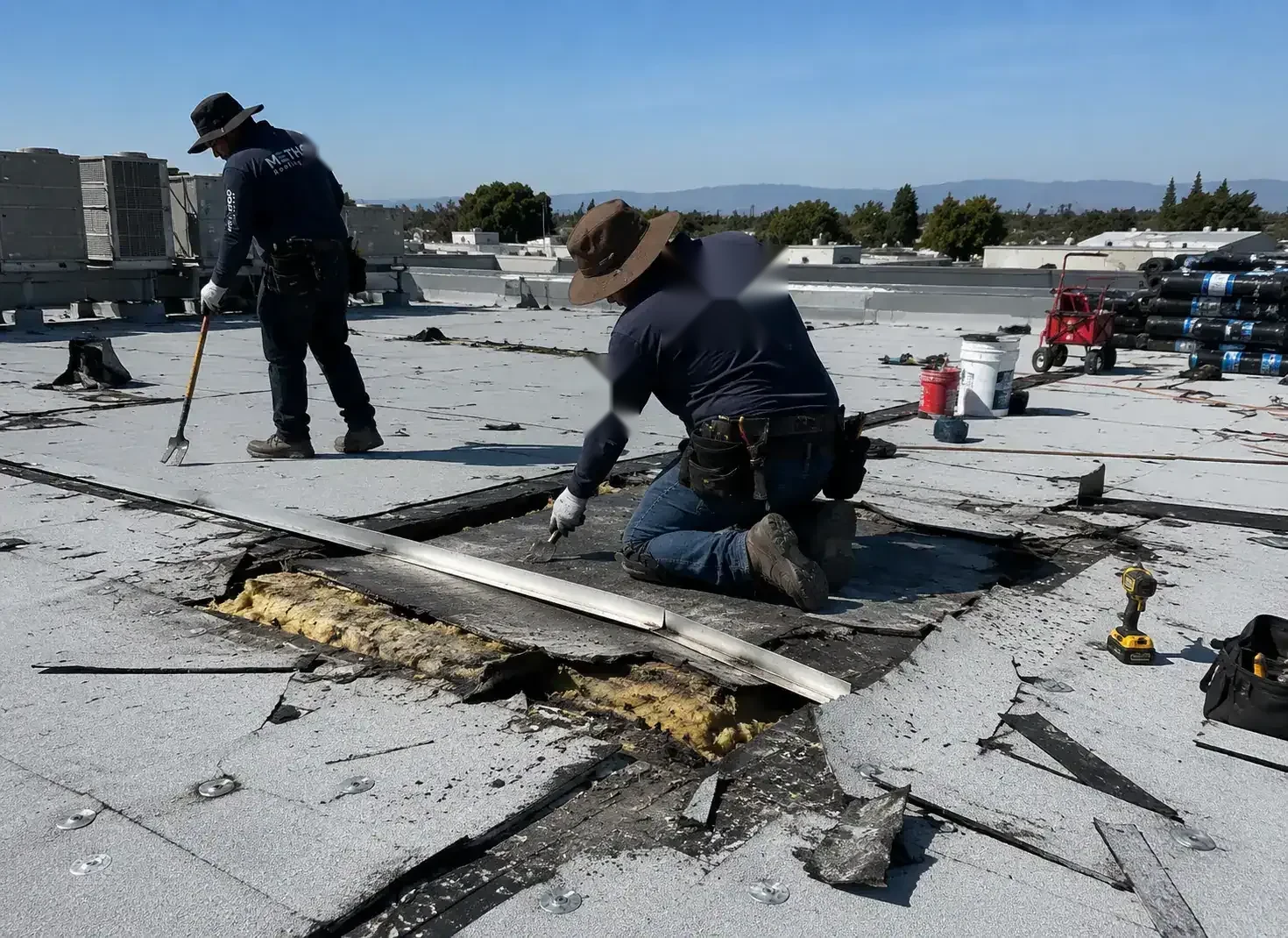
Repair starts with a stable receiving surface and the correct flashing detail for the existing assembly. We remove loose material, prepare the curb or pipe area, and connect new flashing to sound membrane or metal. The scope names fasteners, primer, reinforcement, sealant, or boot components where required by the selected system. If the roof contains earlier coatings or recover layers, we identify those limits before applying new material. A localized roof correction may address an isolated opening; a broader coating restoration is a separate scope that cannot substitute for a failed curb or unsupported frame. Work is checked at the corners and at the field tie-in before the area is closed.
We record which surfaces must be removed or prepared, how the new flashing meets the existing roof, and any reinforcement or fastening needed at corners. If the curb is bent or the skylight frame is loose, those conditions are named separately from membrane work because one repair may require owner authorization or a different trade. Where a patch must tie into a previous restoration layer, we check compatibility before material is applied. The proposal also states what is excluded, such as concealed frame damage that is not exposed during the initial visit. This lets the building contact review the repair boundary and an appropriate contingency before the crew opens the detail.
Coordinate building use and future checks
Skylight and penetration work needs a clear area below as well as safe access above. We coordinate interior protection, tenant notices, equipment access, and any guardrail or fall-protection requirements before mobilization. City planning identifies retail and service uses on Mangrove Avenue and industrial or business-park areas around Meyers Street and Hegan Lane; operating hours and roof layouts can differ across those places, so the work window is confirmed with the facility contact. At closeout, the owner receives photos of each repaired opening, the materials used, and any detail left to monitor. A condition record can preserve the location for the next service visit, and preventive maintenance can repeat the same checks after equipment work or a reported leak. The final record should make it clear whether a skylight was tested, repaired, or simply observed. A tagged photo tied to the roof plan gives future staff a way to revisit the same curb without relying on a technician's memory. We also note any interior protection that remains until a separate glazing repair is complete, so the property team can keep the building response aligned with the roof closeout.
Commercial Roofing Questions
Can you tell whether a skylight frame or its curb is leaking?
We inspect the frame, curb, flashing, and adjacent membrane separately, then compare them with the interior report. Testing may be needed when a visual inspection cannot isolate the source.
Is sealant enough to repair every pipe penetration?
No. The boot, clamp, membrane, and opening size must fit the installed assembly. We document the detail and choose a compatible repair rather than using sealant as a universal fix.
Do you need equipment to be shut down for penetration work?
Some details require access or a clear work area. We identify that need during planning and coordinate authorization with the facility contact before scheduling any shutdown.
Why inspect the membrane next to a curb?
A leak can begin at a nearby seam or travel beneath the surface. Checking the connection and surrounding field helps define whether the repair is limited to the opening or needs additional investigation.
What should the flashing closeout include?
The record should show each opening, its curb or boot, the field tie-in, materials used, photographs, and any limitation or follow-up that remains open. It should also identify who can authorize the next inspection.
Map the opening before choosing the flashing repair
Share the interior leak location, roof plan, equipment constraints, and any previous work at the opening. We will inspect the curb, pipe, frame, and nearby membrane, then document the repair boundary and access plan.