Commercial Roof Maintenance in Chico, CA
Preventive maintenance is a running change log for the roof, not a box to check once a year. At each visit, compare the same marked zones, separate repaired items from open observations, and assign a follow-up owner. Butte County's 2024 Chico hazard annex describes hot, dry summers and cool, wet winters; that seasonal shift can set review prompts, but it cannot diagnose an assembly. A useful record makes the next decision easier: it names the location, shows what changed, and gives the property contact a clear next action.

Inspect the same roof zones each visit
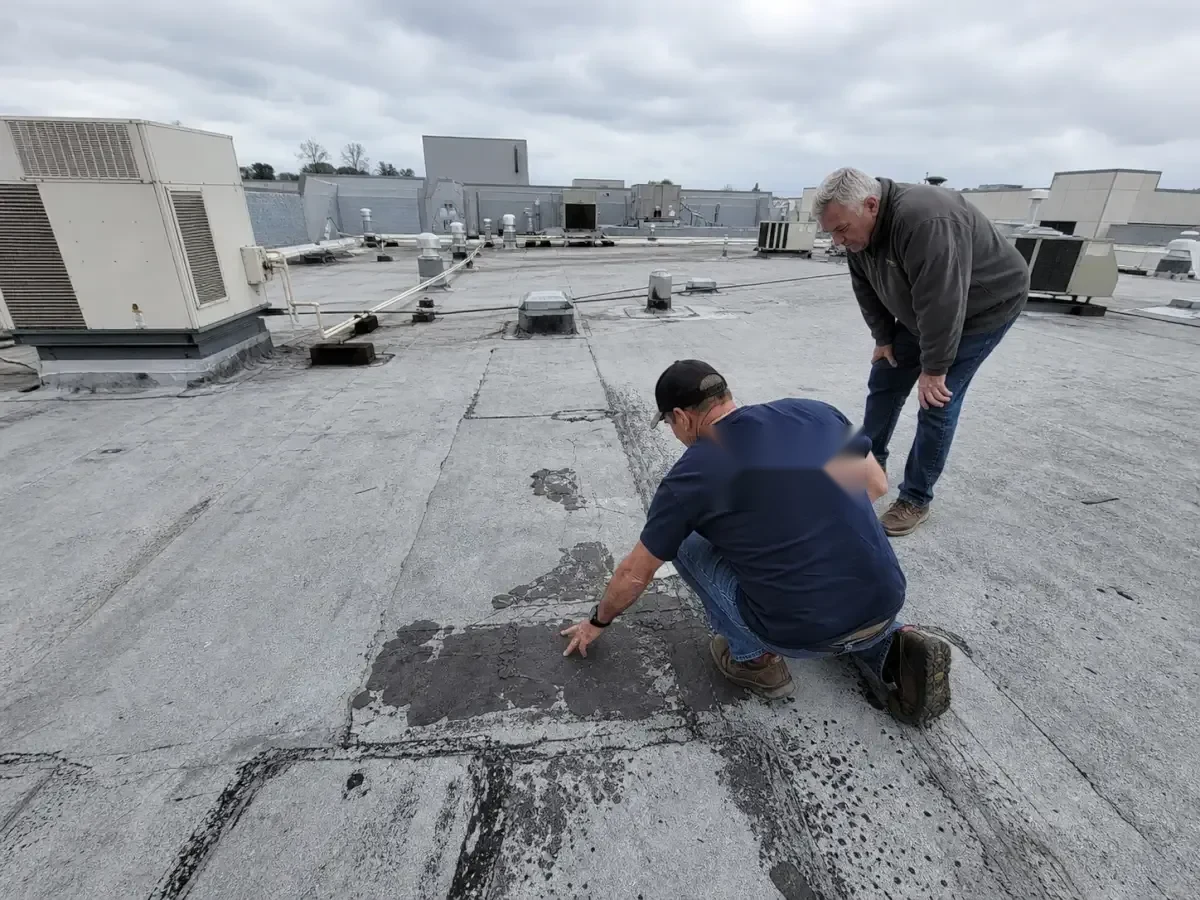
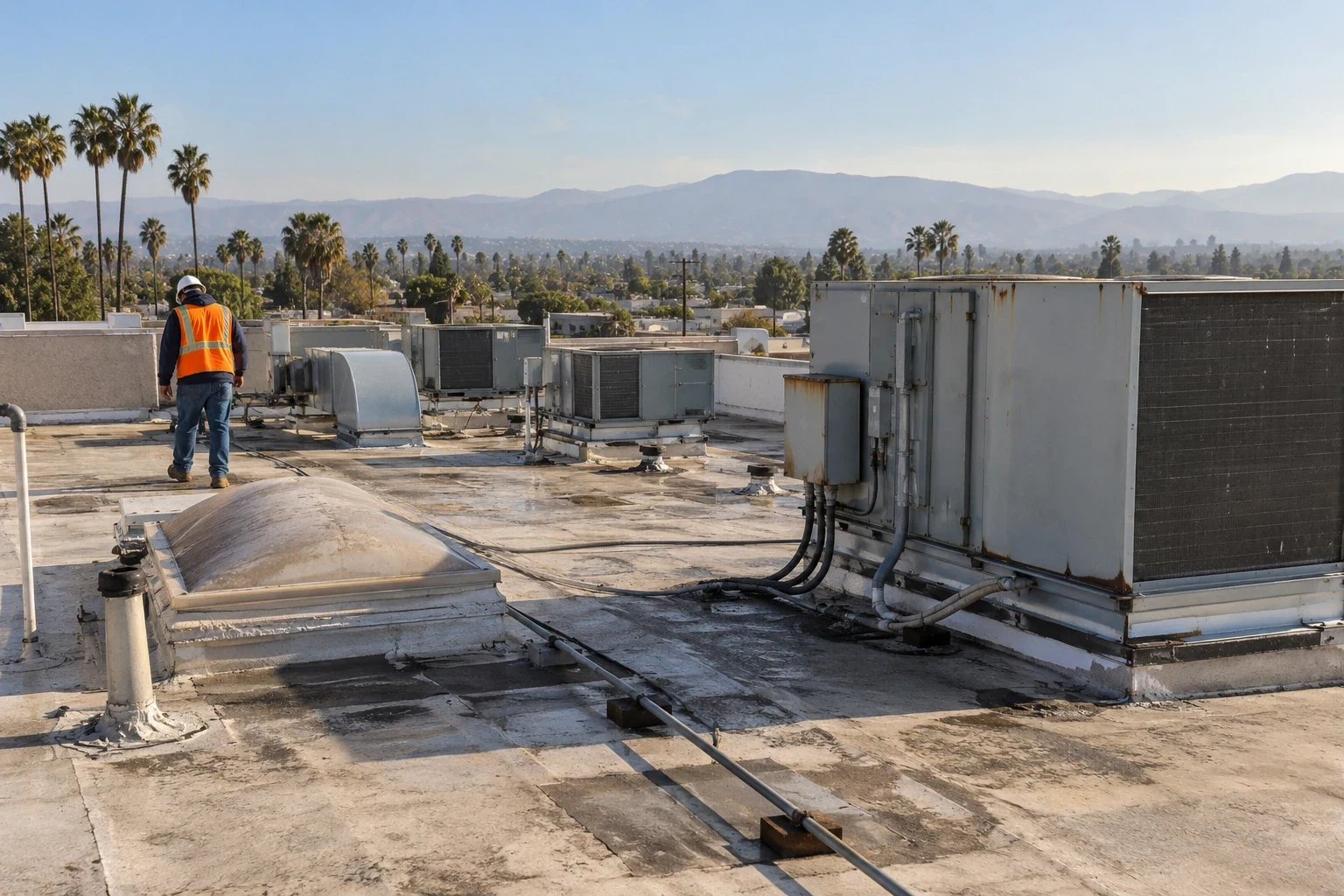
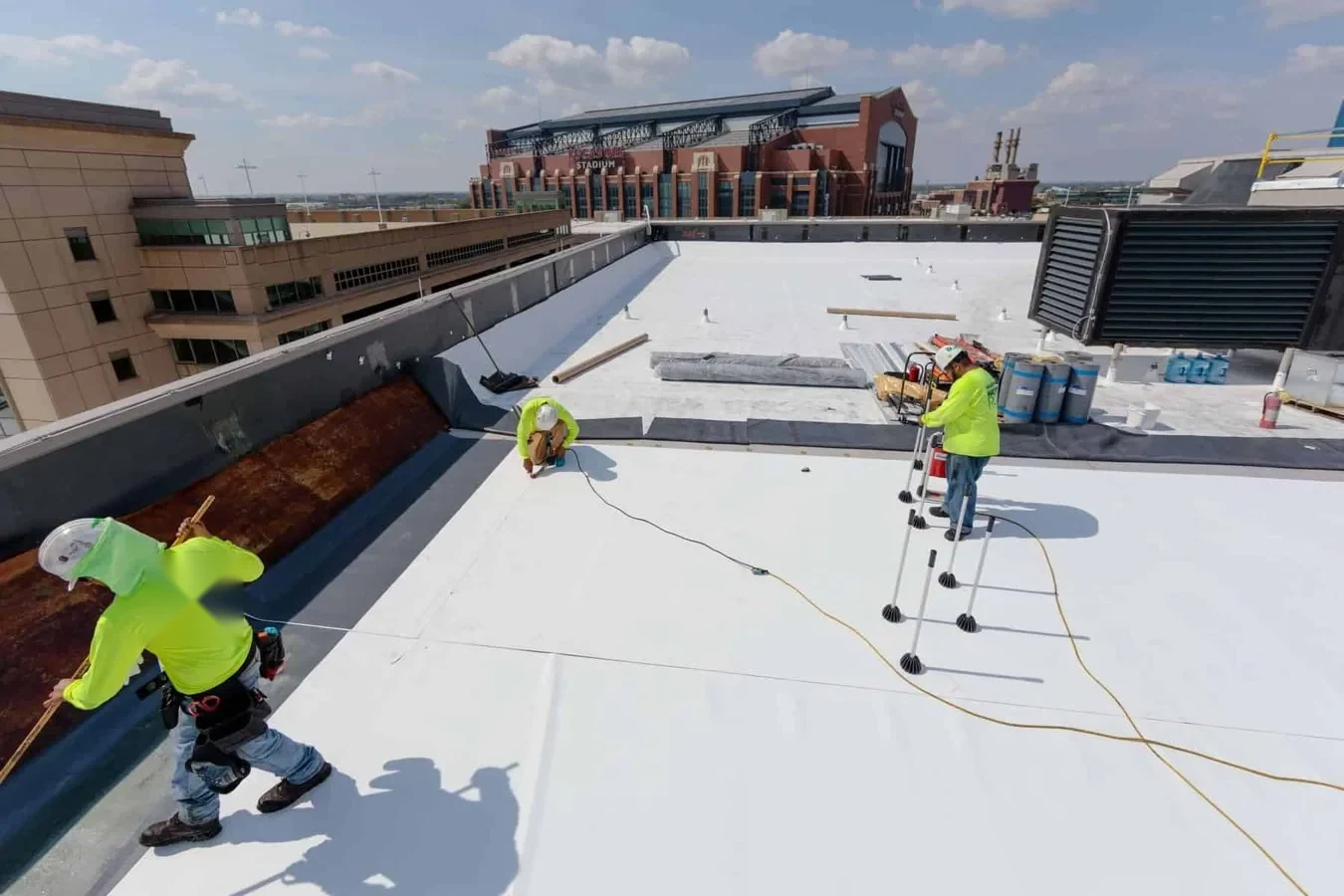
A repeatable route helps compare one visit with the next without assuming that the whole roof ages evenly. We divide the roof by membrane field, drainage low points, equipment clusters, walls, and perimeter transitions. At each zone, we note open seams, loose flashing, exposed fasteners, punctures, debris, ponding, and prior patches. Photos should include a recognizable detail or roof marker so a later reviewer can return to the location. If a leak has occurred, we compare its interior location with the roof map rather than assuming the stain marks the opening. A commercial roof inspection can establish the baseline before the owner sets a recurring maintenance interval.
The interval should reflect the system's observed condition and the building's operating needs. A roof with repeated service calls, a recently repaired drain, or a new equipment curb may need an earlier return to verify the detail, while a stable field still benefits from a consistent record. We do not assign the same calendar to every assembly. At each visit, we compare the current surface and details with the prior photos, then flag a change that merits repair or testing. This makes the inspection frequency a decision based on roof evidence rather than a generic schedule.
Clear the route before winter rain
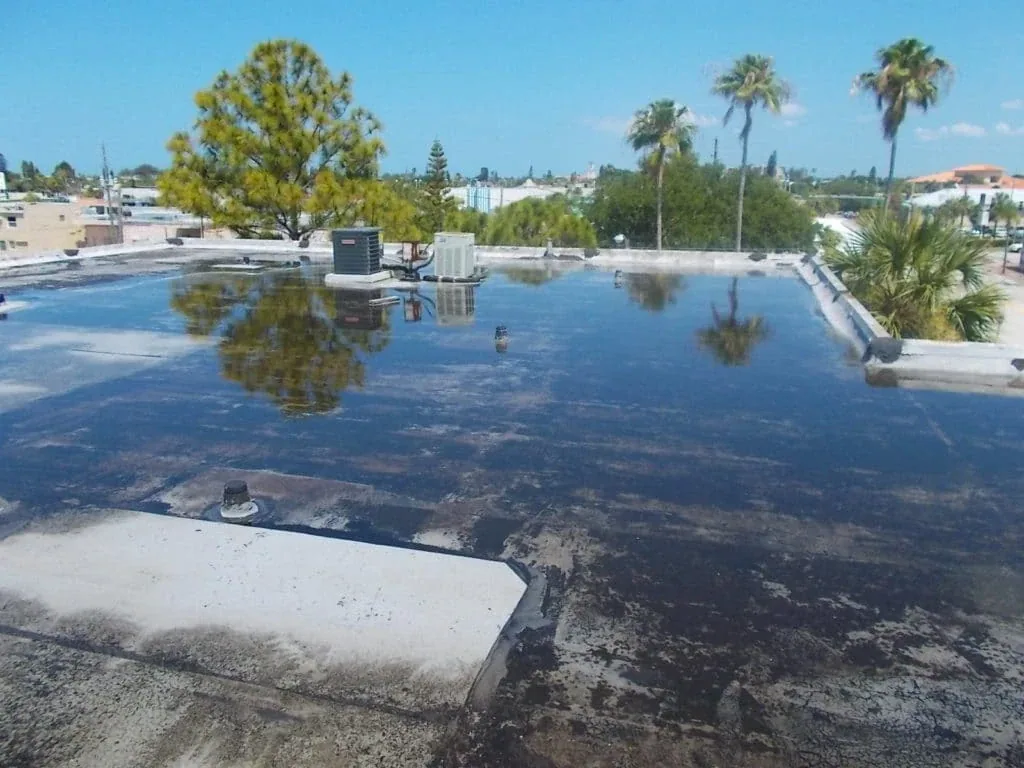
Drainage checks start at the outlet and follow the path backward across the roof. We inspect strainers, bowls, scuppers, overflow routes, and the membrane around each opening. Leaves or loose material can block a strainer, while settled areas can hold water even when the drain is clear. The hazard annex describes cool, wet winters and hot, dry summers, so a late-season drain review is a practical prompt. The actual outlet, slope, and water path still determine whether drainage needs correction. That seasonal pattern makes late-season drain checks practical, but a calendar alone cannot tell us whether a drain is working. We record slow-draining areas and recommend a drain or scupper repair when the outlet or surrounding flashing needs correction. Water should be able to leave without crossing a damaged seam or narrowing an overflow.
Watch seams, curbs, and edges
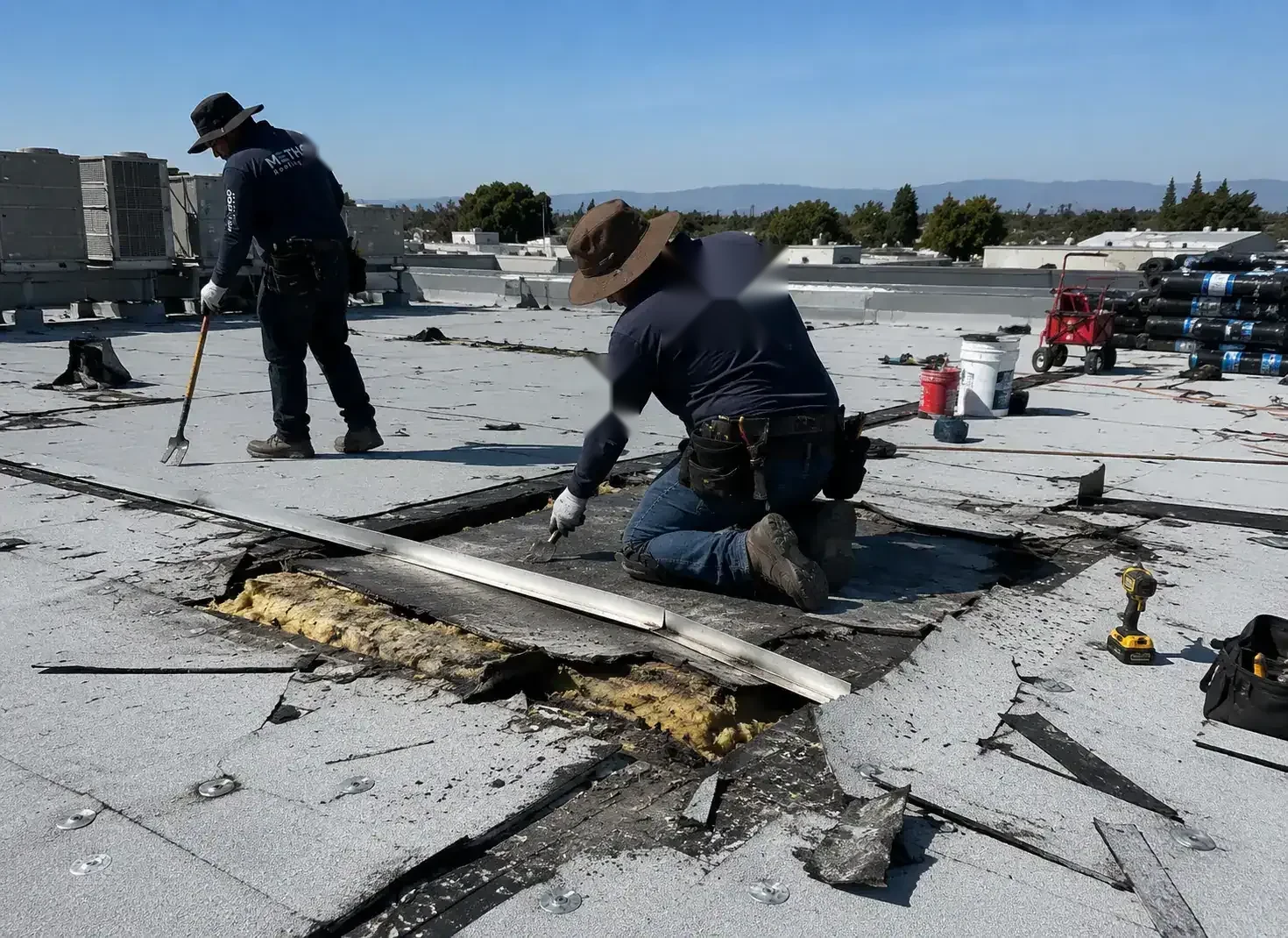
At a seam, we look for an open lap, failed weld, loose adhesive, or patch that has separated from the receiving surface. Around a curb or pipe, we check the flashing, sealant, fasteners, and movement at the base. At a perimeter, we inspect metal joints and terminations for gaps or looseness. City planning identifies the East 20th Street District and Mangrove Avenue among Chico's employment and commercial corridors; those settings say nothing about a roof's actual system, so our check follows the installed assembly. A small opening over dry, secure material may support a bounded repair. A wider soft or wet area calls for testing before a patch is chosen.
Make the record useful to the next person
A useful maintenance record names the roof zone, condition, photo, action, and timing. We label an item as repair, monitor, or further test and explain what would change its priority. The owner's team can then match a work order to a location instead of sending a crew to search across the roof. If the roof has a known warranty, the records should note inspection and repair requirements from the applicable documents without assuming coverage or approval. For multi-building owners, a common set of field labels can make reports easier to compare while preserving each building's separate condition history. A condition report can carry forward observations, and an asset record can help connect roof needs to future budgeting.
Fit small corrections into operations
Maintenance can often be sequenced around building activity, but access, rooftop equipment, tenant hours, and material cure still set the work window. We identify which corrections can be made during the inspection and which require a return visit, special preparation, or temporary protection. In the Meyers Street Industrial Area and Hegan Lane Industrial Area, the City identifies industrial and business-park uses; a facility's operations and safety rules still determine access. We coordinate the route with the site contact, keep service paths clear, and note any unit that needs a shutdown or escort. When a repair needs more than routine work, the scope can include a separate emergency response or a planned roof restoration review.
We tell the owner which findings can be handled while the crew is present and which should be quoted separately. That distinction helps the site contact arrange keys, lift access, and any equipment shutdown only when needed. If rain or heat changes the work window, we update the sequence so preparation and close-in still follow the material requirements. The closeout lists deferred items with a practical next action instead of leaving an open note without an owner or timing cue.
Use seasonal exposure as a prompt, not a diagnosis
Chico's hot summer surface conditions and wetter winter months make the calendar a useful prompt to look at drainage and detail movement. They do not prove that heat or rain caused a visible defect. We compare inspection notes with the actual membrane, attachment, and repair history. If a coating is weathered, we check the receiving surface and water path before proposing renewal. If the roof has repeated leaks after rainfall, we trace each path and verify moisture rather than treating all reports as the same failure. A coating restoration assessment or a single-ply system review should follow that condition record. The next visit then returns to the repair boundaries and low points already marked.
Roofs with additions or previous recover work may have more than one assembly across the same deck. We label those transitions separately, because a patch material or inspection method suitable for one area may not fit the next. The owner can then track each section against its own service history rather than merging conditions into one building-wide rating. That distinction is useful when budgeting a future repair or replacement in phases.
Commercial Roofing Questions
What should a preventive visit record?
We record the roof zone, visible condition, photo, action, and recommended timing. Items that need a repair, monitoring, or additional test are separated so the owner can assign a clear work order.
When should drains be checked in Chico?
A check before the wetter months can identify debris or slow flow, and the actual outlet should be inspected after significant roof work or a reported ponding condition. The roof's state matters more than a fixed calendar.
Does a maintenance plan prevent every leak?
No inspection can prevent every failure. Routine checks can document changes, clear drainage issues, and identify details that need repair before they affect the interior.
Can you handle small repairs during the inspection?
Some corrections fit the access, weather, and material conditions of the visit. We identify those separately from work that needs testing, special preparation, or a longer close-in window.
How does a maintenance record help with replacement planning?
Photos and repair locations show how conditions change over time. That history helps distinguish a durable localized correction from repeated work that merits a broader assembly review.
Set a useful inspection baseline
Share the building type, roof records, leak history, and access limits. We will map the roof zones, document current conditions, and prioritize repairs and follow-up checks.