Commercial Roofing in Downtown Chico, CA
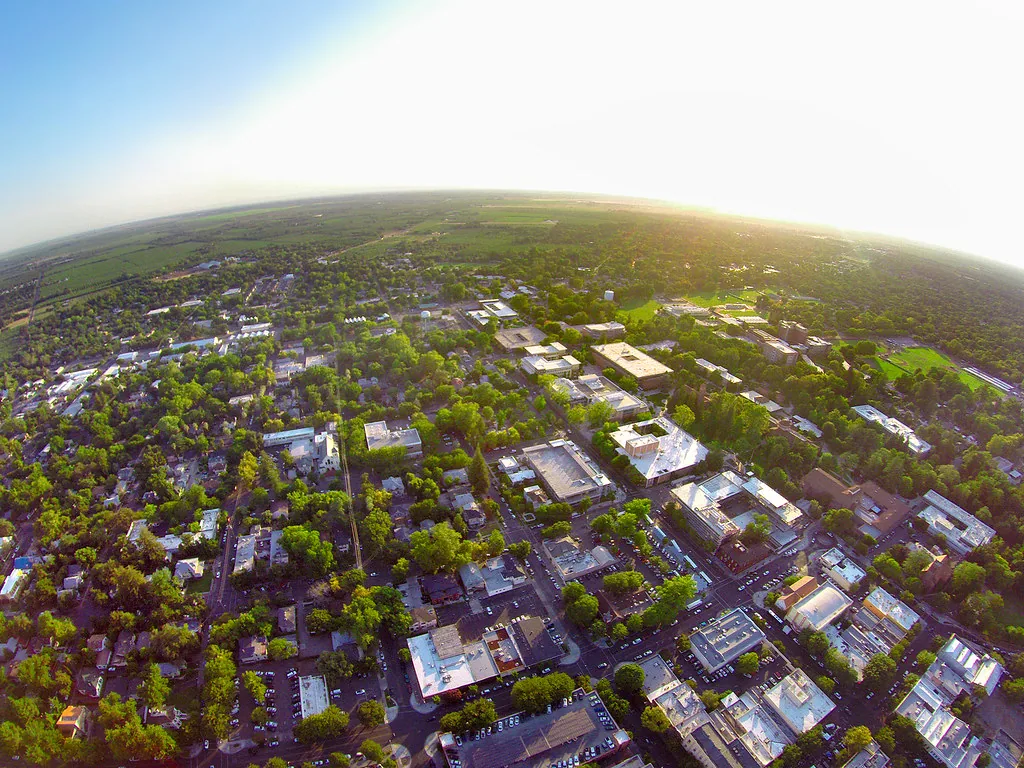
A recurring ceiling mark in a downtown office or mixed-use building deserves a roof-level water-path check before anyone prices a broad replacement. We trace the condition through seams, drains, wall transitions, and penetrations, then separate the repair boundary from sound assembly. Downtown Chico is a civic and cultural center with commercial, office, and residential mixed-use designations, while the North Esplanade Corridor has a different streetscape and use pattern. That mix makes access, occupant schedules, and protection below the active work area part of the roof decision. The City describes the district between Little Chico Creek and Big Chico Creek, with Normal Avenue and Orient Street marking the other general limits. We use that area definition for service planning, not as a claim about any one building's construction.
Trace before opening
A ceiling stain in Downtown Chico gives the inspection a starting point, not a roof diagnosis. Water may travel along a deck or insulation joint, so we trace the path through membrane seams, laps, drain bowls, curb corners, and perimeter transitions, then photograph confirmed and uncertain conditions. City planning analysis describes a downtown opportunity area generally between Little Chico Creek and Big Chico Creek, Normal Avenue and Orient Street; it also notes utility and parking limits on some underused parcels. Those details matter to roof access or staging only where they fit the property and do not establish the roof's present condition.
A written condition report with marked photos lets an owner review the proposed repair line before work begins. If moisture extends beyond a seam or flashing defect, we compare a local repair with replacement planning or a suitable recover assembly. Each option needs a boundary, a tie-in detail, and a clear note about what the existing roof can support.
Keep the drainage route clear
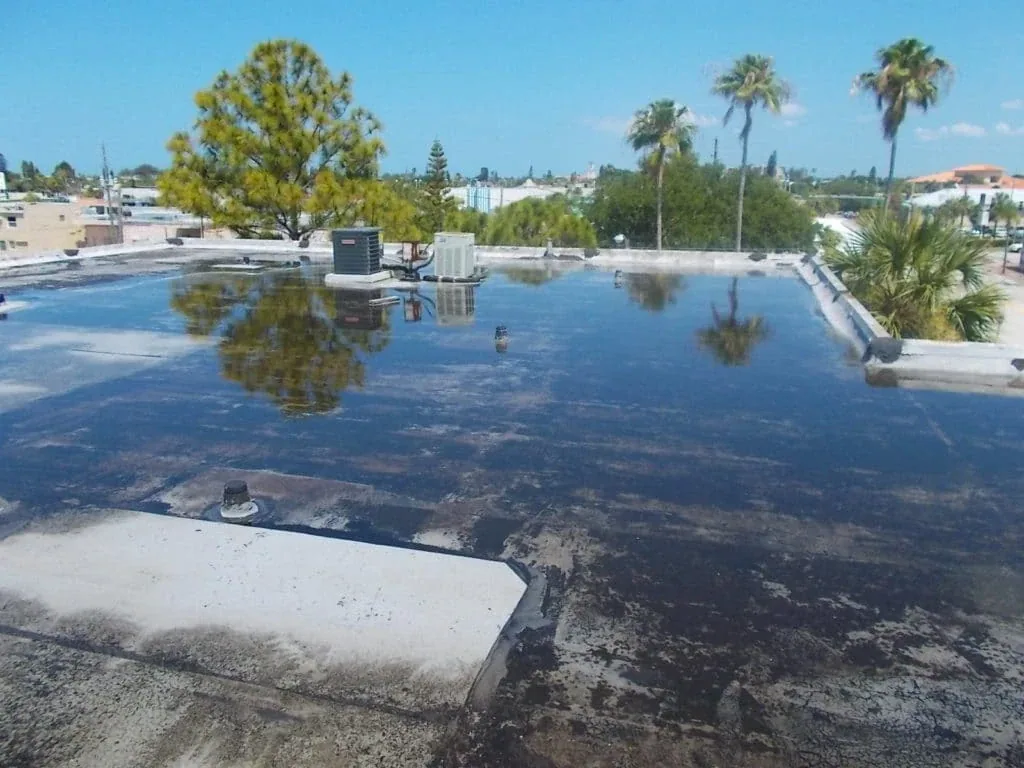
Chico's normal rainfall is strongly seasonal. The NOAA station record puts January and February above five inches each on average, while July precipitation is close to a trace amount. For a downtown roof, that pattern makes a dry-season inspection useful for finding debris, low spots, and drain restrictions before the wetter months arrive. It does not prove that a particular drain has failed. We check the bowl, strainer, overflow opening, slope toward the outlet, and any seam or patch that could divert water. A drain and scupper review can distinguish a blocked outlet from a roof-level slope concern that needs a different scope.
Where water remains after an outlet clears, we document its depth and footprint instead of treating every shallow area as the same defect. The owner can then weigh localized correction, tapered insulation during a larger project, or monitoring with a dated service record. Any plumbing or structural condition outside the roof assembly is identified for coordination, not folded into a membrane repair by assumption.
Read the transitions
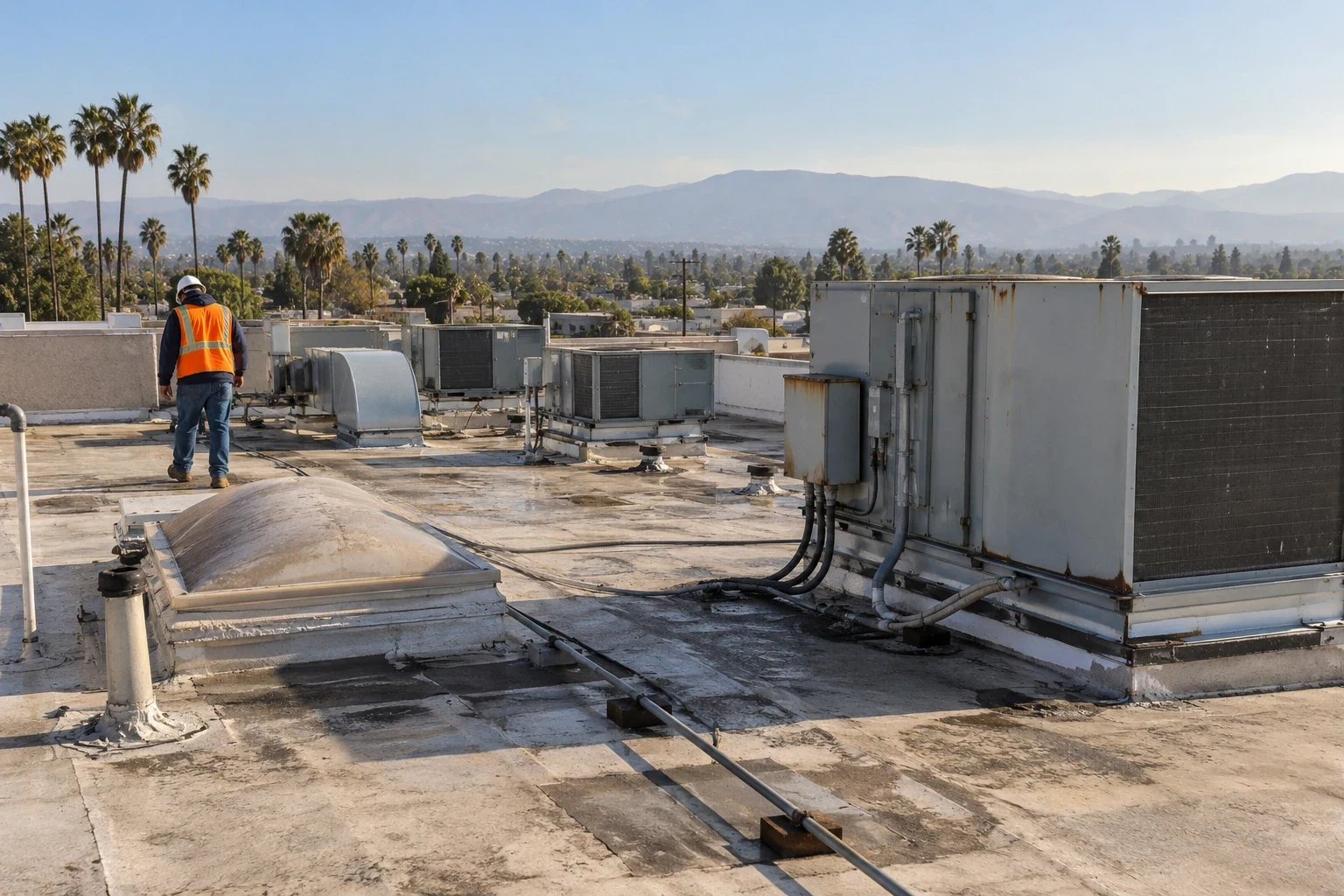
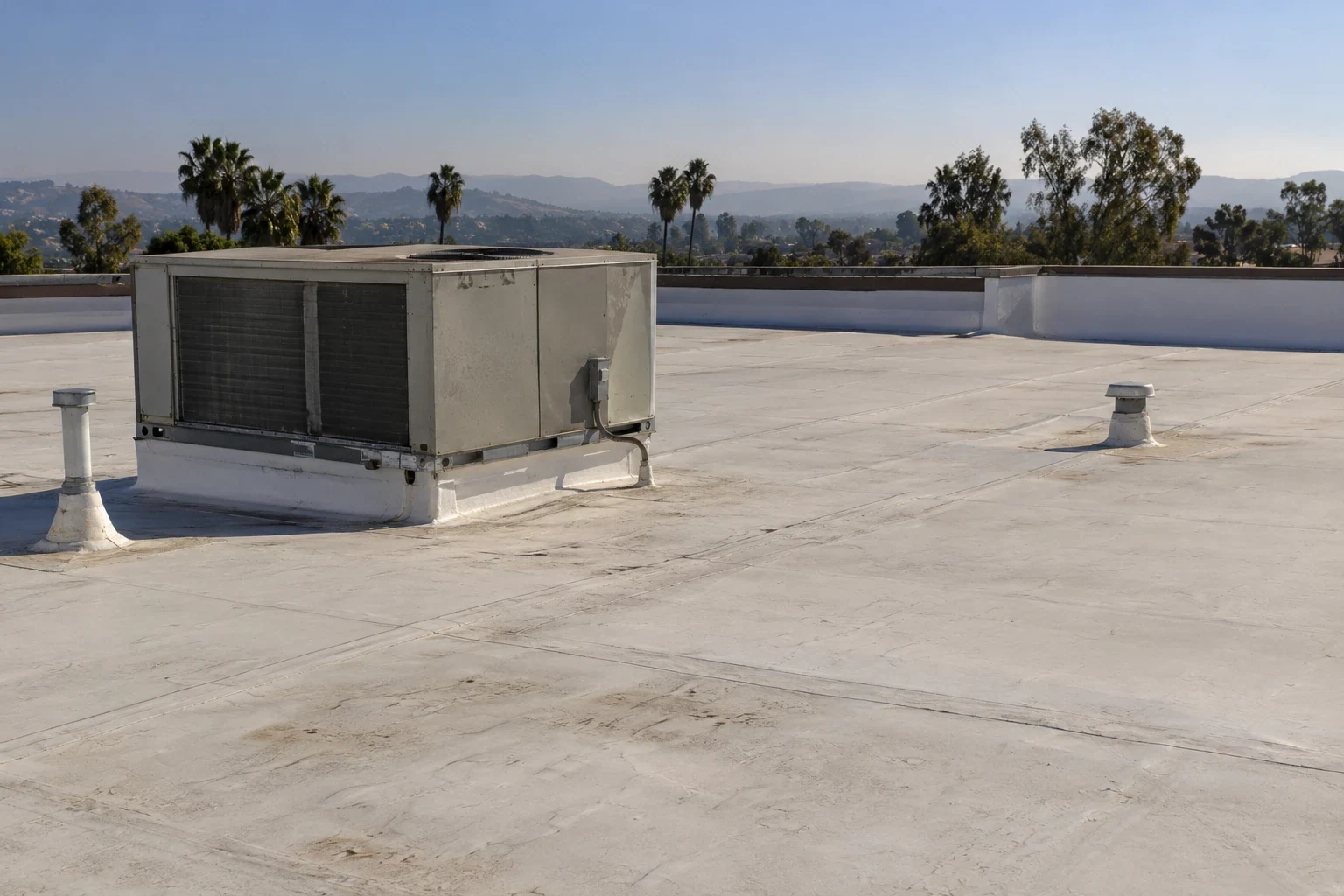
Downtown mixed-use buildings can have different roof transitions even when they meet along one block. We inspect parapets, party-wall conditions, skylight curbs, equipment supports, and changes in deck height as separate details. A patch that stops in the middle of a moving joint can reopen nearby; a sound tie-in must reach compatible, dry material and account for movement. We note whether existing flashing terminates under counterflashing, at a wall coating, or against an exposed edge, then describe the repair that fits what is visible.
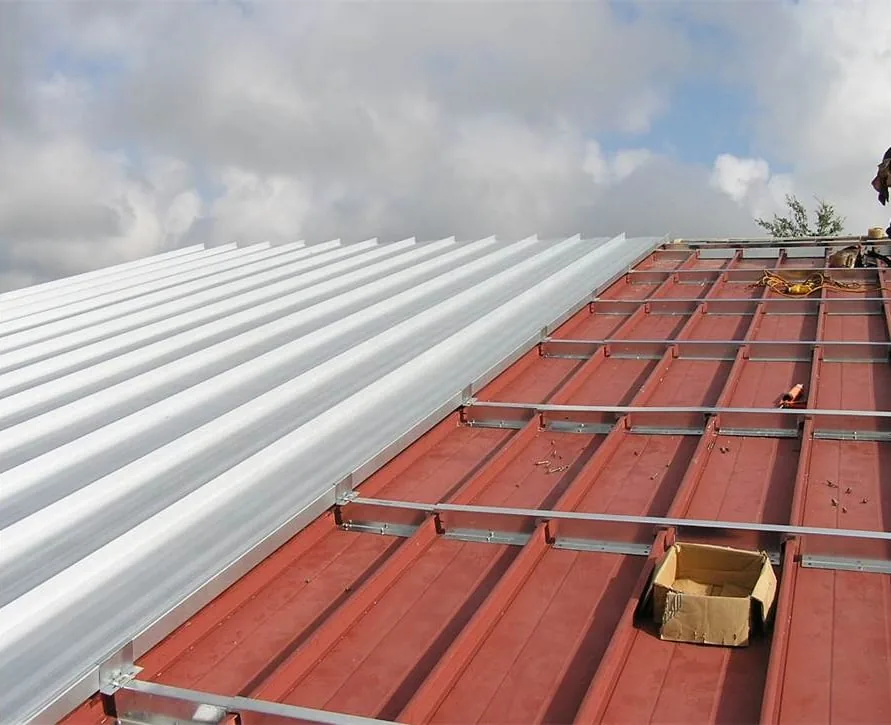
For a broad low-slope field, a TPO membrane or another assembly may be relevant, but product selection follows the deck, insulation, attachment, and existing material. We do not infer those layers from the district's land-use labels. A metal edge may need a separate perimeter-metal repair, especially where movement has opened a joint or loosened a termination. Photographs of each transition give the owner a way to compare the proposal with the completed work.
Plan a usable work window
A downtown roof project has to protect the rooms below while maintaining reasonable access for occupants and service trades. We divide the roof into work zones, keep temporary dry-in at each open boundary, and coordinate noise, deliveries, equipment shutdowns, and any restricted roof access with the property contact. Surface parking and utility constraints identified in the City's downtown planning analysis may affect a specific staging plan, but the actual property must be reviewed before choosing a laydown area. We identify what needs to move, what can stay in service, and which tasks need a short shutdown window.
Hot, dry Chico summers and a wetter winter season help frame scheduling, not promise a particular number of workable days. Membrane adhesion and cure requirements, afternoon surface conditions, moisture readings, and forecast conditions all matter. For occupied properties, an occupied-building sequence can set daily closeout points and interior checks.
Compare repair and replacement
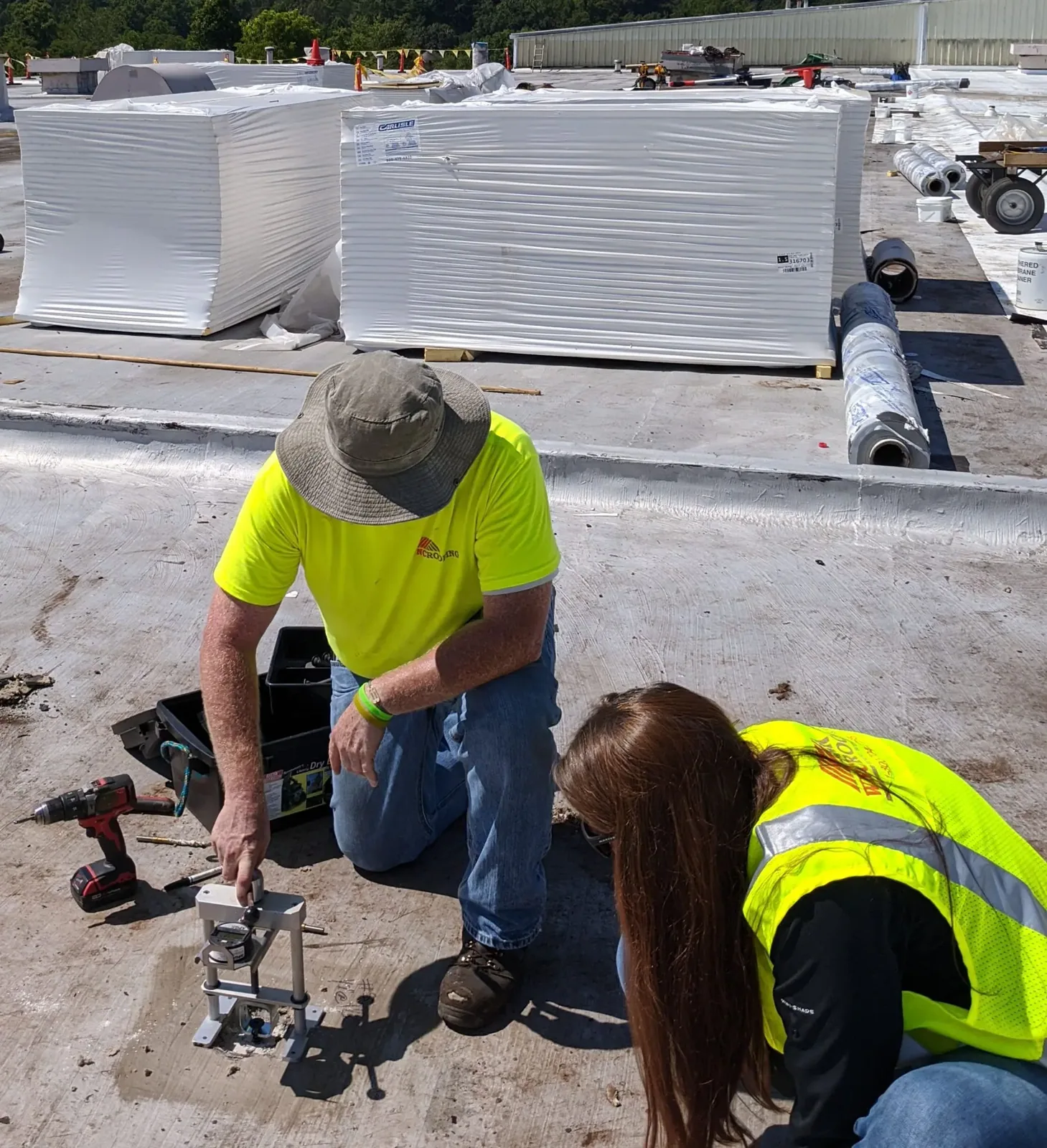
A repair fits when the defect is bounded, surrounding material is sound, and the tie-in can be made to a stable surface. Replacement deserves consideration when moisture is widespread, seams or flashings have failed in several areas, or repeated repairs no longer leave a reliable boundary. A recover may avoid tear-off only when the existing assembly is dry enough, attachment is sound, code allows the added system, and transitions can be raised without creating new drainage problems. The proposal lists the inspection findings behind each option and notes whether a test cut or code check remains before final quantities are set.
California's current Title 24 edition became effective in 2026, with local amendments applying in Chico. For a commercial alteration, we review the energy provisions that apply to the roof scope alongside the permit path. We coordinate the roof scope with permit requirements and rooftop equipment work rather than assuming an older permit basis still applies. The written proposal separates membrane work, insulation replacement, metal details, access needs, and exclusions so the owner can compare the actual scope rather than a single system label.
Leave a useful service record
Closeout should make the next roof decision easier. We provide dated photos, note repaired seams and penetrations, record replaced materials where known, and flag areas that warrant another look after wet-season use. The same record helps a property manager coordinate drain cleaning, equipment contractors, and tenant communication without treating each service visit as a new investigation. For owners coordinating work with the Mangrove Avenue Corridor, condition notes should remain separated by building and repair boundary.
To request an inspection in Downtown Chico, share the building use, the location of the symptom, any previous repair notes, and the access window. We will map the water path, document the repair boundary, and explain what can be handled now versus what needs more evidence. If water is active, we can respond day or night, including holidays, with temporary protection followed by a defined permanent scope.
Commercial Roofing Questions
Can a ceiling stain in a downtown suite identify the roof defect?
Not by itself. We compare the indoor mark with drains, seams, curb corners, and wall transitions above it, then document the path that best fits the evidence.
What changes when roof work is above occupied offices?
The work zone and dry-in sequence matter. We coordinate access, deliveries, noise, equipment needs, and daily closeout with the building contact before opening the assembly.
Would a recover be reasonable for a mixed-use building?
Only after we confirm the existing roof is dry enough, secure, and compatible with added layers. Drain height, edge metal, code, and transitions can rule it out.
Does the downtown location change permit review?
The parcel and scope control that review. We check the applicable permit path and current code requirements, including provisions that may affect a commercial alteration.
What should the service record include after a repair?
Dated photos, the repaired boundary, materials observed or installed, and conditions to recheck after winter rain give the next inspection a useful starting point.
Set a downtown roof inspection
Tell us the building use, symptom location, and access window. We will document the water path, repair boundary, and timing considerations for your roof.