Commercial Roofing in Southwest Chico, CA
A roof above a production area has different access and dry-in needs from one serving a customer-facing business. Southwest Chico covers about 654 acres and includes residential, commercial, manufacturing, and light-industrial uses. Park Avenue and 20th Street are principal commercial corridors in the neighborhood plan because they connect traffic with the freeway and other parts of the city. That mix makes the property and roof assembly the starting point, not the neighborhood label. We inspect existing conditions or review a defined construction set, then map the work to the building’s use, drainage, equipment, and operating schedule.
Identify the active use and roof boundary
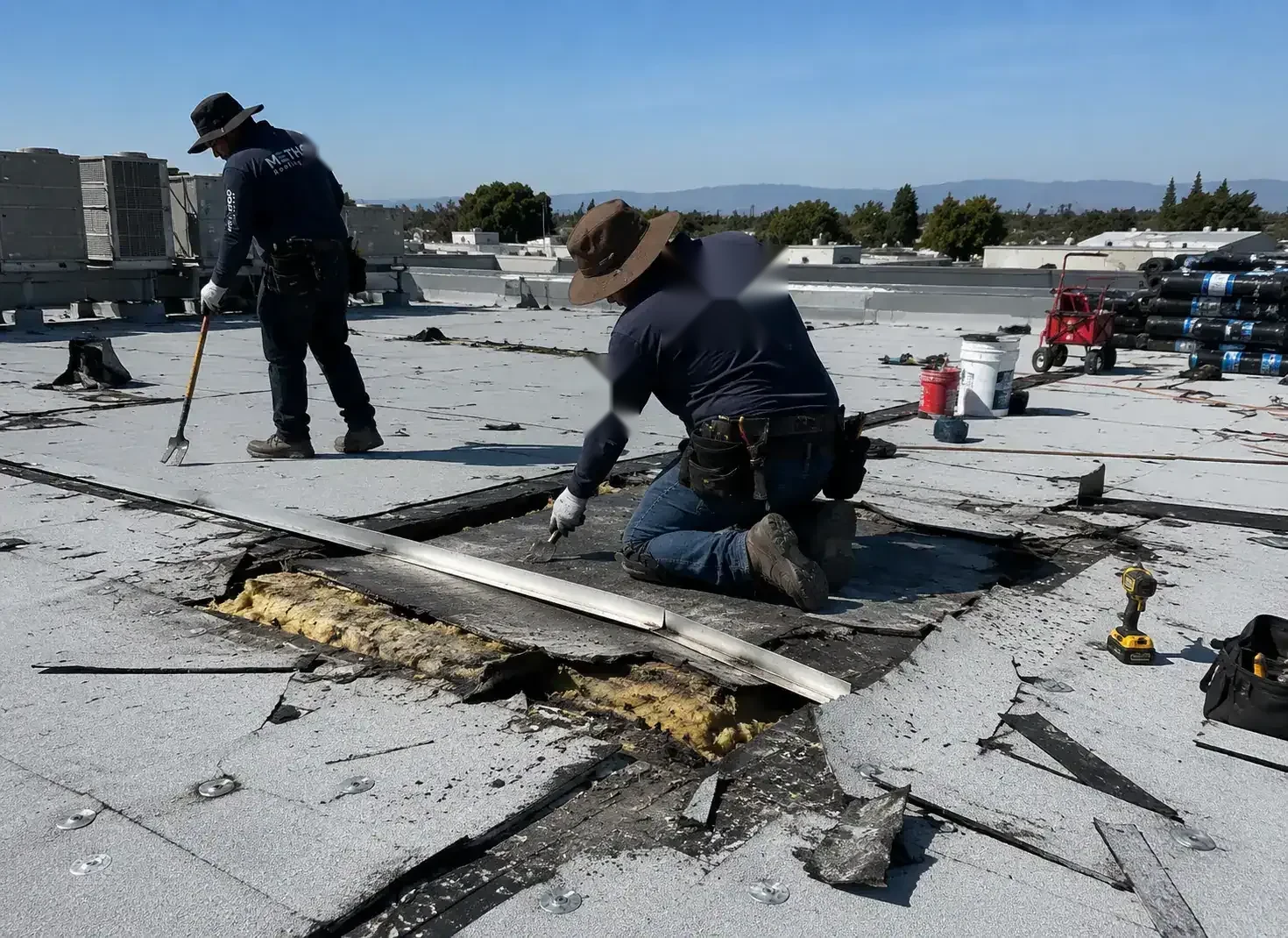
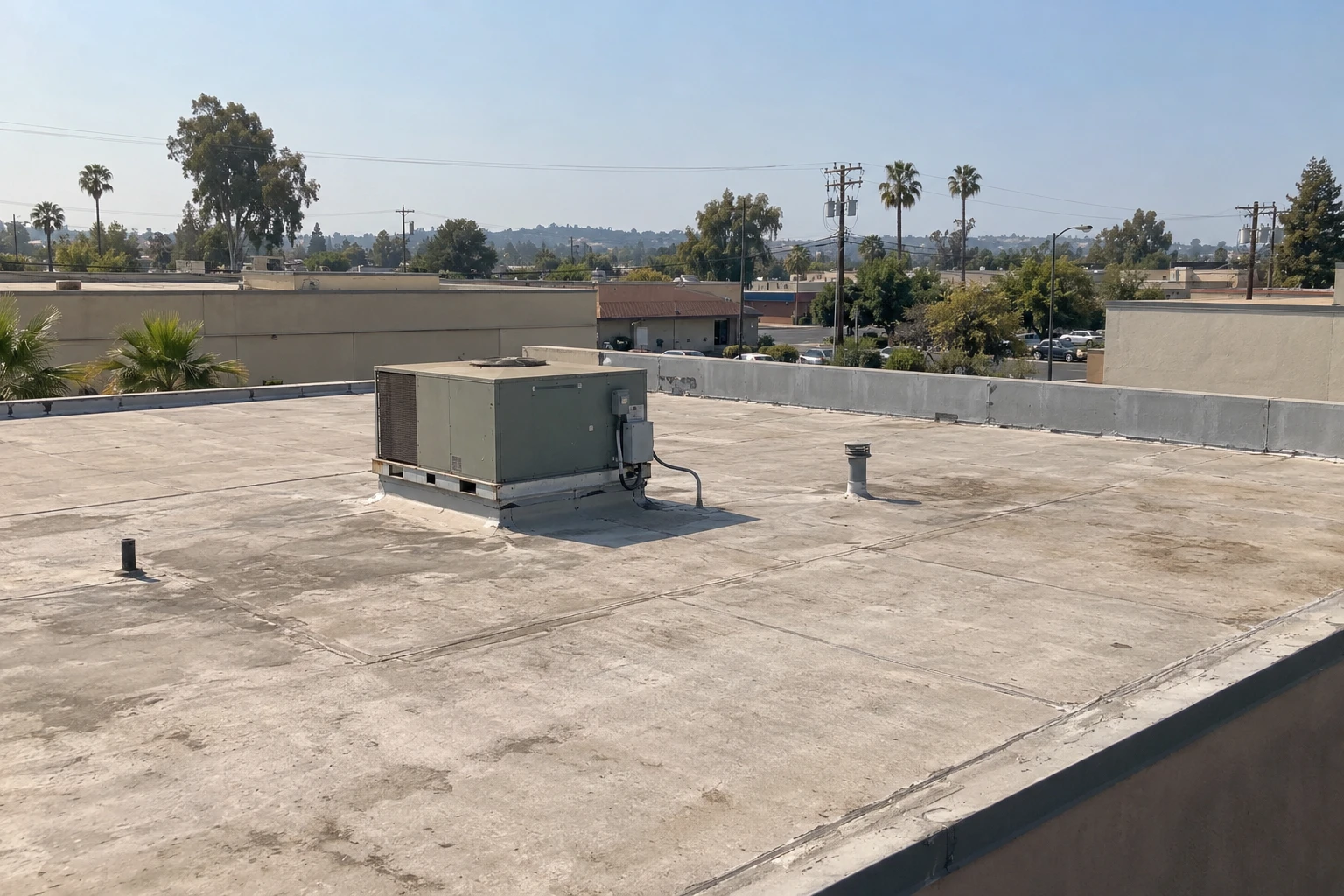
On an existing commercial roof, we note the assembly, seams, penetrations, perimeter details, drains, and interior symptoms. We ask whether the leak follows a production shift, cleaning cycle, or equipment change, then trace the water path across the roof rather than stopping at the ceiling mark. Photos and a simple roof sketch show which sections were inspected and where a repair may stop. A commercial inspection gives the facilities contact a record tied to that specific building.
Park Avenue and 20th Street carry different kinds of traffic and property activity, but a corridor does not tell us the roof’s membrane or access rules. We confirm the actual address privately for dispatch, the authorized roof entry, delivery windows, and any areas that must stay open. If a manager oversees several sites, each report names the roof inspected so a condition at one property is not applied to another.
Follow water beyond the first stain
A leak can travel along insulation, deck flutes, or a seam before it appears indoors. We compare the reported location with roof slope, wall transitions, equipment curbs, and drains, then record the evidence that supports the likely entry point. If a membrane looks intact but moisture may sit below it, we explain whether a test opening or survey could change the repair decision. The owner can approve that step before removal begins, with temporary protection planned for the exposed area.
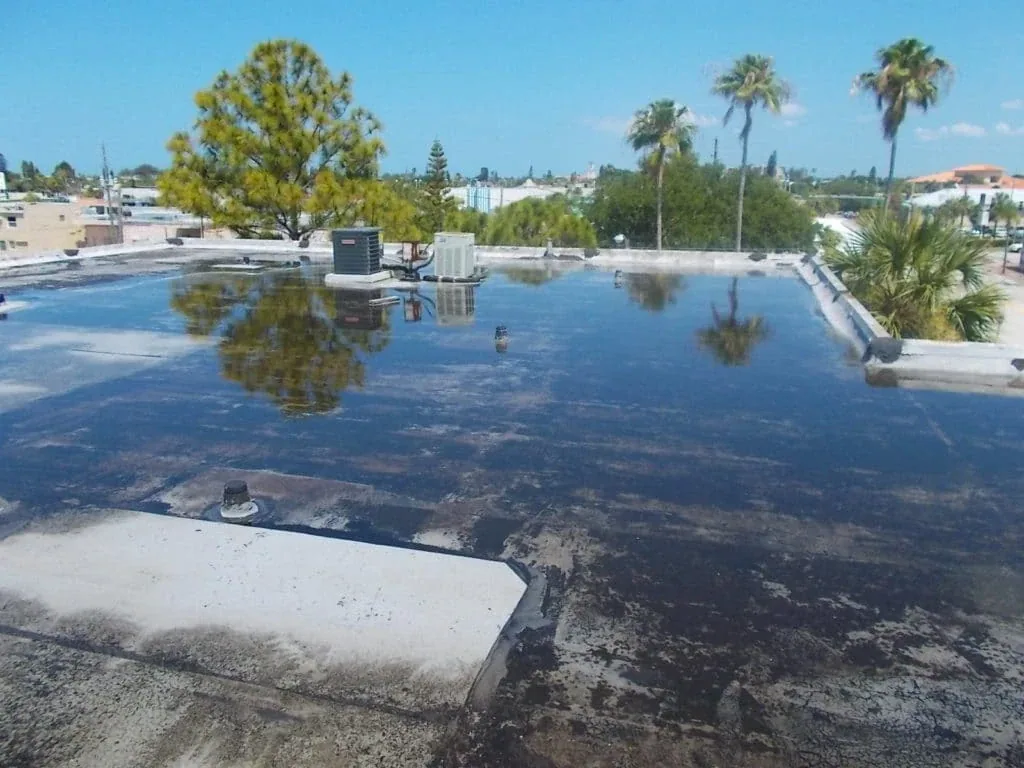
During winter rain, an obstructed outlet or failed flashing can push water toward a seam that was not previously a concern. Our drain inspection checks the bowl, strainer, scupper, overflow, and adjoining membrane. If water remains in a low area after cleaning, a ponding-water assessment can document its limits and check adjacent insulation evidence. That keeps cleaning, membrane repair, and slope correction as separate choices.
Do not blend separate employment areas
Southwest Chico’s plan distinguishes the Meyers Street industrial area from the Park Avenue and Fair Street setting and from Hegan Lane to the south. Those are separate commercial areas, not one roof portfolio. Meyers Street is described as a multi-user industrial setting with limited access, while the Park and Fair area has more visible street frontage and users behind some parcels. A roof near one corridor does not establish conditions at the next. We inspect the building in question and document its own delivery route, perimeter, and water path.
For a repair, that distinction affects how crews enter, where equipment can be staged, and how the owner keeps operations moving. A Meyers Street roof and a South Park and Fair Street property may need different access planning even when the roof material is similar. If the task involves a larger replacement, we mark delivery and lift points with the site representative before the open-roof window is set.
Let the assembly guide the repair choice
We identify layers and attachment before recommending a patch, recover, or removal. A local repair works when the damaged seam or flashing can tie into dry, stable material. A recover is only suitable when inspection shows dry, attached layers that can support the added system, with drains and perimeter heights still functioning. If failed seams or wet insulation cross multiple roof zones, replacement may be easier to document and maintain. The proposal shows the evidence and the conditions that still need a test opening rather than hiding them in a general allowance.
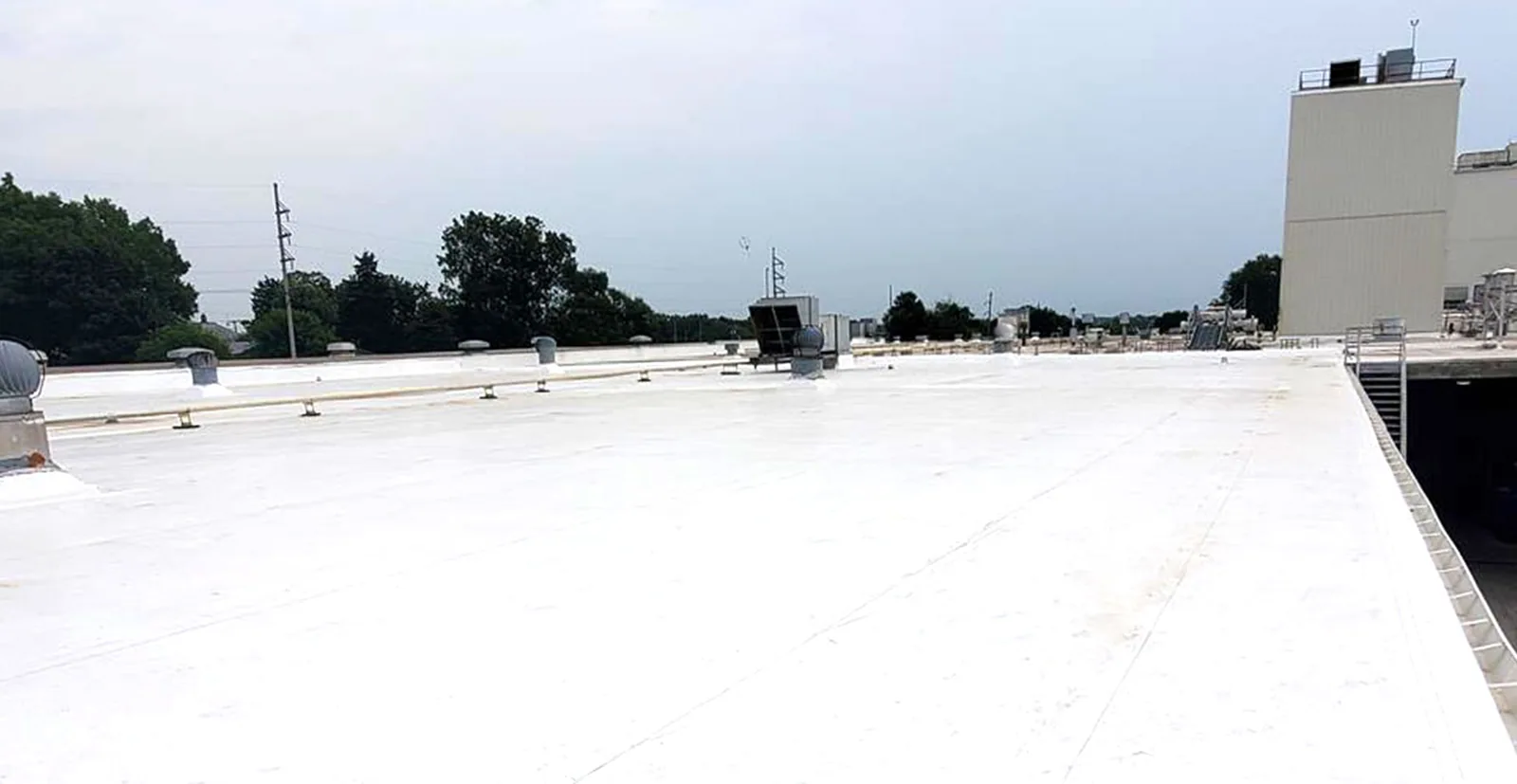
For an existing single-ply roof, a modified-bitumen option is not automatically compatible with the current system; material choice follows the design and substrate. A new roof may require coordination with rooftop units, insulation, drainage, and perimeter metal before installation. Our replacement planning defines the roofing scope and trade interfaces, while the responsible design professional confirms structural or mechanical requirements.
Keep production and public areas protected
Manufacturing and light-industrial uses can have shift changes, loading periods, or controlled access that affect roof work. We ask the property contact which doors, yards, equipment, and interior zones must remain available. Before crews mobilize, the site team agrees on delivery paths, lift placement, noise windows, roof access controls, and a daily dry-in limit. If removal exposes a damaged deck or additional wet insulation, we stop at the agreed boundary, protect the opening, and request approval before expanding the scope.
Commercial uses along Park Avenue and 20th Street may have different hours and pedestrian activity than a production area. A phased sequence can keep one roof zone closed while another remains in service. We coordinate occupant notices, interior protection, and end-of-shift cleanup with the manager. If a mechanical contractor needs roof access, the work order names who owns the curb flashing and when the final tie-in will be inspected. This avoids reopening a finished membrane because a later trade arrived without a defined handoff.
Set a realistic Chico work window
Chico’s normal precipitation falls mainly in winter, while midsummer is notably dry. That pattern helps an owner schedule drain checks and identify a weather window, but it does not confirm that an individual roof is ready for work. In summer, surface temperature and substrate moisture matter to adhesion and cure. In winter, the plan needs temporary protection and a dry-in point before a shift ends. Product instructions and field measurements govern whether a material can be installed on the scheduled day.
When an active leak cannot wait, we can separate temporary stabilization from permanent repair. The record notes the protection used, the area covered, and what remains to inspect once conditions allow. For planned replacement, we identify the open-roof limit, material staging, and the person who can approve a change if the deck differs from expectations. This keeps timing decisions connected to the roof and operations rather than a broad seasonal statement.
Price measurable work and unresolved conditions
A useful scope lists the measured repair area, preparation, compatible material, flashing, edge work, access, disposal, and temporary protection. If concealed conditions can change quantities, the proposal says how the owner will review and approve that work. Separate alternatives make it possible to compare a bounded repair with broader replacement without implying that either is needed before the evidence is reviewed. Schedule depends on access, material selection, site operations, weather, and coordination with other trades.
For permitted work, California’s 2025 Title 24 edition has applied since January 1, 2026; the project scope and local amendments determine which provisions govern. We coordinate insulation and roof details with the project team where code review is required. For an occupied property, we include staging and work-hour constraints in the sequence. The price follows the defined roof area, selected assembly, existing deck condition, and approved work limits, not the amount of commercial land in a neighborhood plan.
Commercial Roofing Questions
Does the Southwest Chico plan describe one kind of roof?
No. The neighborhood contains varied land uses. We identify each building’s actual assembly, condition, and operating constraints before recommending work.
Why distinguish Park Avenue from Meyers Street?
The areas have different access and frontage descriptions. A site visit confirms the specific delivery route, roof entry, and staging limits for the property being serviced.
What if a leak is over an active production area?
We coordinate interior protection and roof access with the site contact, then set a dry-in boundary so work does not leave an opening above operating space.
Can an inspection separate a blocked drain from a roof failure?
We record the outlet, flashing, slope, and surrounding seams. If water remains after cleaning, additional testing can determine whether the membrane or insulation also needs attention.
What makes a recover practical?
The existing assembly must be dry, secure, compatible with added layers, and workable at drains and edges. We document those conditions before pricing a recover.
Arrange a property-level inspection
Share the building use, current roof symptom, access rules, and timing. We will confirm what to review and how the visit can fit site operations.