Commercial Roofing in Skyway Commercial District, Chico, CA
A roof repair in a retail district has to account for the rooms below, the equipment above, and the route water follows across the membrane. We inspect those details before deciding whether the defect is isolated or part of a wider failure. The City's Skyway opportunity area is bounded by State Route 99, Notre Dame Boulevard, Forest Avenue, and Morrow Lane. Planning records identify a regional commercial center with shopping centers and large-format retail uses. They also note excess surface parking and underused parcels, while an earlier report says much redevelopment had already occurred. Those facts describe a district, not the current roof at an individual property.
Read the roof before setting scope
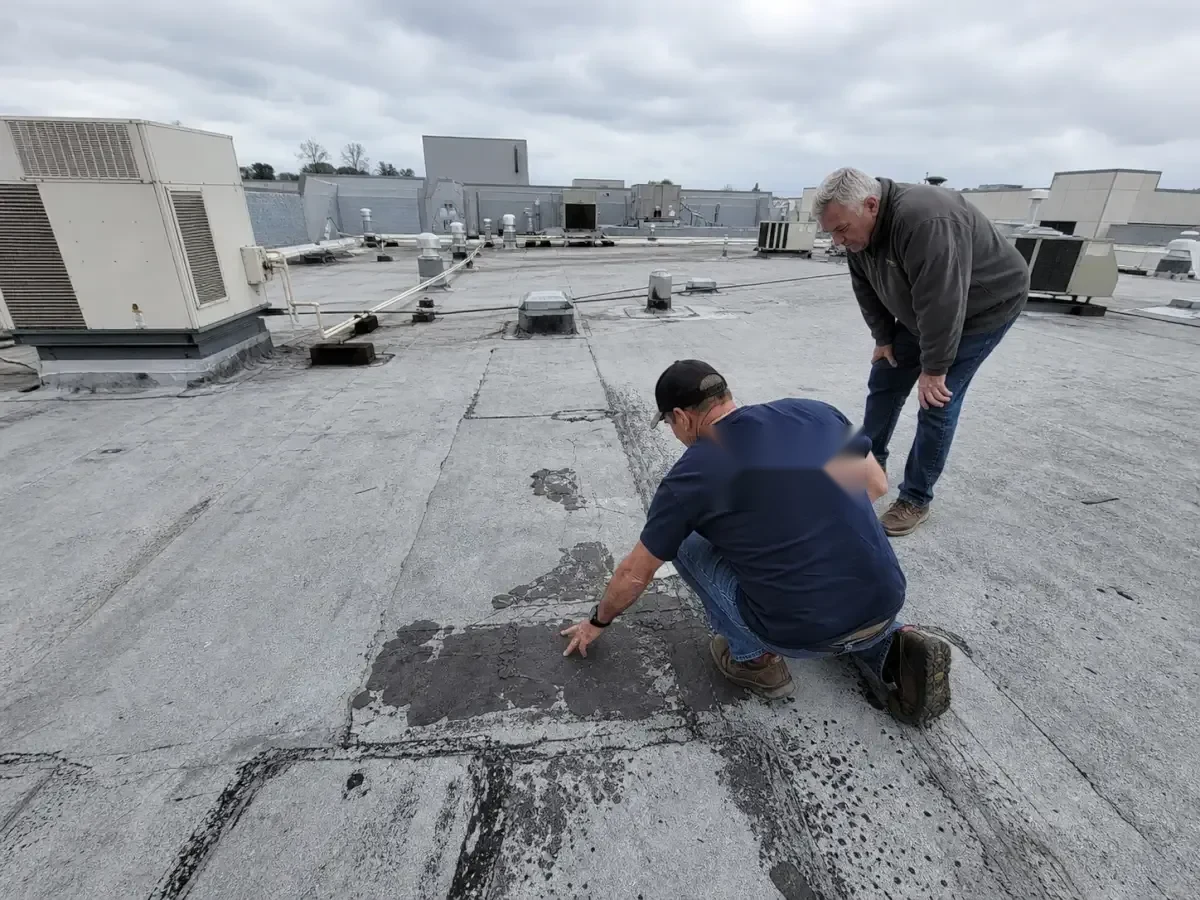
We walk the field, check seams and repairs, inspect drains and overflows, and look closely at equipment curbs and perimeter terminations. The reported interior mark is compared with what appears above it. If moisture might have moved through insulation, we identify whether a test opening or survey can reduce uncertainty. The owner receives photos and a proposed repair line that shows what remains inside and outside the current scope.
The district's commercial character differs from the East Avenue Corridor and other Chico corridors, but that distinction does not tell us any roof's condition. A condition report helps a manager compare the field evidence with repair, restoration, or replacement proposals. Each option has a boundary and a record of what it assumes.
Track water beyond the outlet
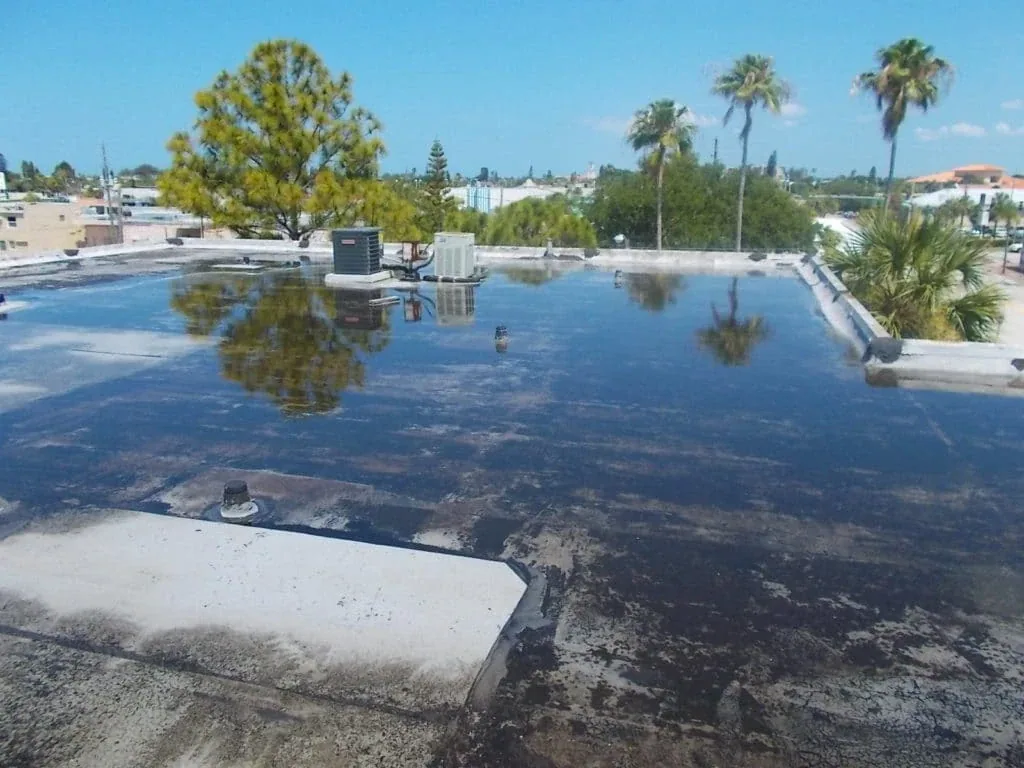
On a low-slope roof, a clean drain may still sit outside the lowest area. We check the bowl, strainer, overflow, slope, and water marks, then determine whether cleaning changes the path. If ponding remains, we map its depth and spread in relation to seams, penetrations, and patches. That information can distinguish a maintenance task from an insulation or slope issue that needs a separate scope.
Chico's NOAA precipitation normals show winter months are much wetter than July and August. Before that seasonal shift, we can document outlet condition and debris while the surface is dry. A calendar does not establish that a particular roof will leak. Our drain and scupper work identifies restrictions and overflow paths. Where water overlaps a suspect membrane area, a ponding-water repair review checks whether the defect reaches the insulation below.
Inspect curbs, seams, and edges
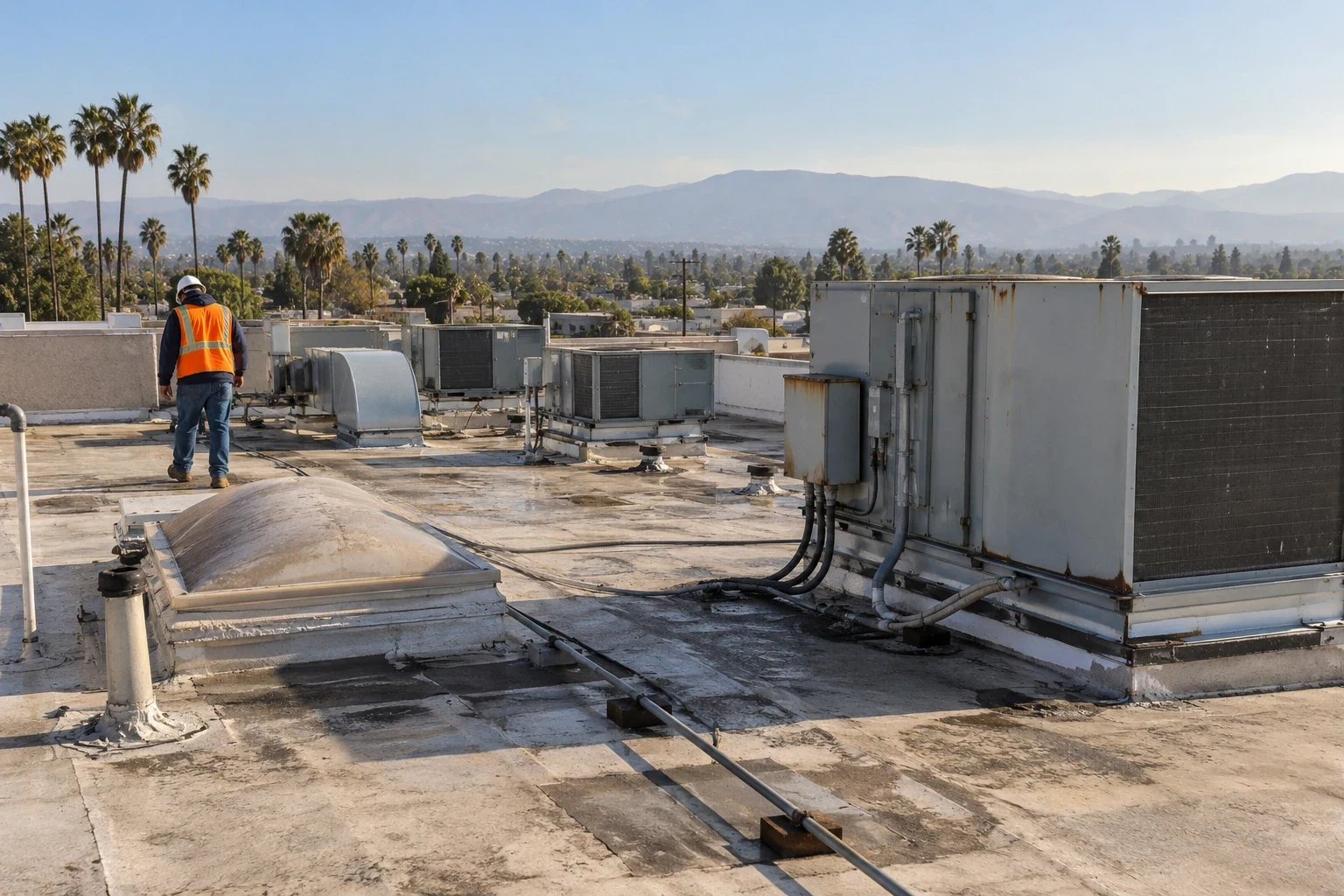
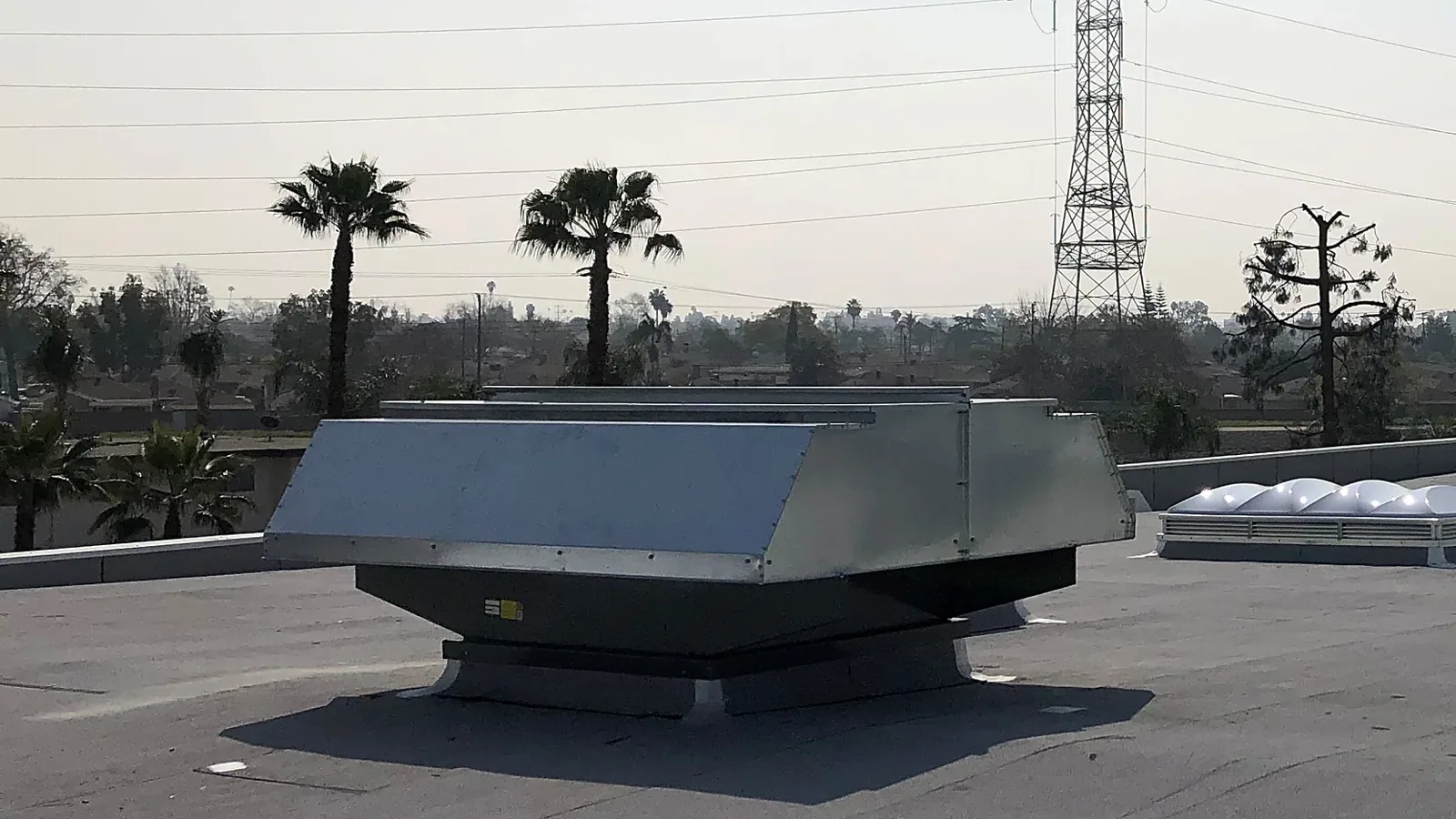
Retail roofs may have multiple rooftop units and penetrations, but we document only the ones present on the property. We check the curb corners, membrane turn-up, counterflashing, and fasteners, then coordinate any shutdown with the equipment contractor. At the perimeter, metal joints can open through movement or loose attachment. A roof repair that leaves a failed edge or curb outside the tie-in may not close the same water route.
Along Chico's Skyway commercial corridor, a repair choice depends on the roof assembly and the water path at the failed detail. TPO, EPDM, modified bitumen, and metal systems use different seam and flashing methods, so a patch should suit the existing materials. If the surrounding membrane remains serviceable, a localized repair may fit a bounded defect. A equipment curb review can coordinate nearby trade work, while a perimeter inspection records coping and edge conditions before the scope is set.
Plan staging at the property
The City's planning description mentions surface parking, yet parking may be occupied, reserved, or unavailable to a roof crew. We confirm permission, delivery routes, pedestrian protection, and where materials can be placed without blocking operations. A project over active retail space also needs tenant notices, interior protection, and a named contact for access changes. We split larger work into areas that can be dried in before the crew leaves each day. Before the work starts, the manager receives a sequence for deliveries, tenant notices, roof access, and the point where each day ends. We also set a check-in before a phase closes, so the interior team can confirm protection and resume normal access.
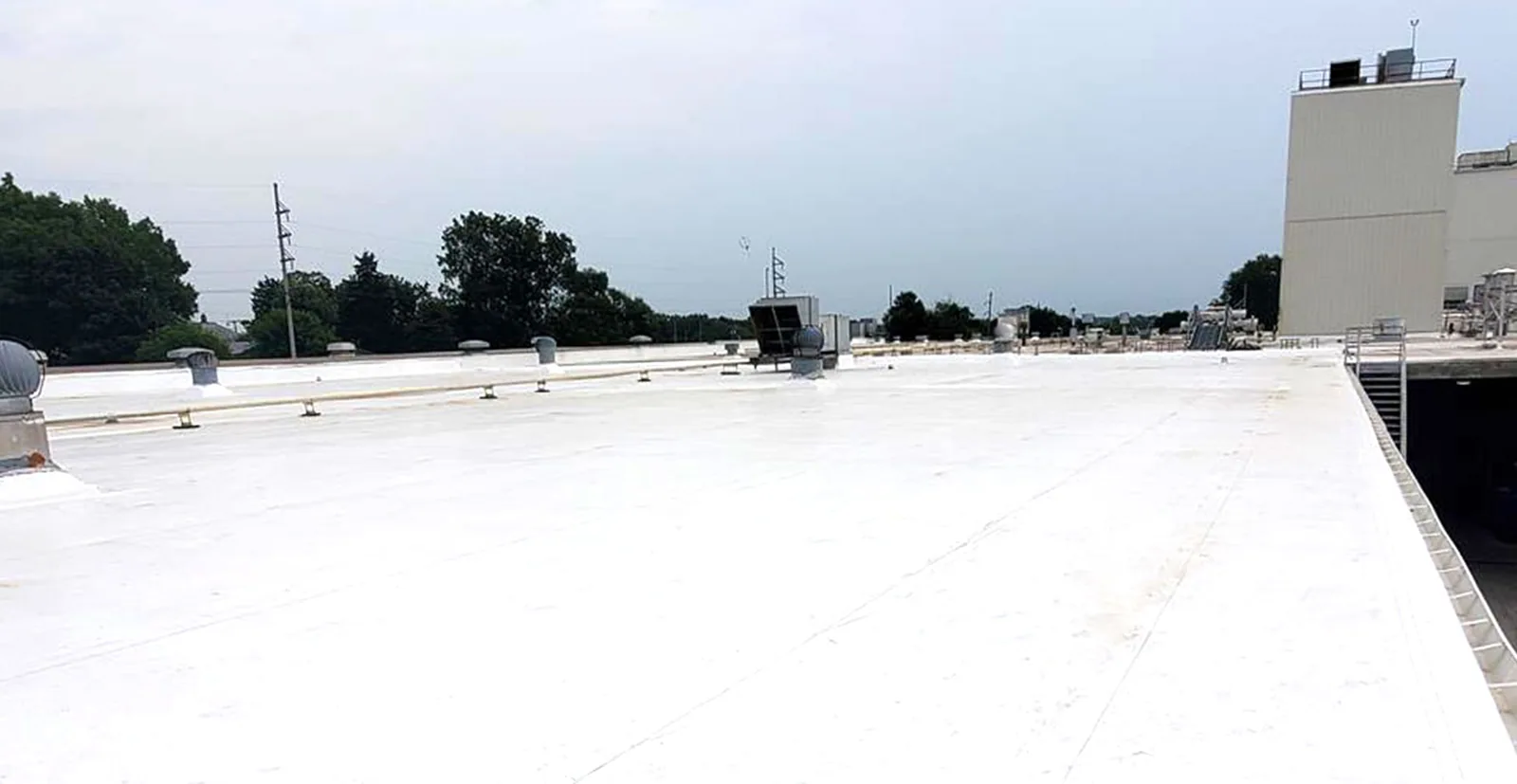
Hot summer roof temperatures and a wetter winter season affect material handling and exposure planning. The roof surface, substrate moisture, and system limits decide when installation can proceed. A phased occupied-building plan can coordinate tenant hours with a short open-roof window. If the inspection supports a restorative scope, a coating review follows adhesion and moisture checks; it does not conceal wet insulation or repair a failed curb by itself.
Compare a repair with larger work
A patch may be appropriate when a seam or detail has failed in a bounded area and the adjoining assembly is sound. If moisture and open seams appear in separate locations, replacement should be compared with continued repairs. A recover requires confirmation that the existing system is dry, secure, and compatible with added layers at drains, curbs, and metal edges. We explain what the inspection shows, which condition is still uncertain, and whether a test opening could change the recommendation. A test is useful when moisture depth or attachment cannot be determined from the surface and the answer would affect the scope. We set the opening location with the owner, protect the area, record the layers, and close it with a compatible repair. If a broader failure remains possible, the proposal identifies that limit rather than presenting the test result as a roof-wide conclusion.
The California Building Standards Code effective in 2026 and local amendments govern the applicable permit scope. Commercial alterations can also involve current energy requirements and coordination with rooftop equipment. We check the parcel and project before finalizing the assembly. The estimate separates removal, insulation, membrane, flashing, metal, staging, and temporary weather protection. Cost and timing reflect those measured items and the property's operation, rather than the district boundary or parking count.
Leave the next manager a baseline
At closeout, we provide dated images of the repaired field and details, record materials observed or installed, and list any adjacent area that remains unopened. A clear service record gives the next inspection a boundary and a point of comparison after the wet season. It also helps a manager coordinate drain cleaning and equipment access without confusing a maintenance item with a completed repair. The record can list the next inspection interval selected for the roof and the symptoms that should prompt an earlier visit, such as a new interior mark or a drain that no longer clears.
For a Skyway District roof, share the building use, active symptom, roof history, and access needs before a visit. We will map the water path and explain what work can close now. If your team also maintains the North Valley Plaza District, we keep each roof's observations and repair boundaries separate. For urgent water entry, temporary protection can be scheduled at any hour, including holidays, with permanent work scoped from the inspection.
Commercial Roofing Questions
Do the district's parking areas provide roof staging space?
Not necessarily. We confirm available space, property approval, delivery timing, and protected paths for tenants or pedestrians at the building itself.
How can you tell if a retail roof needs replacement?
We map failures, moisture, and repair history across the roof. Replacement is compared when the evidence extends beyond a limited seam or flashing repair.
Will rooftop equipment need to be turned off?
We identify units that cross the repair area and coordinate with the equipment contractor. Any shutdown window is agreed before membrane work reaches the curb.
Can a coating fix ponding water?
A coating does not change roof slope. We inspect the drain path, surface adhesion, and moisture first, then separate a coating candidate from a drainage correction.
What should closeout photos show?
The repaired section, tie-in edge, nearby drains and curbs, and any condition left outside scope give the next manager a useful roof baseline.
Set a Skyway roof review
Send the property use, symptom location, prior repairs, and access limits. We will inspect the roof and outline a protected work sequence.