Commercial Roofing in East Avenue Corridor, Chico, CA
A roof serving a low-intensity commercial use needs an inspection that distinguishes its own wear from the surrounding land-use plan. Along Chico's East Avenue Corridor, we check the membrane or metal surface, drain route, wall transitions, and interior symptom before setting a repair limit. The City's opportunity area extends from Alamo Avenue to the Town and County Center, west of the Esplanade. Its planning report describes mostly low-density residential uses with some lower-intensity commercial activity and access to nearby services and transit. Large underused parcels are identified as opportunities for possible office or retail use, not proof that a project has been built. We assess the existing roof, not a forecast.
Start at the roof, then trace inside
A ceiling mark is the last visible point in a water path that may begin at a curb, seam, drain, or parapet. We inspect those details and compare them with the interior location, then photograph what supports a repair. If wet insulation or a hidden deck issue could change scope, we explain whether a test opening is warranted. A report marks the affected area and separates confirmed defects from conditions that still need verification.
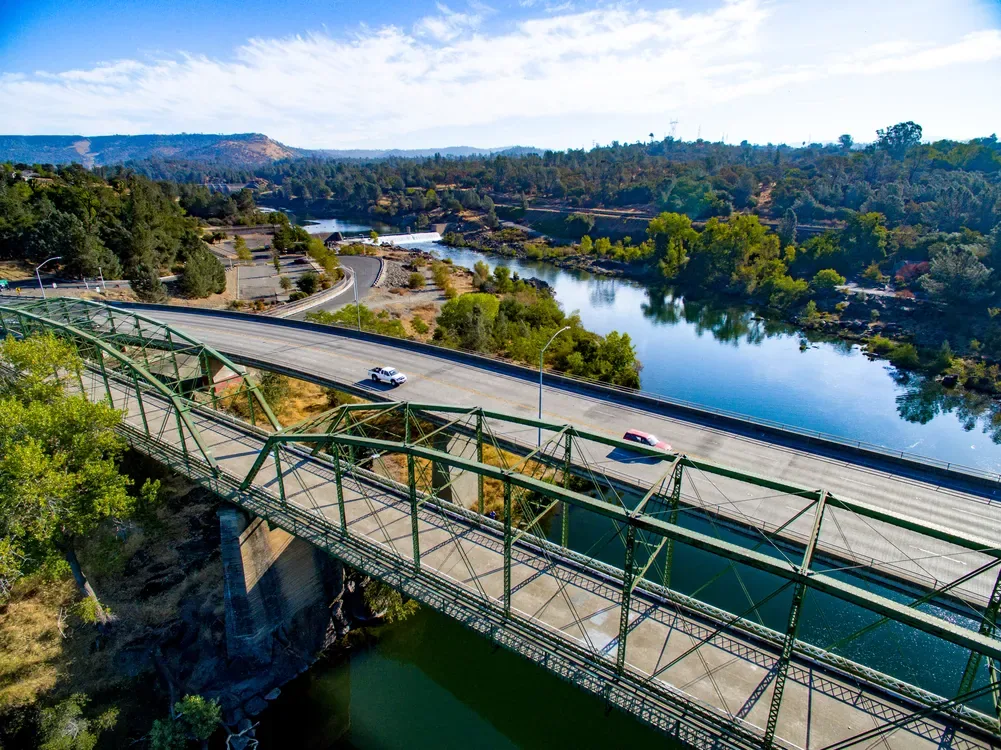
East Avenue connects toward the West East Avenue area and sits near the North Esplanade Corridor, but those planning boundaries do not indicate a shared roof design. A condition report with photos gives the owner a roof-specific basis for comparing repair, recover, and replacement scopes. The first decision is whether the visible boundary can be closed on sound material.
Check water movement before material choice
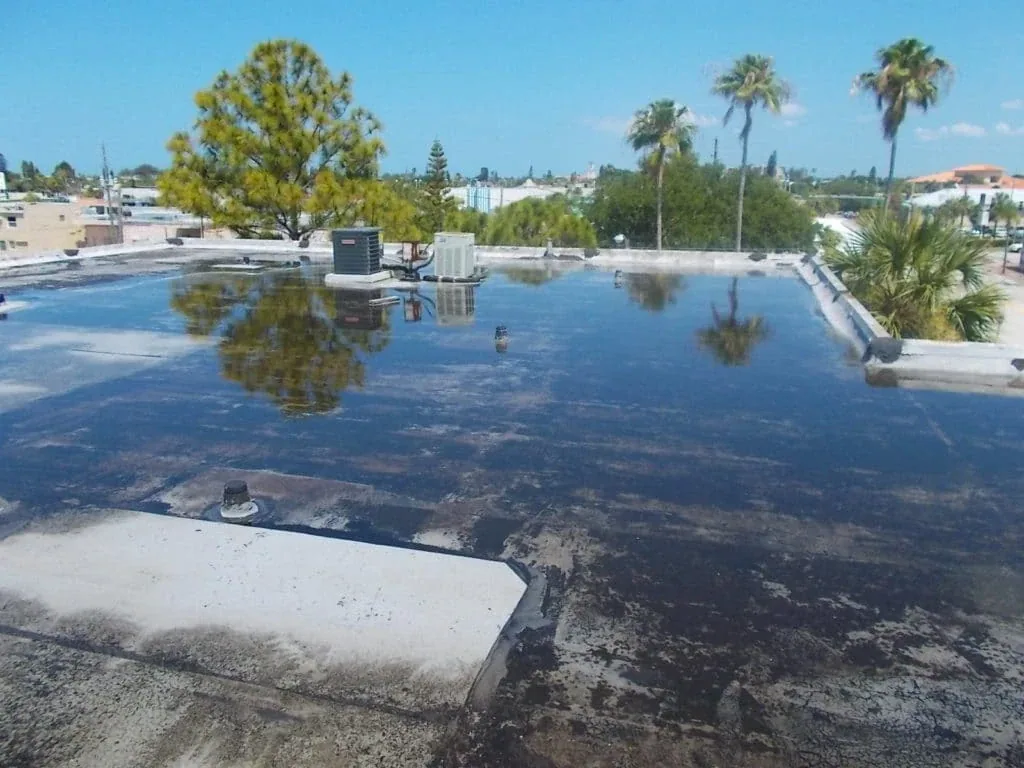
Drainage is a roof-system issue, not only a cleaning task. We check strainers and bowls, overflow openings, nearby low spots, and the slope that leads to each outlet. A clear drain can still sit above a low point, while a blocked strainer can mimic a slope problem. We record what cleaning changes and what remains after water can move freely. If a deck or structural concern appears, we identify it separately for the appropriate review.
Chico's normal precipitation is concentrated in winter, and July and August are comparatively dry. A summer visit offers a useful chance to record drains and seams before wetter weather returns, without treating the calendar as proof of a defect. Our drain service documents the primary and overflow paths. When water has remained in a low area, a ponding-water assessment determines whether the membrane or underlying insulation needs attention.
Give each transition its own review
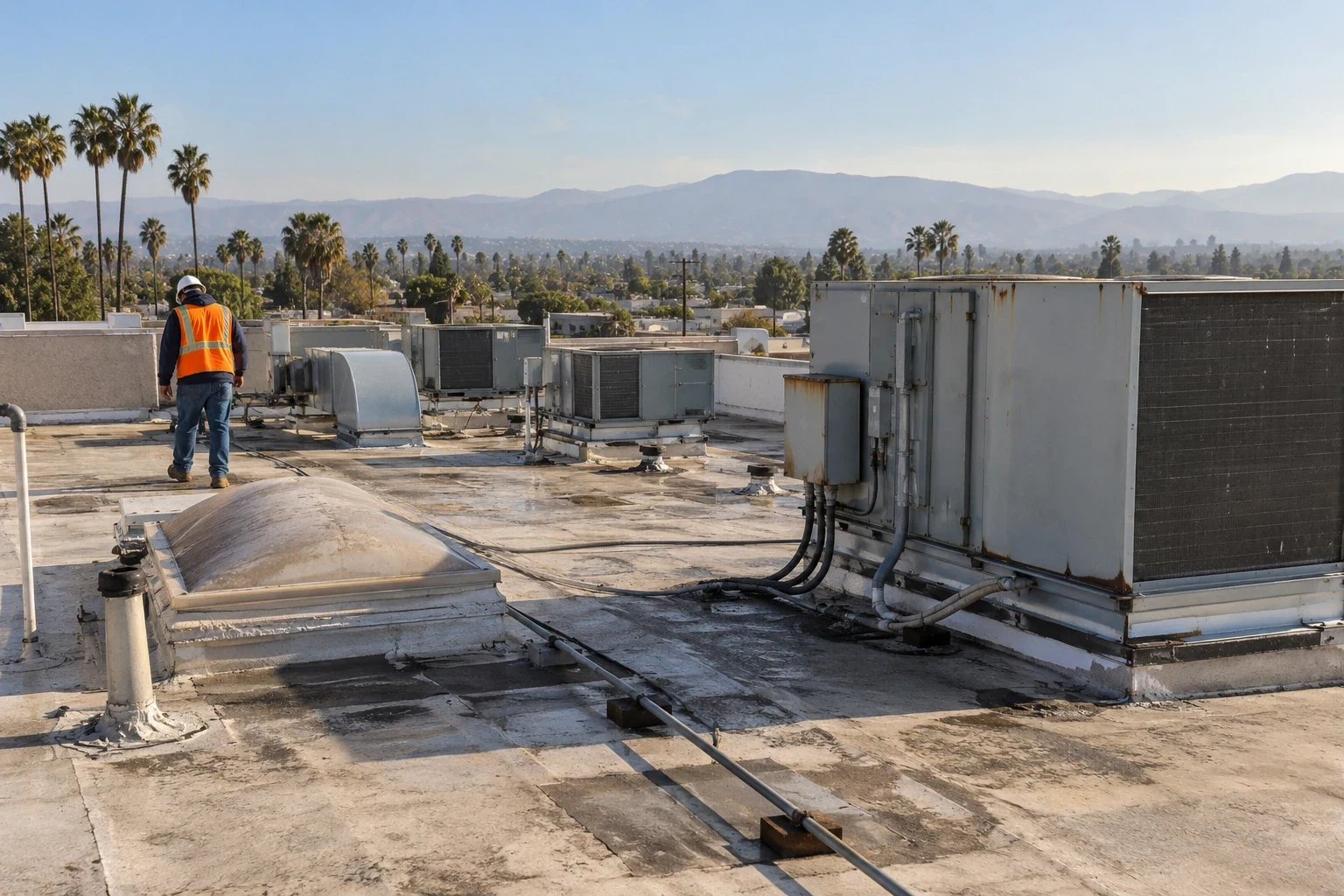
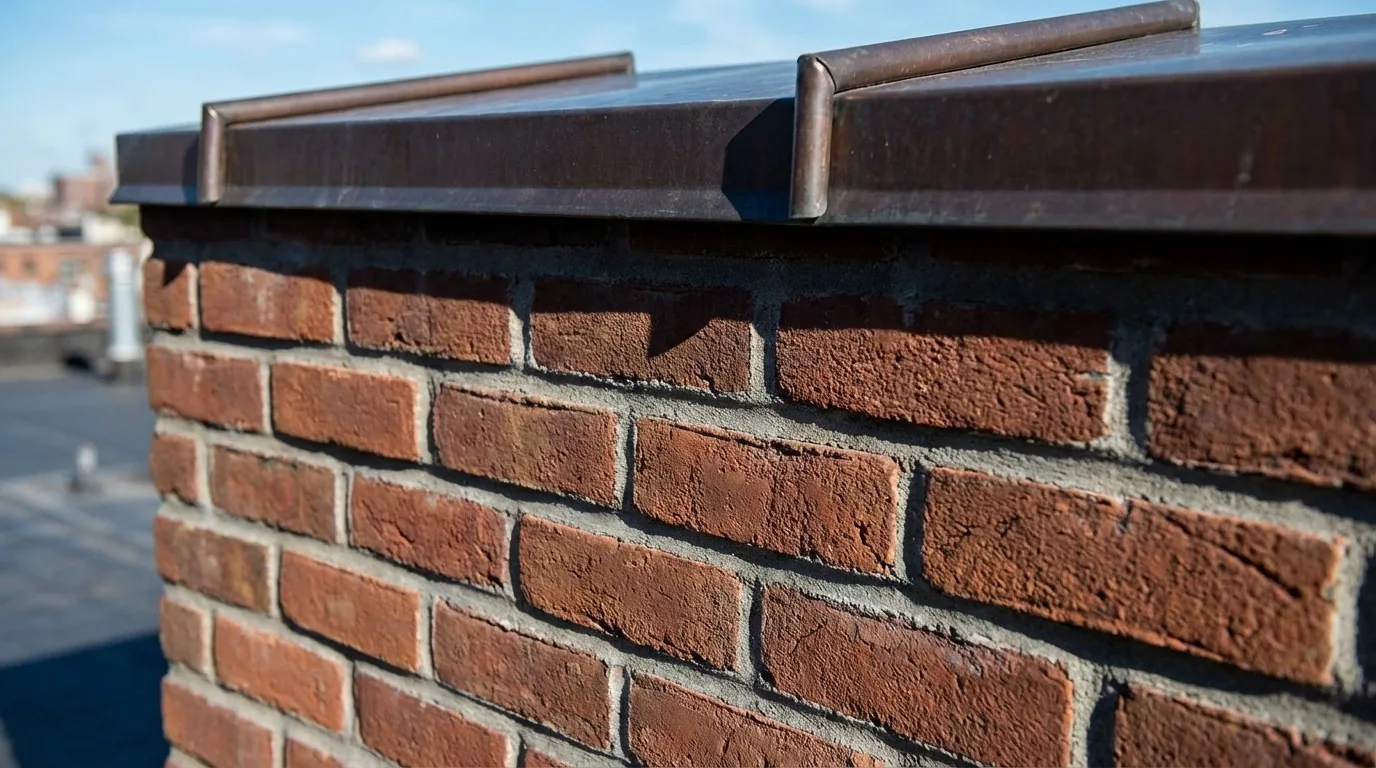
At a curb, wall, pipe, or metal edge, the flashing must connect to a surface that can hold the detail through movement. We examine corners, terminations, fasteners, and compatibility with the field membrane. If a patch meets loose material, the repair should expand to a stable boundary rather than stop at the first visible split. The owner sees the proposed tie-in and any uncertainty about concealed layers before approval.
The City identifies several underused parcels in the East Avenue opportunity area and notes possible office or retail use. Those opportunities are a planning context, not an assumption about current roof inventory. A new or altered commercial roof must match the actual deck, insulation, and permit scope. We can review EPDM details or other systems when the existing assembly supports that comparison. Where the roof edge has loosened, a separate edge-metal repair keeps perimeter work visible in the estimate.
Make access part of the sequence
Before opening a roof, we confirm who provides access, where materials can be staged, whether a room below needs protection, and which equipment must remain available. Nearby transit or shopping access does not establish a loading route for a specific property. The site contact helps us plan entry, deliveries, noise periods, and the daily dry-in line. Before the crew mobilizes, we confirm how occupants will be notified if a roof zone affects a doorway or mechanical service route. A limited work zone keeps water protection clear when an occupied operation continues below.
Chico's summer heat and wetter winter season influence when adhesives, coatings, and membrane work are practical. The roof surface, substrate moisture, manufacturer application limits, and forecast determine the actual window. An occupied-building sequence can separate the roof into sections with a clear closeout point. If repair needs become broader, replacement planning includes staging, weather protection, and the owner's access constraints rather than treating the work as a single open area.
Compare work that fits the assembly
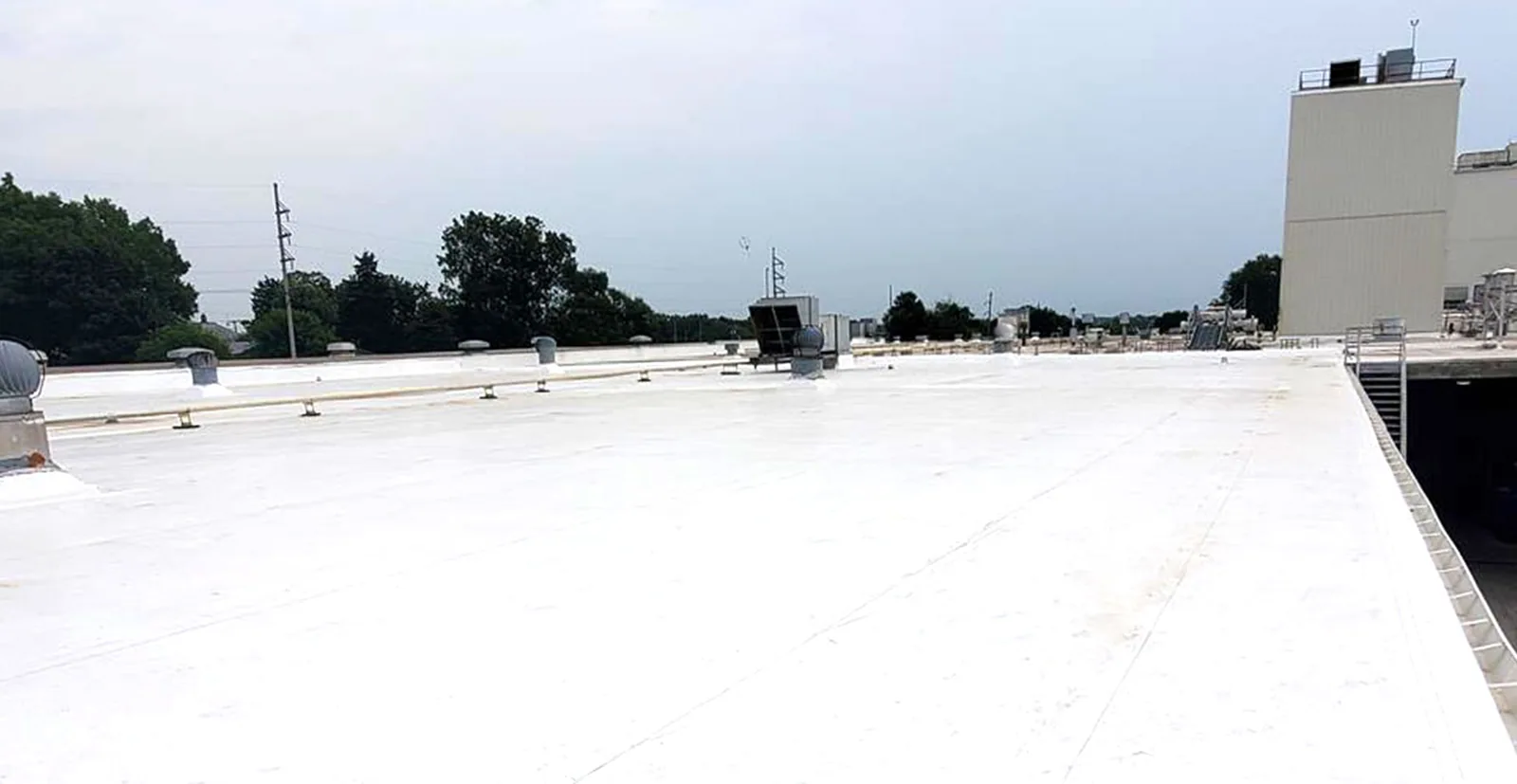
A local repair is useful when the defect ends at compatible material and nearby insulation and attachment are sound. Replacement is worth pricing when moisture, seam failure, or recurring flashing defects appear across distinct areas. A recover may leave a serviceable layer in place, but only if the roof is dry, fastened securely, within allowable layer limits, and able to accept raised drains and edges. We explain those checks before choosing an option.
California's current Title 24 edition now governs applicable work, with local amendments and parcel permits setting project requirements. We review provisions affecting a commercial alteration before finalizing insulation, rooftop equipment, or electrical interfaces. The proposal identifies measured area, removal, insulation, metal work, access, and temporary protection. Cost and timing follow these quantities, the chosen assembly, delivery lead time, and operating schedule, not the corridor designation.
Keep the roof history usable
After work, we leave dated photos and notes showing where the repair begins and ends, what material was installed or observed, and which nearby areas were not opened. A service record gives a future inspection a starting point and makes seasonal drain review easier to compare. It should note any temporary protection, its removal date, and whether an adjacent seam needs a second look after the next wet-season event. If a condition remains outside the approved boundary, it is recorded as a separate item so it does not disappear from the owner's maintenance plan or get confused with completed work.
Share the property use, active symptom, prior repairs, and access window when requesting an East Avenue inspection. At the visit's end, we return photos, a defined edge for the work, and any open question that could change the scope. A manager responsible for roofs near Downtown Chico can keep each site's findings distinct. If a leak is active after hours or during a holiday, our response can install temporary protection before a permanent repair is defined.
Commercial Roofing Questions
Does the East Avenue plan prove that a commercial roof is being built?
No. The City identifies potential office and retail uses on underused parcels. We make no assumption about a completed building or its roof until the specific property is inspected.
Can summer roof heat affect inspection findings?
Surface temperature can affect material handling and some survey methods. We record the conditions during the visit and interpret them with visible seams, moisture evidence, and the roof assembly.
Why inspect the overflow if the primary drain is clear?
The overflow is a separate backup path. We check that it is open and positioned to receive water if the main outlet becomes restricted, then record what needs maintenance.
What determines whether a curb needs a local repair?
The flashing, curb corners, field membrane, and substrate must provide a stable tie-in. If the surrounding material is loose or wet, we show how far the repair needs to extend.
Does a new office project require a different roof review?
A planned use does not decide the roof system. We review the actual construction, permit requirements, insulation and drainage design, and equipment layout for that project.
Review an East Avenue roof
Share the property use, current symptom, past repairs, and roof-access limits. At the visit's end, we return photos, a defined edge for the work, and any open question that could change the scope.