Commercial Roofing in West East Avenue Area, Chico, CA
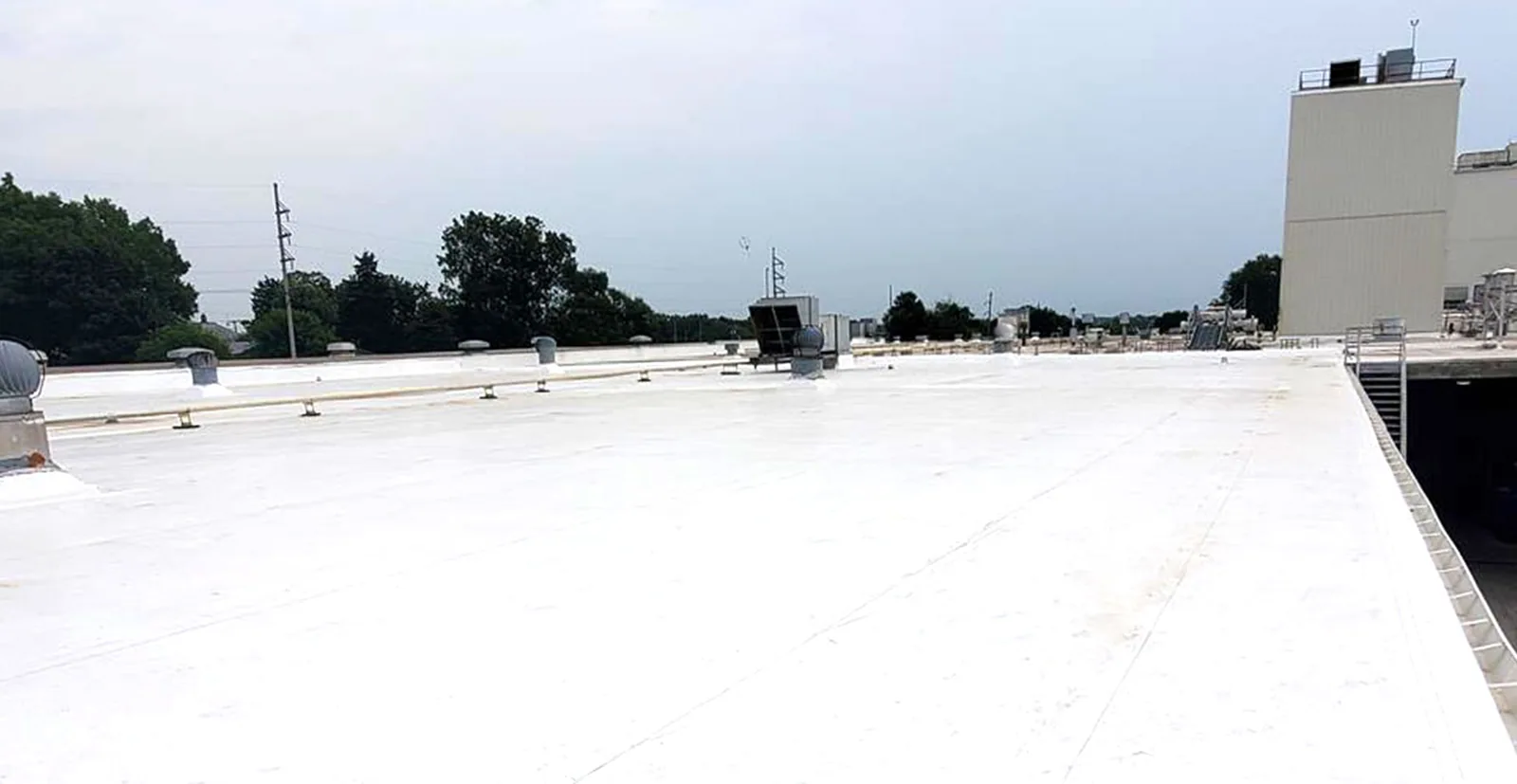
A roof near the West East Avenue connection deserves a property-level inspection before an owner treats a leak as a corridor-wide condition. We check the assembly, seams, drains, penetrations, and interior symptom, then map where a repair can return to stable material. Chico's General Plan identifies West East Avenue as a corridor linking Nord Avenue with the Esplanade and State Route 99. The nearby Bell-Muir planning area is northwest of that route and close to existing urban services and infrastructure. The City also describes East Avenue and Nord Avenue as connections between the growth area, State Route 32, State Route 99, and downtown. Those routes help orient service, but they do not establish any building's roof type or access.
Separate confirmed damage from a hunch
We look for a water path that fits the indoor evidence. A roof stain may sit below a different penetration or seam than the one that first catches the eye. Our inspection checks laps, curb corners, wall transitions, drains, and old patches, then records where moisture is visible. If the insulation condition cannot be seen from the surface, we describe a test opening and why it may change the scope. The owner gets a repair boundary with an explanation of what is confirmed.
The route connects the Nord Avenue Corridor and East Avenue Corridor, each with distinct planning descriptions. A property's position near either does not prove its material or condition. We can prepare a condition report with dated photos, the affected area, and any unresolved question. That record lets the manager compare a local repair against a broader replacement without relying on a map label.
Plan a safe arrival and exit
Corridor access is not a work plan by itself. We confirm the property's roof entry, gate controls, staging permission, delivery route, and pedestrian or vehicle paths with the site contact. If the project needs a lift or temporary obstruction, the responsible party and schedule are identified before material is moved. A work area above an occupied room also needs an interior protection plan, a contact for service interruption, and a defined dry-in point at the end of each shift.
State Route 32 and State Route 99 are part of the City's broader connection map, while West East Avenue links Nord and the Esplanade. We use those named corridors to frame arrival, then verify the actual entrance and site rules. For an active leak, a a temporary response may protect the opening before a permanent repair is scoped. A phased roof sequence helps keep access and operations coordinated during longer work.
Inspect outlets with the surrounding slope
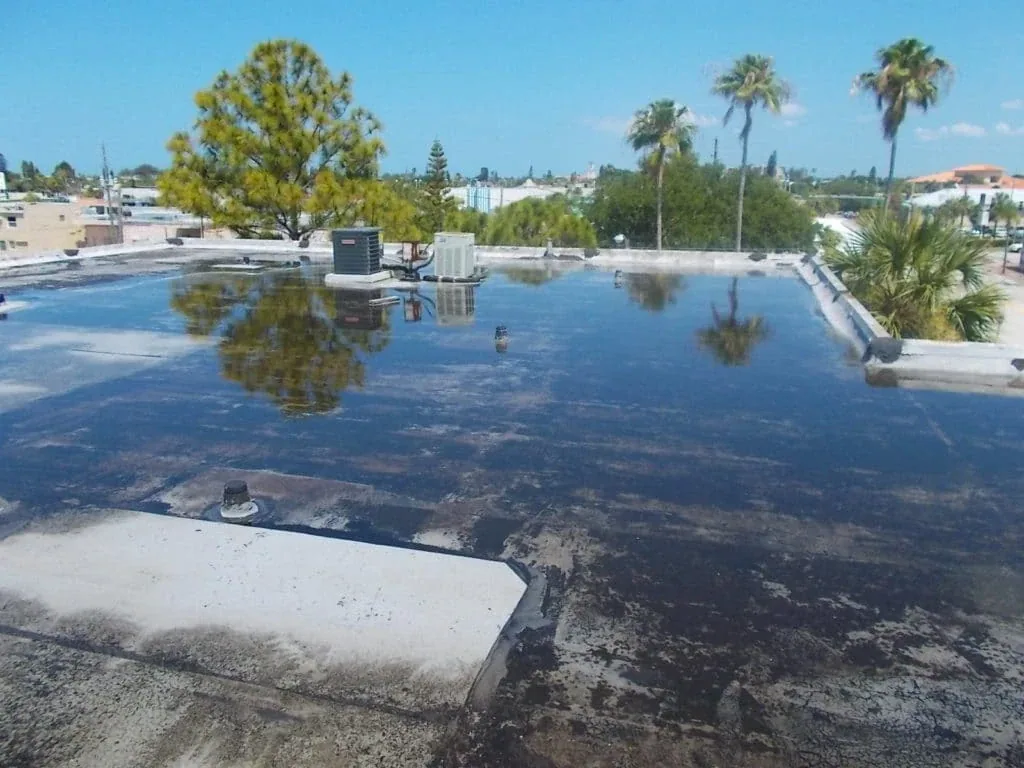
We check drain bowls, strainers, scuppers, overflows, and nearby low points. Cleaning may restore the path; a depression or poorly placed outlet may remain after debris is removed. We note whether water crosses a seam or flashing on its way to the drain and whether a prior patch changes that route. A drainage correction and a membrane repair can belong in one project, but they need distinct findings and quantities.
In Chico, normal rainfall is much greater in winter than in midsummer. An inspection in dry weather can record outlet conditions and water marks before the seasonal change, giving the owner a baseline. Weather alone cannot identify a failed roof. Our drain and scupper inspection documents what is clear and what needs follow-up. If retained water overlaps a soft or wet section, ponding-water repair can map the affected assembly.
Tie in to a compatible surface
Before selecting a repair, we identify the visible membrane or metal and determine what adjoining material can accept a bond or fastener. At a wall or curb, flashing needs a continuous connection and enough allowance for movement. At a metal edge, fastener pullout or an open joint may sit outside the field-membrane problem. A patch should stop at stable material, not at an arbitrary distance from the stain. If the roof surface is wet or loose, we document what must be removed before a permanent tie-in can be made.
Bell-Muir is a planning area near existing services, but that context says nothing about a specific roof assembly. We describe actual materials from inspection or records. Low-slope EPDM membrane, modified bitumen, and metal systems call for different repair methods. For a perimeter concern, edge-metal work can be included with the membrane scope. A test opening helps confirm underlying layers when records or the visible edge do not answer the question.
Decide whether to repair or replace
A local repair is appropriate when the failure is limited and the surrounding roof remains sound. Replacement becomes a useful comparison when moisture is broader, seams are failing in separate sections, or repeated details cannot be tied into stable material. A recover is possible only when the existing assembly is dry, secure, compatible with added layers, and workable at drains and perimeter edges. We explain what each path addresses and identify testing that could change the recommendation.
California's current building standards code and energy provisions may apply to a commercial alteration, with local amendments and the parcel permit controlling the project. We review requirements before finalizing insulation, membrane, or equipment interfaces. The scope divides removal, substrate work, system installation, metal, temporary protection, and access. Price and schedule follow the measured roof area and confirmed work, the materials selected, staging needs, and any equipment shutdown. A road connection or planning boundary is not a substitute for that estimate.
Keep the service history by property
Closeout notes include the repaired section, material observed or installed, photos of tie-ins, drain condition, and items left for another visit. We mark what was outside the approved boundary so later moisture is not attributed to work that did not open that zone. The record helps a manager schedule seasonal maintenance and coordinate equipment vendors with the next roof review. When multiple sites share an operations team, keeping each address's findings separate preserves the actual water path and repair history.
For a West East Avenue inspection, provide the building use, symptom, prior repair notes, roof-access limits, and preferred work window. We will document the condition and explain the repair or replacement choices tied to it. If your team also oversees Downtown Chico, its mixed-use planning context still needs a separate roof assessment. A multi-site service record can keep the findings organized without treating nearby properties as one roof asset.
Commercial Roofing Questions
Does the corridor connection indicate that roofs share a design?
No. The General Plan shows transportation links, not roof specifications. We inspect each property's deck, membrane or metal, flashing, drainage, and access separately.
Should I treat a stain below the nearest curb as a curb leak?
The curb is one possibility. We compare the stain with the water route, adjacent seams, wall details, and drains before assigning a repair boundary.
Can a temporary cover remain until a replacement is approved?
We document the protective measure, the area it covers, and the follow-up needed to plan permanent work. Its timing depends on the actual roof condition and exposure.
What does the Bell-Muir planning context change for roofing?
It helps identify the surrounding area and existing infrastructure, but it does not establish a roof assembly or permit need. We verify both for the parcel and proposed scope.
How can multiple nearby roofs be managed without merging their findings?
We keep separate reports and photos for each property, then use a shared schedule for access and maintenance. The roof condition and repair boundary remain specific to each building.
Schedule a West East Avenue review
Share the property use, symptom, prior repair notes, and access limits. We will trace the water path and outline the work that fits the roof.