Hotel Roofing in Chico, CA
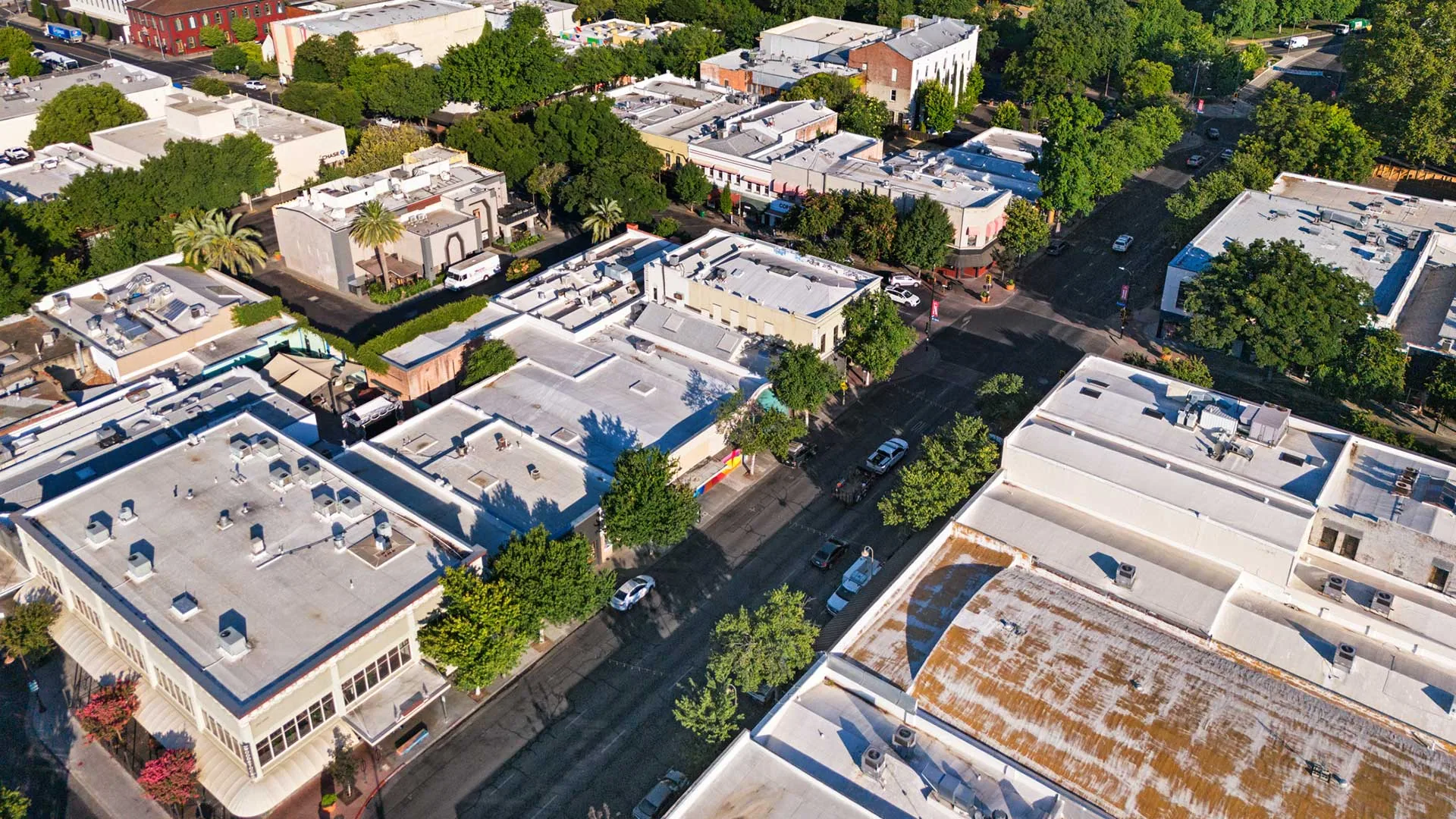
A hotel roof protects guest rooms, corridors, meeting areas, and service spaces that may remain occupied throughout the day. In Chico, CA, we start with the reported issue, roof zone, current operating limits, and any equipment or repair history. A ceiling mark can guide the investigation, but does not establish where water entered. The inspection compares the room and timing with roof seams, drains, curbs, and wall transitions, then records what was accessible. Chico planning identifies commercial areas around North Valley Plaza, East 20th Street, and Skyway; these districts provide local context rather than proof of any hotel’s system or roof condition.
Connect guest reports with roof zones
A useful hotel roof record identifies the building section, membrane where known, insulation, drains, equipment curbs, skylights, edges, and previous repairs. We mark photos and findings so a guest report from a room or corridor can be evaluated against the roof area above and nearby transitions. The report should separate observed membrane conditions from a front-desk or maintenance note. If a roof section cannot be reached safely or is blocked by equipment, that limit belongs in the record.
Hotel maintenance can note room status, reported time, weather, and any mechanical service near the affected zone. Those details help choose an inspection window and protect guests, but do not prove roof damage. A multi-unit residential roof plan also tracks reports by occupied area, while restaurant roofing coordination may account for dining and kitchen schedules. For a hotel, the manager should identify who can authorize access, room holds, and communication during active work.
Review units, curbs, and rooftop work
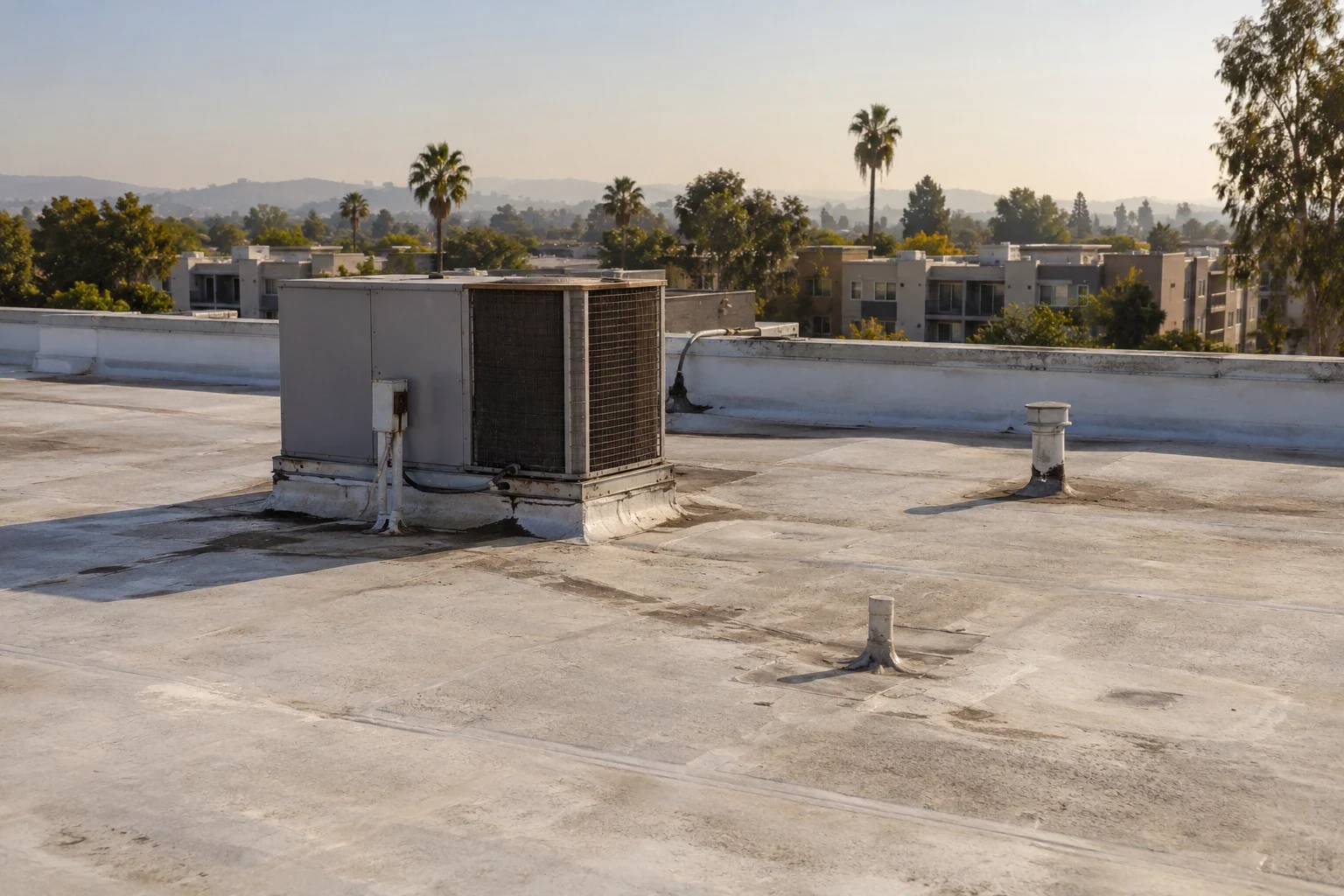
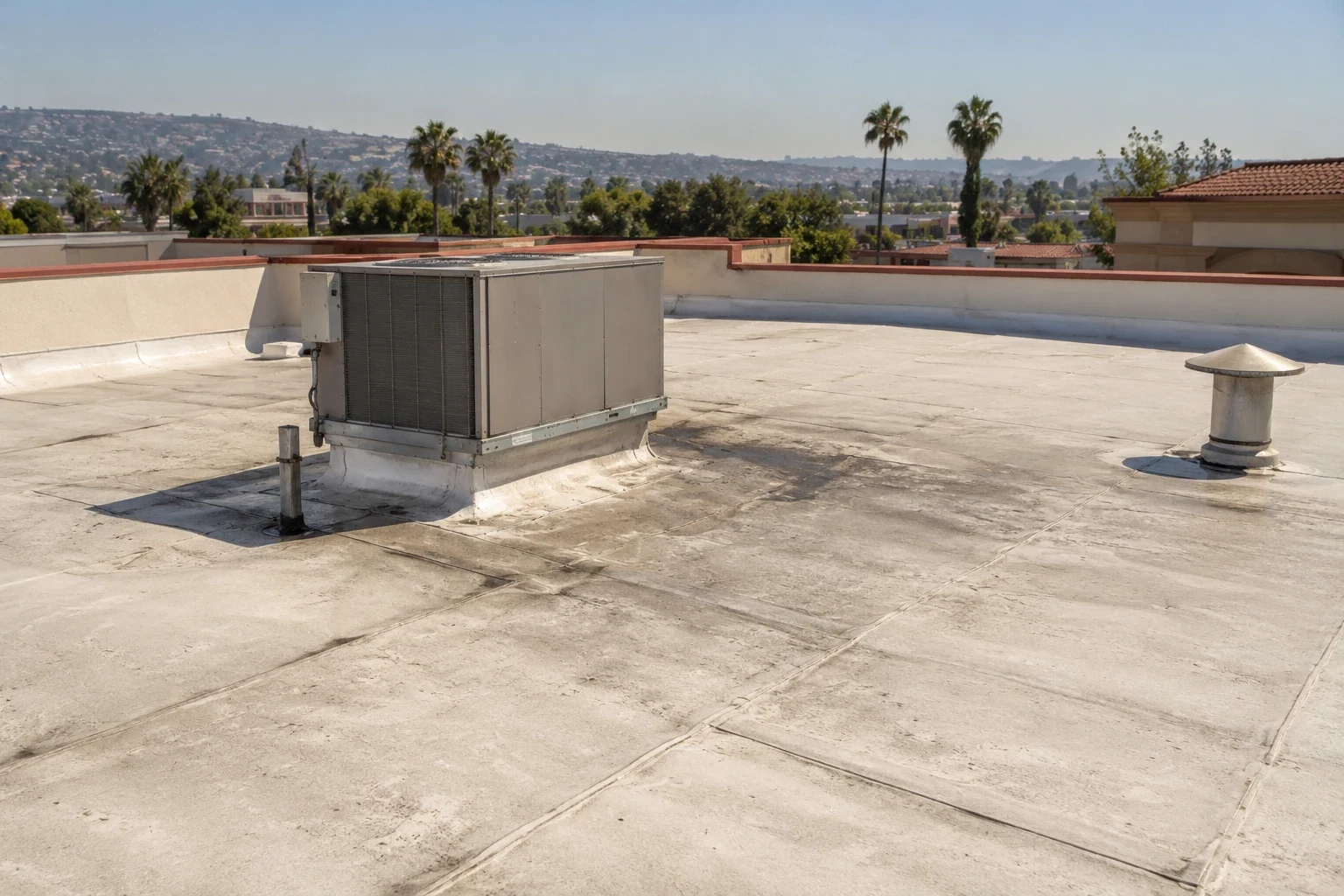
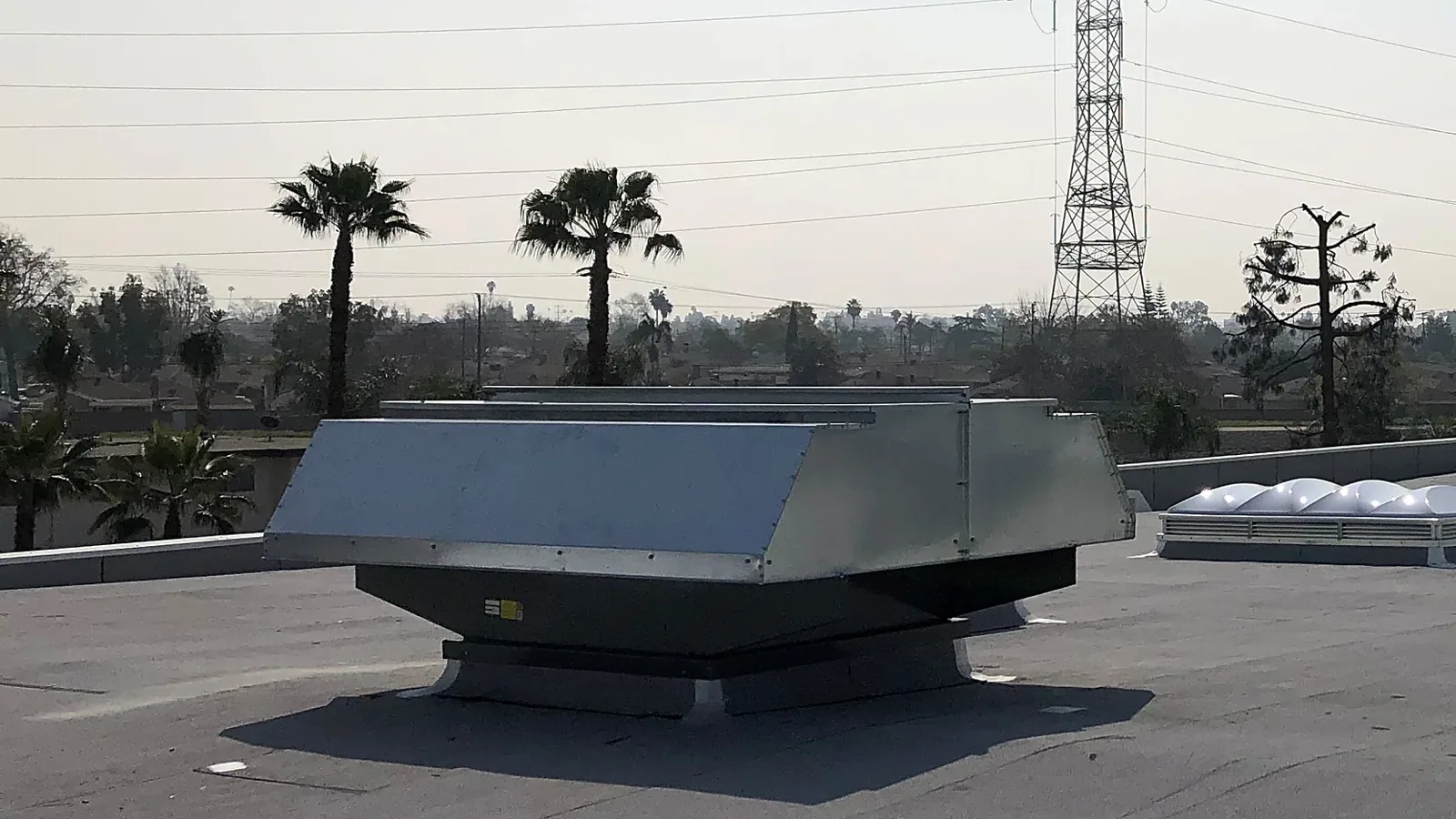
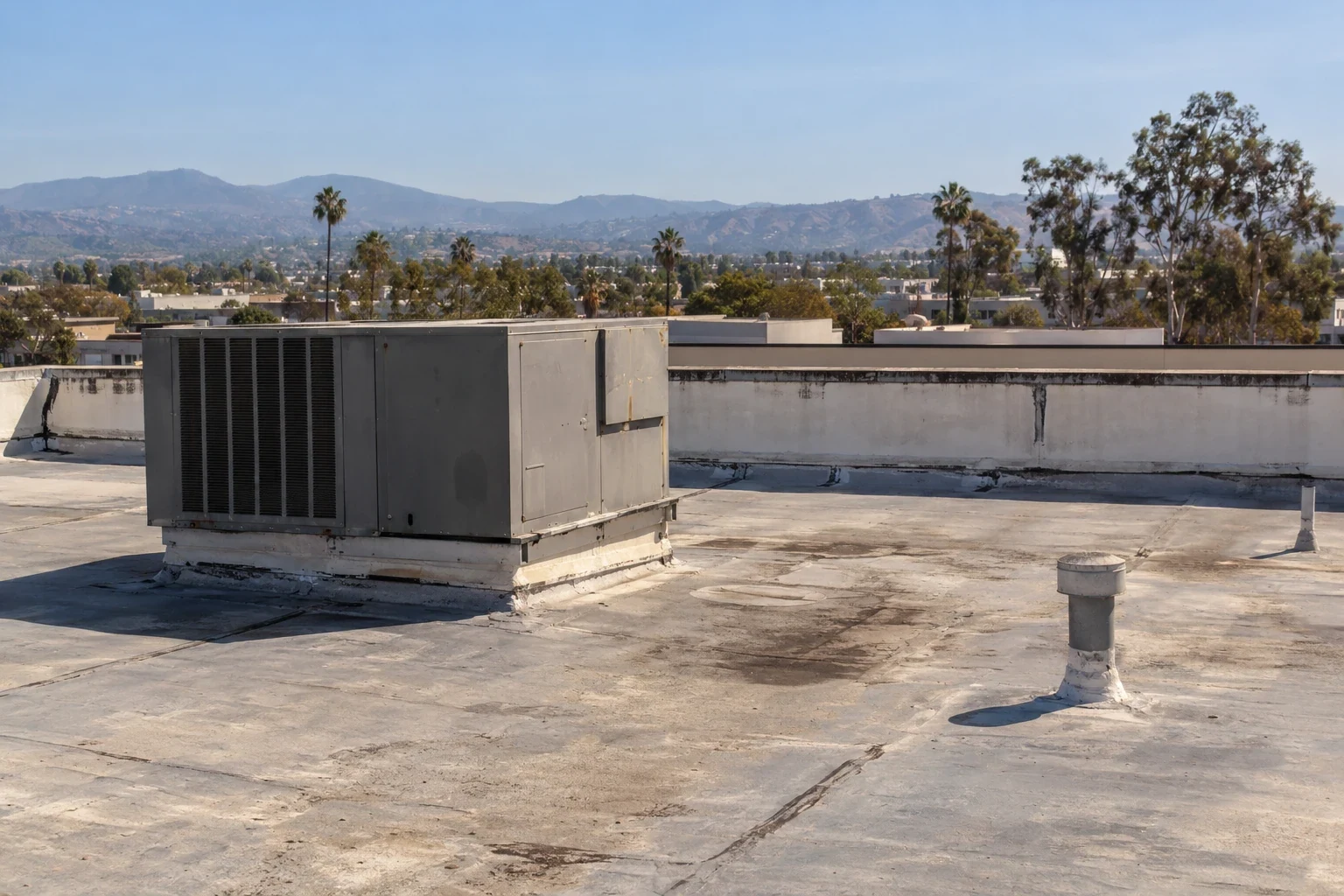
Heating and cooling units, exhaust systems, antennas, and service platforms can create multiple roof transitions. We inspect flashing, seams, counterflashing, support feet, and previous sealant work around each item. A recent equipment replacement should be checked for membrane disturbance and a complete tie-in. Before any equipment is lifted, the project plan assigns the opening, temporary protection, final flashing, and the responsible mechanical contact. This avoids a gap between trades after the new unit is set.
California’s 2025 Energy Code took effect January 1, 2026 and applies to new nonresidential buildings and applicable additions or alterations. The responsible project professionals determine code requirements for a particular equipment project. The roofing scope describes its interface and can coordinate with a curb and support detail. Solar-ready planning also needs reviewed plans before roof attachments or penetrations are assumed.
Trace water without disrupting guests
Water may travel from a roof entry point before appearing in a room. We compare guest and staff reports with the roof layout, slope, drains, seams, skylights, and wall transitions. The location and time of each report should be preserved, then checked against rain, equipment work, and previous repairs. If several rooms report water, each should be mapped before combining them into one scope. A ceiling stain alone does not establish how much insulation is wet or whether replacement is required.
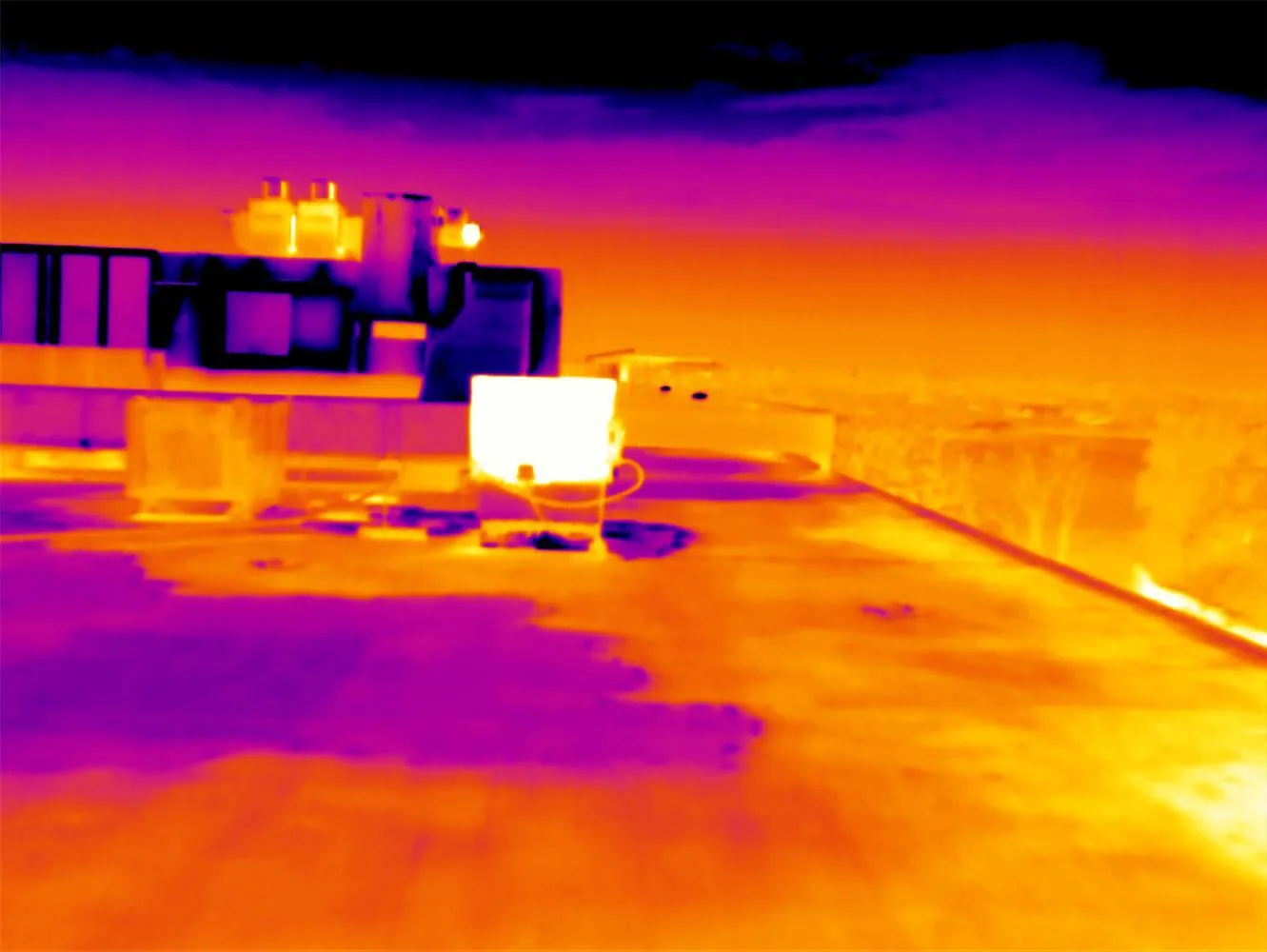
Chico averages 27.39 inches of annual precipitation, with much higher normal totals in January and February than in summer. That seasonal context can help organize response records, but does not diagnose a hotel roof. A commercial leak assessment can define the inspected repair boundary, while infrared moisture mapping may identify areas requiring confirmation. Moisture should be verified against the assembly before removal is included.
Phase work around occupancy
Before work starts, hotel leadership can identify quiet hours, meeting schedules, guest entrances, room access, deliveries, and service corridors. We confirm ladder and material routes, staging, lift access, and how overhead work affects occupied rooms. The sequence should state which roof section opens, the protection installed below, and the condition required before a room or area returns to service. Hotel staff control guest notices, room assignments, and decisions about temporary closures.
Noise, vibration, odor, and debris protection should be discussed for the affected area, not assumed to apply uniformly to the property. A crew can work more predictably when one hotel contact can confirm the day’s access and communicate changed conditions. A phased occupied-building plan can show the daily boundary and closeout check. The hotel decides whether the resulting sequence fits its occupancy and brand requirements.
Set protection for Chico weather
The Chico University Farm normal is 27.39 inches of precipitation per year. January and February average just over five inches each; July and August are nearly dry. Butte County’s hazard annex describes a Mediterranean climate, with hot summers and a cool, wet winter period. These figures support seasonal planning, not a workday forecast. The daily plan still depends on current weather, roof slope, materials, and the time needed to seal a section. We identify temporary protection and a complete closure boundary before removing roof materials.
Summer heat can affect crew timing and rooftop material handling. Winter rain makes drain readiness and end-of-shift checks more important. Hotel staff should know which rooms or corridors could be affected if conditions change. If water appears during a storm, the manager can protect the area and contact the assigned project lead. An emergency roof response can address temporary protection where available, followed by a separate inspection to establish permanent work.
Compare targeted repair and larger work
A single curb, seam, or edge issue may support repair if nearby materials remain sound. Recurring leaks, broad moisture, or deteriorated attachment may require a larger section or replacement. A recover is possible only when existing layers, wet material, drainage, structure, perimeter height, and the proposed fastening system support another assembly. If the evidence is incomplete, additional inspection can clarify whether a local repair will hold or simply postpone a broader need.
For a hotel, compare the repair boundary and expected disruption with the cost of repeated mobilizations and future room restrictions. A roof assembly choice should follow substrate, design, drainage, and project requirements. City planning identifies the East 20th Street District as a commercial area, but local development context does not determine a hotel’s roof. Drawings, past work, and field conditions guide the recommendation.
Make the project comparable
A hotel roofing proposal should identify measured areas, preparation, tear-off or recover assumptions, membrane, insulation, flashing, edge metal, drains, equipment coordination, access, disposal, and temporary protection. It should state the working hours, room protection, noise controls, guest notice responsibilities, and how concealed deck or wet material conditions are presented for approval. A schedule should distinguish the crew’s roof boundary from any room closure managed by the hotel.
Cost and timing depend on system, deck condition, materials, equipment, access, occupancy, and forecast. A dated report can show why the selected repair or renewal fits the findings and what remains unverified. Chico’s identified retail and service areas include North Valley Plaza, Skyway, and East 20th Street, but a project begins with the hotel’s own roof records and operating calendar. Share access limits and any active leak reports to plan an inspection around guests.
Commercial Roofing Questions
Can roof work happen while hotel rooms are occupied?
Phasing may be possible when protection, noise, access, safety, and weather allow. Hotel leadership controls room holds, guest notices, and whether each phase fits occupancy needs.
Does a guest-room stain prove a roof leak?
It is a useful report, not a roof diagnosis. Water can travel, so the room, timing, roof details, and equipment history should be compared.
How should hotel HVAC work be coordinated with roofing?
Assign the equipment opening, temporary protection, mechanical contact, and final flashing responsibility before a unit is moved.
What should a hotel roof proposal include?
Measured zones, materials, equipment interfaces, drains, access, guest protection, working hours, exclusions, schedule, and concealed-condition approval steps.
Can one inspection cover the full hotel?
A visit can include multiple authorized roof sections, but each zone needs its own access note, condition record, and repair boundary.
Plan a Chico hotel roof review
Share the property use, reported symptom, roof records, access limits, and operating calendar. We will confirm the inspection boundary and document findings for the area reviewed.