Military Installation Roofing in Chico, CA
A roof scope inside a controlled installation depends on the access plan as much as the material sequence. In Chico, CA, the Chico Armory is a local National Guard contact point for the 649th Engineer Company. That presence makes project criteria and access rules specific to the contracting authority, so mobilization starts with the actual documents. We do not infer a building type or roof system from a unit listing. We begin with the actual project documents, identify the assembly and work zones, and plan how each opening will be inspected and closed. The owner receives a boundary tied to the roof and its operating schedule, not a generic commercial sequence. A commercial roof inspection can record the visible condition before the project scope is finalized.
Read the project criteria before selecting a system
Military roofing work may be governed by contract specifications, Unified Facilities Criteria, base standards, and project-specific submittal requirements. We review the documents that apply to the roof before writing a repair or replacement scope. The criteria can affect material selection, attachment, fire performance, drainage, insulation, testing, inspection hold points, and closeout records. We separate what the documents require from what the field inspection confirms, then note any conflict for the contracting officer or design team to resolve. A detail is not treated as approved until the responsible authority accepts it.
That document review covers the assembly and the work sequence. We identify roof zones, penetrations, edge conditions, drains, equipment interfaces, and any area where an opening must remain protected. The proposal lists the materials, preparation, fastening or bonding method, and the inspection point before close-in. If the roof contains built-up roofing or another existing system, we verify it from records and field evidence rather than assume it from the facility name. An inspection record can connect the findings with the approved scope.
Confirm entry, escort, and work windows
Badging, vehicle screening, escorts, tool control, and photography limits can shape the job before a crew reaches the roof. We request the access instructions, approved personnel list, delivery rules, and allowed work hours early enough to build them into the schedule. The owner or contracting authority confirms who can authorize entry and whether each trade follows the same process. A commercial roofing schedule cannot be transferred to a secure site without that review.
Chico's principal north-south route is State Route 99, connecting commercial areas across the city. That corridor is useful for general material planning, but an installation's approved gate, staging point, and delivery time still come from the project team. We identify the vehicle and equipment needs, confirm where materials can wait, and schedule roof access around mission activity specified by the customer. Downtown Chico’s commercial and office mixed-use designation puts public entrances and deliveries on the roof access checklist. Roof service in Downtown Chico follows the building’s own access plan; installation rules come from the contracting authority.
Keep mission operations outside the work boundary
Roof work can affect rooms, equipment, communication pathways, and routes below an active roof. Before opening a section, we ask which areas must remain available, what shutdowns require approval, and whether any asset cannot be photographed or approached. The daily plan shows where the crew may work, where tools and debris move, and who can stop the operation if a condition changes. Access to a roof does not authorize access to every room or adjacent area.
We divide the job into sections that can be prepared, inspected, and closed under the approved work window. Any tie-in that remains incomplete receives temporary protection and a written status for the next shift. The foreman and customer representative confirm the zone before the crew begins. When a curb, pipe, or communications penetration is part of the scope, equipment support work is coordinated with the appropriate trade so roof flashing is not altered without authorization.
Protect attachment, penetrations, and runoff
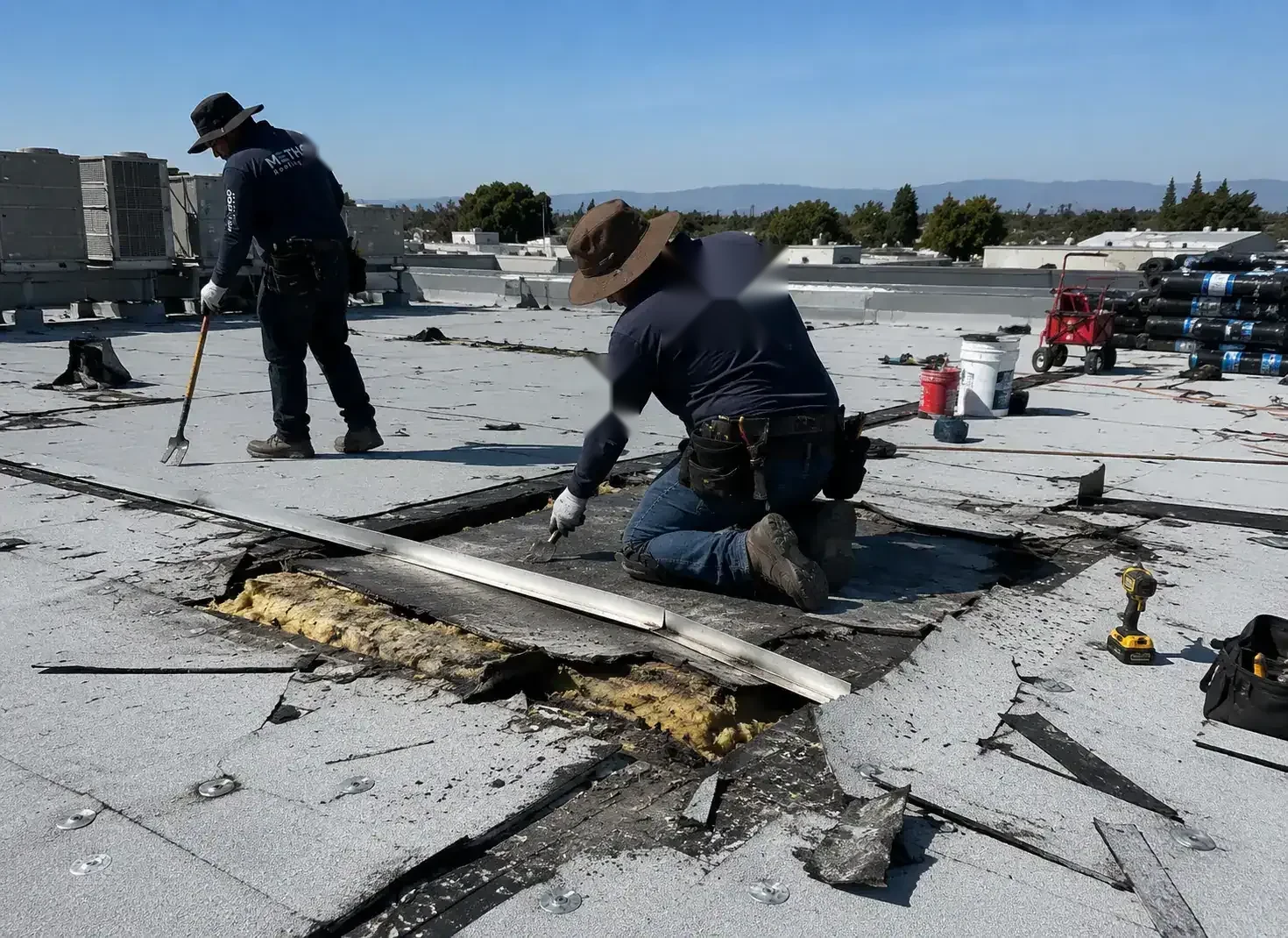
Existing roofs can have several layers, repairs, and equipment transitions that do not appear in the original drawing. We inspect visible seams, fasteners, edges, drains, and penetrations, then compare the findings with approved plans. If hidden moisture could change the repair boundary, a targeted test is proposed before the roof is covered. Drainage is checked as the work progresses, including temporary water paths while one section is open. No material should block a drain or redirect water into a finished zone.
Chico has hot, dry summers and a cooler wet season, so the work schedule considers both surface conditions and the period when runoff must leave the roof. A warm day does not remove the need for a secure close-in, and a rain forecast does not replace checking substrate moisture and product cure requirements. When an outlet or overflow needs attention, a drain correction can be included in the approved scope. The crew records the work area and any drain that remains inaccessible or outside contract limits.
Make approvals visible at each hold point
Submittals, samples, mockups, and inspection requests should arrive before the field sequence depends on them. We identify the item, reviewer, and required response date in the project schedule. If the contracting authority requires a test cut, fastening review, or moisture confirmation, the plan states when it happens and who may release the crew to continue. A concealed condition that changes the assembly is photographed and submitted before it is covered. The owner sees the cost and schedule effect before the work moves beyond the approved boundary.
When a building remains occupied, deliveries and interior protection may need separate coordination. In Chico, the State Route 99 corridor links north and south commercial areas, but the installation's gate and staging instructions remain controlling. We use commercial roof repair for a defined detail issue or replacement work when the approved scope calls for a wider assembly change. The record shows the basis for that choice and the authorization tied to it.
Leave the installation a usable roof record
Closeout should identify the roof zones completed, materials installed, repairs made, inspection results, and any limit that remains open. Photos should show the location and direction of the detail without recording anything the customer restricts. We provide the information requested by the contract, including approved product data, test results, and maintenance notes when required. A warranty record should state the documents actually issued, not a term or coverage that the project has not established.
For Chico-area projects, the National Guard presence and the citywide delivery corridor provide local context, but the building-specific scope and access rules govern the roof work. The facility team should receive a map that distinguishes completed repairs from items reserved for a later phase. Share the active symptom, roof history, project criteria, and access rules before the site visit. We can then document what the inspection found, how work should be sequenced, and which approvals are needed before the roof is opened.
Commercial Roofing Questions
What documents do you need before an installation roof visit?
We need the project scope, access rules, approved roof plans, submittal requirements, and any restrictions on photography or equipment. The contracting authority confirms which documents control before the survey is scheduled.
Can crews work around mission activity?
The customer sets mission restrictions and authorized work windows. We translate those limits into roof zones, delivery timing, protection steps, and the daily inspection point before material is removed.
How are hidden roof conditions handled?
We stop at the approved hold point, photograph the exposed condition, and submit the proposed change for review. The crew continues only after the authorized representative releases that boundary.
Does a unit listing tell you what roof system is installed?
No. We identify the assembly from project records and field evidence. The scope names only the materials and layers that the inspection confirms or that the contract documents require.
What should the closeout package include?
The contract controls the required submittals. We can organize zone maps, material data, inspection results, repair photos, and maintenance notes so the facility team can locate the completed work.
Review the project criteria and access plan
Share the roof history, current condition, project specifications, approved roof drawings, and entry requirements. We will identify the survey boundary, sequencing questions, and approvals needed before mobilization.