Commercial Roofing in Paradise, CA
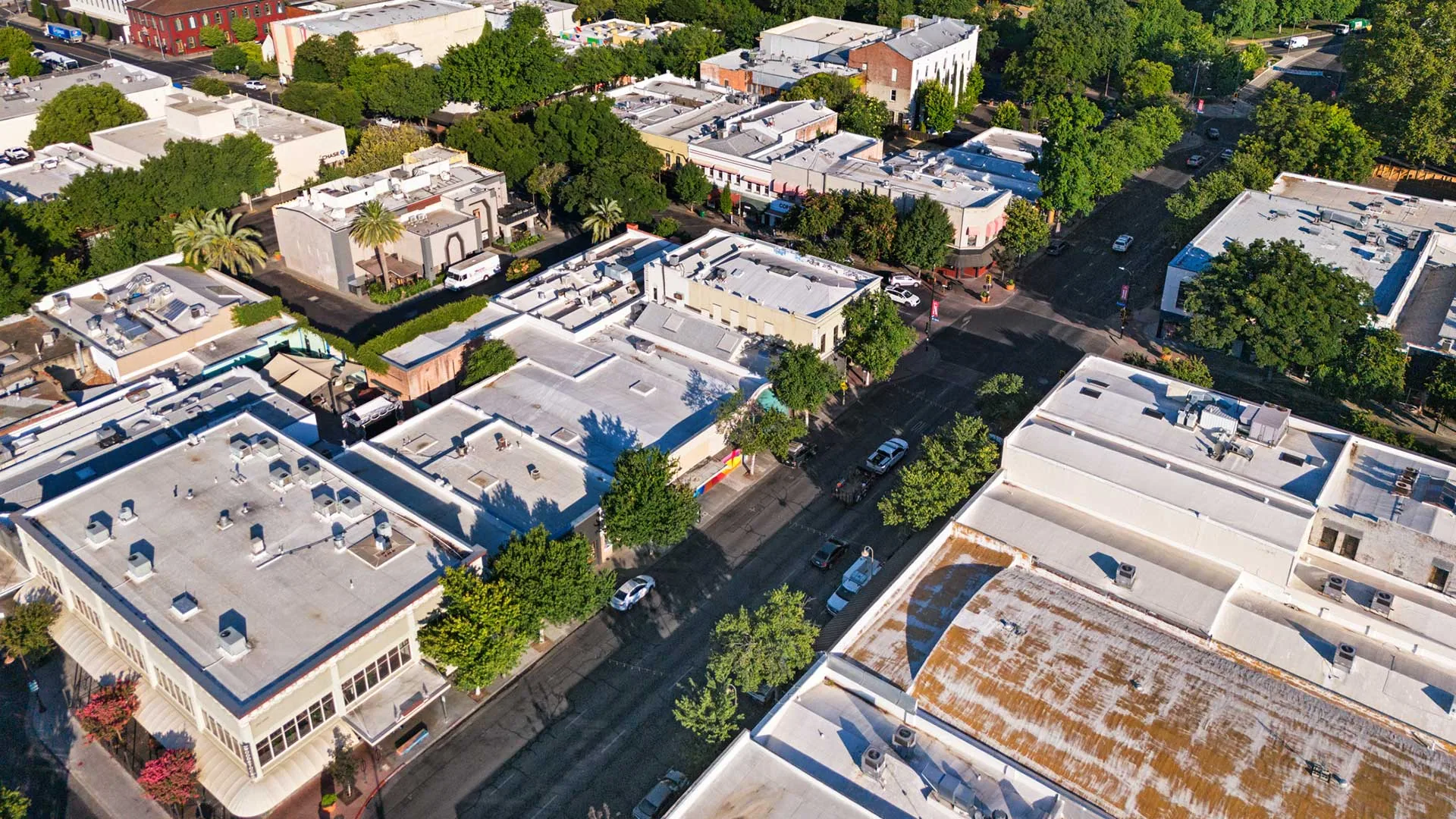
A commercial roof in Paradise deserves a review grounded in the actual building, not an assumption about what every property in town looks like. The Town’s General Plan describes a central commercial area generally bounded by the Paradise Memorial Trailway, Elliott Road, Pearson Road, and Skyway. It also places commercial uses along Clark Road and identifies an expansion of the existing industrial area there. Those planning references help locate the broader business context; they do not establish the age, size, or condition of a particular roof. We start with the owner’s access, the roof assembly, and the symptoms already observed, then build the next step around those findings.
Start with a roof record, not a repair guess
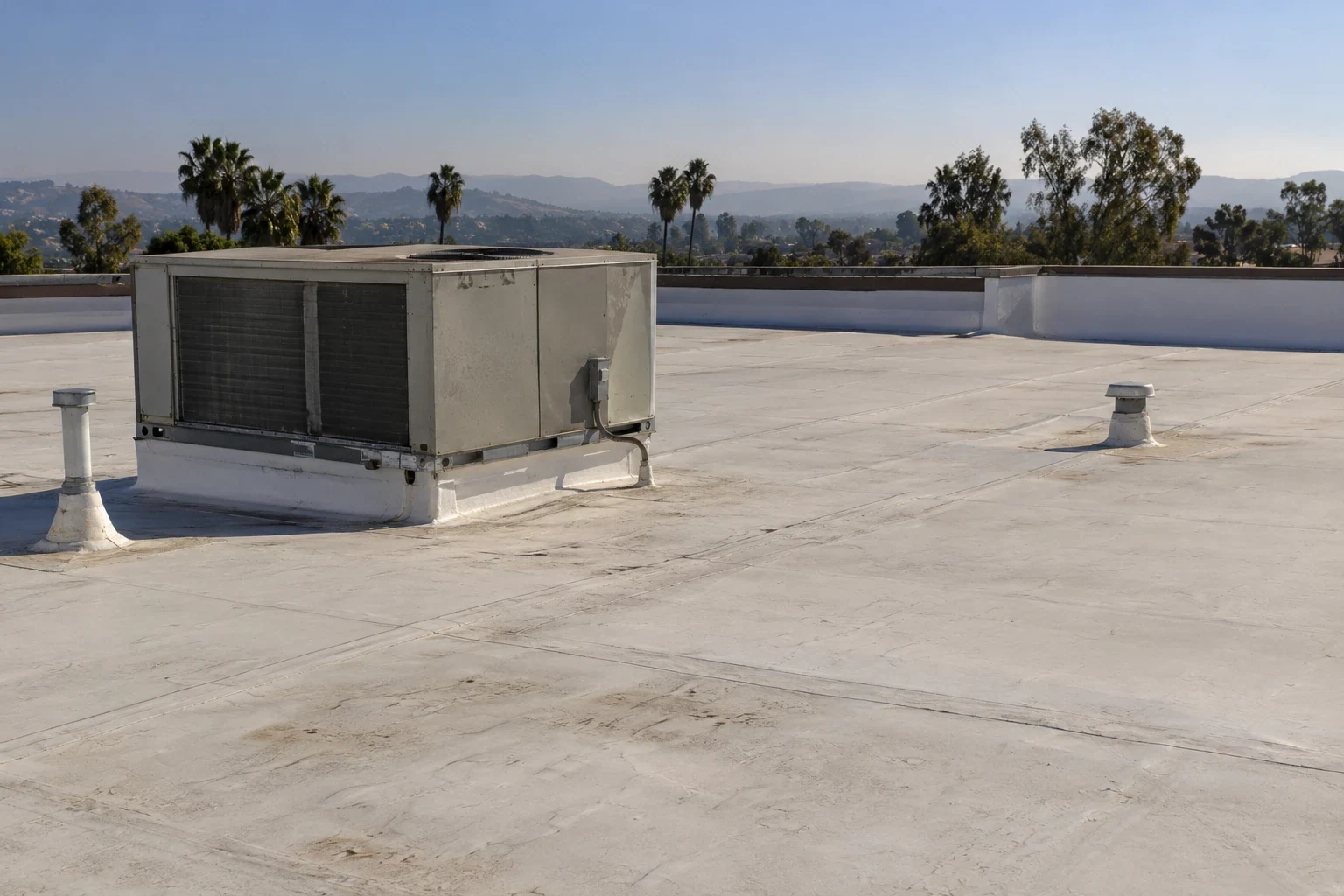
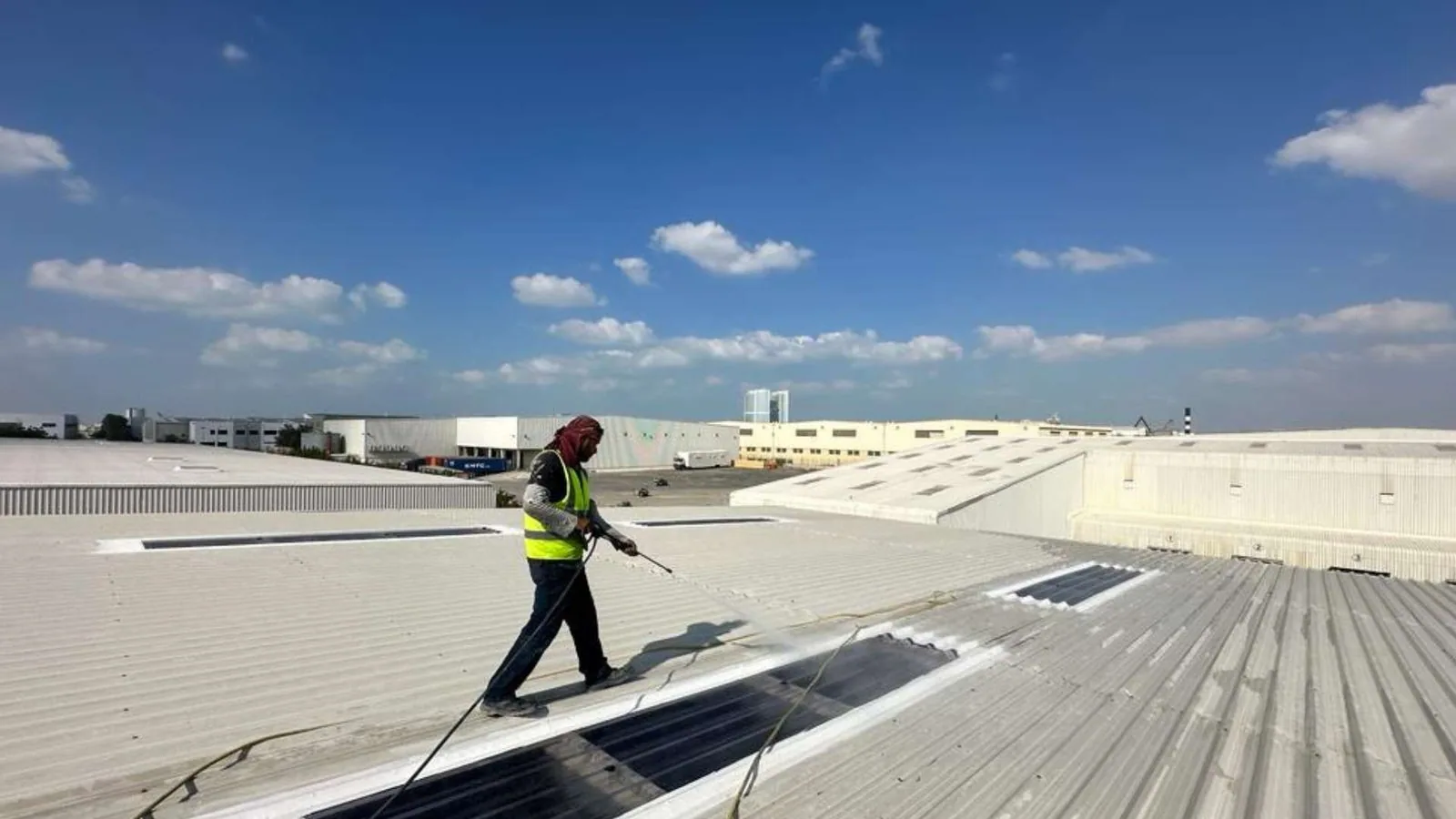
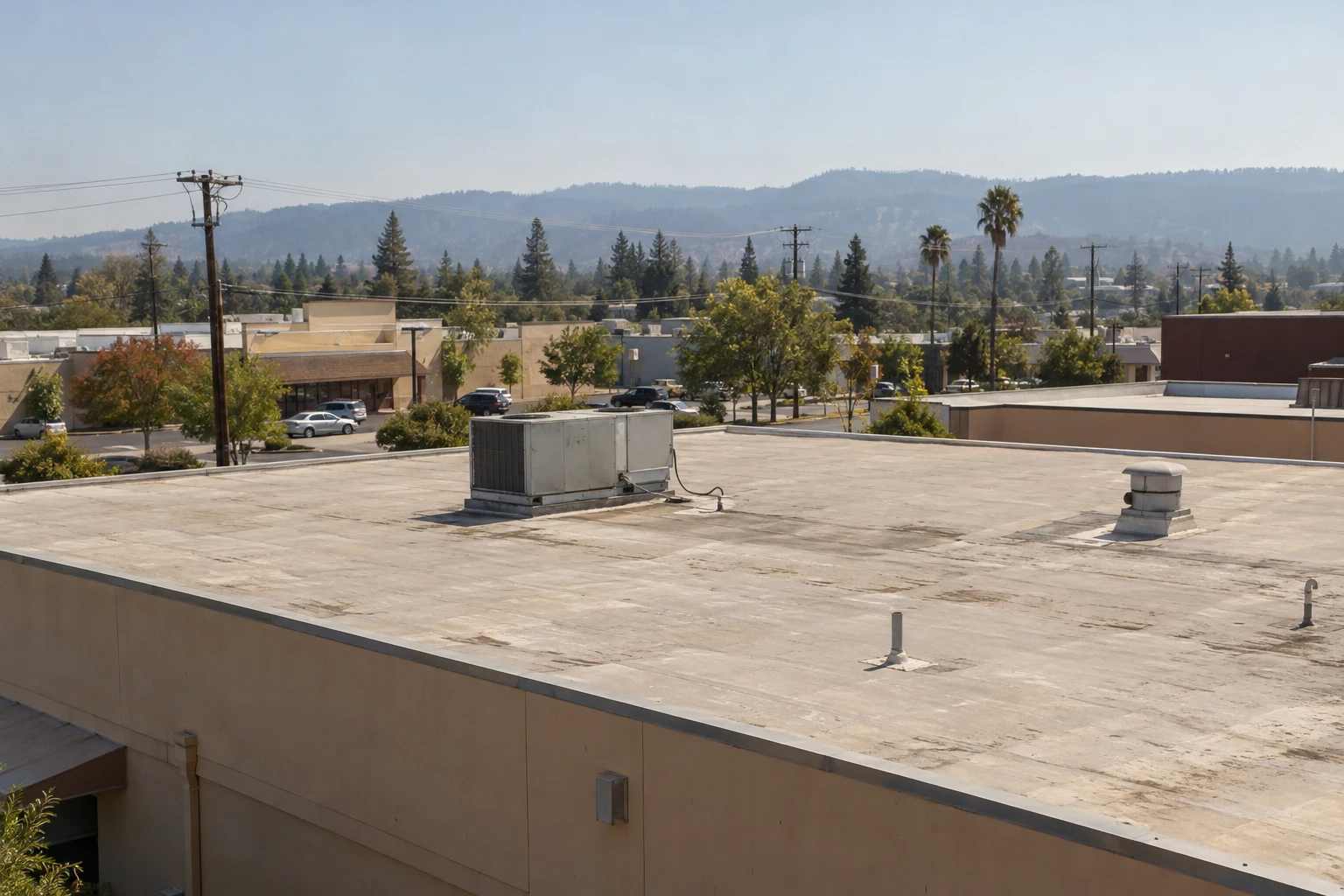
Before anyone recommends a coating, patch, or replacement, we want to know what is installed and where water is getting through. A first visit records the roof surface, seams, perimeter metal, penetrations, drainage points, and any prior repair boundaries that can be identified safely. We compare those observations with interior stains, maintenance notes, and photographs from earlier work. A ceiling mark may trace back to an opening well away from the room below, while an old patch can conceal the original entry point. Matching the evidence keeps a limited repair from being treated as proof that the rest of the assembly is sound.
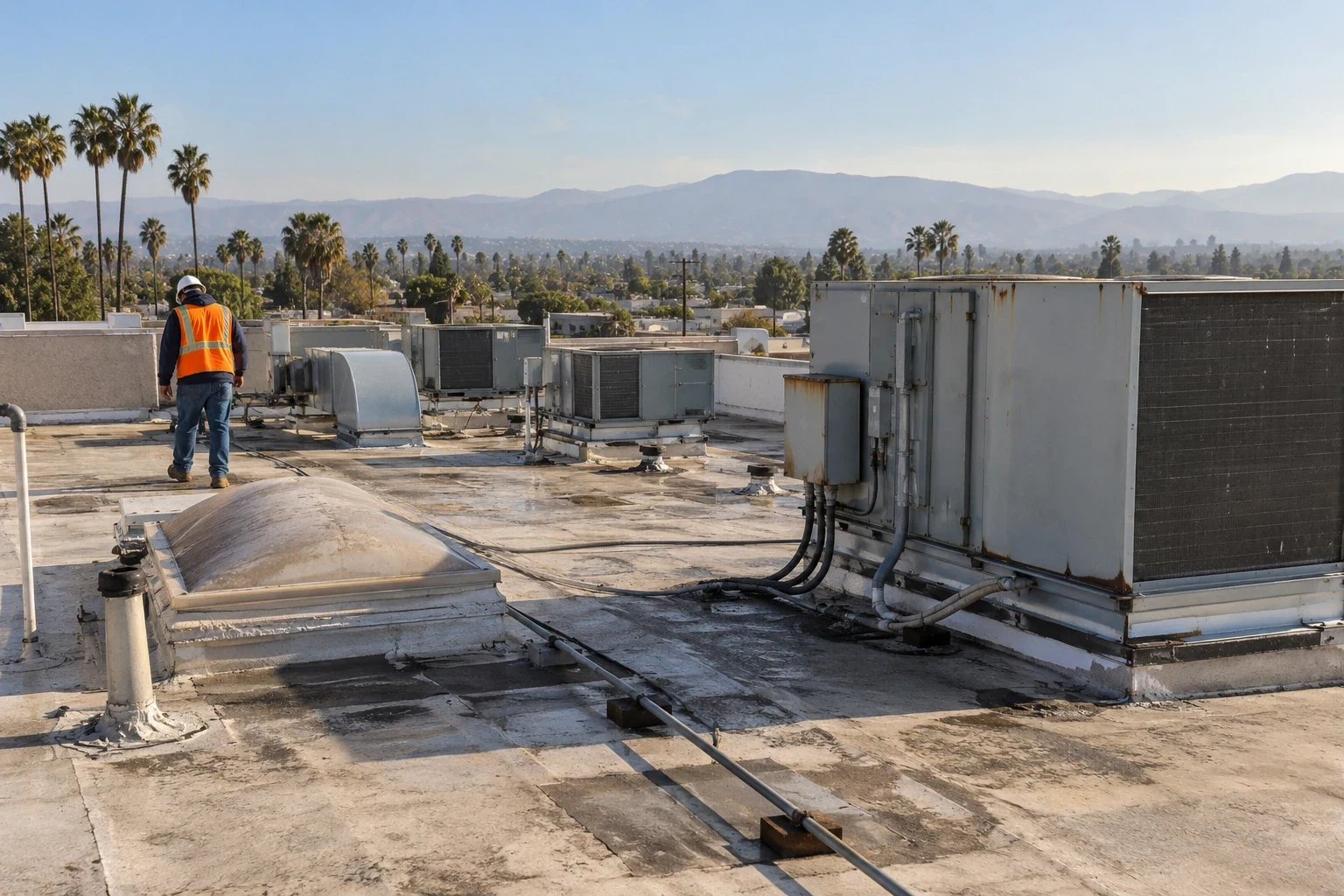
Access also shapes the inspection. We confirm who can authorize entry, which ladder or roof hatch is available, whether a tenant schedule limits movement, and what fall-protection arrangements the site requires. If a roof cannot be reached safely, we identify that limitation before estimating a repair. The resulting notes separate observed conditions from areas that were not accessible, so an owner can decide whether to arrange another visit or provide missing records.
Follow the water through the roof detail
Leak diagnosis works best when the path is traced rather than guessed from the first visible stain. We check nearby laps, transitions, wall terminations, penetrations, and drainage details for openings or movement that could admit water. When an interior symptom appears after a storm, we note the date, weather, and the room or equipment affected, then compare it with the likely roof entry points. Photos tied to a simple roof sketch help keep the discussion specific. If the source remains uncertain, we say what evidence is missing and explain whether a controlled test or additional access may narrow the search.
Plan work for the Chico-area wet and hot periods
Chico’s weather offers useful planning context for nearby projects, but it is not a measurement of weather on every Paradise roof. NOAA normals at the Chico University Farm record a July average daily maximum of 95.2 degrees Fahrenheit and 25.7 days each year with highs at or above 90 degrees. Those hot, dry conditions make surface temperature and crew timing practical considerations during summer work. The same station reports 27.39 inches of annual precipitation, with monthly averages concentrated in winter and nearly no July rain. We use those market-city figures as a planning reference, then confirm the actual forecast and roof conditions before setting a work date.
Heat can affect how crews stage materials and how long a roof surface remains comfortable to work on. Rain changes the sequence for tear-off, substrate exposure, temporary protection, and membrane attachment. At a first walk, we discuss how much roof can be opened at a time and which areas must remain watertight at the end of each shift. If the property needs continuous operation, we can identify access windows and a staged boundary for review. Weather does not replace inspection findings, but it belongs in a schedule that protects the building while the roof is open.
Choose the repair or replacement from what is found
A repair may make sense when the affected area is defined and the surrounding assembly remains serviceable. Replacement deserves consideration when deterioration extends across several roof zones, repeated repairs are no longer controlling water, or the system’s layers and attachment cannot be confirmed. A recover can be an option only after the existing roof, moisture condition, structure, drainage, and code requirements are reviewed. We describe what each path would include and what remains uncertain, rather than treating one material as the right answer for every building.
On a repair visit, we document the prepared area, materials used, edges sealed, and any adjacent detail that needs attention later. On a larger scope, we map roof sections, identify penetrations and transitions, and record what is included in each phase. For owners comparing systems, our TPO roof system overview and modified-bitumen system review can help frame the questions, while the existing assembly and project constraints determine what is suitable.
Keep access, tenants, and work boundaries coordinated
Roof work affects more than the membrane. We ask where deliveries can stage, which entrances must remain open, whether occupants need advance notice, and how crews should avoid sensitive equipment or active loading areas. A plan may identify a daily work boundary, material route, debris removal point, and a person who can approve a change if hidden conditions appear. These details reduce surprises and help the owner understand which areas may experience noise, temporary access limits, or brief interruptions.
Confirm current code and permit responsibilities
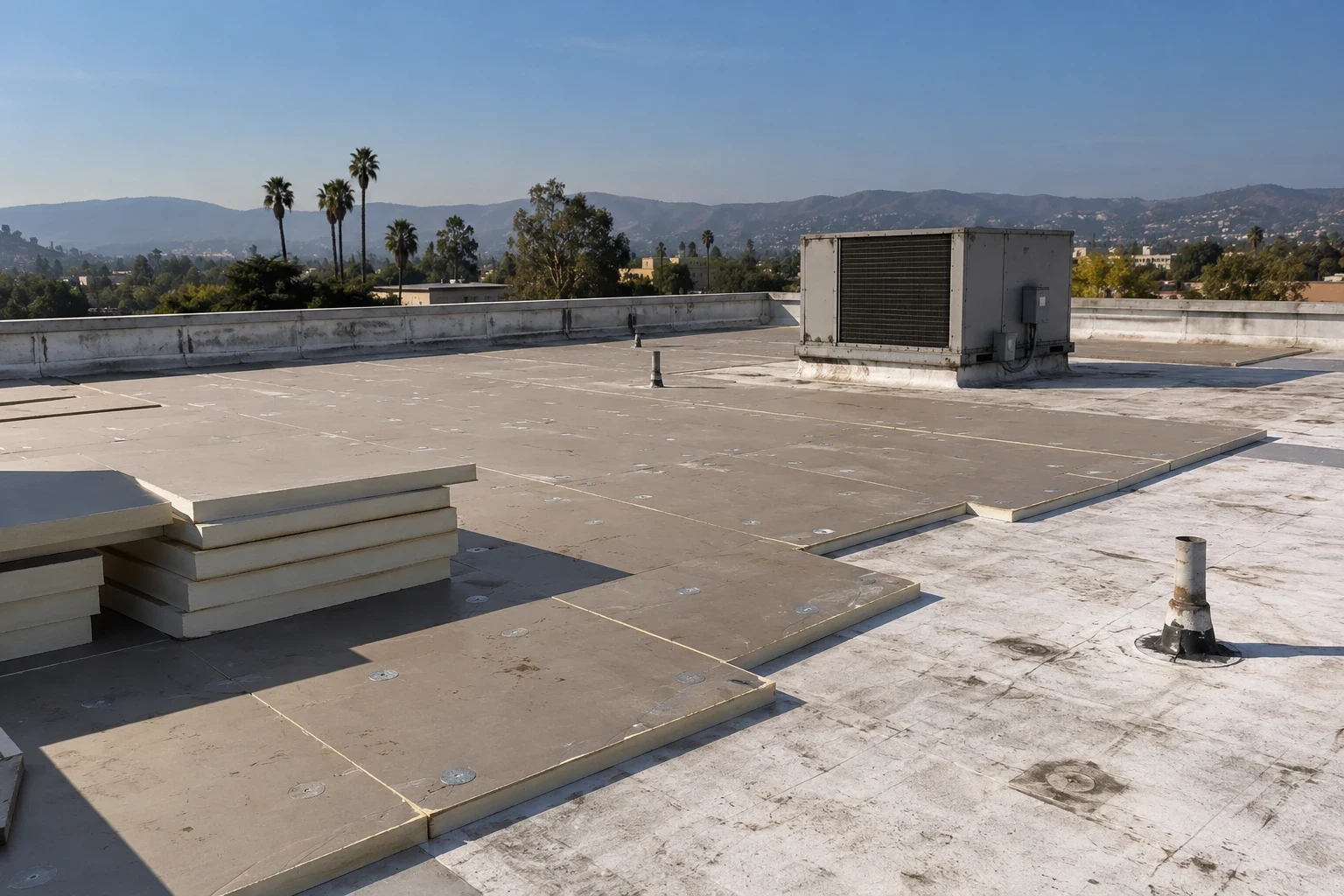
Before work is priced, we ask whether plans, prior permits, warranty terms, or a consultant specification should guide the scope. An insulation change or recover requires review of existing layers, moisture, drainage, structure, and applicable code provisions. We document visible roof conditions; design interpretation and permit approval remain with the responsible professionals. Insulation thickness and cover-board selection belong in the insulation and cover-board scope for the actual assembly.
Make the estimate show its assumptions
A proposal identifies measured area, preparation, materials, edge and penetration details, drainage work, access, disposal, and temporary protection. It separates included work from concealed conditions that may need approval after removal. Owners can compare scope differences such as wet-substrate replacement, drain changes, or protection for ongoing operations.
Price and timing depend on dimensions, roof layers, deck condition, material selection, delivery access, crew sequence, and available work windows. We label which observations came from the walk and which assumptions need confirmation. A photo record can support future maintenance, while a roof condition report preserves observations and a commercial leak repair plan ties work to the identified entry point.
Planning documents identify Paradise commercial corridors along Skyway, Pentz Road, Neal Road, and Clark Road; that context cannot locate a specific customer roof. Separate properties require separate records: a Gridley commercial roof and a Biggs commercial roof each need building-specific findings. To request a Paradise inspection, share the property use, symptom history, access contact, and preferred timing so we can confirm the appropriate next step.
Commercial Roofing Questions
Does a Paradise planning area describe the roof on my building?
No. Planning boundaries explain land use, not roof age, assembly, or condition. We inspect the authorized property and report what is visible.
Can you diagnose a leak from a ceiling stain alone?
A stain helps locate an interior symptom, but water can travel before it appears. We compare the room, weather, roof details, and repair history.
Will summer heat change the work plan?
It can affect crew timing and surface conditions. We use Chico climate normals only as regional context, then schedule against the current forecast and site needs.
When should an owner compare replacement with a repair?
Compare them when deterioration spans several areas, repairs keep recurring, or the roof layers are uncertain. The inspection should show the evidence and limits.
Can work be phased around an occupied commercial property?
Often, subject to access and weather. We plan boundaries, deliveries, protection, and daily closeout with the person responsible for the building.
Request a Paradise commercial roof review
Share the property use, leak history, available roof access, and timing constraints. We will confirm whether an inspection, repair plan, or broader condition review is the appropriate next step.