Commercial Roofing in Thermalito, CA
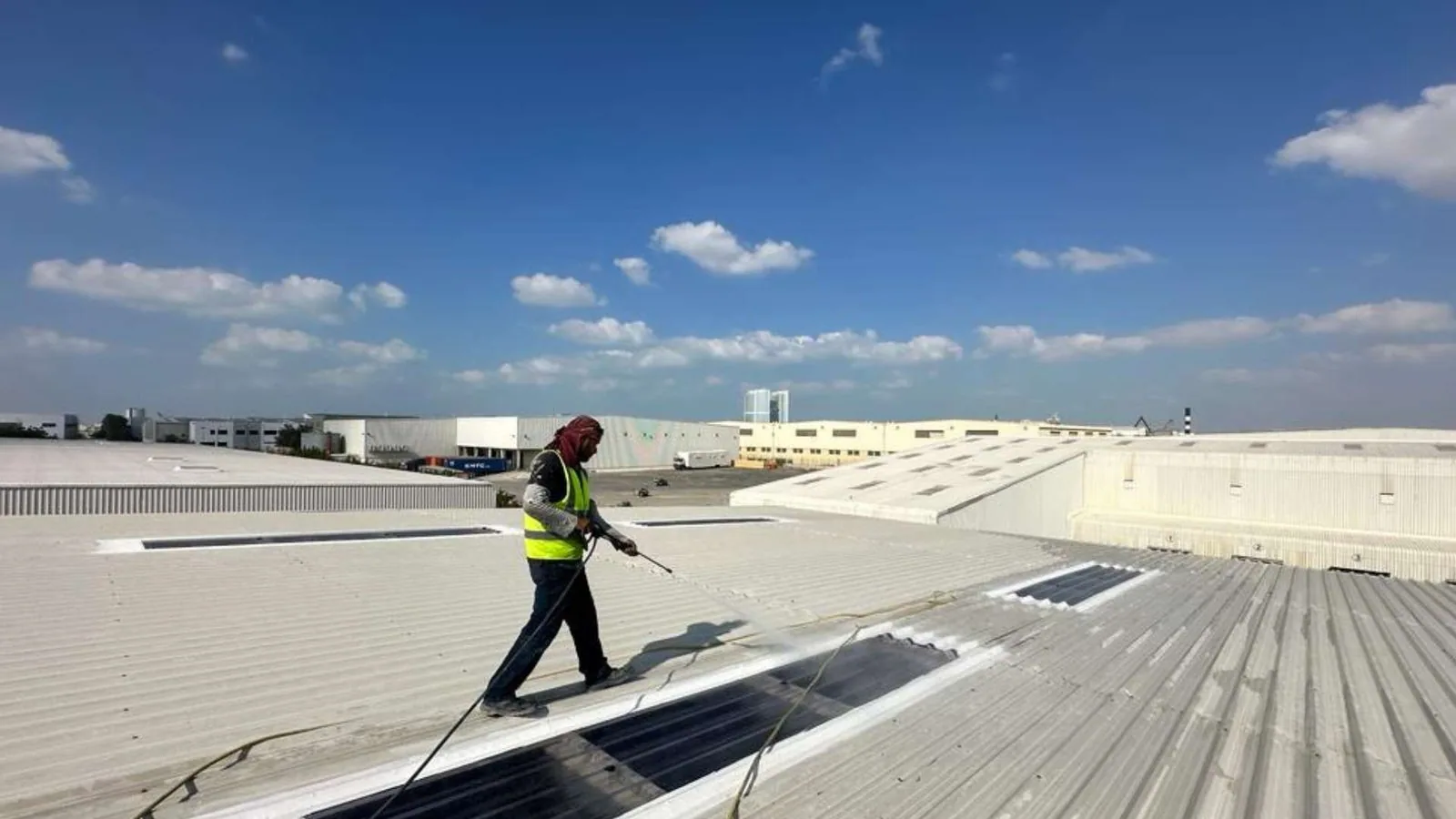
A roof scope in Thermalito should begin with the parcel and the roof zone, not an assumption about every building in the community. Butte County describes the Thermalito Community of Opportunity as an unincorporated urbanized area, broadly bounded by Nelson Avenue, State Route 70, the Thermalito South Forebay, and the area around Oro Dam Boulevard West. That boundary helps orient a service request, but it does not identify a property's roof assembly or permit status. We inspect the visible conditions, mark access limits, and connect the reported symptom to a measured work area before recommending repair or replacement.
Use the community boundary for orientation
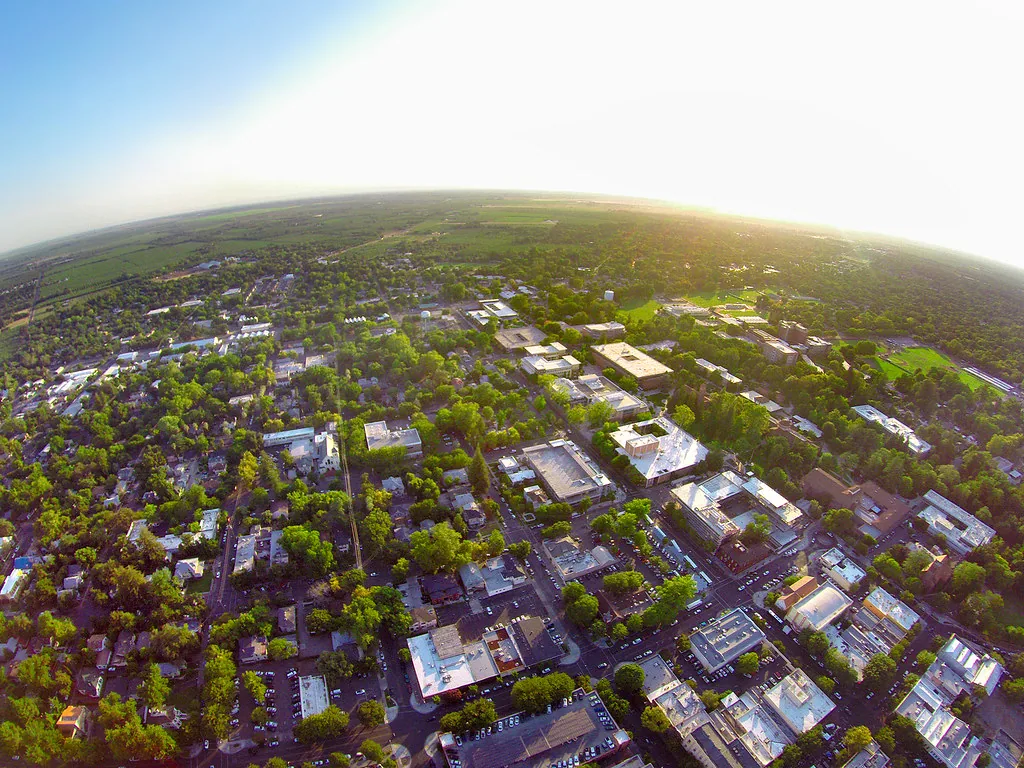
The planning description gives a broad frame for Thermalito, with Nelson Avenue to the north, State Route 70 to the east, the Thermalito South Forebay to the west, and land near Oro Dam Boulevard West to the south. We use those references to confirm whether a service request is in the intended area, then return to the individual parcel for the roof assessment. County planning and building services apply to unincorporated communities, but a commercial use or mailing address does not by itself settle the requirements for an alteration.
The 2025 Title 24 edition became effective in January 2026, and the permit review may also account for locally adopted amendments. The project owner confirms the path for the parcel and proposed work. We note whether the scope changes insulation, drainage, edge height, or rooftop equipment, then explain what field information is available for the review. A commercial roof inspection records the assembly and visible details. A Cohasset roof assessment likewise begins with its own parcel, not a generalized Butte County roof standard.
Check where water leaves the roof
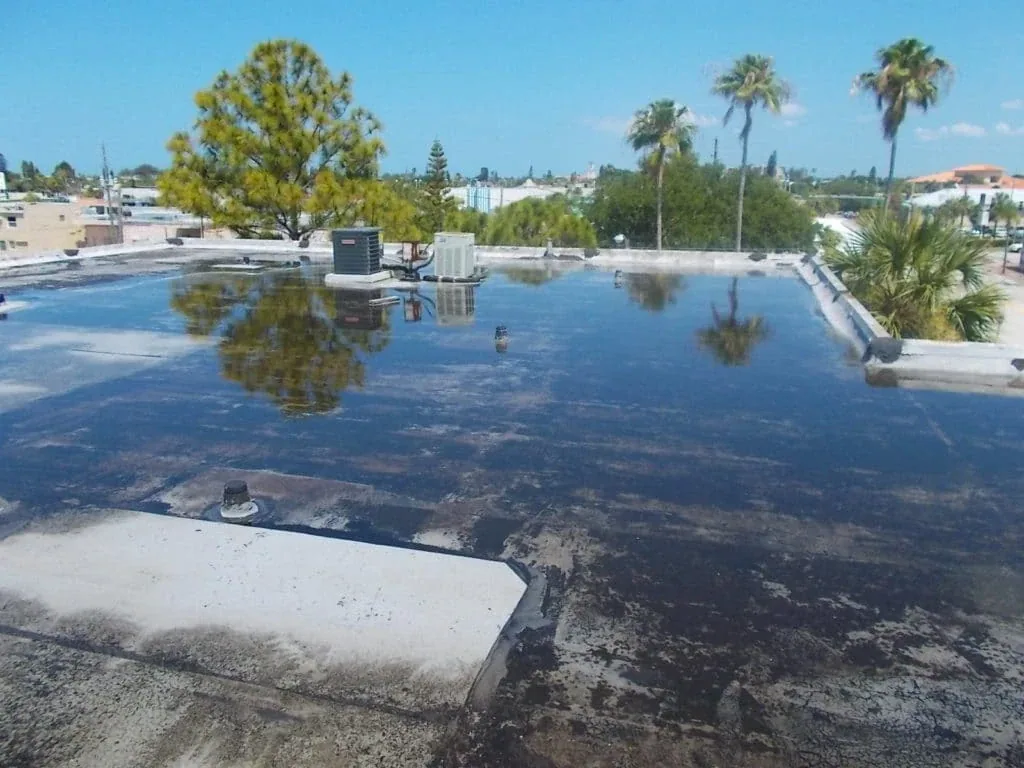
Water management starts at the roof, not the ceiling below. We identify the low points, drain bowls, scuppers, overflow paths, and any change in slope that could hold water near a seam. A blocked outlet can be cleared, but a recurring pond may also involve deck deflection, an altered drain path, or a repair that raised the surface. We photograph the outlet and nearby membrane, then compare the observation with the interior report. That separates a maintenance item from a condition that may need opening or a broader drainage correction.
Chico University Farm records an annual precipitation normal of 27.39 inches, with winter carrying more of the total than midsummer. The station profile gives market context, not a forecast for a Thermalito workday. Before a wet-season roof opening, we confirm the temporary tie-in and closeout step. A drain and scupper review captures outlet condition, while a marked roof condition report gives the owner a reference for later comparison. Neither replaces a field decision based on the actual assembly.
Separate the stain from the entry point
An interior mark may show where water became visible, but water can travel along a deck or below insulation before it reaches that room. We compare the location and timing with roof seams, wall transitions, curbs, penetrations, and drains. If a prior patch has changed the surface, its edge and attachment matter as much as the visible sealant. A roof sketch with dated photos helps the manager see which details were checked and where access stopped. If the route remains uncertain, we state what limited opening or test could resolve it before expanding the repair.
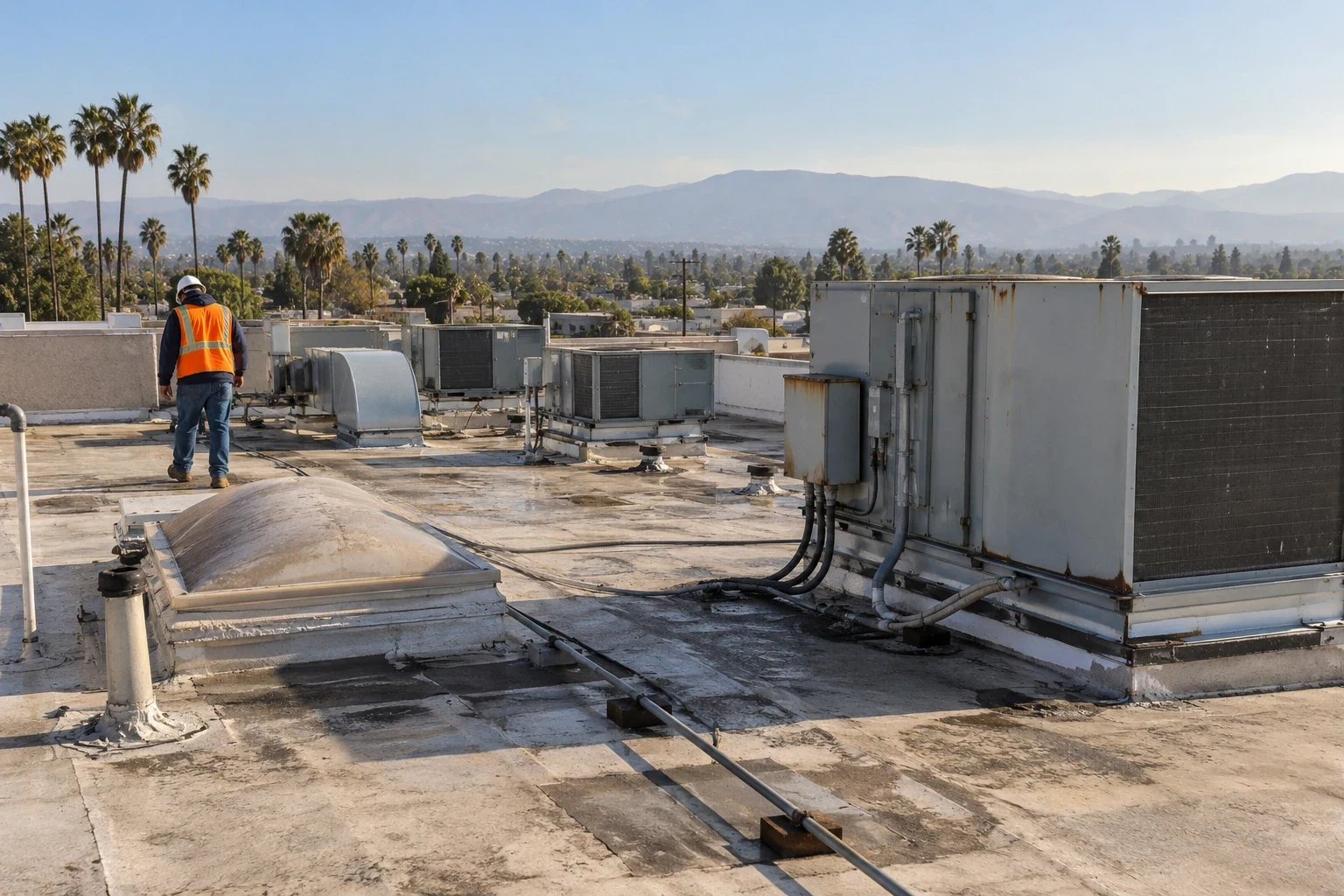
In a commercial or industrial parcel, rooftop units and their curbs need to be inspected as part of the assembly. Movement, service work, or a new penetration can disturb a flashing detail. We check the material around the curb, fasteners, seams, and nearby drainage before assigning the water path. For active entry, a leak repair assessment can distinguish temporary protection from permanent work. The objective is a defined repair boundary, not a patch at the ceiling projection.
Account for heat at exposed details
Repeated summer heat can expand metal edges and challenge sealant where the roof changes direction. We look closely at terminations, coping, curb corners, and transitions between dissimilar materials, then compare those details with any reported water path. Chico NOAA normals record a July average daily maximum of 95.2 degrees and frequent days at or above 90 degrees. The measurement is from Chico University Farm, not a Thermalito property or current workday. It helps frame seasonal exposure for the market while the installed material and observed condition guide the repair choice.
A coating may suit a roof only when its surface, attachment, drainage, and moisture conditions support that system. The preparation scope should state how loose material is removed, which repairs are required first, and how the perimeter and penetrations are finished. A restoration coating review compares those conditions with repair or removal. A roof in Downtown Chico still requires its own inspection; city heat context does not establish what is installed at another parcel.
Make the work boundary explicit
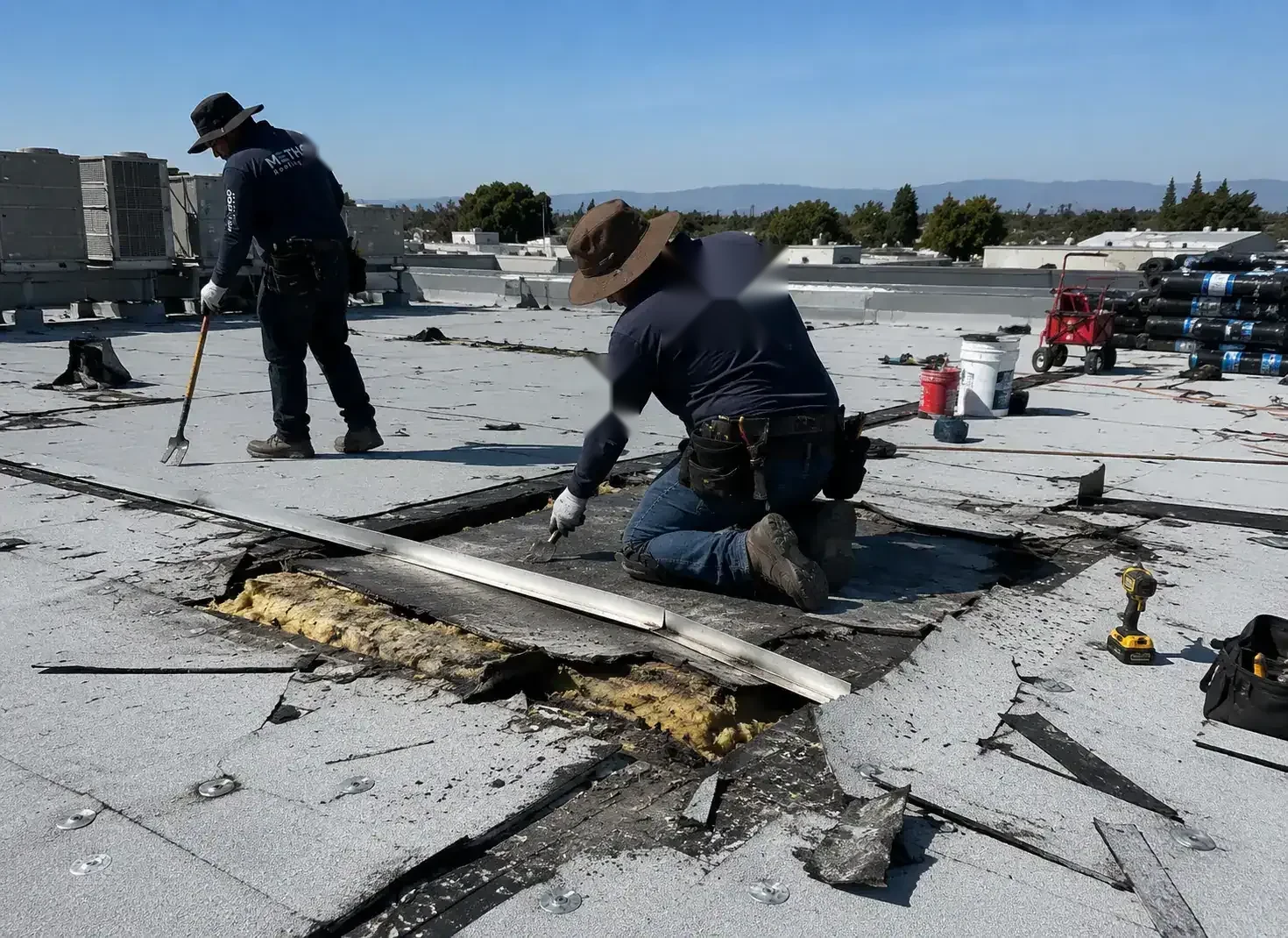
A local repair can be a sensible first step when the surrounding membrane remains attached, the substrate is suitable, and the failure has a limited edge. Repeated leaks in several zones, confirmed wet insulation outside that area, or widespread attachment loss may support a larger scope. We show which findings support each option and what further inspection could change the recommendation. That gives the property contact a basis to compare a small repair, a section replacement, and a full reroof without relying on a single symptom.
For a recover, we confirm existing layers, structural capacity, moisture, attachment, drainage, and perimeter height before another assembly is added. The estimate identifies the points that may change after removal exposes the deck. Access route, staging, disposal, occupancy below, and weather also affect sequence. A replacement scope should define removal and closeout, while a maintenance plan can track the roof after work. The owner sees the inspected area and any concealed condition that still needs approval.
Keep the record tied to the parcel
Closeout notes should identify the repaired zone, materials, dated photographs, and unresolved item, if any. Keep that record with the parcel's roof plan, access instructions, permit documents, and service history. The next inspection can then compare an earlier seam or drain with current observations instead of repeating an unbounded search. If equipment service changes a curb or penetration, include that work in the roof record so the next water report can be evaluated against a known detail.
Cost and duration are driven by measured area, existing layers, deck condition, material choice, access, staging, disposal, and the safe open-roof window. We describe those drivers before work and identify the approval point for a concealed condition. Share the building use, reported symptom, roof history, and access contact to arrange a Thermalito review. We will document what is visible and the next action supported by the roof evidence.
Commercial Roofing Questions
Does the Thermalito planning boundary establish permit jurisdiction?
It orients the community area, but the parcel and proposed work determine the review path. The owner should confirm jurisdiction with Butte County before a permitted alteration.
What should be checked before a roof drain is repaired?
We inspect the bowl, overflow, slope, nearby membrane, and any change in surface height. That shows whether the issue is blockage or a wider drainage condition.
Can the July temperature normal describe my roof's surface?
No. It is a Chico station measurement. We use the current conditions and the material observed at the property to make a work-window decision.
When would a local repair be too narrow?
Evidence of wet insulation beyond the detail, repeat failures, or broad attachment loss may support a larger area. We show the finding and remaining test.
Which information helps price a roof replacement?
Measured area, layer count, deck condition, access, disposal, and the selected assembly all affect scope. Concealed conditions need an approval step before removal.
Schedule a Thermalito roof assessment
Share the property use, reported symptom, roof history, and access contact. We will record the inspected zone and any approval point that affects the scope.