Commercial Storm Damage Roof Repair in Chico, CA
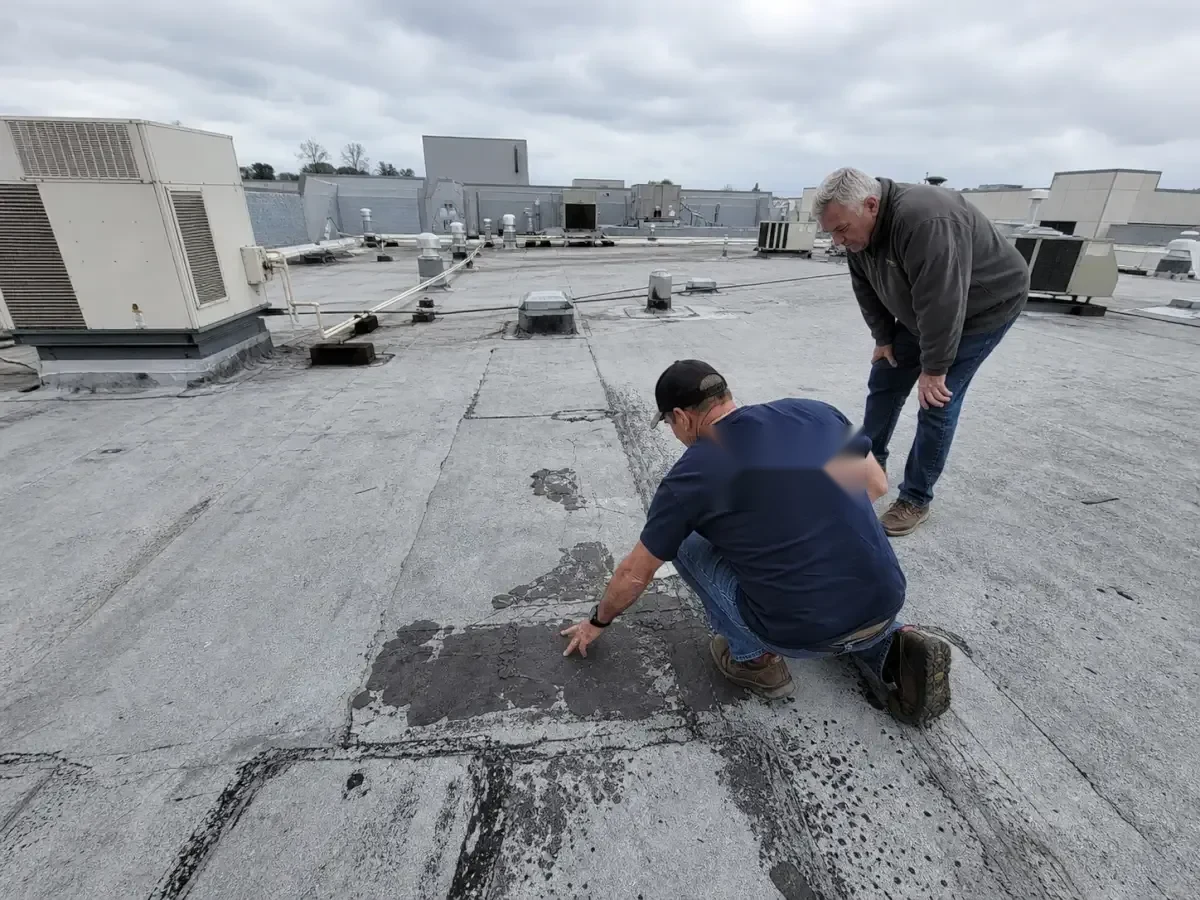
After a storm, the first roof decision is whether water is entering and what area needs protection before a permanent repair is designed. We document the reported location, interior impact, drainage route, and visible roof conditions, then mark any temporary measure separately from the final scope. Chico's climate has hot, dry summers and cooler wet winters, but a seasonal pattern is not proof that weather caused a particular opening. We look for the actual change in the assembly and compare it with prior photos or service records. A commercial roof inspection gives the owner a condition map that can guide immediate stabilization and the next repair visit.
Protect the interior while keeping the roof safe
Active water entry can require moving stock, protecting equipment, or placing a controlled interior catch before the roof is safe to access. We ask where the leak appeared, whether the water is still moving, and what operations are affected. Roof access follows weather and fall-protection limits; a crew does not climb onto a surface simply because a call is urgent. If access is unsafe, we explain the next safe step and coordinate the interior response while conditions change. When the roof can be inspected, we identify the most direct way to stop additional entry without covering evidence needed for diagnosis. A temporary cover, seal, or diversion is recorded with its limits and a planned return so an interim action is not mistaken for a completed repair.
Connect the ceiling report to the roof above
The spot under a ceiling stain may sit away from the roof opening because water can travel along a deck, framing, or insulation. We map the interior report against roof drains, seams, walls, equipment curbs, skylights, and prior patches. Photos include a roof reference and enough context to locate the detail on a later visit. If staining appears in more than one room, we record each area rather than treating the reports as a single point. The City identifies both Downtown Chico and the East 20th Street District as commercial areas with different street and access conditions. That context can shape staging and tenant coordination, but it cannot identify a damaged roof detail. The building's own roof map and service history control the investigation.
Distinguish storm evidence from an older defect
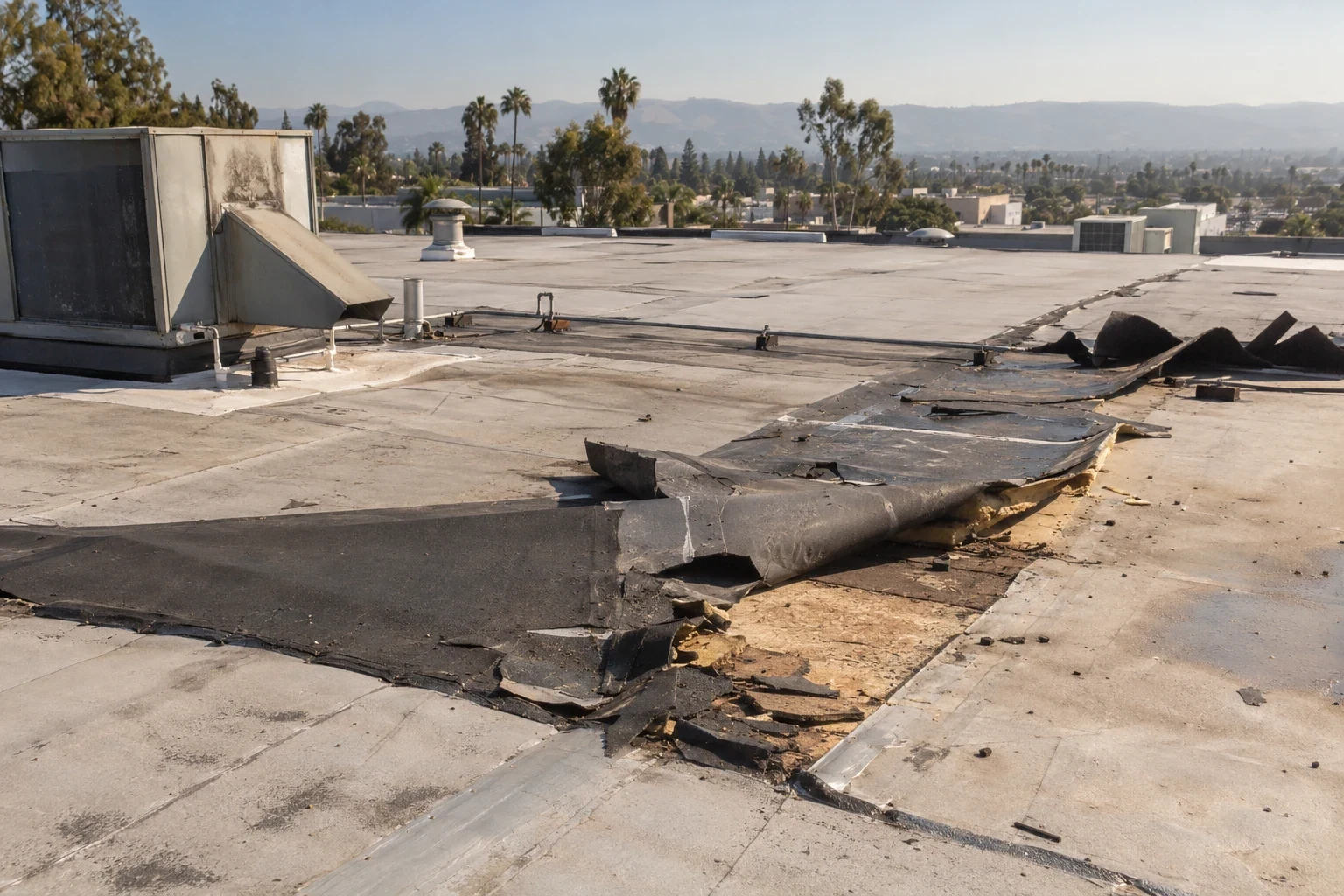
Not every leak reported after wind or rain began at that moment. We look for displaced edge metal, opened seams, punctures, damaged flashing, debris impact, and a changed water path, then compare those observations with maintenance notes. A drain that was already slow, a brittle sealant joint, or a patch that had lifted may need attention even if the recent weather exposed the problem. We describe what is visible and what remains uncertain, avoiding a cause statement that the roof cannot support. Chico planning documents list commercial and employment uses along Park Avenue and in the Meyers Street and Hegan Lane areas; those place descriptions help identify a service context, not a particular roof's age or construction. A wind-related repair review can organize the observed damage without presuming the cause.
Trace water and check the outlet route
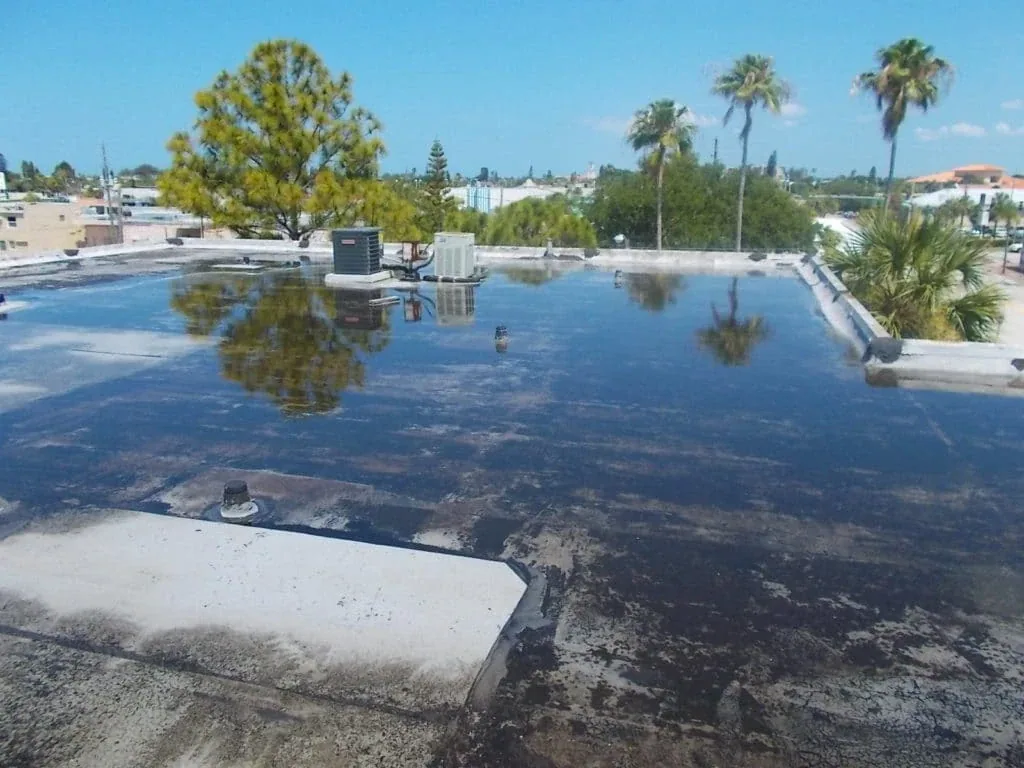
Rainwater may enter at a wall transition or curb, then move toward a low point before it reaches the ceiling. We inspect the outlet, overflow, nearby membrane, and the slope of the affected section. Chico's normal precipitation is concentrated in winter, and January and February each average slightly more than five inches at the University Farm station. That makes a dry-season review useful for planning, but a prior storm's path still needs to be found from physical evidence. We note whether a drain is clear, whether ponding has a defined boundary, and whether water crosses a repair edge. A drain or scupper service may be part of the correction when the outlet detail or adjacent flashing is involved.
Price the confirmed repair boundary
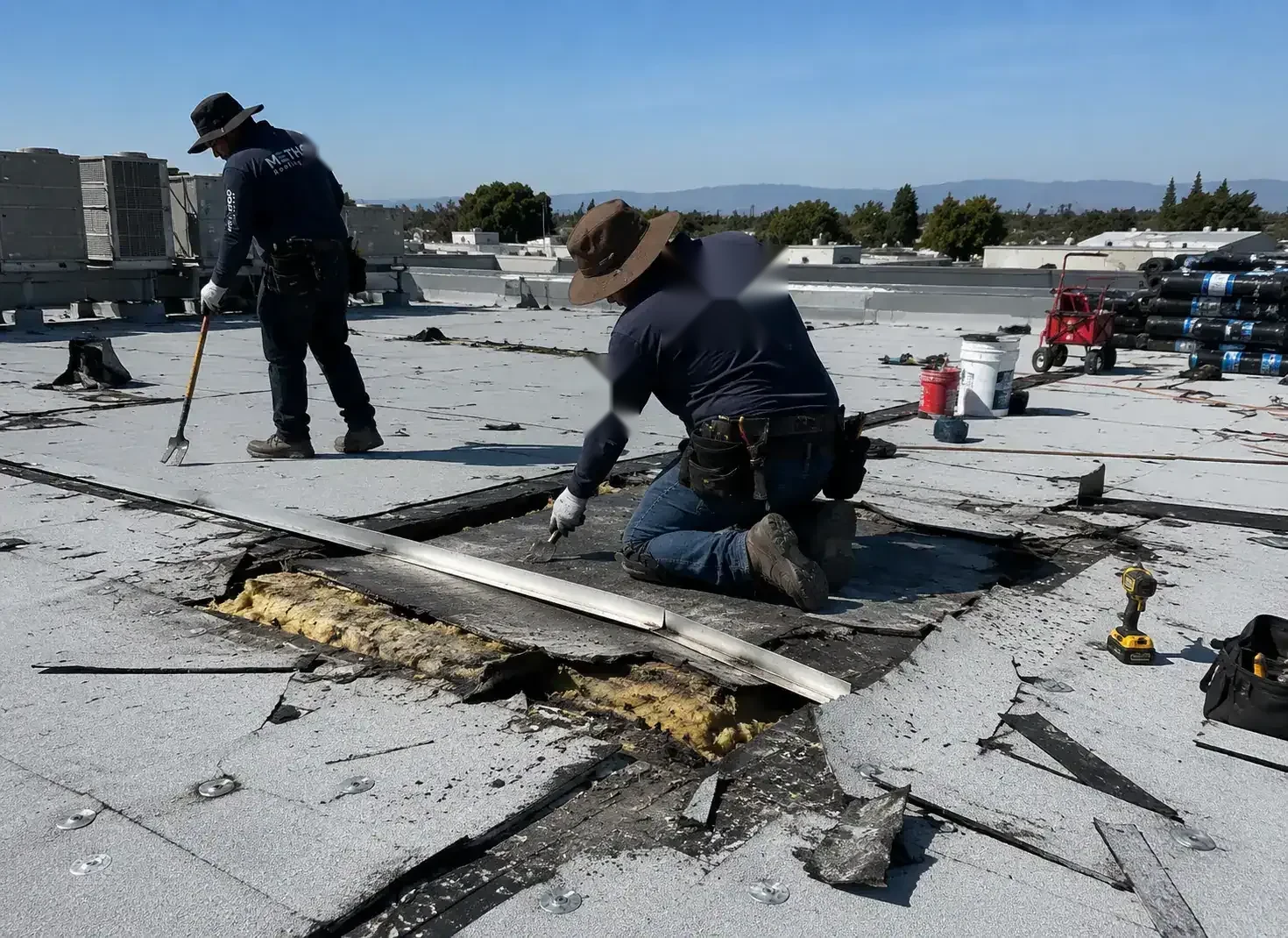
A repair scope names the roof zone, materials, preparation, transition details, and closeout photos. We distinguish temporary protection, diagnostic testing, and permanent work so the property team can track each decision. If moisture may extend below the membrane, we identify the area that requires confirmation instead of pricing a surface patch as if the assembly were dry. When the opening is at a curb, skylight, or pipe, its flashing is included in the repair boundary; when a seam has failed, the receiving surface and adjacent lap need inspection too. A commercial roof repair addresses a defined defect, while a penetration-flashing correction may require its own preparation and testing. Photos at completion should show the work and the surrounding detail, not just a close-up of new material.
We also record conditions around the selected repair: attachment at the edge, the direction water can travel, the adjacent seam, and nearby penetrations. These observations help distinguish a local correction from an area that needs more testing. The proposal identifies any access, sequencing, or weather assumptions that affect work. When an unforeseen condition appears after preparation, we stop at the agreed boundary, photograph the finding, and explain whether the change requires approval before material is installed. That gives the owner a clear point to review rather than discovering a broader scope only at the invoice stage.
Coordinate access and return visits
Storm response in an occupied property includes more than roof access. We confirm the contact who can provide keys or escort, identify equipment that must remain online, and sequence work around deliveries, tenants, or production. The Skyway and Mangrove Avenue corridors include commercial activity identified in City planning documents; their traffic and business context may affect arrival and staging, but each site sets its own access rules. We tell the owner whether weather, a material cure period, or additional testing changes the return date. At closeout, the report lists the temporary measures removed or left in place, permanent repairs completed, unresolved areas, and the recommended follow-up. A condition report preserves that record for future maintenance, while a separate emergency response can be arranged if water entry resumes before the permanent scope is complete. The facility contact receives the marked roof location and interior reference, along with any restriction on walking near the repair until materials reach their specified condition. If monitoring is recommended, we state what to watch for and how soon a recheck should occur. That turns a storm call into a documented next step for the property team.
Commercial Roofing Questions
Should we wait for dry weather before calling about a roof leak?
No. Report active water entry as soon as it is safe to do so. Interior protection and roof access decisions are separate; crews follow safe access limits and can document what needs a return visit.
Can you confirm that a storm caused the roof damage?
We document visible changes and compare them with available service records. If the evidence does not establish when a defect began, the report says what is known and what remains uncertain.
Is temporary protection the same as permanent repair?
No. An interim cover or diversion is recorded with its limits and a return plan. The permanent scope follows inspection and any testing needed to confirm the repair boundary.
Why might a ceiling stain be away from the roof opening?
Water can travel along roof layers or framing before it appears inside. We compare the interior location with drains, seams, walls, and other transitions instead of patching directly above the stain by assumption.
What should the closeout report include?
The report should identify the roof zone, findings, temporary action, permanent materials and details, photographs, unresolved questions, and follow-up timing so the next visit starts with a usable record.
Record the roof condition before the next repair decision
Tell us where water appeared, when it was noticed, what operations are affected, and what roof records are available. We will document the safe access plan, visible findings, and the boundary between interim protection and permanent work.