Commercial Fire-Damaged Roof Repair in Chico, CA
A commercial roof can be affected by direct flame, radiant heat, smoke, suppression water, debris, or the access work that follows an incident. Those conditions do not look alike and should not be treated as one repair item. We coordinate with the property representative and incident-response professionals, then inspect only the areas cleared for roofing access. The first roof visit records visible conditions and protects exposed areas while the owner determines what can be evaluated next.
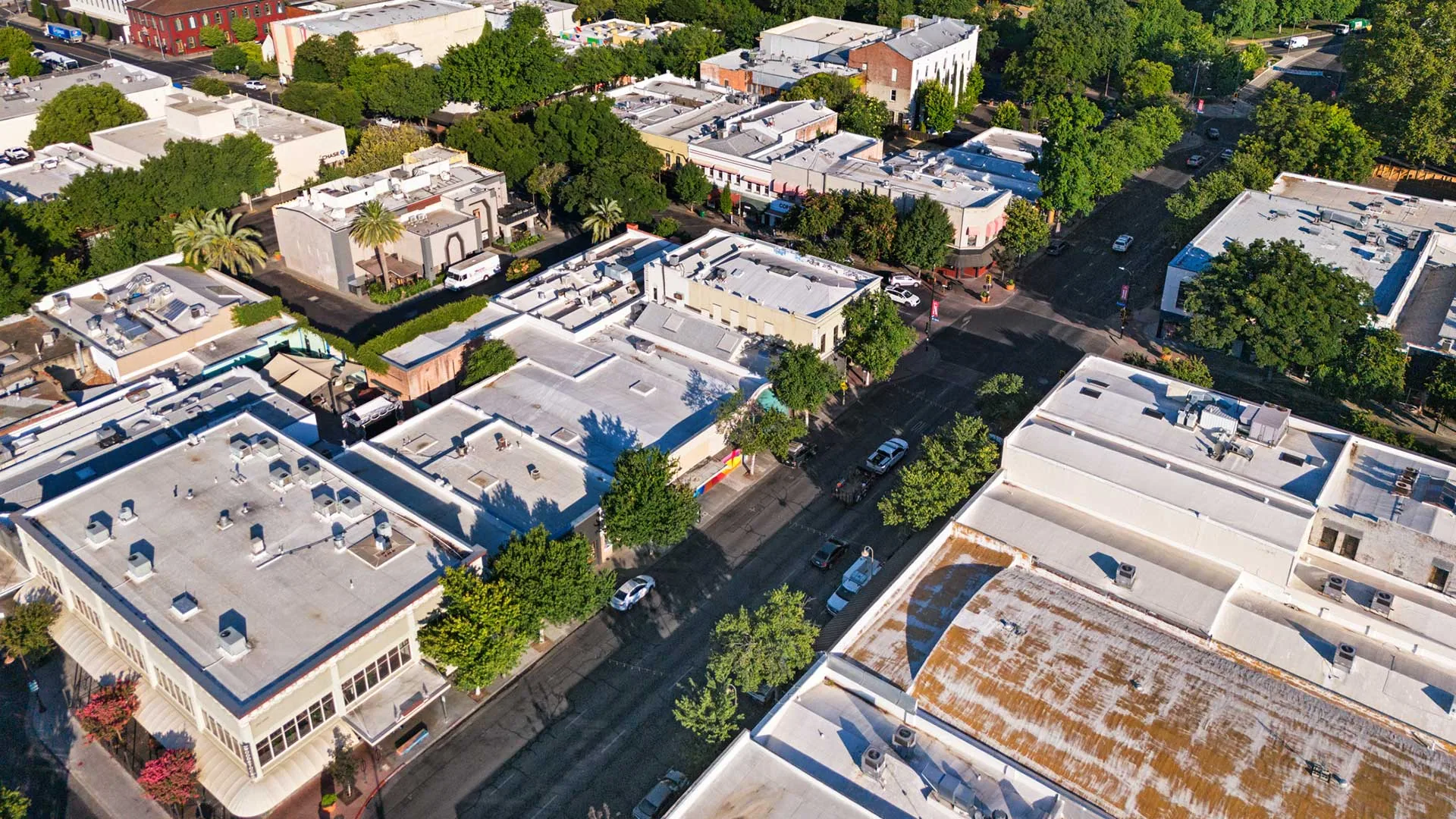
For a Chico property, we record the roof area, access route, current surface condition, and any temporary protection already in place. The local pattern of hot, dry summers and cooler, wetter winters is useful scheduling context, while the event-specific conditions control the inspection. If the affected property is in Downtown Chico or an industrial area near Meyers Street, we coordinate check-in and work boundaries with that site rather than infer roof conditions from its location. A emergency roof response can start with securing an authorized, accessible area.
Confirm Clearance and Protect the Exposed Area
Before a roofing crew climbs, the owner or incident lead must confirm that the roof and access path are released for the specific work. We identify restricted zones, overhead hazards, unstable surfaces, damaged parapets, utilities, and any areas where debris or water remains. Roofing personnel do not make structural-safety determinations or enter a restricted area to speed an inspection. If the roof cannot be reached safely, we document that limit and wait for authorization.
Temporary protection should match the opening and the weather exposure. A cover, secured sheet, or temporary curb detail must avoid trapping water or loading a weakened area, and it should remain within the owner's approved plan. We photograph the existing protection, note who authorized it, and set a follow-up point. The work record distinguishes emergency stabilization from permanent repair, so a temporary cover is not mistaken for a completed roof restoration.
Separate Heat, Smoke, Water, and Impact Findings
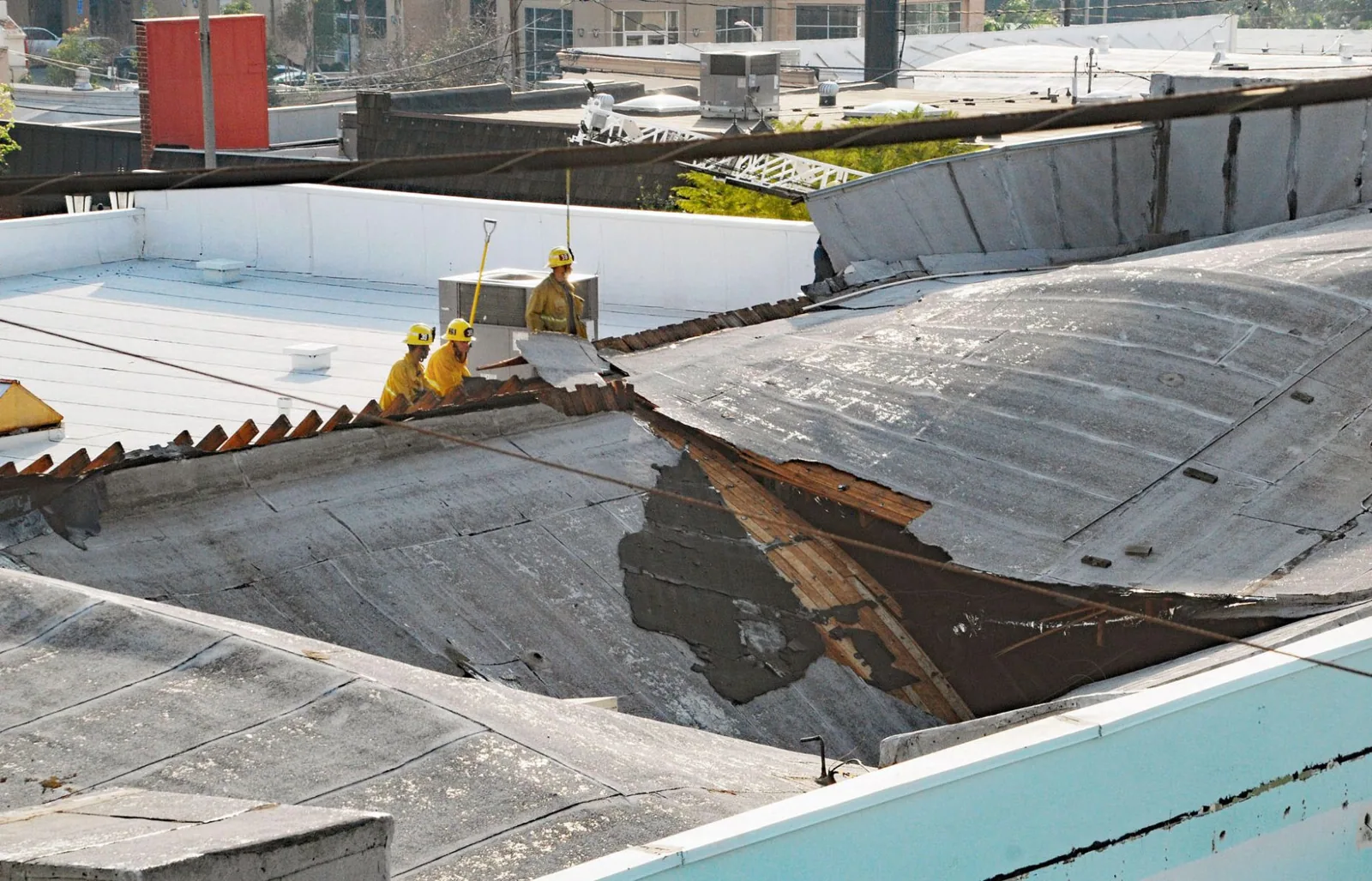
We map the visibly affected roof field and adjacent details before removing material. The review may include membrane blistering or shrinkage, softened coating, failed seams, damaged flashing, displaced metal, impact marks, wet insulation, or punctures from debris. Smoke residue and suppression water are documented as separate observations because they can affect cleaning and material decisions even where the membrane appears intact.
Interior reports can help locate a roof area, but water may move below the surface before appearing in a room. We compare the roof plan with slope, drains, curbs, penetrations, and accessible interior marks. Each opening or suspect area is labeled separately, with photographs that show both context and detail. An inspection record can then distinguish confirmed damage from questions that need sampling, testing, or a later access window.
Identify the Assembly Before Selecting Materials
Repair compatibility depends on the roof system and the condition of material outside the visibly affected area. We review closeout documents, labels, exposed edges, attachment, prior patches, and field construction. A fire-related roof scope may include several systems, transitions, or later repairs, so appearance alone is not enough to choose an adhesive, coating, membrane, or flashing product. If identification remains uncertain, we state that and request an approved method to verify it.
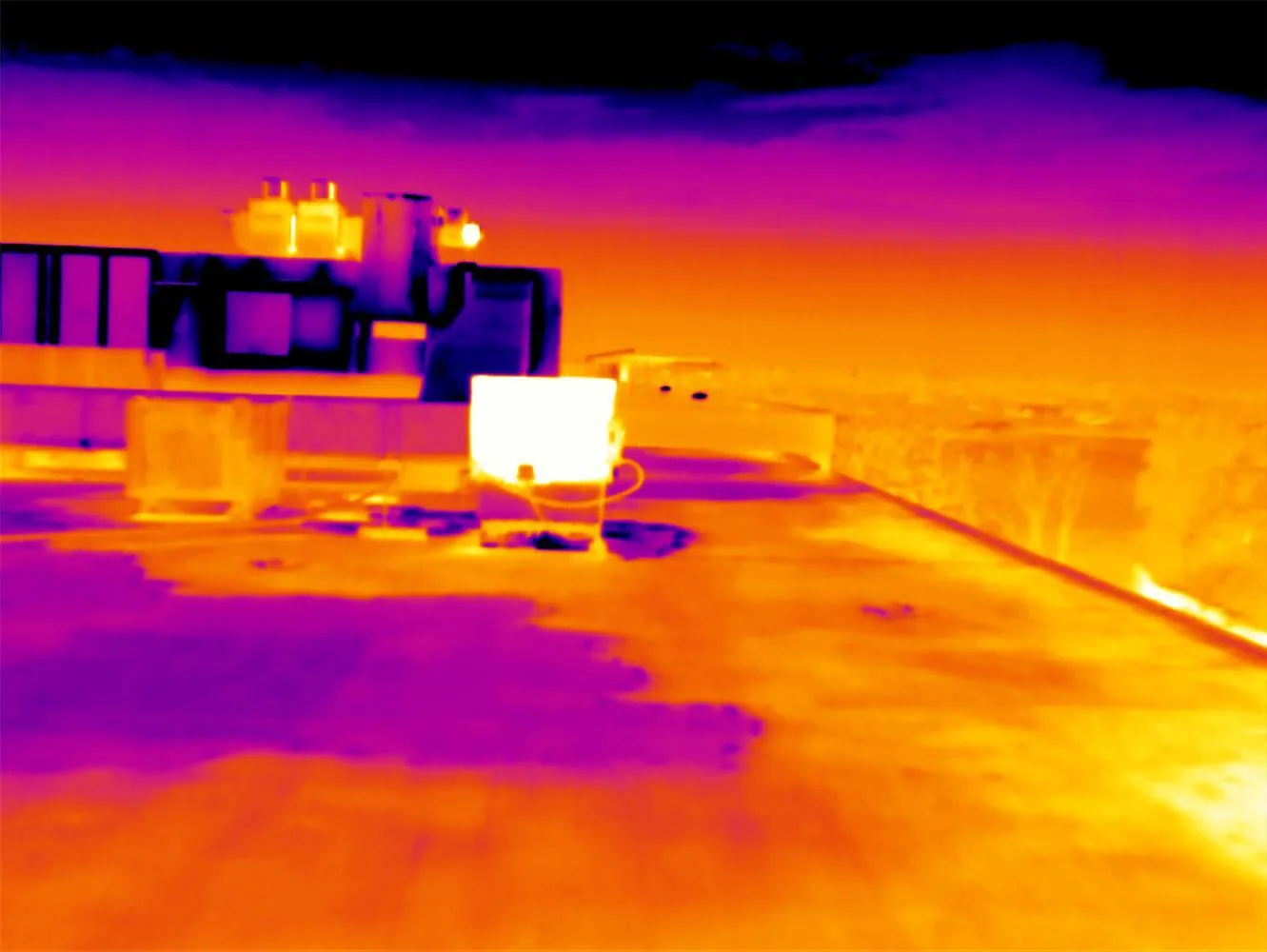
Where heat has altered a surface or smoke has left residue, preparation must follow the selected product instructions and any direction from the owner's restoration team. We do not cover contamination or bridge a damaged seam without defining how the surface will be prepared. A targeted moisture survey may answer a specific question about concealed wet insulation, while modified-bitumen construction is considered only if that system is confirmed at the property.
Write a Bounded Scope With Clear Exclusions
The scope should identify the mapped roof areas, temporary measures, material to be removed, tie-in points, and conditions that are not included. If roof work depends on electrical, mechanical, structural, environmental, or interior restoration tasks, we identify the interface and the party expected to release it. That keeps a roofing quote from representing work outside our trade or from assuming that hidden systems are ready for access.
For occupied facilities near East 20th Street or the Skyway commercial district, the schedule may need separate delivery and roof-access windows. We confirm loading, escort, noise, odors, and any restrictions with the property contact. If cleanup or removal reveals additional deterioration, the crew secures the area and requests an owner decision before expanding the work. A phased occupied-building plan can coordinate notifications without conflating it with the roof repair boundary.
Complete Approved Repairs and Document the Limits
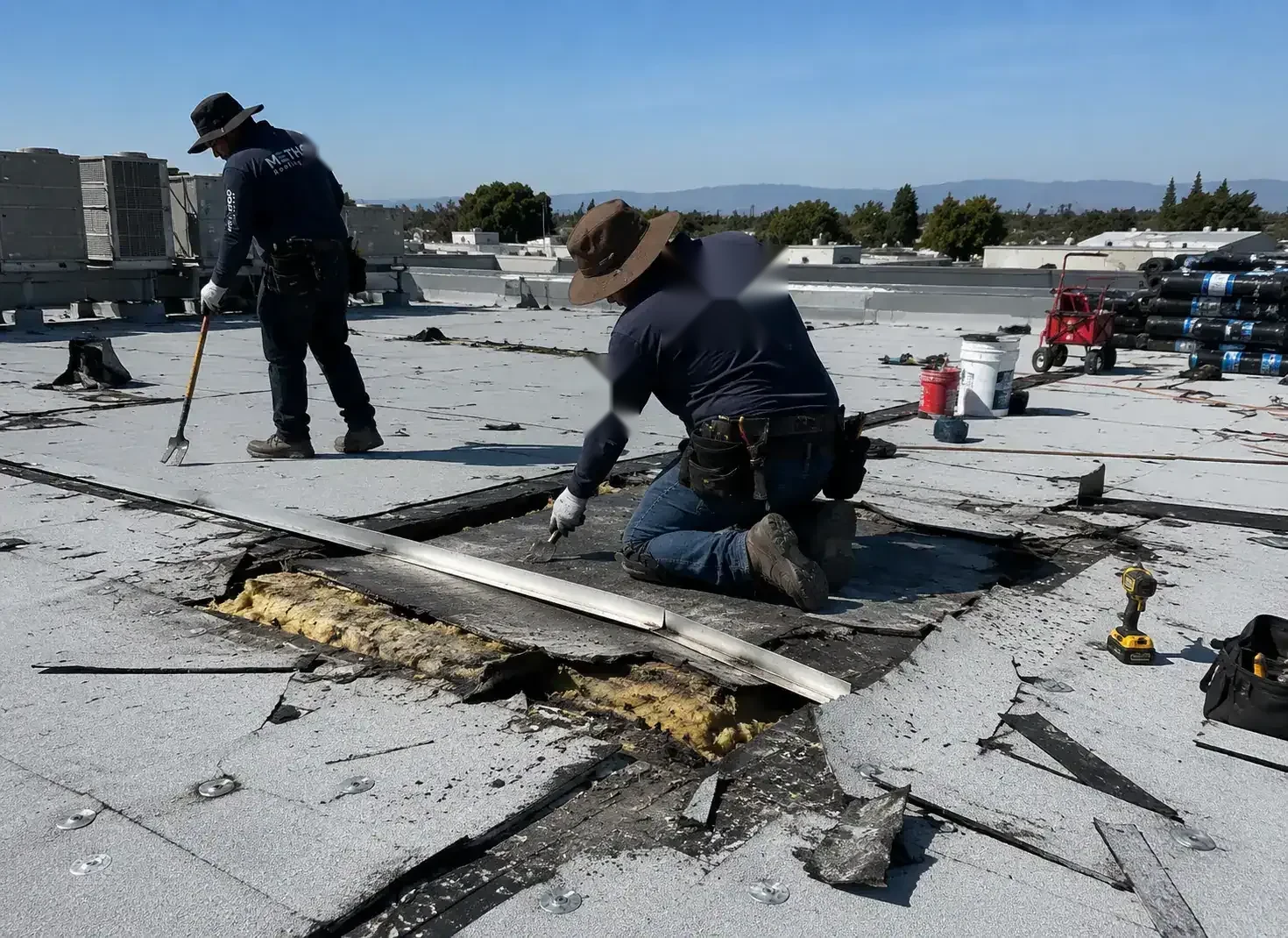
Once the area is released and the materials are identified, the crew completes only the approved roof work. Preparation, patching, flashing replacement, or edge repair follows the applicable system instructions and the agreed tie-ins. We log the work area, conditions encountered, materials, and any field change that was authorized. If a roof section remains inaccessible, it is listed separately rather than implied complete.
Closeout photographs should show the work in context, the finished detail, and any remaining temporary protection. We note whether the roof received a visual review, a permitted seam check, or another specified test, along with its limits. A perimeter detail review can be scoped independently if heat, debris, or water affected an edge condition beyond the original repair. The owner receives open items and next access needs in a concise handoff.
Decide Whether a Local Repair Still Fits
A localized repair may fit where the affected section is defined, the surrounding material accepts a compatible tie-in, and other layers are suitable for the planned work. A wider scope may be needed when damage is distributed, substrate conditions are unclear, seams are repeatedly failing, or the repair boundary cannot reach sound material. We present observations and options so the owner can compare a bounded repair with a separately priced restoration or replacement evaluation.
The repair map should stay with the building's roof records, incident documentation, and later inspection notes. That makes follow-up easier if water appears after another storm or if a different area is opened for restoration. A wind-damage review or puncture repair assessment can address distinct findings when those conditions are present. Each Chico roof is scoped from its verified assembly and access clearance, not from the type of event alone.
Commercial Roofing Questions
Can a roofer inspect the roof immediately after a fire?
Only after the owner or incident lead releases the specific area and access path. A roof can contain unstable surfaces, debris, utilities, or other hazards. We wait for authorization, inspect within the approved boundary, and record any section that remains inaccessible.
Does suppression water require roof replacement?
Not by itself. The roof assembly, exposure, drainage, and condition of each layer determine the next step. We map visible water effects and identify whether testing or a controlled opening is needed before comparing localized repair with a broader scope.
Can smoke residue be cleaned from a commercial roof membrane?
The appropriate method depends on the membrane, residue, and product guidance. We identify the material and coordinate with the owner's restoration team before cleaning or covering affected areas. Any cleaning trial should have a defined boundary and documented result.
Will the roofing contractor handle structural or interior restoration?
Roofing work is scoped separately from structural engineering, electrical work, environmental response, and interior restoration. We note coordination points and access releases, then price the roof tasks within our trade and the approved boundary.
What should I provide for a fire-related roof assessment in Chico?
Share the roof plan, access restrictions, incident lead's release, photographs, system records, and any temporary protection notes. Include the interior locations where water or smoke effects were reported. We will confirm the accessible area and define the inspection or repair scope.
Document the Roof Area Cleared for Repair
Share the roof plan, access release, incident notes, system records, and photographs. We will map visible roof conditions and prepare a bounded repair scope for the areas authorized for roofing work.