Johns Manville Commercial Roofing in Chico, CA
A Johns Manville reference in a roof schedule should be tied to a specific system, building area, and project record. We compare the supplied documents with exposed layers, seams, attachment, flashing, and prior repairs before recommending a material or work method. A manufacturer's name alone does not show which membrane, insulation, or detail is present across every roof section.

On a Chico site, the inspection record notes when and where conditions were observed, especially when heat or recent rain affects access. Commercial properties near Downtown Chico and the East 20th Street district may share a market but not a roof assembly. A site near East 20th Street is documented from its own plan and closeout files. A roof inspection identifies what the crew could verify.
Confirm the System Named in the Project File
We review the specification, submittals, product labels, warranty documents, and closeout details to identify the Johns Manville products associated with a roof area. A commercial assembly can include membrane, insulation, cover board, vapor-control layers, attachment, flashing, and perimeter details. The field record should not reduce that build-up to one brand name or assume that an addition uses the original system.
Where records are incomplete, we note which detail remains uncertain and check accessible edges or transitions before choosing a repair. A coating or overlay may conceal an earlier layer, so a product name in an old work order can refer to past construction. The modified-bitumen system review is relevant only if that assembly is confirmed in the project records or field.
During a transfer or refinancing review, a schedule may describe a product family while a later change order names a different material. We preserve both records and match dates and plan references before summarizing the current roof. If an area cannot be confirmed without opening it, the report describes that limit and leaves the assembly field for follow-up.
Inspect the Field Membrane and Its Connections
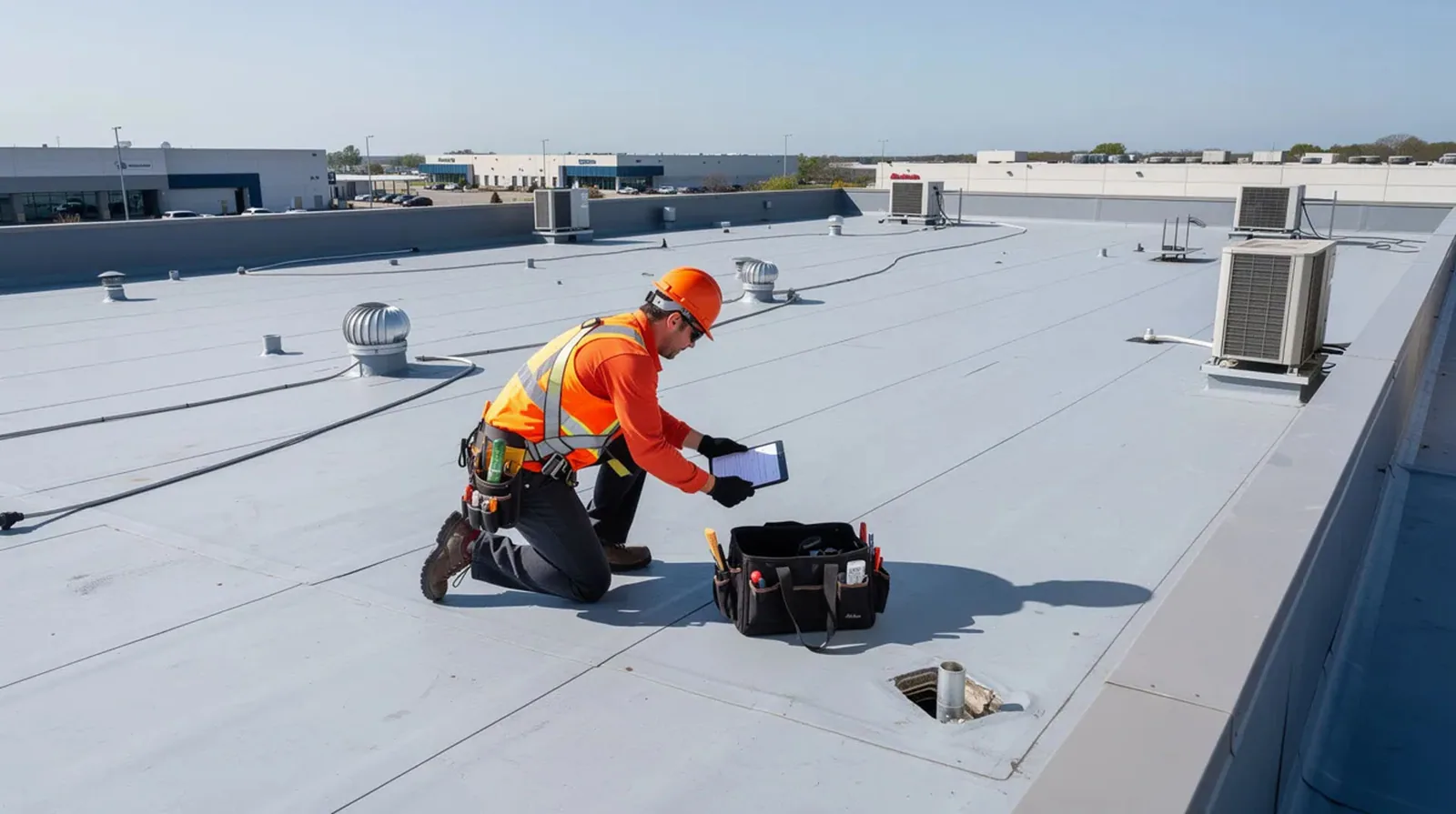
The field review follows laps, corners, penetrations, drains, curbs, and edges where a roof system changes direction or meets another material. We look for open seams, loose flashing, splits, blisters, surface wear, and prior patches. Each observation is mapped to a roof-plan reference. A seam probe or other test is used only when the material and surface allow it, and the report identifies the segment checked.
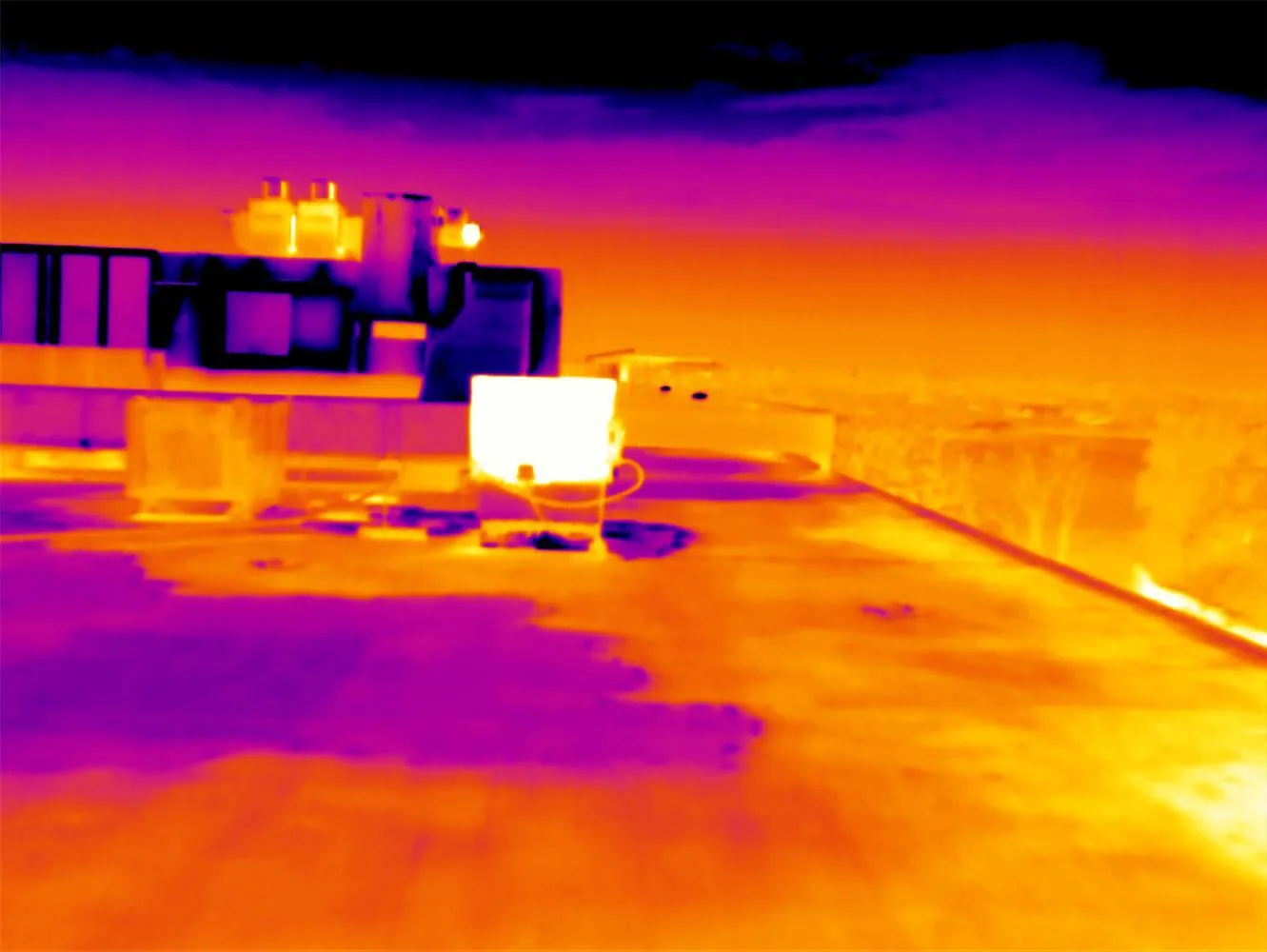
Interior water reports are compared with slope, drainage, and accessible roof details because moisture can travel before it appears in a room. If the suspected area extends beyond a visible condition, a moisture survey may answer a defined question about concealed layers. A confirmed opening can receive a separate membrane repair scope after the surrounding material is evaluated.
Prepare a Compatible Repair or Restoration
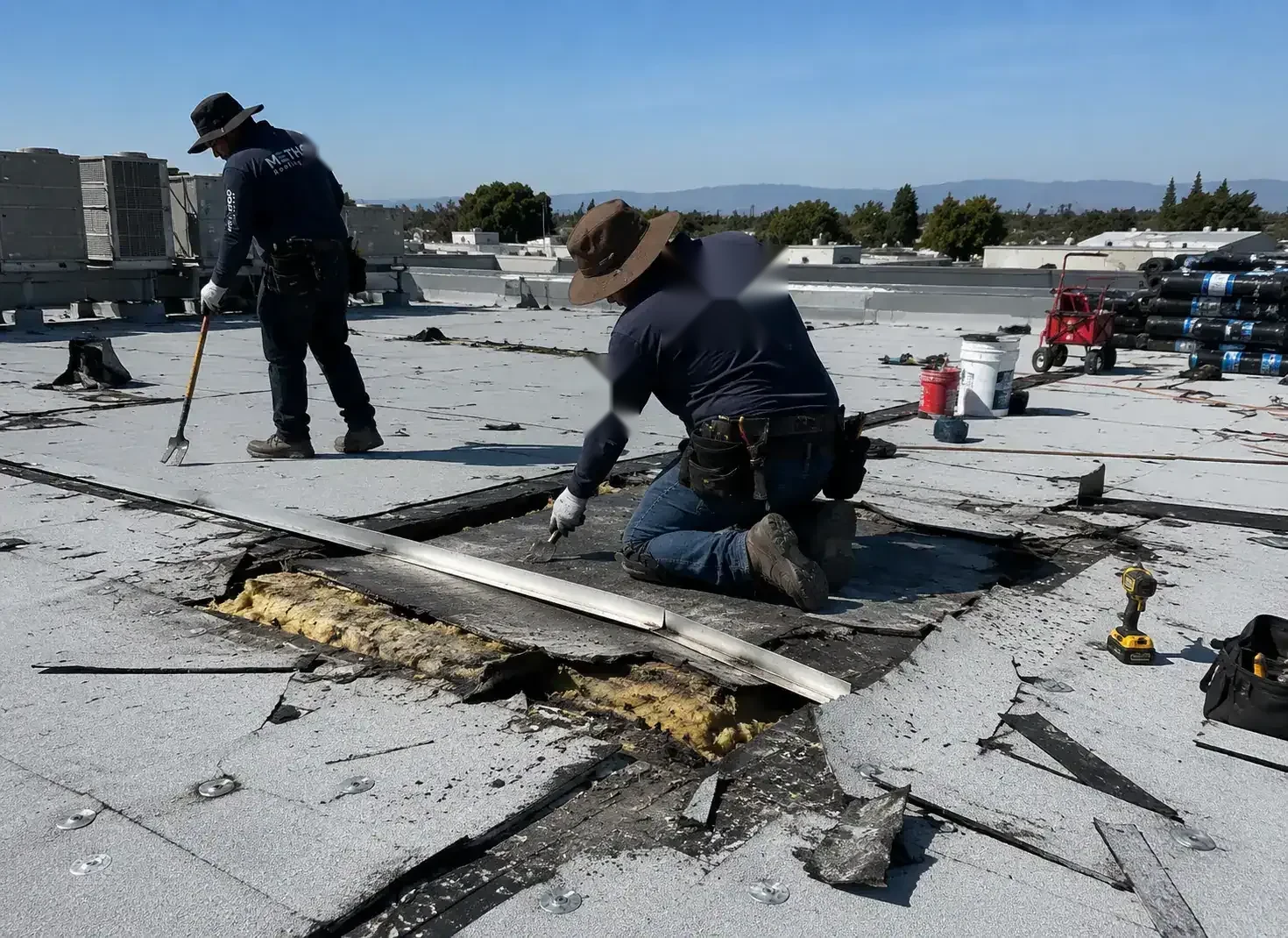
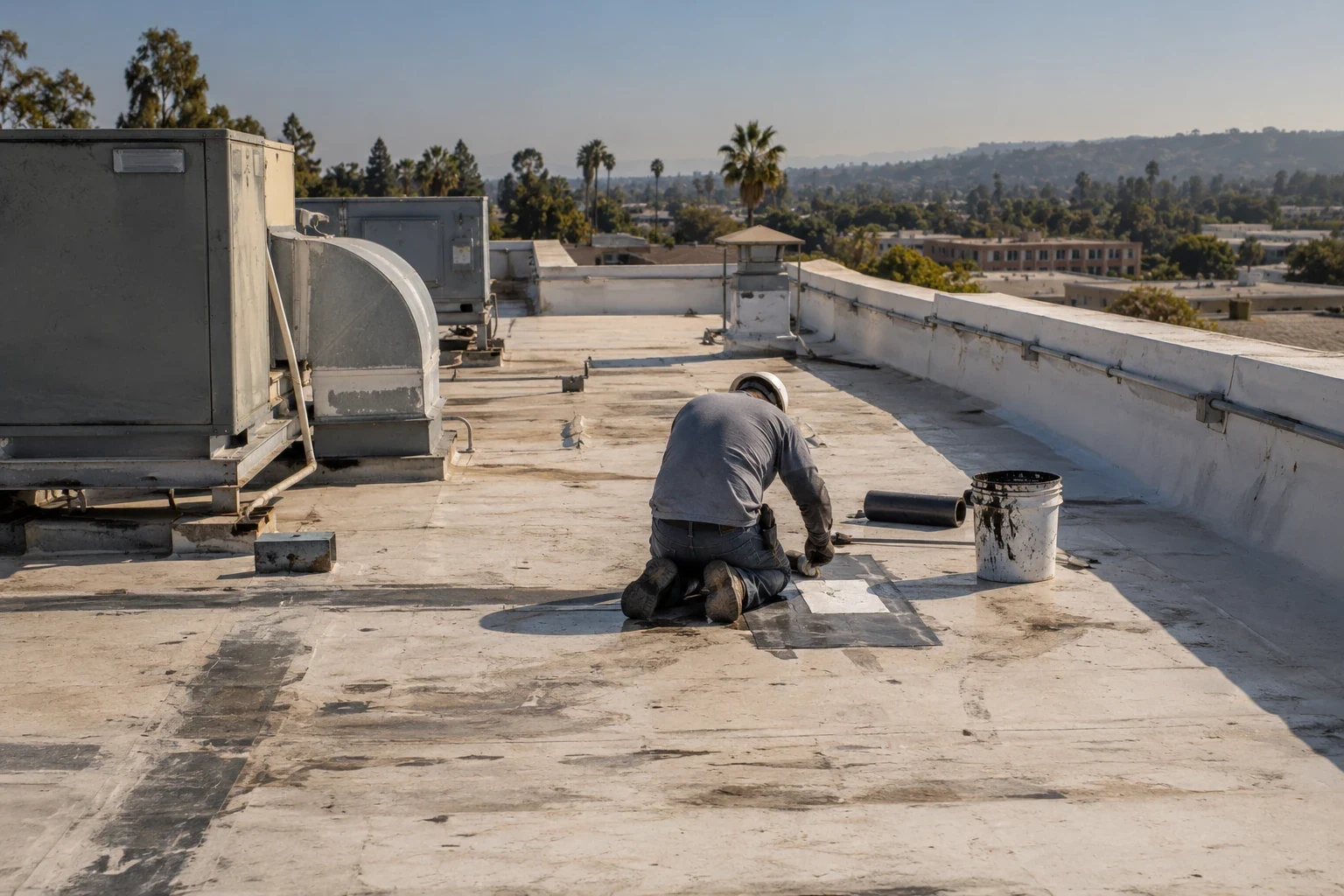
Repair selection follows the installed system, current product instructions, substrate condition, and the boundary of sound material. The crew confirms surface dryness, removes incompatible or loose material as approved, and prepares the tie-in area. When the work uses an adhesive, primer, coating, or membrane patch, the project scope identifies the material and installation procedure for the confirmed assembly.
A small repair should not bridge a failing seam or cover a wet area without addressing the cause. If inspection reveals a different product or layer than the record described, we pause the expanded work and request an owner decision. For broader wear, a coating restoration review or a separately priced replacement evaluation may compare options, but each starts from the roof's actual condition.
Photographs should show the repair in context and at close range, with a label that points back to the roof area. Record the surface preparation and conditions during installation, including any pause for moisture or temperature. That information helps the next reviewer understand the work sequence without inferring more than the closeout actually shows.
Keep Drainage Findings Separate From Membrane Work
Membrane condition and drainage can interact, but they are not the same repair. We document drain obstruction, ponding, low areas, interior moisture reports, and surface defects as separate findings. If debris removal is authorized, the report names the area and work performed. If ponding remains after cleaning, the owner can decide whether a broader slope or drainage evaluation is needed.
Chico's wetter winter period makes it useful to keep a dated record of where water remains after a rain event, while the summer inspection can show a different surface condition. A drain and scupper review addresses conveyance details, and a maintenance visit records accessible housekeeping. Neither should be used as a substitute for identifying a membrane opening.
Maintain Product and Warranty Documentation
For each roof area, the owner should retain product schedules, installation details, inspection reports, maintenance logs, repair records, and the applicable certificate. We can organize the available file and list missing documents or conflicting descriptions. Warranty terms vary by the actual certificate and covered assembly; a field visit does not decide coverage or replace the owner's review of its obligations.
A useful closeout names the work area, date, material when documented, preparation, tie-in, photographs, and field check. Store it with the Johns Manville records and roof plan so a later manager can trace the repair. The warranty-file process can track notices and dates from the supplied document, while Carlisle records or a GAF schedule can be reviewed separately if those products are identified elsewhere in the portfolio.
When a later vendor updates the file, retain the prior version and date the new entry. That history allows the facility manager to distinguish original construction documents from a current inspection or repair record.
Leave a Clear Work Boundary for the Owner
The scope states which roof areas are included, where the tie-in stops, what the owner must provide, and what conditions require approval before work expands. Access limits, occupied operations, staging, and any coordination with equipment or interior teams are listed before scheduling. If a condition is inaccessible, the report says so rather than implying that the whole system was inspected.
Properties near Skyway or South Park Avenue may have distinct deliveries and access rules. We confirm them with the site's contact instead of assuming a district-wide schedule. The owner receives a concise handoff with photographs, product details that were actually confirmed, open questions, and the next review date. This record helps a Chico facility team compare later observations with the same roof-area references.
Commercial Roofing Questions
What Johns Manville details should I provide for a Chico roof review?
Share the roof plan, specification, submittals, product labels, closeout documents, warranty certificate, repair history, and access instructions. We compare those records with visible field construction and identify any roof areas that still need verification.
Can you repair a Johns Manville commercial membrane?
A repair can be scoped when the installed system and surrounding material are identified. Preparation and tie-in follow the applicable product instructions. The estimate names the boundary and any condition that requires an owner decision before work expands.
Does the manufacturer's name identify every layer?
No. A roof assembly can include multiple materials and later additions. The closeout file and field details help identify membrane, insulation, cover board, attachment, and transitions by roof area.
Can ponding be fixed with a membrane patch?
A patch addresses an opening, not the roof's slope or drainage path. We document ponding, drain condition, and membrane defects separately so the owner can choose the right next evaluation.
What belongs in a Johns Manville repair closeout?
Keep the roof-area reference, date, identified material, preparation notes, repair photographs, tie-in boundary, and field checks performed. File the record with the existing system documents and note any remaining access or condition question.
Review the Installed System Before Scope
Send the Johns Manville project file, roof plan, prior repairs, and photographs. We will identify accessible system details and document a bounded inspection or repair option for your Chico property.