SOPREMA Commercial Roofing in Chico, CA
A SOPREMA specification can describe a membrane field, a liquid-applied detail, or several components in one roof assembly. We identify the product family and roof area from the supplied submittal, closeout file, and accessible field construction before planning a repair. A product name alone does not show which layer is installed at every transition or whether a later coating changed the surface.

Chico properties near Mangrove Avenue and Hegan Lane have different access patterns, but each roof still needs its own records and map. We note inspection date and surface condition because dry heat and winter moisture can affect application steps. A commercial roof inspection ties findings to the property's plan before a scope is selected.
Identify the SOPREMA System and Its Components
We review the system schedule, submittals, warranty documents, approved details, and repair history. The roof assembly may include a membrane, insulation, cover board, vapor control, attachment, flashing, and a substrate that needs separate verification. For a modified-bitumen assembly, we check the documented layers and field laps; for a liquid-applied detail, we identify the area where the resin system was specified and what it ties into.
SOPREMA's Alsan line includes liquid-applied flashing resins. A detail using that material should be scoped from the specific product instructions, reinforcement requirements, substrate, and transition. A field label or a previous invoice may cover only one repair. The modified-bitumen system review can help an owner compare general assembly details when that membrane is confirmed.
Inspect Laps, Flashings, and Transitions
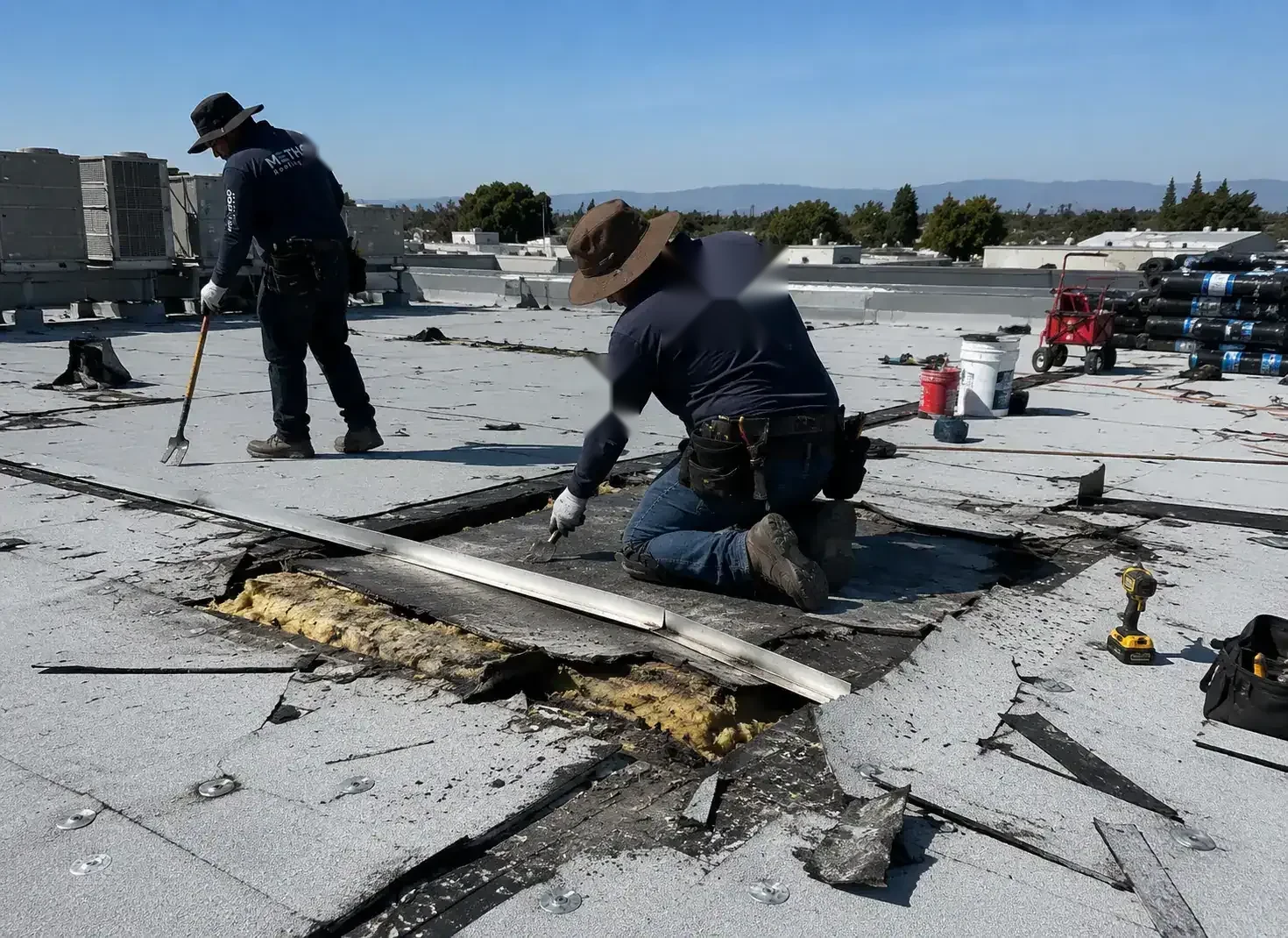
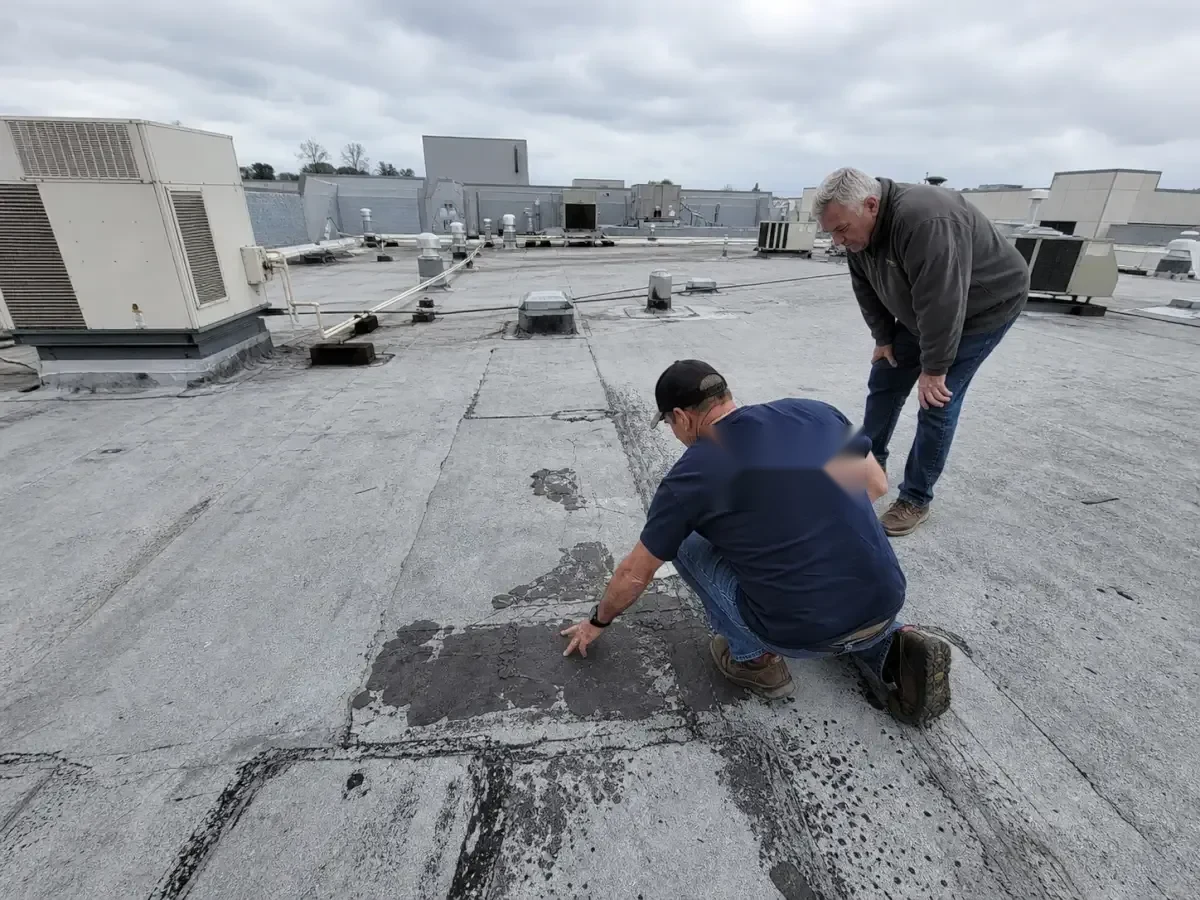
We map open laps, blisters, exposed reinforcement, cracks, patch edges, and transitions at walls, curbs, drains, and penetrations. On a modified-bitumen roof, laps and surfacing condition may need separate notes. At a liquid-applied flashing, the tie-in edge and substrate condition matter. Each observation is photographed and linked to a plan reference, with the tested or accessible segment clearly named.
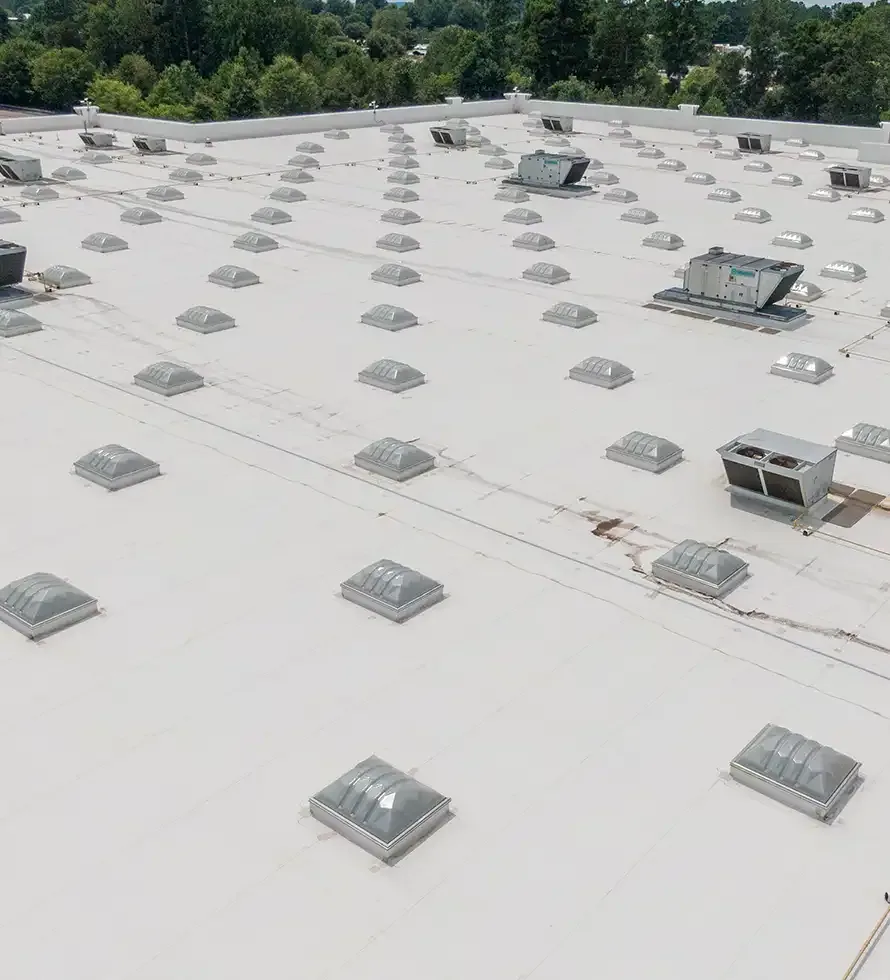
Water inside can travel below the roof surface, so a ceiling stain is a lead rather than a roof location. We compare its reported room with slope, drainage, and nearby details. If a seam is open, a seam repair review can define the affected length. A penetration flashing inspection can address a separate curb or skylight transition.
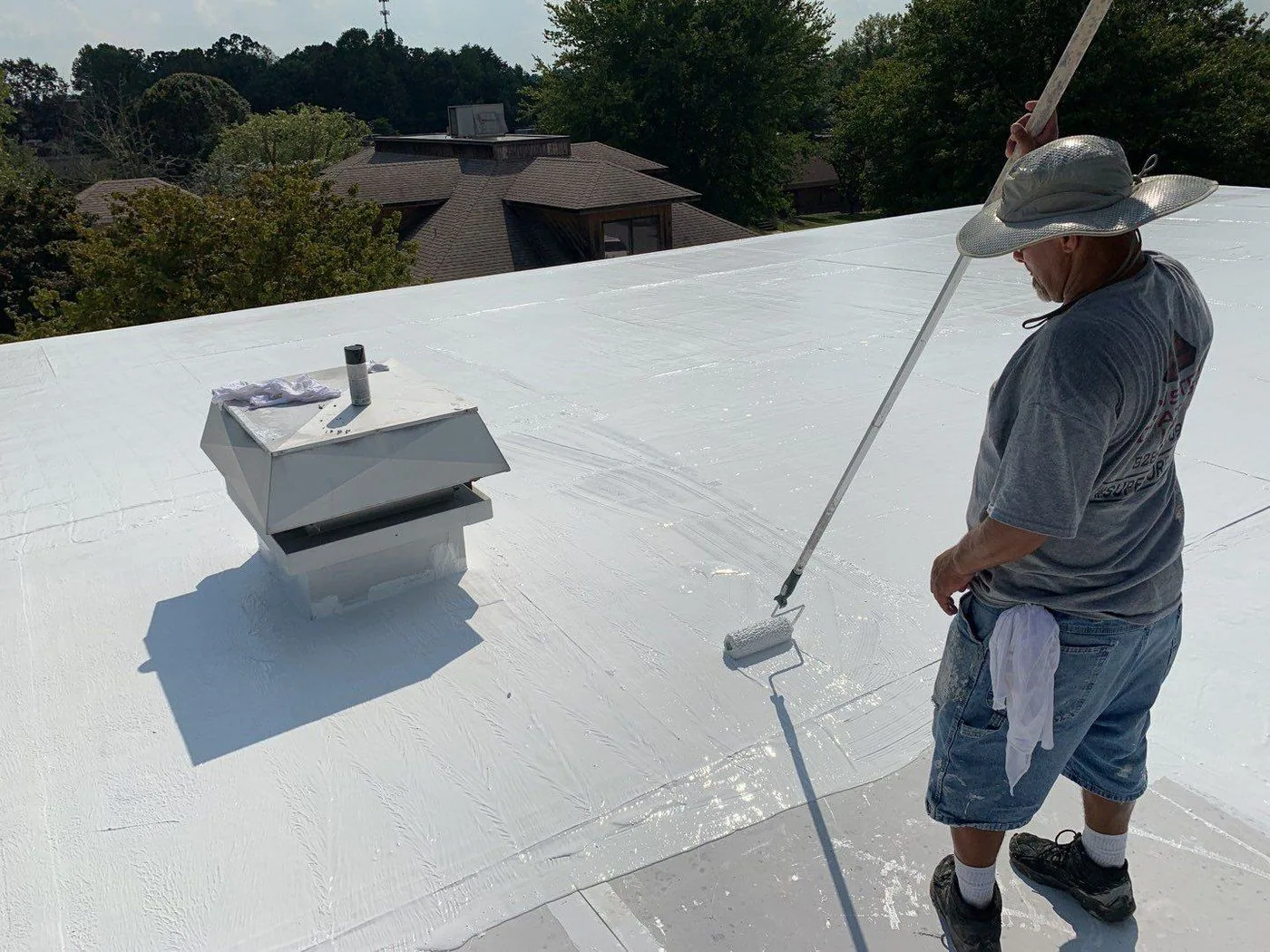
At a resin detail, inspect the width and continuity of the applied layer, the condition of any reinforcement, and the transition onto the adjacent membrane or metal. A repair scope should identify how the substrate will be cleaned and dried, which edge is being tied in, and what cure condition is required before the area is returned to service. The work record should distinguish a spot correction from renewal of a larger flashing run.
Prepare the Surface for a Compatible Repair
Repair begins with identification and surface preparation. We check moisture, contamination, adhesion, existing coating, and the material adjacent to the planned tie-in. Loose or degraded material may need removal within the approved boundary. The crew follows product-specific instructions for primers, reinforcement, application, curing, and any test required for the chosen detail.
An Alsan resin detail and a modified-bitumen lap do not use the same preparation steps. If a repair crosses a transition, each system interface should be identified before work. When concealed damage appears, we protect the area and obtain the owner's direction before extending the opening. A repair scope defines the work boundary, while a coating evaluation addresses broader surface renewal separately.
For bituminous work, the approved detail controls the sequence and any heating process. We confirm the adjacent layers and protect nearby penetrations and equipment before the crew begins. If a moisture condition or soft substrate appears during preparation, pause at the approved boundary, photograph the finding, and ask the owner how to proceed. A changed condition should receive an updated scope rather than be absorbed without review.
Keep Water Movement in the Condition Record
Drainage observations can explain why moisture persists, but they should not be merged with a membrane repair. We document drain condition, low areas, debris, ponding, and interior reports separately. The property team can then decide whether cleaning, testing, a slope review, or a membrane correction addresses each item. A repair estimate should show which one it includes.
Butte County's Chico climate description notes a shift from hot, dry summers to cooler, wetter winters. We use the inspection date and current surface state to plan the work window rather than carry a seasonal assumption forward. A maintenance visit can record accessible drainage and debris conditions, while a moisture survey may help map a defined suspected wet area.
Retain the Product Documents With Closeout
Keep SOPREMA submittals, certificates, approved details, maintenance records, and repair photographs with the roof plan. The actual warranty document controls its covered area and obligations. We can index supplied records and tie field work to them, but an invoice or product label does not establish coverage. The owner should review its certificate and direct formal questions to the issuer.
Closeout notes name the product when confirmed, preparation, repair location, date, photographs, and verification performed. A warranty file review can track document-based dates and gaps. If another site uses a different product, a Sika Sarnafil record and a GAF system record stays attached to its own roof area rather than blended into the SOPREMA file.
Compare Local Correction With a Larger Scope
A localized correction may fit when the affected detail is bounded and adjacent material can accept a compatible tie-in. Widespread wear, repeated water entry, or deterioration below the visible surface may justify a broader restoration or replacement study. We state the evidence for each option and identify whether a test opening or additional document is needed before pricing can be firmed.
For a property near Mangrove Avenue or East 20th Street, schedule and loading limits come from the site contact. The owner receives the same roof-area reference in the estimate and closeout, plus any open access question. A replacement evaluation can compare a defined area if field findings show the existing assembly cannot support the planned local correction.
When a future inspection is scheduled, carry forward the roof-plan label, product identification, prior tie-in photographs, and any unresolved layer question. The next reviewer can then compare the same detail under similar or different surface conditions, note whether the repair edge remains attached, and recommend only the follow-up supported by those observations.
Commercial Roofing Questions
What SOPREMA materials may appear in a commercial roof scope?
The records may identify modified-bitumen membranes or an Alsan liquid-applied flashing resin, among other components. The specific product and location should be confirmed from the approved submittal and field details before repair.
Can an Alsan flashing detail be repaired with a membrane patch?
The repair method depends on the resin detail, adjacent material, substrate, and product instructions. We identify the transition and prepare the approved area for a compatible correction rather than assuming one patch works for every assembly.
How should a Chico property prepare for a SOPREMA roof inspection?
Provide the roof plan, product submittals, warranty file, repair history, access contact, and interior locations where water was reported. We record what could be reached and list any detail that remains uncertain.
Does a SOPREMA product label confirm warranty coverage?
No. The owner should review the certificate, covered assembly, and terms. We can organize maintenance and repair records by roof area for the owner's file, but the issuer handles coverage interpretations.
When is a full roof review better than a local repair?
Repeated failures, broad deterioration, concealed moisture, or no sound tie-in boundary can prompt a larger study. The report explains which observations support further testing, restoration, or replacement evaluation.
Confirm the SOPREMA Detail Before Work
Send the SOPREMA product file, roof plan, warranty documents, and repair history. We will identify accessible layers and transitions and prepare a bounded inspection or repair scope.