Shopping Center Roofing in Chico, CA
A shopping-center roof protects multiple suites whose tenants may notice symptoms at different times. In Chico, CA, we begin with the roof area, reported interior condition, access rules, and any recent rooftop work. A stained ceiling near a retail bay does not by itself locate the entry point, and a center-wide leak log can hide whether several calls share one drain or belong to separate roof sections. The record connects observations to marked zones and separates findings from unverified reports. The City identifies commercial districts near North Valley Plaza, East 20th Street, and Skyway. Those names provide context; roof conditions and site activity set the sequence.

Map suites to roof zones
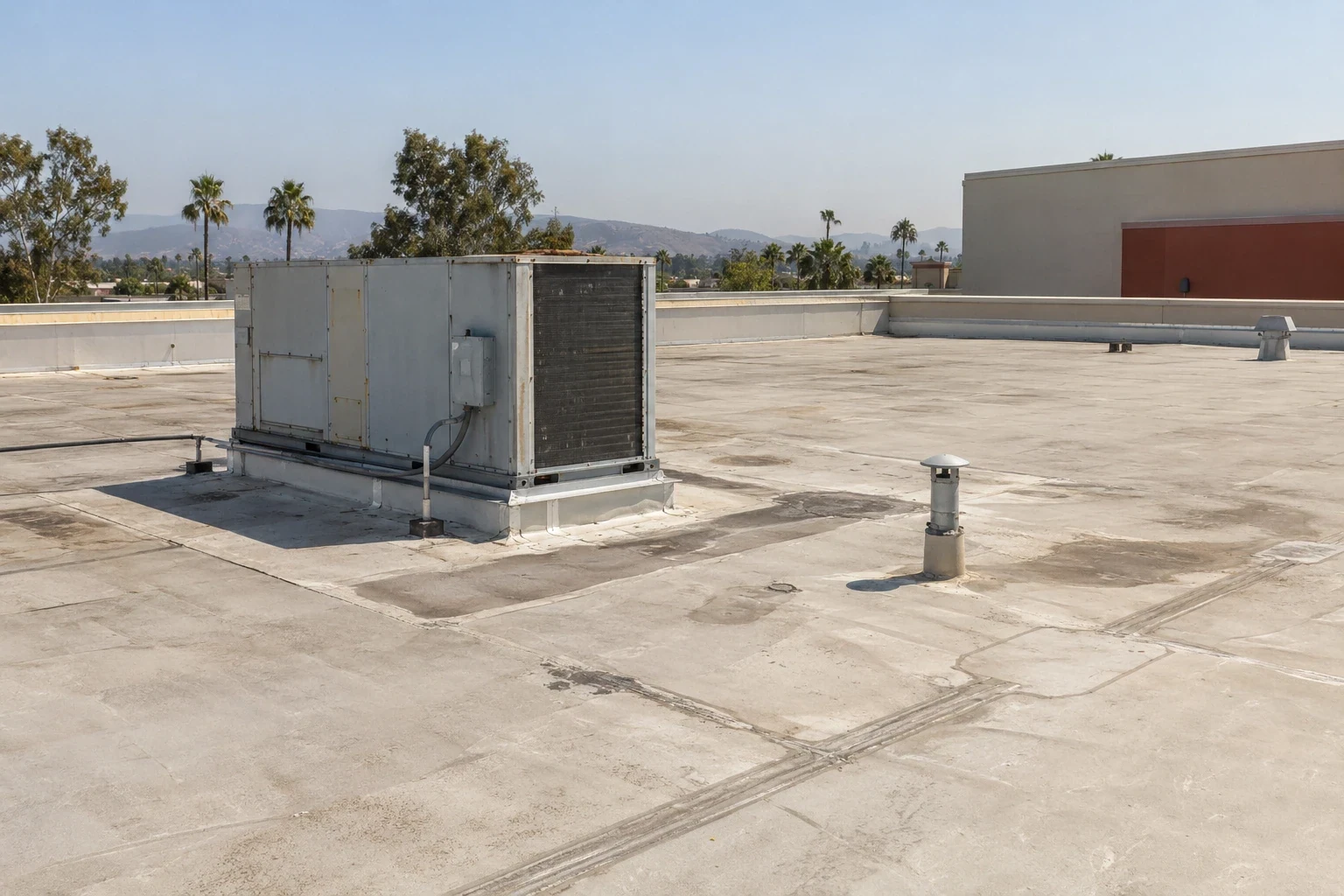
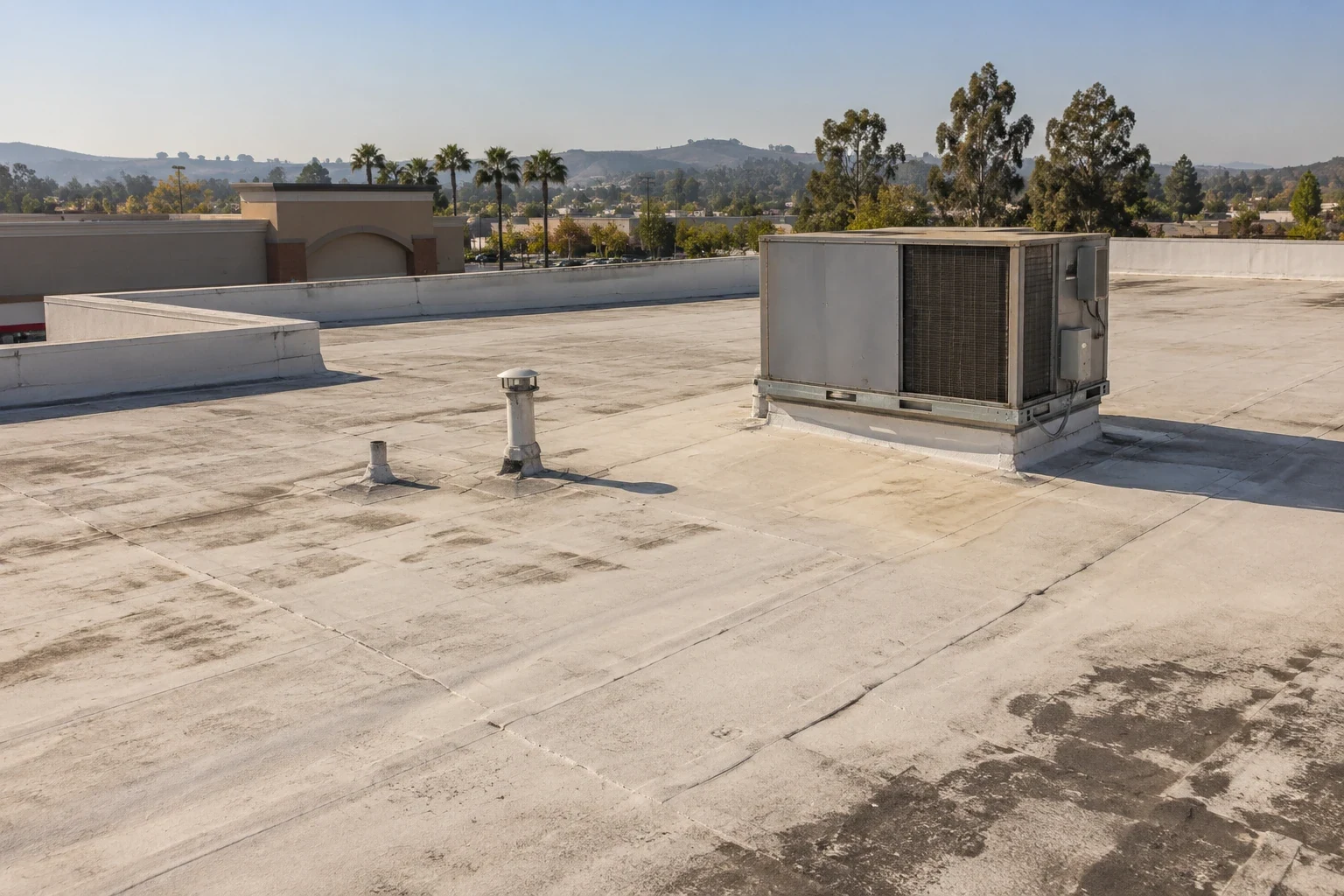
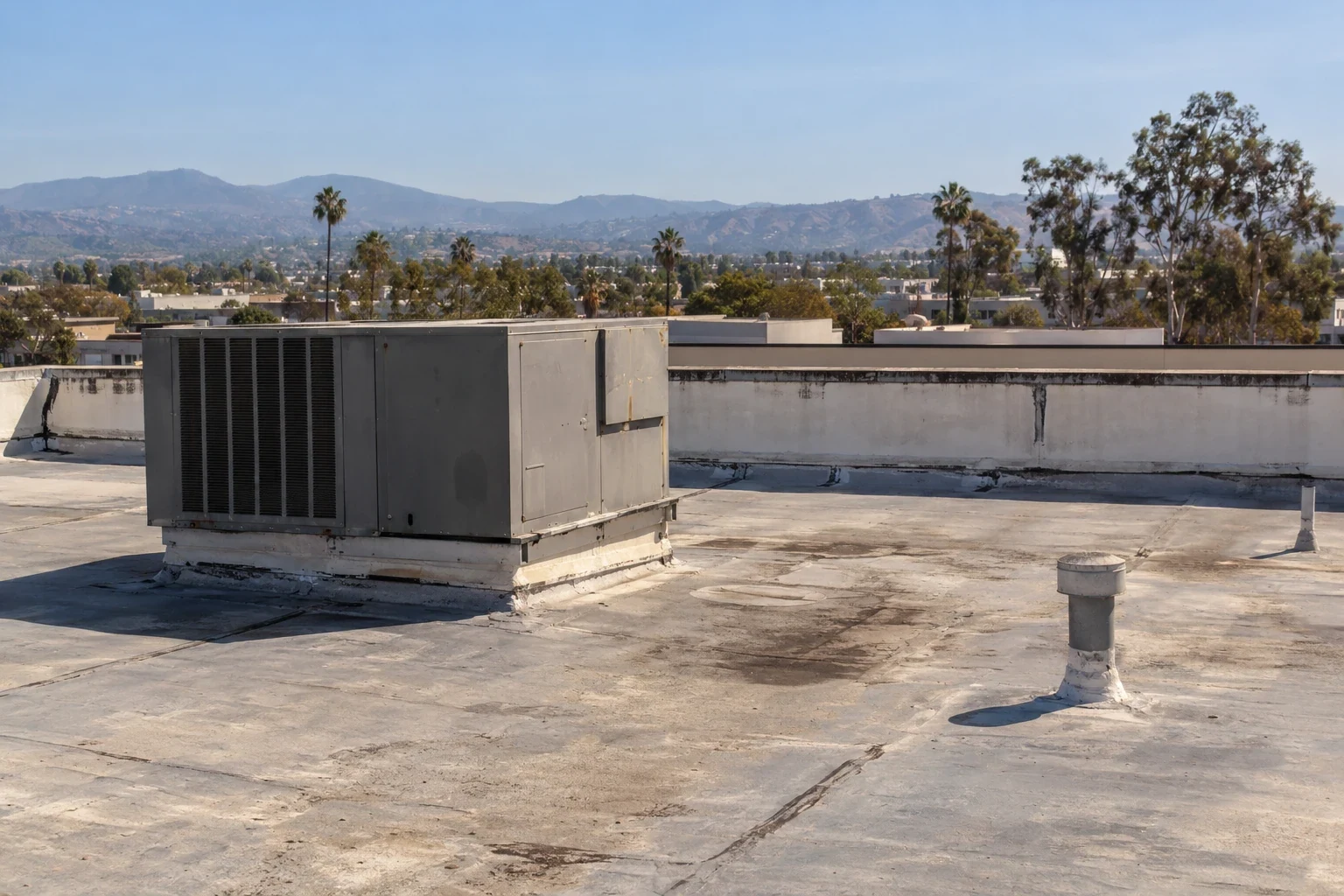
Before recommending work, we identify which suites sit beneath each roof section, where drains and equipment interrupt the membrane, and whether prior repairs changed the assembly. A roof plan connects a tenant report to a location without assuming a stain marks the opening. We photograph seams, penetrations, edges, transitions, and ponding, noting inaccessible areas. When a center has additions from different years, the record keeps each system and repair boundary separate rather than assuming one roof condition applies to the entire property.
Tenant contacts can help establish when water appeared, whether it followed rain or HVAC work, and which goods or customer areas need protection. We keep those observations separate from the roof findings until a path is verified. An organized big-box retail roof inventory uses similar zone logic, while grocery roof planning adds refrigeration and receiving constraints. For a center, the asset record should also note access gates, loading areas, and any roof zones shared by neighboring suites.
Trace drainage and low areas
Large roof areas can route water across long distances before it reaches a drain or scupper. We check visible slope, debris accumulation, drain condition, overflow paths, and whether any curb or rooftop addition redirects flow. Record water marks and ponding with dates and roof-zone references. A blocked drain may explain an immediate maintenance need, while persistent water at a low point can indicate a slope, deflection, or drainage design issue that needs broader evaluation. The repair plan should identify the condition; shallow water alone does not prove membrane failure.
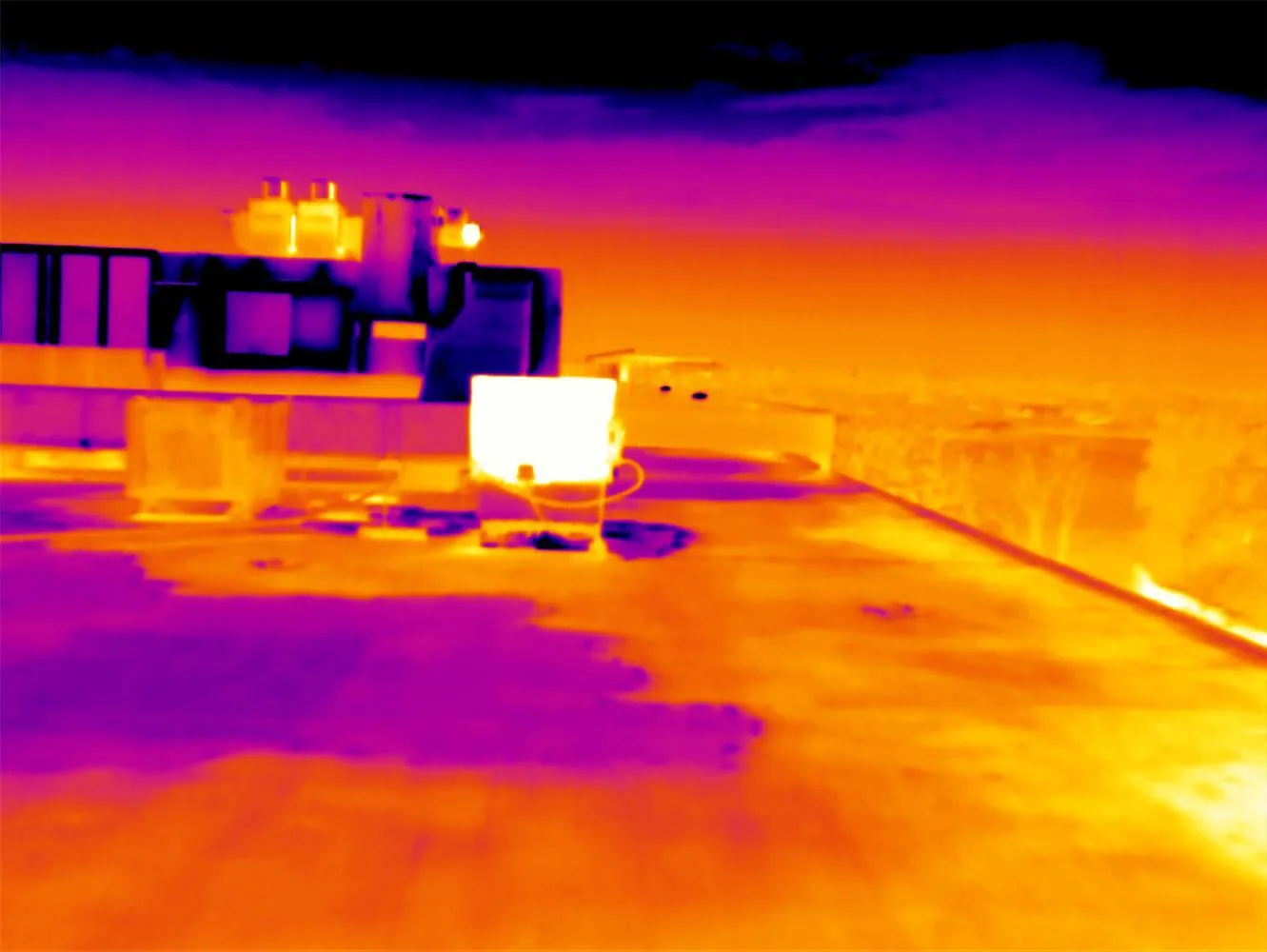
At the perimeter, we review terminations, coping, and transitions where wind-driven rain can reach a vulnerable edge. Clear photographs of drains and edge details make later comparisons more useful than a general statement that the roof is wet. If a survey is used, it should answer a defined question and be verified in the field. An infrared moisture survey may identify patterns for follow-up, while the roof plan and physical checks determine what is actually affected.
Coordinate tenant and delivery activity
Roof access is only part of the sequence. A shopping center may have deliveries, customer traffic, service lanes, outdoor dining, and tenant hours that limit staging or overhead work. Before crews arrive, the manager can identify loading windows, emergency routes, sensitive storefronts, and areas where materials must not be placed. We confirm where a lift or dumpster can operate, who controls access to the roof, and how tenant notices will be handled. These details affect production and keep work from blocking daily operations.
Each phase should state what opens, how the crew protects the interior below, and what must be complete before the roof is left unattended. If a tenant reports water during work, the project contact needs a clear way to route the report to the correct roof area. A phased occupied-building sequence can set daily protection and closure points. Management retains control of tenant notices and emergency access.
Plan for Chico rain and heat
NOAA normals for the Chico station record 0.03 inches of rain in July and 0.10 in August, compared with 5.12 in January and 5.14 in February. Butte County describes the seasonal pattern as Mediterranean, with summer heat and winter rain. These patterns inform seasonal planning but do not replace a forecast. For a center, the work plan should set a safe daily opening size, available temporary protection, and a clear closeout check before crews leave. The manager can use the schedule to coordinate tenant notices before weather-sensitive phases.
Heat can affect worker timing and material handling on an exposed roof, while winter rain limits how much area can remain open. We confirm staging, rest periods, deliveries, and interior protection before setting the sequence. Where an active leak is reported, the leak repair scope should follow inspected seams, drains, and transitions. City climate averages do not show whether a particular section is wet or ready for coating.
Match the repair to the assembly
A localized seam or flashing failure can support a targeted repair when adjacent membrane, insulation, and substrate remain sound. If several areas show recurring openings or moisture, a broader condition review may change the choice. A recover can limit tear-off only when existing layers, attachment, drainage, structural capacity, and edge heights permit it. Replacement may fit where the assembly is saturated, poorly attached, or unserviceable. We state the evidence and what further inspection could change the scope.
When comparing options, center ownership should account for tenant disruption, expected access periods, roof lifecycle, and the cost of repeated mobilizations. The TPO roof system is one possible assembly, but selection depends on substrate, slope, attachments, code requirements, and project specifications. A planned commercial mix near North Valley Plaza or East 20th Street does not establish roof design. The property’s drawings and field conditions do.
Use maintenance to preserve evidence
Routine roof checks should document drains, seams, penetrations, edge details, debris, and any repair material that may affect a future tie-in. A center manager can keep the log organized by building and zone, then compare photographs across visits. After HVAC or tenant work, note changed curbs, conduit, or penetrations. If a leak returns, the maintenance history can help distinguish a new opening from an earlier repair that needs attention. Maintenance records support decisions but do not establish warranty coverage.
Reports are most useful when they separate immediate housekeeping from roofing repairs and recommend a follow-up only where the evidence supports one. A preventive roof maintenance visit can establish a repeat interval for visible details and drainage. The frequency should reflect the roof system, site activity, prior findings, and owner requirements rather than a fixed promise that every center needs the same schedule.
Compare scope and boundaries
A useful proposal lists measured areas, preparation, tear-off or recover assumptions, membrane and insulation, flashing, edge metal, drainage work, access, disposal, and temporary protection. It also states exclusions, working hours, tenant coordination responsibilities, and how concealed conditions will be handled. For a multi-tenant property, the owner should know which suites sit below each phase and which access or notice tasks remain with management. Comparison is difficult when drain work is included in one bid and left as an allowance in another.
Price and timing depend on roof size, existing layers, deck condition, materials, access, equipment coordination, and the work window. We label confirmed findings and unresolved questions. City planning identifies regional retail districts near North Valley Plaza, East 20th Street, and Skyway, with parking and infill considerations; those are planning contexts, not proof of a particular roof assembly. The project starts with this center’s drawings, tenant schedule, and inspection notes. Share those details to plan a site review.
Commercial Roofing Questions
How is a leak traced across a large retail roof?
We compare the tenant report and timing with drains, seams, penetrations, and wall transitions. The marked zone guides a closer field check; the ceiling stain alone does not establish the entry point.
Can roof work continue during store hours?
It may be phased when access, noise, safety, and temporary protection allow. The owner and tenants should agree on delivery routes, notices, and daily closure boundaries.
What should a center roof inspection record?
Record the roof zone, assembly where known, drains, seams, equipment, edge conditions, photos, access limits, and any excluded areas. Keep tenant reports distinct until verified.
When does a recover make sense?
Only when existing layers, moisture, structure, drainage, attachment, and perimeter conditions support another layer. Inspection or testing may be needed before choosing.
What belongs in a retail roof proposal?
Measured areas, materials, preparation, drainage and flashing details, staging, tenant coordination, exclusions, schedule, and a process for concealed conditions should be stated clearly.
Plan a Chico shopping center roof review
Share the property use, reported symptom, roof records, access limits, and operating calendar. We will confirm the inspection boundary and document findings for the area reviewed.