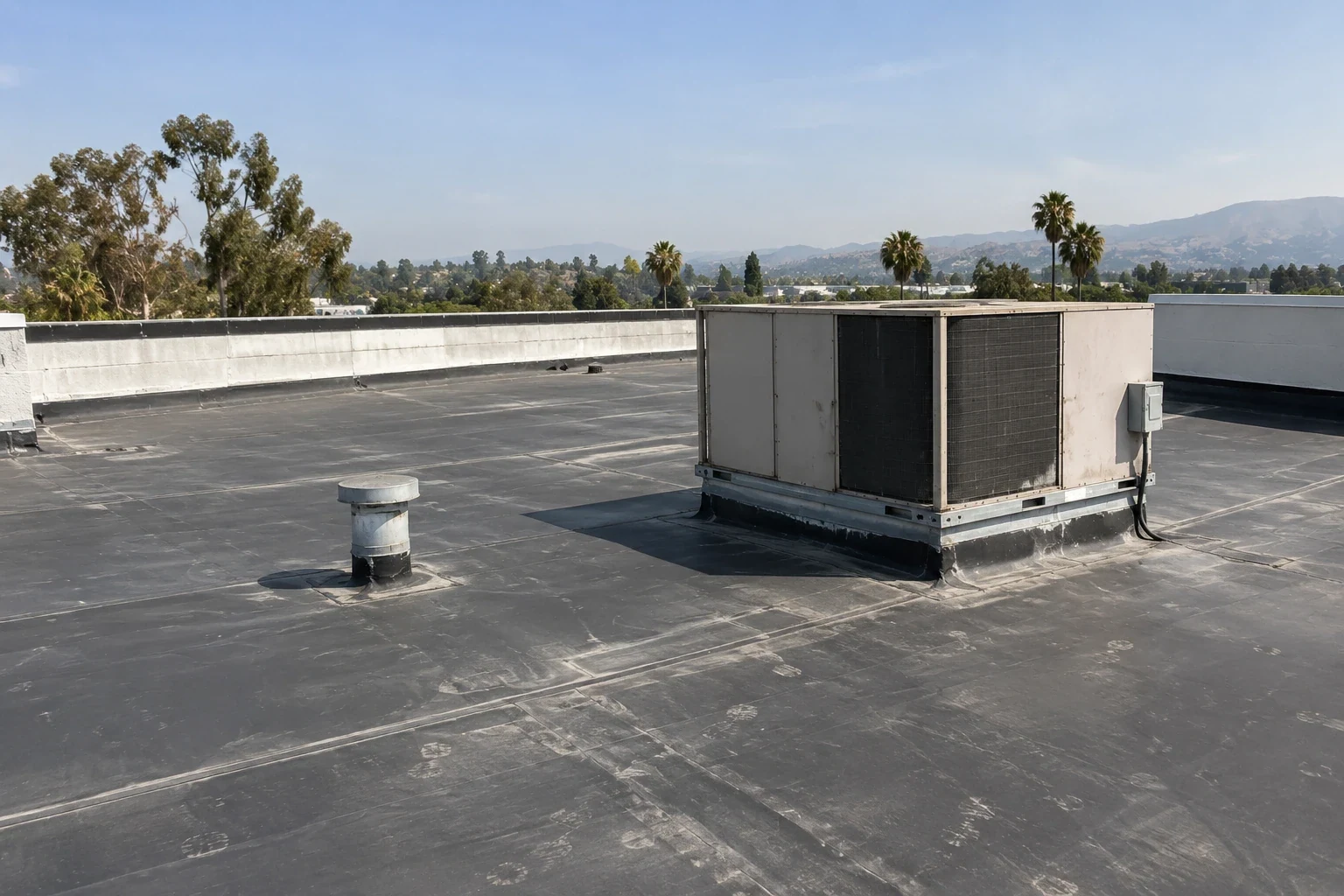
Commercial Roof Flashing Failure Repair in Chico, CA
Water at a wall, curb, or pipe does not tell us which flashing layer opened. We inspect the transition, trace the reported water path, and compare the detail with nearby seams and roof movement. The repair plan identifies the part that failed, the material that must be removed, and how the new flashing will tie into the existing assembly. That boundary keeps a small transition repair from quietly expanding into an undefined roof replacement.

Chico's hot summers and wet winter period put different demands on sealants, laps, and discharge details through the year. Downtown Chico's commercial and office settings differ from the mixed employment areas around Hegan Lane, yet the inspection still begins with the actual roof section. The citywide setting is context, not a diagnosis. A North Esplanade roof review follows the building's detail, slope, and access conditions.
Locate the Failed Transition
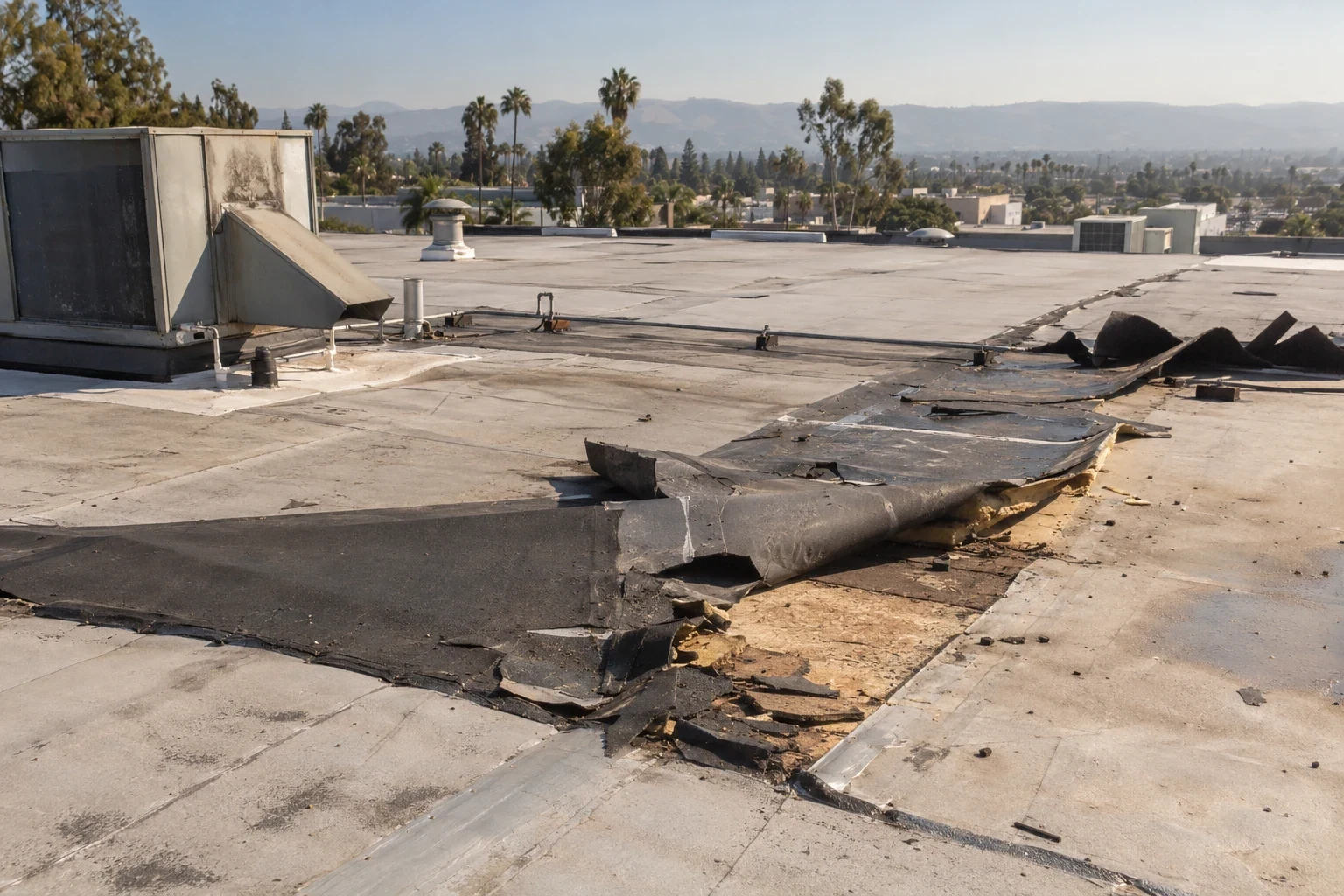
We identify where the flashing turns, terminates, laps, or meets another material. Common inspection points include curb corners, pipe boots, roof-to-wall joints, skylight perimeters, coping transitions, and drain connections. The report marks each point on a roof plan and photographs the condition from enough angles to show the adjacent membrane. Where a raised edge is also loose, wind-related edge movement can be documented as a separate finding. A separated counterflashing and an open base flashing are not the same repair, even if both appear near the same interior stain.
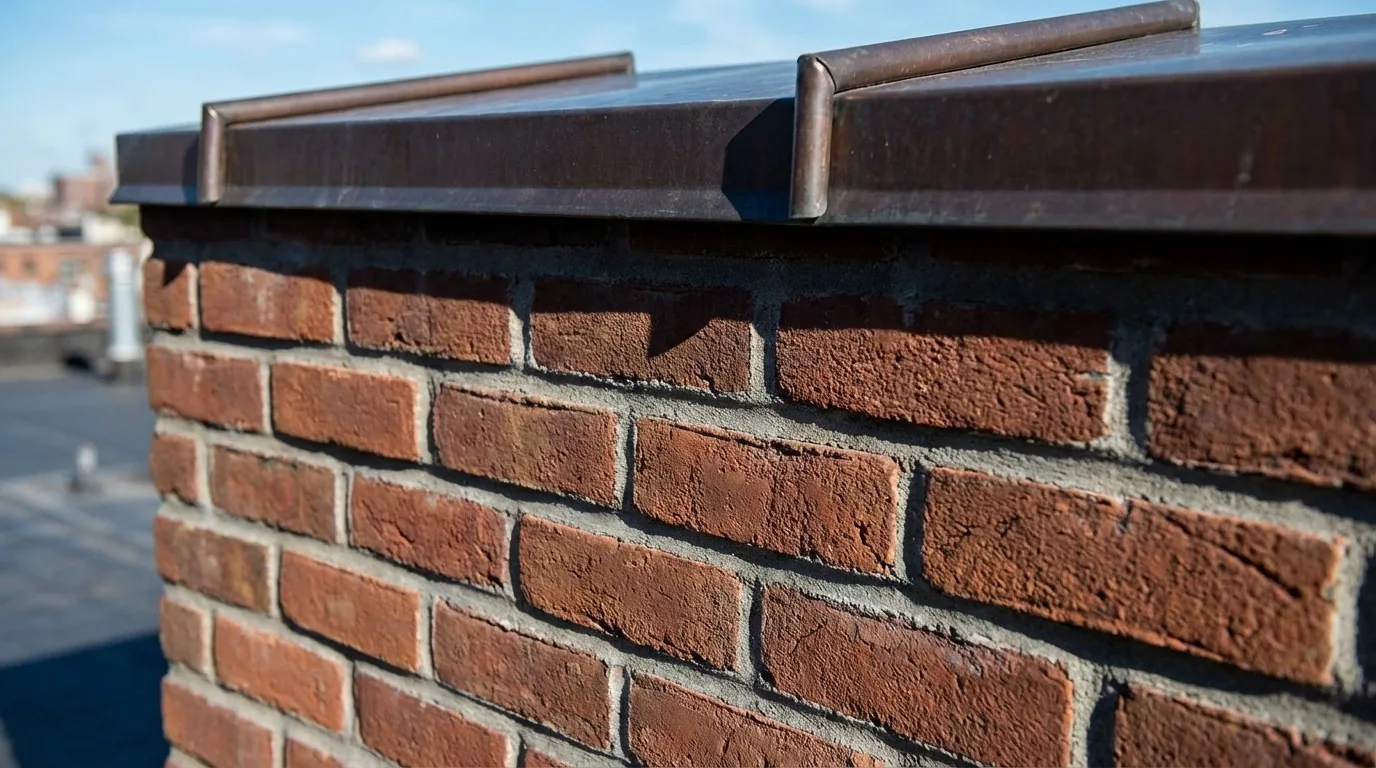
Access and prior work can obscure the original detail. A patch may cover an old termination, while a new equipment curb may have a different height or support. We compare visible layers with available drawings and service records, then state what remains concealed. The penetration flashing review can focus on a specific curb, pipe, or skylight. If the transition sits at a parapet, the coping inspection checks the cap and the membrane edge as one connected detail.
Connect the Detail to the Interior Report
Water can track beneath a membrane or along a deck before it appears on a ceiling. We compare the room location and timing with roof slope, seams, drains, curbs, and wall turns. If the report comes from more than one room, we map each separately until the roof path connects them. This helps the owner protect the right interior area while we distinguish an active flashing opening from a nearby condition that may be unrelated.
Chico's normal rainfall is concentrated in the cooler months, so a transition that appears dry during a summer walk may need a second observation after rain. We record the weather and surface condition during the inspection. A leak investigation can document an active path; a controlled opening may be needed to confirm moisture below the roof surface. We identify the question the test would answer and the approval required before cutting into an occupied roof.
Match the Repair to the Roof Assembly
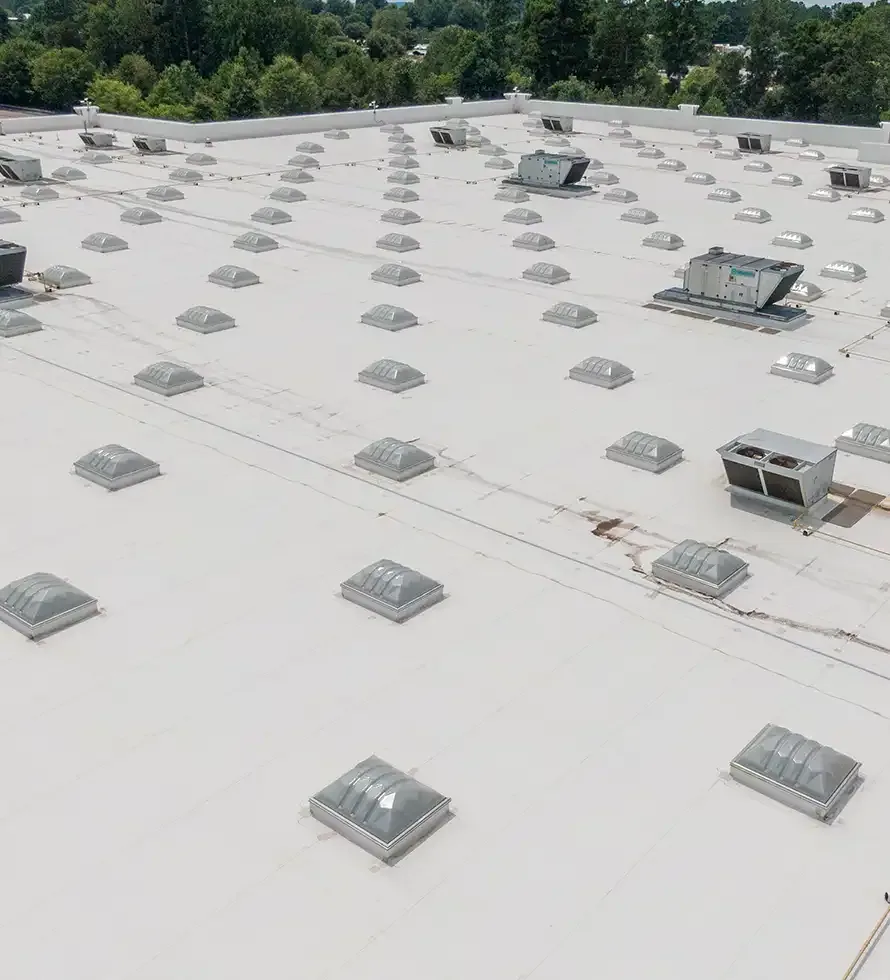
Flashing materials and attachment vary by roof system. We confirm whether the existing roof is thermoplastic, EPDM, modified bitumen, metal, or another assembly before choosing preparation and tie-in steps. A thermoplastic corner may need a compatible welded detail; an asphaltic membrane may require a reinforced flashing layer; a metal panel transition needs movement allowance and properly shaped trim. We do not cover a weak edge with a surface sealant and call the assembly restored.
Heat and cooling cycles can move a roof field relative to a wall, pipe, or equipment curb. Sealant should not be asked to bridge a gap the flashing geometry must manage. We inspect whether the material has split, pulled away, blistered, or lost adhesion, then identify sound edges for the repair. A system-specific EPDM review can help confirm a compatible repair path once the material is verified. We note any section where the substrate or attachment cannot be checked without additional access.
Protect the Building During Flashing Work
Before removing a detail, we confirm who can authorize access to the roof and the interior area below. A curb or wall flashing repair may require equipment coordination, temporary protection, and a dry-in boundary that can be closed during the shift. The site contact identifies deliveries, entrances, sensitive rooms, and routes that should remain available. The crew stages material so the transition stays protected while the old flashing is removed and the new tie-in is prepared.
Downtown Chico planning records identify a mixed-use civic core, while East 8th and East 9th Streets include a different urban context. Those district descriptions do not establish hours or access for a particular property. We confirm the actual operating schedule and work restrictions with the building contact. A work-window sequence can state the daily start, closure, and inspection point. At closeout, the report shows what is watertight, what still needs a separate trade, and where temporary measures remain.
Compare a Detail Repair With Broader Renewal
A localized flashing repair may be appropriate when the failed transition is bounded and adjoining membrane, metal, and substrate are serviceable. If the same failure appears at multiple curbs or walls, we compare the details and look for a shared assembly issue. Replacement may be considered when moisture or attachment failure extends across the roof zone. The proposal maps each alternative and identifies the inspection finding that would justify a wider boundary.
Cost and timing depend on the number of corners, access height, material type, equipment shutdown, edge metal, removal, wet insulation, interior protection, and cure or weld conditions. A repair estimate should state what surface preparation and tie-in are included. If the deck or insulation is concealed, we list the approval process for added work rather than assuming a condition. A repair assessment can price the measured detail; a broader renewal option can be evaluated against that roof plan if the inspection supports it.
Record the New Flashing Boundary
Closeout photographs should show the substrate or old detail where exposed, the prepared transition, completed flashing, and the tie-in to adjacent membrane. The report notes products used, areas corrected, and anything that was not accessible. If a mechanical trade must reset a unit or support, the handoff identifies which party restores the waterproofing and when it must be inspected. That record helps the next service visit distinguish the repair from nearby original construction.
For a Chico property with recurring water reports, keep the roof-zone map with the room location, date, repair detail, and follow-up observation. North Valley Plaza and the North Esplanade are useful geographic references, but they do not define an individual roof's material or failure. Send the building plan, prior repair photos, access contact, and the detail where water appeared. We will inspect the transition and adjoining assembly, then return a written repair boundary. A seam condition review can document a separate issue where the roof map shows a field seam opening.
Commercial Roofing Questions
How do you identify which flashing is leaking?
We compare the interior report with the roof slope, transition geometry, nearby seams, and drainage. The inspection marks the observed opening and any test needed to confirm concealed moisture before setting the repair limit.
Can sealant alone repair a failed roof flashing?
Sealant may be part of a suitable detail, but it cannot replace sound flashing geometry, attachment, and membrane tie-in. We identify the existing system and select a method that joins to serviceable material.
What happens when flashing surrounds rooftop equipment?
We identify who controls the equipment, whether shutdown or movement is required, and who restores the waterproofing after the work. The scope records the curb, support, and flashing handoff before the repair begins.
Can an old flashing patch be removed during inspection?
We document the patch first and obtain approval before disturbing it. If removal is needed to see the original transition or substrate, the proposal states the opening, temporary protection, and closeout method.
What should a Chico roof owner send before a flashing visit?
Provide the roof plan, reported interior location, prior repair photos, equipment schedule, and access contact. Those details help us inspect the right transition and plan a work window that protects the occupied area below.
Inspect the Transition Before It Opens Further
Share the roof plan, interior report, photographs, and access rules. We will examine the flashing and adjacent assembly, document any concealed condition, and price the repair boundary supported by the inspection.