Commercial Roofing in The Wedge District, Chico, CA
A light-industrial roof can combine service areas, equipment penetrations, and exposed field seams, so we begin by identifying the assembly and the condition that needs attention. In Chico's Wedge District, the City describes a southwest opportunity area near East 20th Street, Fair Street, and Park Avenue. Planning records characterize it as predominantly light industrial with commercial services and retail uses. The plan anticipates commercial mixed use in the north and industrial-office mixed use in the south, with existing infrastructure noted in the review. These are district-level land-use facts; they do not establish which buildings are present or what roofs they carry. We inspect the actual property before drawing a repair line.
Inspect the boundary, not just the spot
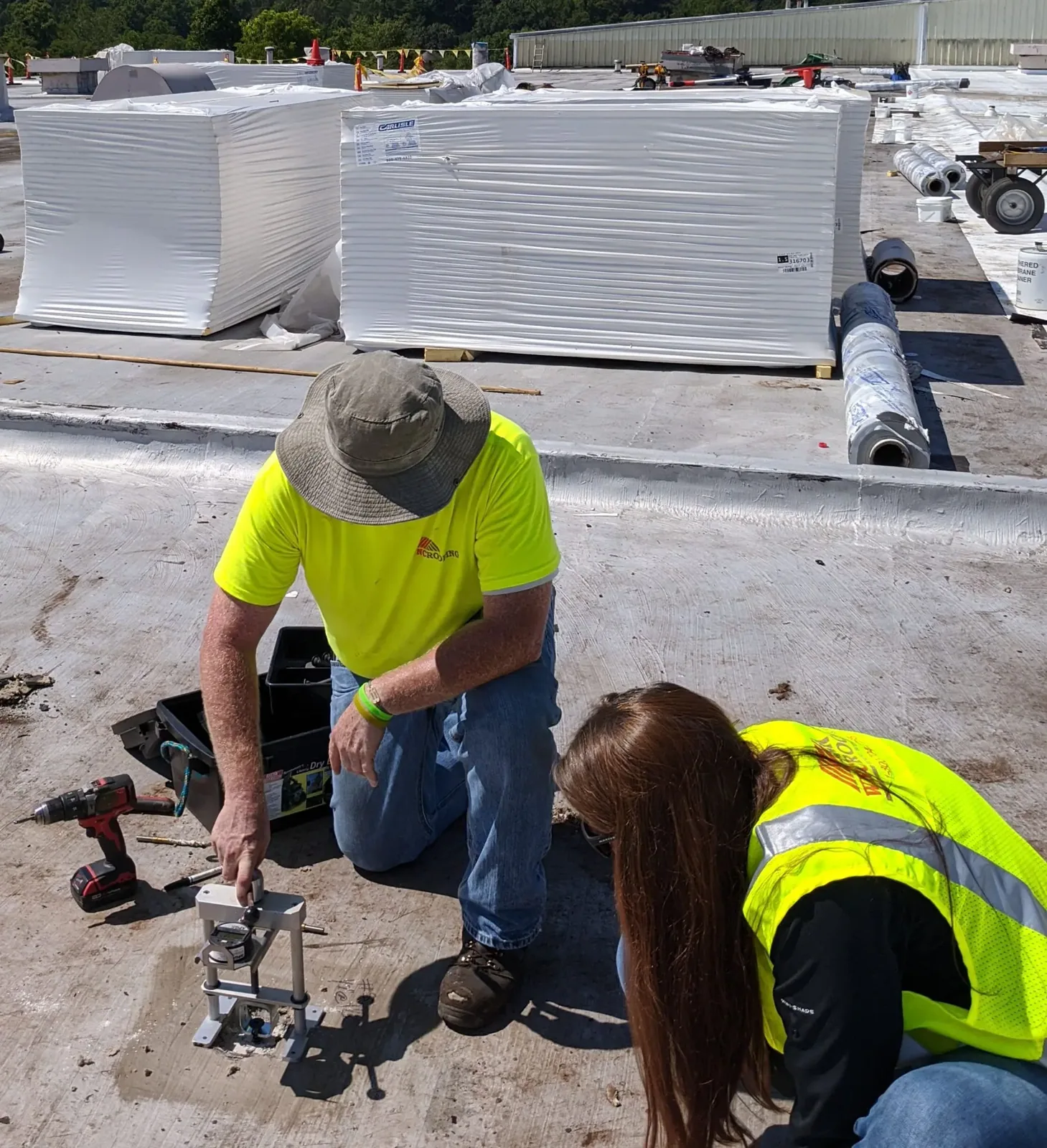
We trace the symptom across membrane laps, penetrations, wall transitions, and drains. A leak under a pipe or curb can begin at a nearby seam, and water may travel through the assembly before becoming visible indoors. We record the field condition, old patches, and any moisture evidence that could widen the repair. A test opening is considered only when its result would change the owner's options and a same-day dry-in can be planned. We compare the proposed opening with earlier repair records, because an old patch may hide a seam or transition that should be included in the current review.
The Wedge's mix of commercial services and industrial uses differs from the East 20th Street District, but each roof remains separate. A photo-based report records where the inspection stopped and why. When repair history is incomplete, that document gives a new manager a starting point without assuming that a nearby property's roof is comparable.
Keep runoff from crossing the repair
We follow the roof slope toward drains and scuppers, checking strainers, overflow openings, and any depression that can retain water. Where runoff crosses a patched seam or flashing, the detail may need attention even if the outlet is open. We note whether cleaning changes the flow and where water still collects. That distinction helps the owner separate routine maintenance from membrane, insulation, or slope correction.
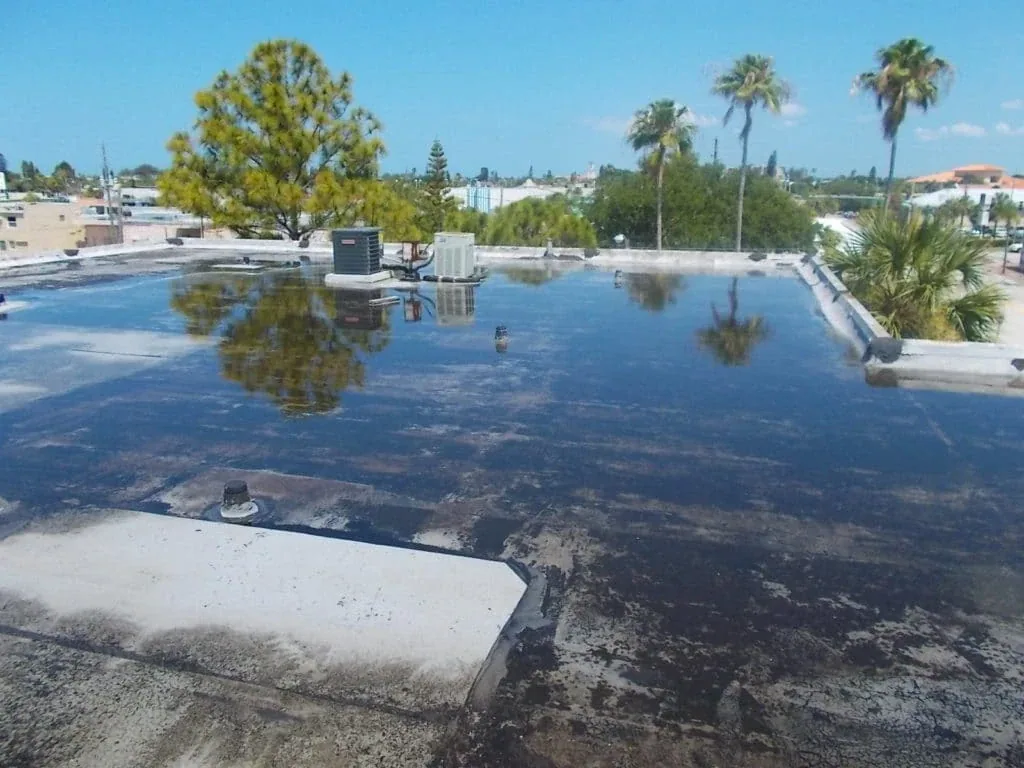
Chico's normal precipitation is concentrated in winter, with July and August much drier. An inspection in dry weather can document drain condition and surface marks before rain returns. The seasonal pattern is context, not a defect diagnosis. Our drain and scupper service checks the primary and overflow routes. If water remains in a low area, a ponding-water assessment can map the area and check for related seam or insulation evidence.
Match work to the roof in place
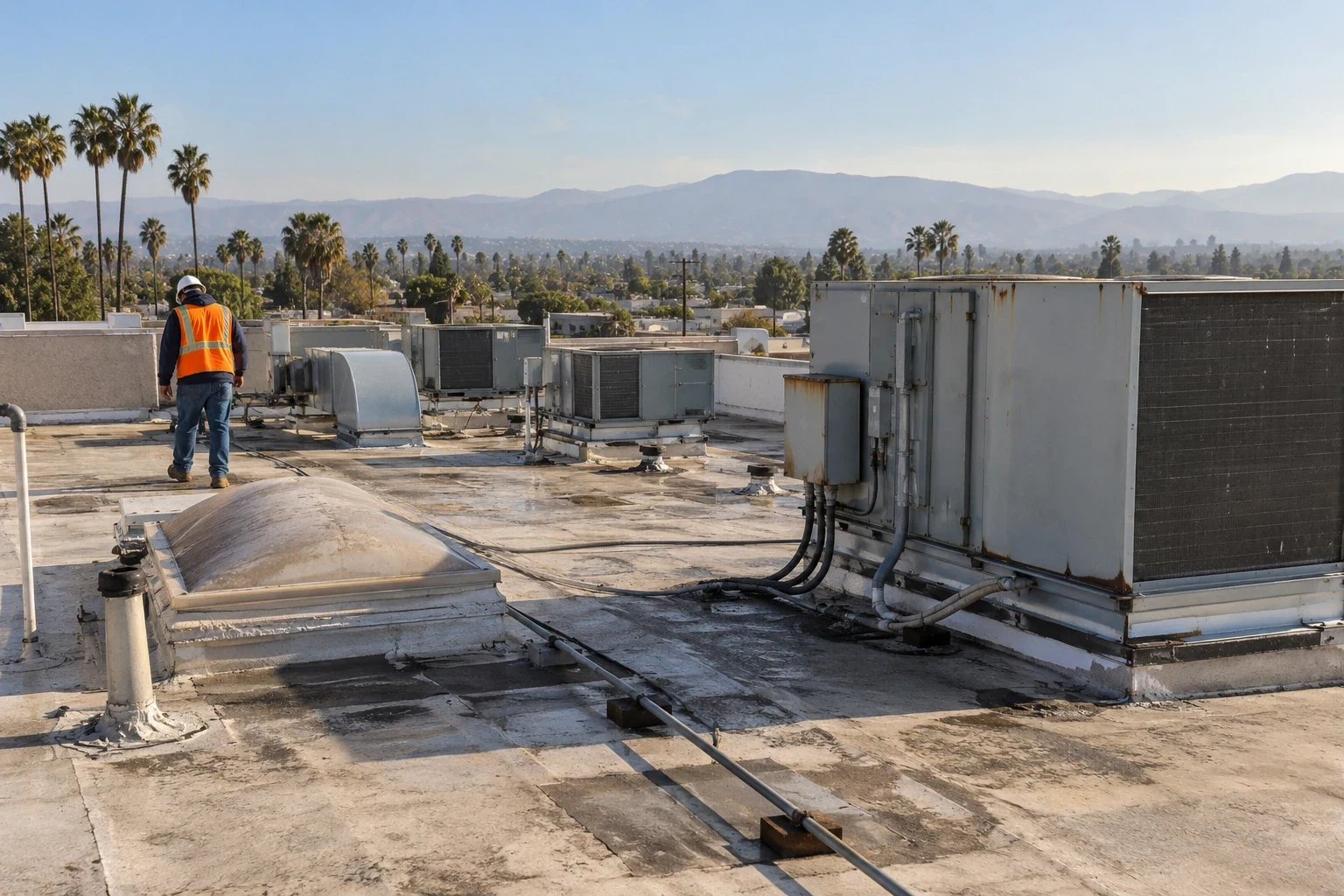
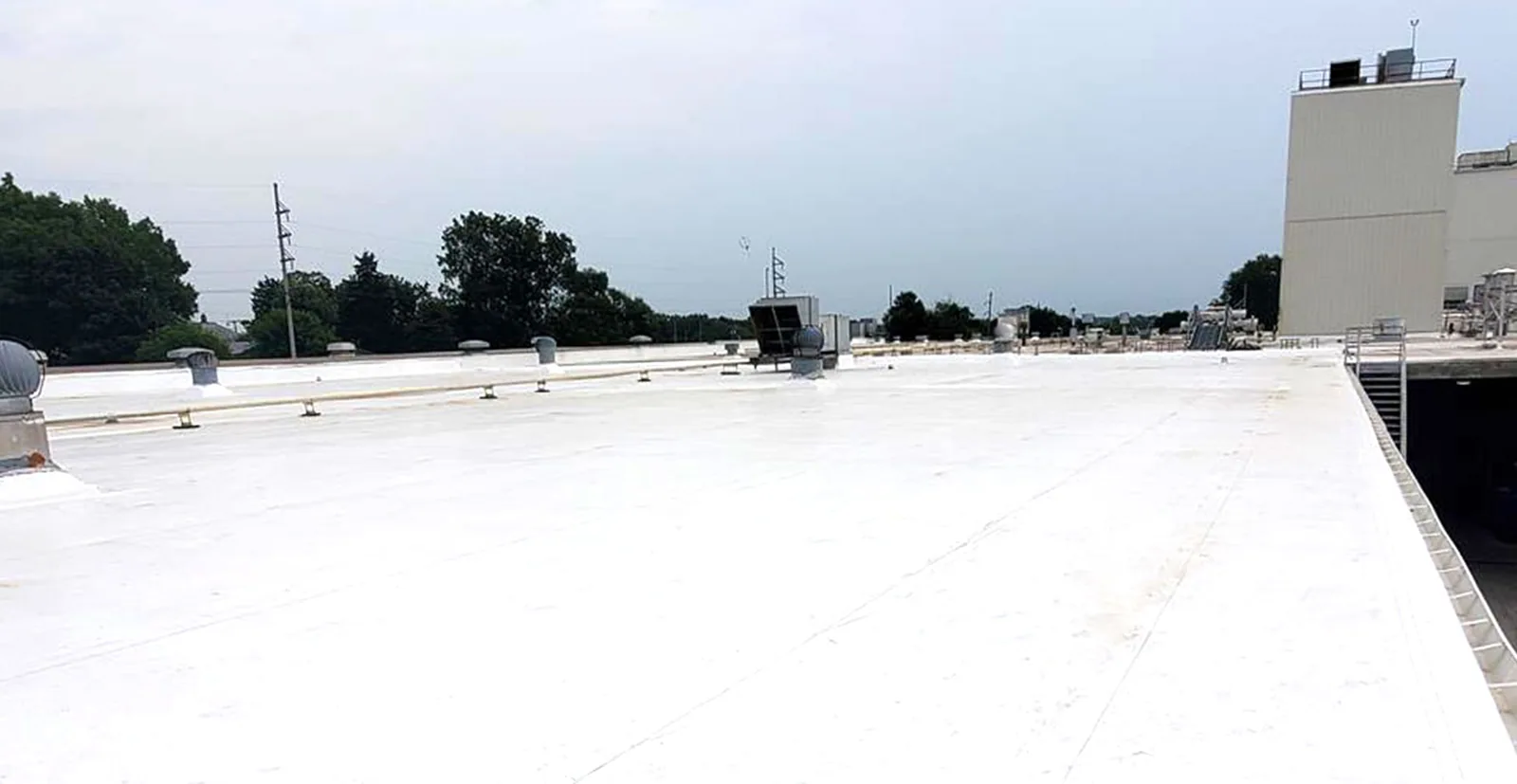
The planning designation does not specify TPO, metal, or any other roof type. We inspect the membrane or panels, confirm how they attach, and check whether the substrate is dry enough for a compatible repair. At an industrial-use property, equipment bases and exhausts may interrupt the field; we document the actual curb and support details before assigning work to another trade. A field patch cannot solve a failed termination if the wall or edge is the source.
System choice follows the existing assembly and the owner's performance needs. A modified-bitumen roof has different repair methods from a single-ply membrane, and standing-seam metal needs attention to fasteners and panel movement. If the assembly is suitable, a localized commercial repair may close one detail. For broad damage or repeated moisture, replacement planning should show how removal, insulation, and tie-ins will be handled.
Coordinate crews and equipment
Commercial services and industrial-office activity can impose different access rules within one district. We confirm the roof entry, delivery path, equipment shutdowns, tenant hours, and areas that need interior protection with the property contact. The plan also identifies who can approve a field change if the opened assembly differs from the visible surface. Before mobilization, we confirm the production area for the day and where a temporary cover can be secured if work stops unexpectedly. A daily dry-in boundary keeps an unfinished section protected before other trades or employees return to the area below.
Chico's hot, dry summer and wetter winter season affect the available installation window, while actual surface temperature and moisture govern material use. A phased occupied-building sequence can organize the work by safe, closeable areas. Where roof units need service, a curb and equipment review coordinates flashing and mechanical access before membrane removal. That sequence reduces the chance that a finished transition must be reopened for a late trade.
Keep repair and replacement distinct
A repair is reasonable when the failed seam, puncture, or flashing can be bounded by sound material. Replacement enters the comparison when moisture spans multiple roof zones, terminations repeatedly fail, or prior patches no longer provide stable tie-ins. A recover can work only after checking moisture, attachment, existing layers, drainage heights, and code. We explain the evidence behind each option and identify whether a test cut is still needed to set quantities.
California's current building standards and energy provisions may apply to a commercial alteration, with locally adopted amendments and permit review for the parcel. We coordinate insulation and rooftop equipment work against those project requirements. The written scope separates removal, substrate correction, membrane, sheet metal, and temporary protection. Cost and timing follow the actual work area, access plan, and material availability. A district's anticipated future mix does not determine today's roof scope.
Keep the next work order clear
Closeout photos show the repaired boundary, replaced details, drains, and any adjacent zone that was not opened. We record materials observed or installed and note follow-up work with its reason and timing. The record can also name the roof area and access point used, giving a later crew a concrete starting place without implying that the entire property was opened during the repair. This matters when a property has several operating areas: a facilities manager can coordinate access and trade work by the condition actually found, rather than repeating an inspection without the earlier findings. The record also supports later comparison after winter rain.
For a Wedge District inspection, share the building use, active symptom, repair history, and roof-access limits. We will map the water path and give you a defined repair or replacement option. If the portfolio also includes the North Valley Plaza District, we keep each property's report separate. For a capital review, roof planning can use those records to stage work according to condition and operations.
Commercial Roofing Questions
Does The Wedge's industrial planning designation mean a roof has metal panels?
No. The designation describes land use and anticipated development, not roof construction. We identify the actual assembly, deck, seams, and penetrations at the property.
What if a roof leak appears near a piece of equipment?
We inspect the curb, adjoining seams, and water route before assigning cause. Mechanical access and any shutdown are coordinated with the equipment contractor.
Can roof repairs be completed while industrial operations continue?
Often a limited zone can be isolated, but the site contact must confirm access, noise limits, equipment needs, and interior protection. Each day's work ends at a documented dry-in boundary.
When would you recommend replacing rather than patching?
The recommendation follows the number and spread of failures, moisture evidence, and whether stable tie-ins remain. We show the owner that evidence and compare the cost drivers of each scope.
How do you handle an unknown roof layer?
We note what is visible and propose a test opening when identifying the layer would affect attachment or material choice. The opening is protected and recorded before the scope is changed.
Request a Wedge District inspection
Send the roof symptom, building use, repair history, and operating limits. We will inspect the roof and document a boundary that can be reviewed.