Commercial Roofing in Durham, CA
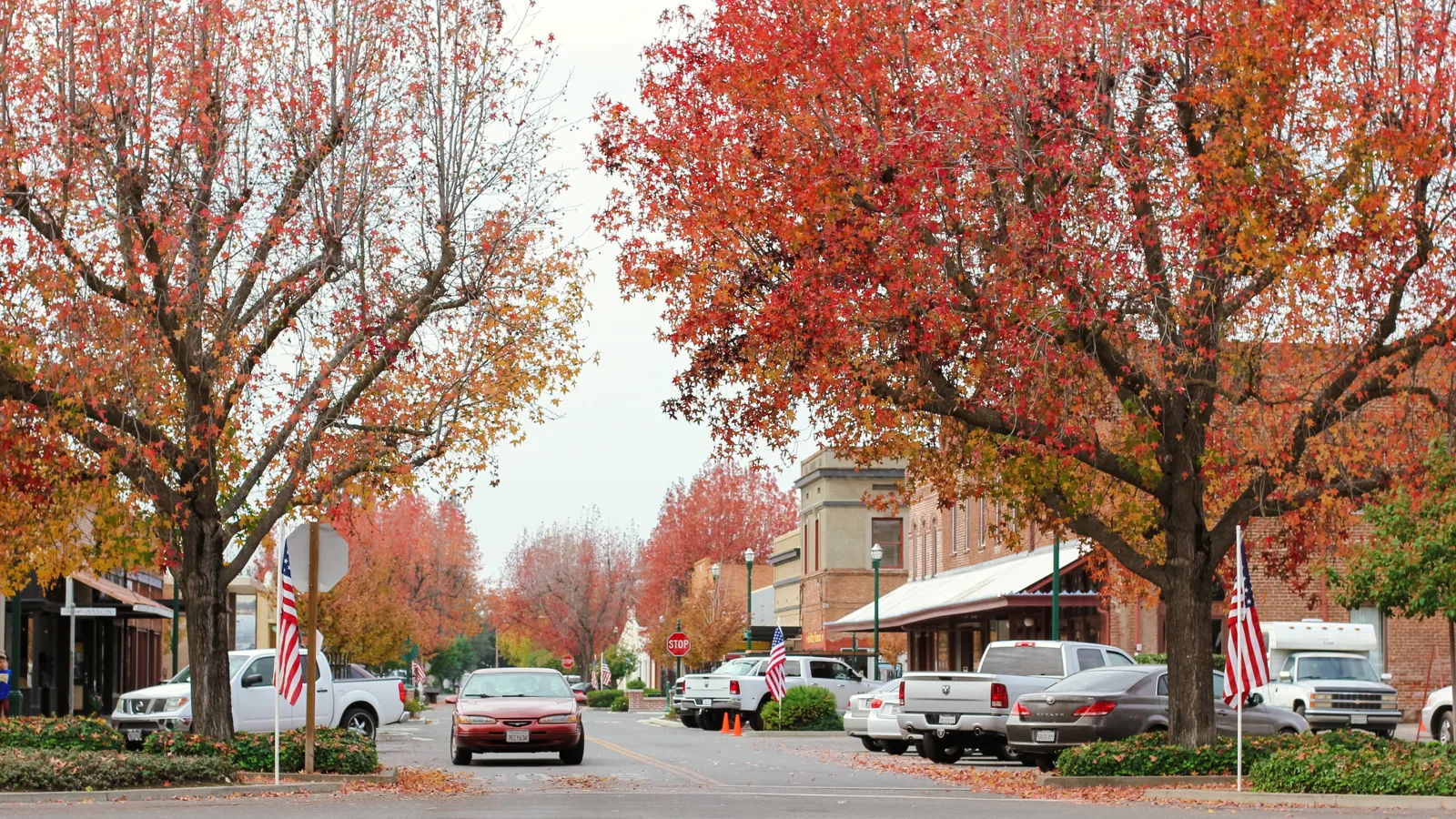
A roof serving a rural commercial use needs a work plan that respects both the building and the surrounding activity. Durham is a recognized Butte County community within the Durham-Dayton-Nelson Planning Area, which has its own land-use policies. County policy supports community-scale retail and allows industrial uses when compatible with nearby uses and rural character. Agriculture remains the predominant land use, and planned growth is tied to roads and public facilities. We inspect an existing roof from its assembly and symptoms, then set access, timing, and protection around the owner’s actual operations.
Begin with the use of the building
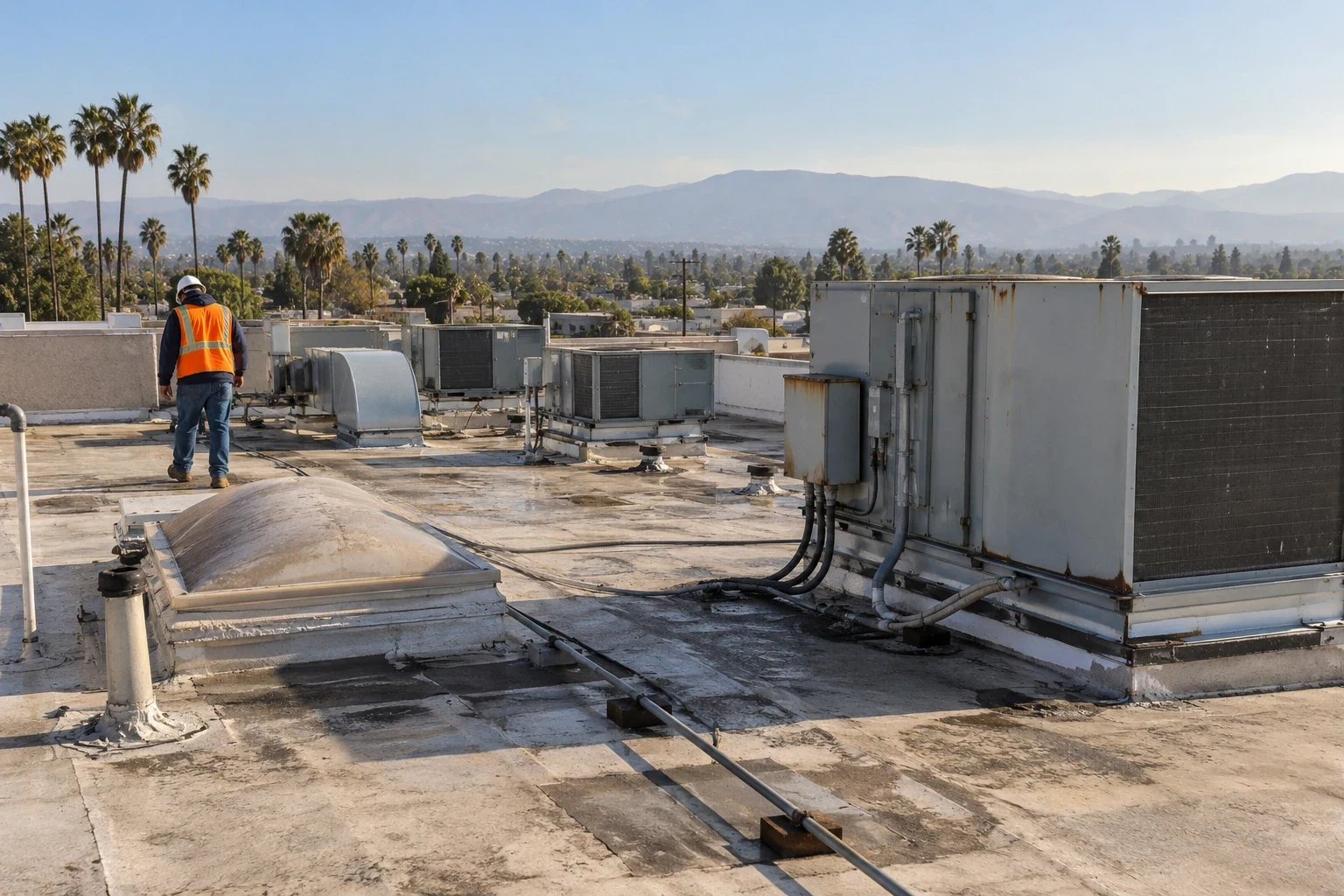
A commercial roof inspection starts with what is installed: surface, seams, penetrations, edges, drains, and interior signs of moisture. We ask what the building does during the day, whether deliveries or equipment work recently changed the roof, and when a leak appears. Those details shape the inspection route and the repair boundary. The planning area’s rural character does not establish the roof type, size, condition, or access for a particular business.
If the property supports retail or a compatible industrial use, the work schedule should preserve agreed operating areas and delivery windows. A commercial roof inspection records the roof sections visited, visible defects, and questions that still need testing. For a property manager working across Butte County, a Gridley roof review is recorded separately from a Durham building so conditions are not carried from one city to another.
Trace water before choosing the patch
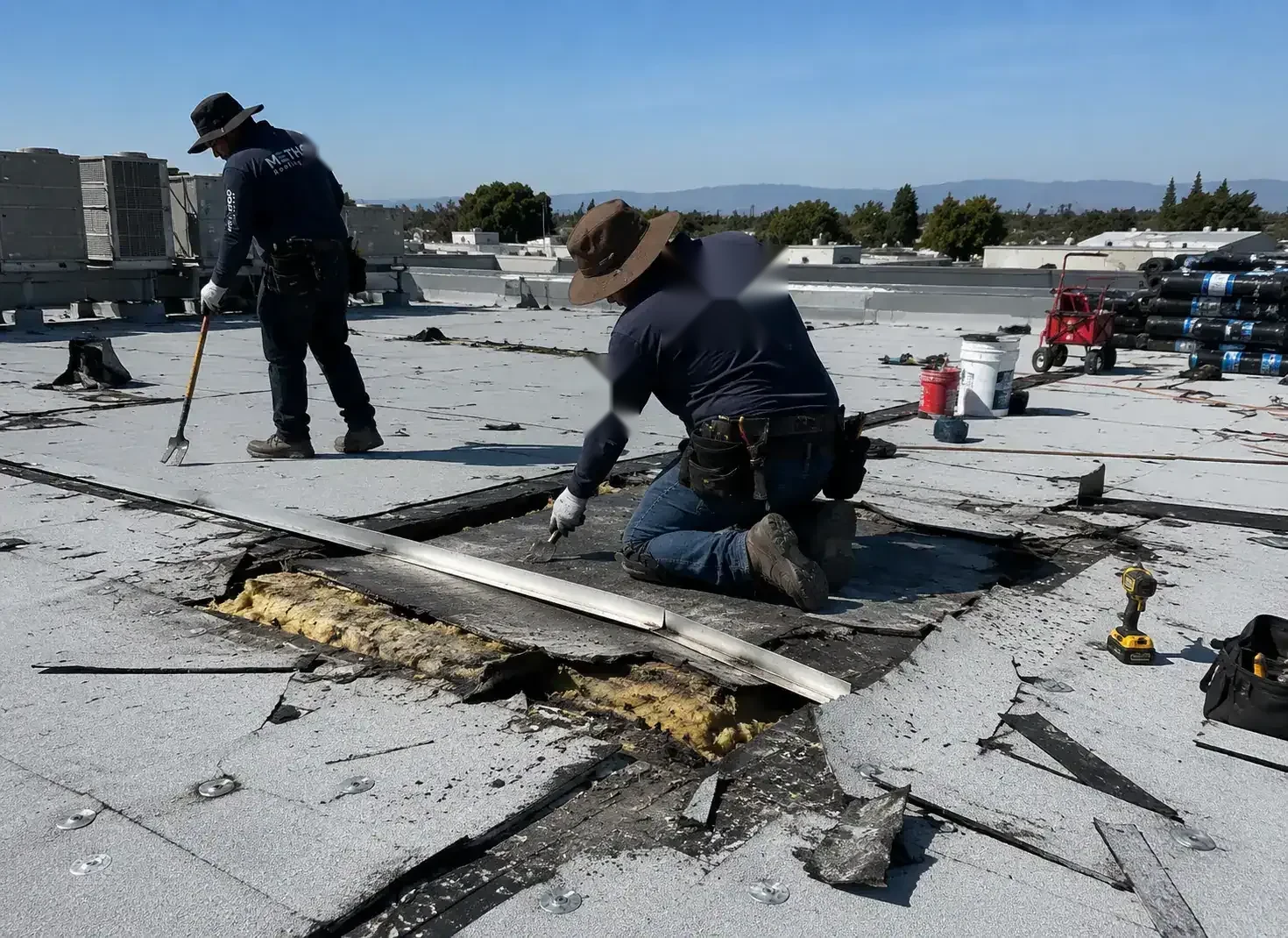
A stain indoors may sit away from the opening in the roof. We compare the reported location with membrane laps, wall transitions, curbs, skylights, drains, and the path water could take across the deck. Prior repairs and recent trade work are noted, because they can point to a weak connection or a change in slope. If moisture may extend below the membrane, we explain whether a test opening could change the recommendation before removal begins.
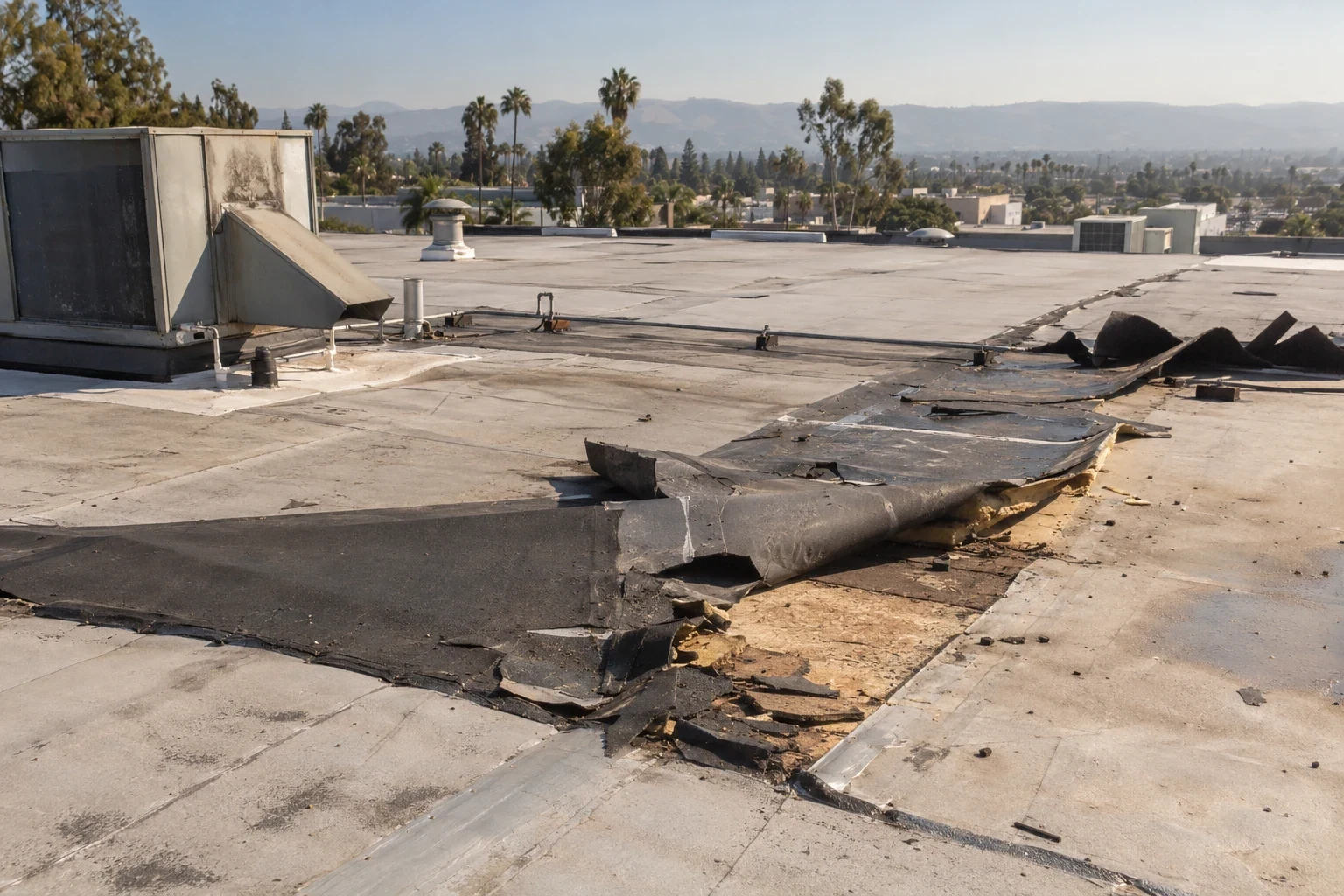
For a building that holds equipment or products, the interior protection plan should be in place before a roof opening is made. A written condition report shows photos, the repair boundary, and areas not opened. If wind has loosened edge metal or disturbed a seam, a wind-damage check documents what moved and whether the adjoining detail remains secure.
Keep the water route clear
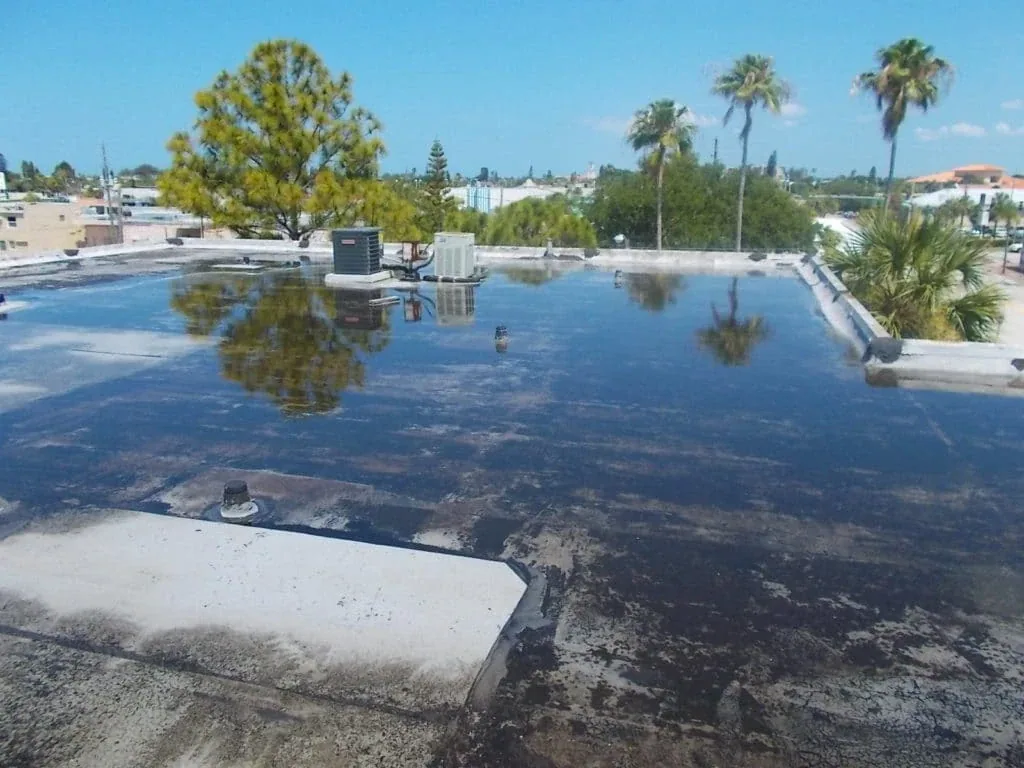
We inspect drains, scuppers, strainers, overflow paths, and the flashing around each outlet. A blocked opening may need cleaning, while water that remains after the path is clear may indicate a slope or insulation issue. We map the low area, compare it with seams, and record whether the next step is routine maintenance, a membrane repair, or additional testing. The owner sees that distinction before a proposal combines separate conditions.
Chico climate normals place the wettest stretch in midwinter and show exceptionally dry July and August averages. That regional timing can inform a Durham maintenance calendar, while roof access and field conditions still determine the work. A drain and scupper inspection records the primary outlet and any overflow path. If standing water remains after cleaning, a ponding-water assessment identifies its extent and nearby details that may need attention.
Coordinate access with rural activity
Agricultural activity and local commercial uses can place deliveries, vehicle movement, or people near the work area. The owner confirms an approved entrance, staging point, roof access, and any travel path that cannot be blocked. We plan lift placement and material storage with the site contact rather than assume the route from a map. The supervisor also identifies who can approve a change if removal exposes a different roof layer or a damaged deck.
For a repair above an occupied area, the daily plan names where work may be opened and the point where it must be protected before crews leave. If the building needs to remain in service, a phased reroofing sequence can separate active work from areas that remain in use. We agree on notices, noise windows, interior protection, and the handoff to mechanical or electrical trades before the roof is closed.
Compare compatible system options
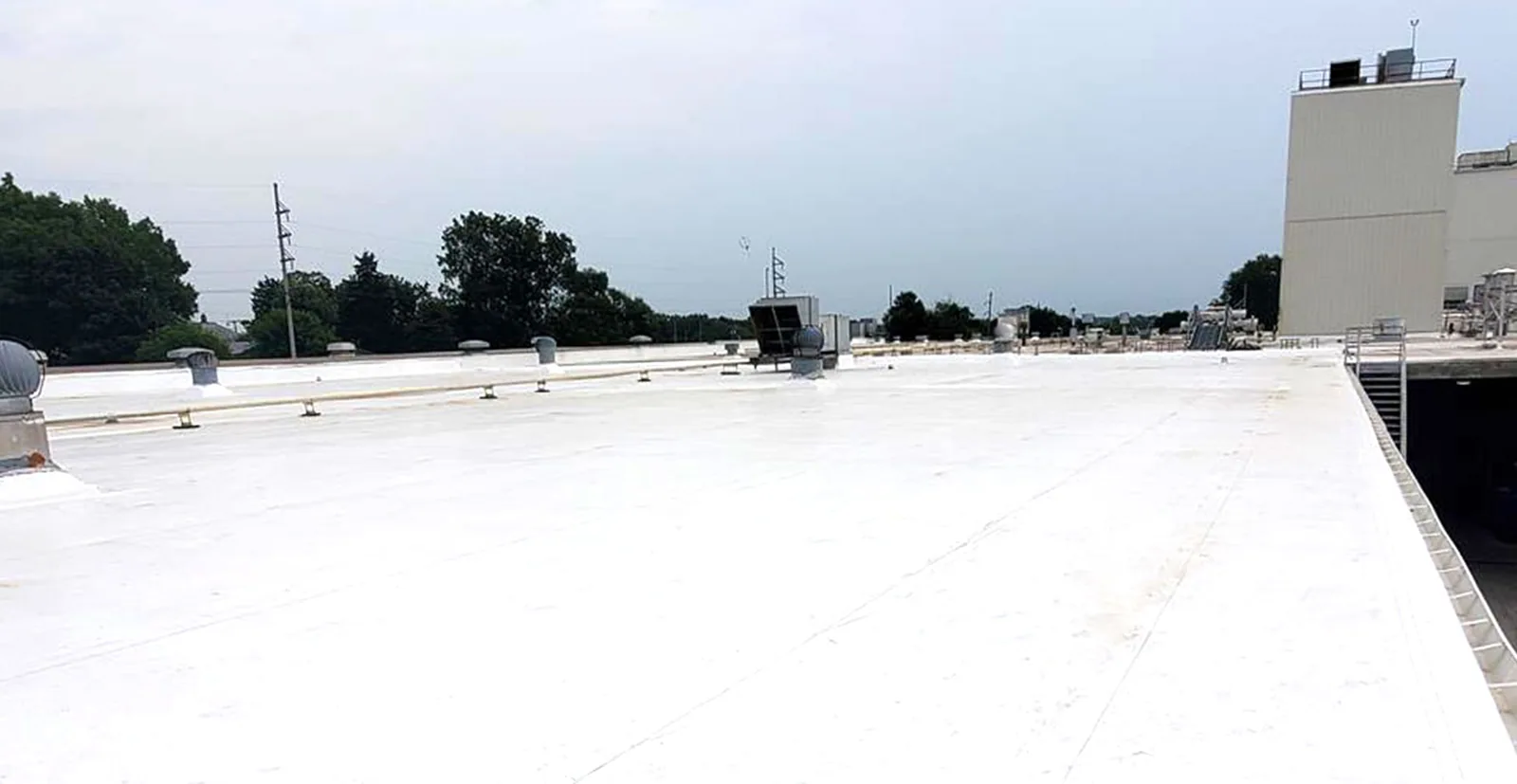
We identify the existing layers and attachment before choosing between repair, recover, and replacement. A repair fits when the failure can be joined to dry, stable material. A recover is only considered if the roof is secure, dry, compatible with another layer, and workable at drains and edges. Replacement may be worth pricing when moisture crosses several areas or repeated failures leave no sound tie-in. If concealed conditions could change quantities, a test opening is discussed before final scope.
For a planned new roof or replacement, the selected assembly needs to work with deck, insulation, drainage, curbs, and perimeter details. A modified-bitumen review considers the specified layers and transitions without assuming that the same material fits every building. The proposal states which work belongs to roofing and which interface requires confirmation by the responsible designer or trade.
Allow for hot afternoons and winter rain
Chico’s climate has hot, dry summers and a wetter winter period. That context matters for scheduling, but surface temperature, substrate moisture, and product instructions determine whether a repair can be installed on a given day. Before winter rain, an owner may want to document open seams, drains, and edge details. During summer, the crew checks safe access and material limits rather than assume a dry forecast alone creates a suitable work window.
For a leak that cannot wait, temporary protection can be scoped before the permanent repair boundary is known. The service record notes which area was covered, what remains to inspect, and when a follow-up should occur. For planned replacement, the crew defines the open-roof limit and end-of-shift dry-in point. If conditions change, the team protects the exposed section and records the next decision for the owner.
Price the measured roof work
A proposal lists measured area, preparation, materials, edge and penetration details, drain work, access, disposal, and temporary protection. It separates known work from concealed conditions that may require an approval after removal. Cost and timing depend on the assembly, roof area, deck, material lead time, delivery path, operating schedule, and weather. A land-use policy does not establish a roof quantity or a price for a specific building.
Beginning January 1, 2026, California’s 2025 Title 24 edition became the state reference; permit conditions and locally adopted amendments govern how it applies to a project. We coordinate insulation and roof details with the project team and name trade interfaces for review by the responsible professional. Closeout photos show the completed repair boundary, materials, and any remaining item. That record supports a practical next inspection without treating the planning area as one job. Property owners comparing distinct locations should maintain separate roof records: a building in Paradise needs its own inspection findings and work scope.
Commercial Roofing Questions
Does the Durham planning area define a single roofing site?
No. That planning boundary describes an area of land-use policy, not one structure. Roof access must be approved for the specific building under review.
Can industrial roofing work fit a rural setting?
The site contact can set access, delivery, staging, and work-hour limits. The roofing sequence is then planned around the actual nearby uses and operating needs.
What if water appears far from a roof seam?
We compare the interior mark with slope, laps, penetrations, and drains. If concealed moisture could change the repair, we explain whether testing is useful.
Does Chico rainfall information describe Durham’s roof?
It provides the market-city seasonal context only. We inspect the Durham property and its drainage before recommending maintenance or repair.
Can a building remain open during roof work?
Often the sequence can be staged, but access, protected areas, notices, and daily dry-in limits must be confirmed with the owner.
Plan a roof visit in Durham
Share the building use, current symptom, roof history, access route, and timing. We will set the right inspection or repair-planning step.